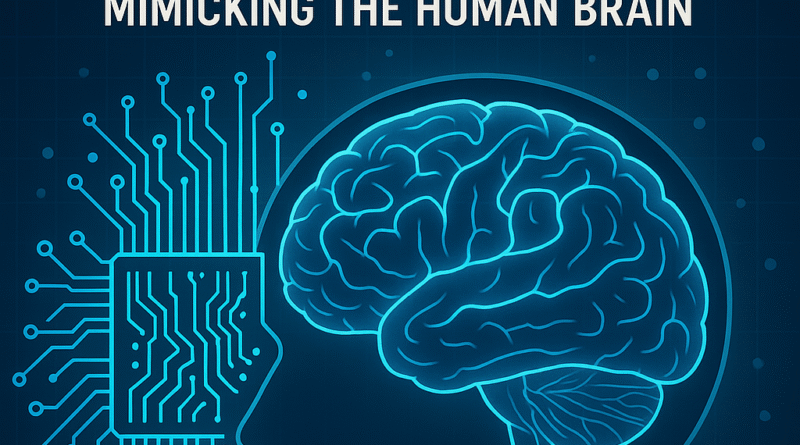
The Rise Of Neuromorphic Computing : Mimicking the Human Brain
Neuromorphic computing represents a paradigm shift in hardware design, moving away from traditional von Neumann architectures toward systems that emulate the structure and function of biological neural networks. By incorporating principles like spiking neurons, synaptic plasticity, and event-driven processing, these systems promise dramatic gains in energy efficiency, real-time adaptability, and cognitive-like performance—addressing the power-hungry limitations of today’s AI workloads.
Neuromorphic computing is a brain-inspired approach to computer engineering that mimics the brain’s neural structure and function in both hardware and software. Unlike traditional computers, it integrates processing and memory on the same chip, leading to greater energy efficiency and faster processing for tasks like pattern recognition and data analysis. This is achieved through specialized hardware that simulates artificial neurons and synapses, often using a different approach than traditional deep learning models.
Neuromorphic computing chips
Neuromorphic computing chips are next-generation processors engineered to mimic the structure and function of the human brain for more energy-efficient and faster AI. Unlike traditional von Neumann architectures that separate memory and processing, neuromorphic chips integrate computation and memory, using event-driven communication (called “spikes”) similar to biological neurons.
Features: Uses Spiking Neural Networks (SNNs) and event-based processing for real-time analysis with ultra-low latency.
Availability: Kits and PCIe boards using the Akida AI Processor have been commercially available since 2022. A development kit was listed at about $799 on BrainChip’s website as of early 2024.
Applications: Smart cameras, drones, automotive systems, and other internet of things (IoT) devices.
IBM TrueNorth
- Description: A pioneering digital asynchronous chip with 1 million neurons and 256 million synapses. It is a milestone in brain-inspired computing.
- Features: Its event-driven, massively parallel architecture dramatically reduces power consumption compared to traditional processors.
- Status: While TrueNorth was a highly influential prototype, IBM has developed more recent “brain-inspired” AI hardware, including the NorthPole chip.
SpiNNaker (Spiking Neural Network Architecture)
Availability: Systems based on SpiNNaker2 are available for research purposes, including the world’s largest brain-like supercomputer located in Dresden
Description: A supercomputer built by the University of Manchester and the Human Brain Project for large-scale, real-time brain simulation.
Features: The newest generation, SpiNNaker2, is highly energy-efficient and scalable, with systems available for large-scale research projects.
Neuromorphic computing jobs
Job opportunities in neuromorphic computing are growing across multiple fields, including research, hardware engineering, and software development. These roles are available at academic institutions, government laboratories, and technology companies that are developing next-generation AI and edge computing systems.
Research roles
Research positions are common and found in both academic settings and corporate research labs. They typically require an advanced degree and focus on advancing the theoretical and practical applications of neuromorphic systems.
- Neuromorphic Research Scientist: These researchers push the boundaries of brain-inspired AI architectures and algorithms, often publishing their findings in peer-reviewed journals. For example, Intel and academic institutions frequently post positions for scientists to develop novel neural network architectures.
- Postdoctoral Fellow: At universities and research institutions like the University of Alabama, postdoctoral positions are available for individuals with research interests in neuromorphic computing, circuit design, and AI.
- Neuroscience Specialist / AI Trainer: Some roles, such as those at Invisible Agency, are focused on communicating with large-scale models. These are particularly valuable in a field where mimicking brain functions is key.
Hardware and systems engineering
Hardware-focused jobs involve designing, fabricating, and integrating the physical chips and systems.
- Neuromorphic Hardware Engineer: These engineers work on the physical architecture and integrated circuits (ICs) of neuromorphic processors. Companies like BrainChip and research organizations like imec hire for these roles.
- ASIC Design Engineer, Neural Processor: Specialists with this title focus on designing application-specific integrated circuits that can efficiently run spiking neural networks (SNNs) and other advanced AI models.
- Electronics Engineer: Some roles focus on specific aspects of the hardware, such as the electronics and design for these specialized processors.
- Systems Architect: A senior role that involves leading multi-disciplinary teams to define and develop next-generation neuromorphic and edge AI computing processors.
Software and applications development
Software jobs focus on developing the tools and applications that run on neuromorphic hardware, requiring expertise in machine learning and programming.
- Neuromorphic Engineer (Software): Responsibilities can include implementing state-of-the-art Spiking Neural Networks (SNNs) in frameworks like NENGO or adapting algorithms to function on specialized hardware.
- AI/ML Software Engineer: These roles focus on the software aspect of neuromorphic systems, including co-optimizing neural network models for next-generation hardware engines.
- Solutions Engineer: These engineers support the neuromorphic research community by helping academic, government, and commercial organizations build novel AI applications using platforms like Intel’s Loihi.
- Edge AI/ML Scientist: These roles involve researching, developing, and testing lightweight learning models for resource-constrained edge devices.
Skills and qualifications
To enter the field of neuromorphic computing, you need a strong interdisciplinary background.
- Educational Background: A background in electrical engineering, computer science, or neuroscience is essential. An advanced degree (Master’s or Ph.D.) is often required, particularly for research and senior roles.
- Technical Skills: Key skills include experience with neuromorphic hardware platforms, programming languages like Python and C++, machine learning frameworks (e.g., TensorFlow, PyTorch), and hardware design languages (e.g., VHDL/Verilog).
- Soft Skills: Due to its interdisciplinary nature, strong creative problem-solving skills, adaptability, and the ability to collaborate across different teams (e.g., with neuroscientists and hardware engineers) are highly valued.
Where to find neuromorphic jobs
- Large Tech Companies: Companies like Intel, IBM, and NVIDIA are heavily invested in this technology and post related job openings.
- Specialized AI Hardware Companies: Look for opportunities at companies like BrainChip and SpiNNcloud Systems GmbH.
- Research Institutions and Universities: Academic positions are a major part of this field. Check for roles at universities, Fraunhofer institutes, and national labs like Sandia.
- AI and Robotics Startups: Smaller, focused companies like Neurobus are often building specialized hardware and software for robotics and autonomous systems.
Neuromorphic computing companies
Intel: A leader in neuromorphic research, Intel developed the Loihi research chip and the large-scale Hala Point system, which features over a billion neurons. Through the Intel Neuromorphic Research Community (INRC), it provides hardware and software access to academic, government, and industry partners to advance the technology.
IBM: Pioneers in the field, IBM created the TrueNorth neurosynaptic chip and has since developed the more advanced NorthPole chip. Its focus is on integrating brain-inspired systems into cognitive computing, with applications in data processing and real-time decision-making.
Qualcomm Technologies: Involved in neuromorphic development through its Zeroth platform, Qualcomm has explored using brain-inspired AI to improve on-device intelligence for smartphones and IoT devices.
Samsung: This company has heavily invested in neuromorphic research and is a prominent patent filer in the space. Samsung focuses on integrating advanced memory and logic components into neuromorphic designs.
Hewlett Packard Enterprise (HPE): While not exclusively a neuromorphic company, HPE explores the technology through its high-performance computing (HPC) research. It aims to develop brain-like systems to improve machine learning efficiency.

Pingback: 10 Mysterious Facts About the Human Brain - Fact Hub
Pingback: Top 5 AI Tools That can Change Your Life - Fact Hub