
The Life and Achievements of Albert Einstein
Albert Einstein (1879–1955) was a German-born theoretical physicist known for the theory of relativity and the mass-energy equivalence formula, E=mc². He received the 1921 Nobel Prize in Physics for his work on the photoelectric effect. His other major achievements include the special and general theories of relativity, which revolutionized understanding of space, time, and gravity. He later emigrated to the U.S. due to the rise of Nazism and spent his final years advocating for peace and nuclear disarmament.
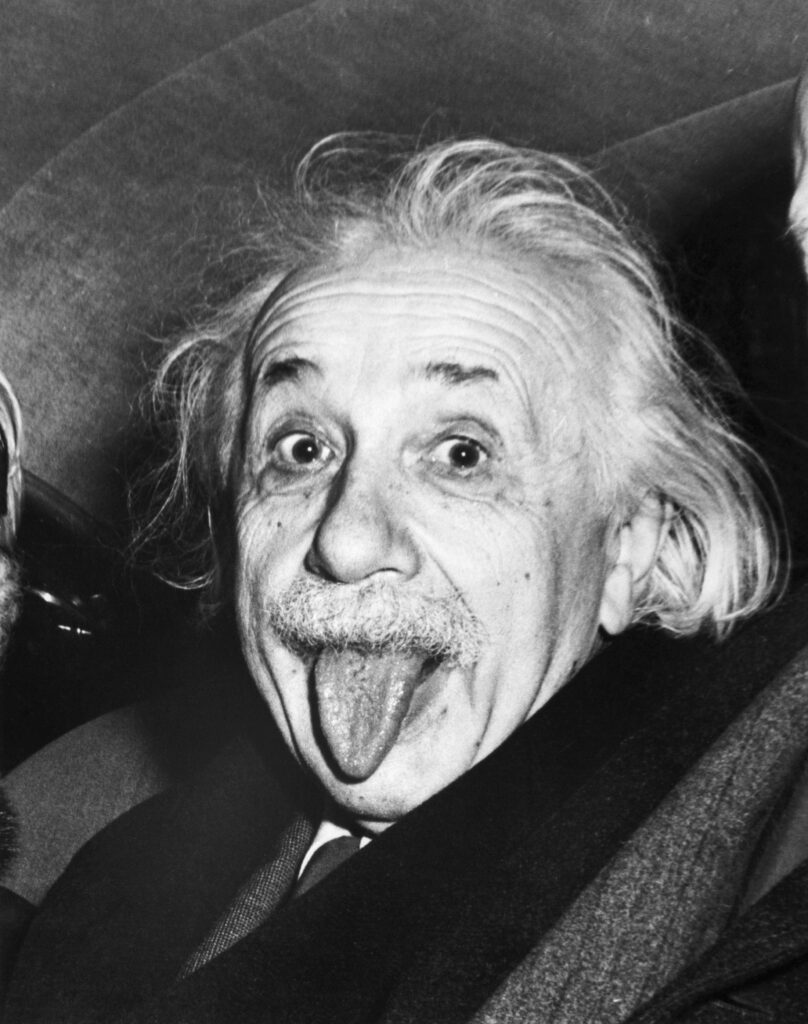
Early Life and Education
- Born: 14 March 1879, in Ulm, Kingdom of Württemberg, German Empire.
- Family: Non-practicing Jewish family. Father Hermann Einstein was an engineer and businessman; mother Pauline Koch encouraged his education.
- Childhood: Raised in Munich. Showed early curiosity for mathematics and nature.
- Education:
- Attended Luitpold Gymnasium in Munich.
- Faced difficulties with rigid school methods but excelled in mathematics and physics.
- Moved to Switzerland in 1895; studied at Swiss Federal Polytechnic, Zurich (later ETH Zurich).
Graduated as a teacher of mathematics and physics (1900).
Initially struggled to find an academic job; worked as a patent examiner at the Swiss Patent Office (1902–1909).
Marriage: Married Mileva Marić, a fellow physics student, in 1903; had three children (Hans Albert, Eduard, and Lieserl).
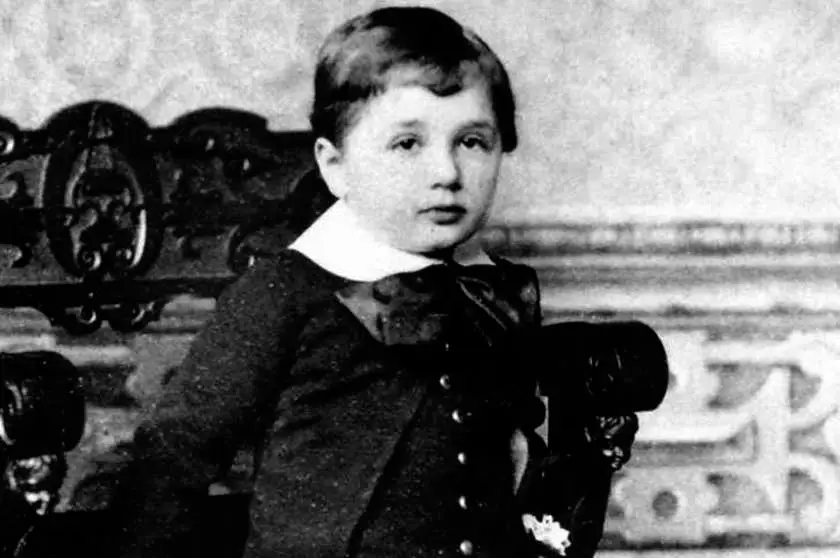
Annus Mirabilis – The Miracle Year (1905)
Photoelectric Effect – showed that light has particle-like properties (quanta, later called photons).
Brownian Motion – provided evidence for the existence of atoms.
Special Relativity – introduced the concept that time and space are relative.
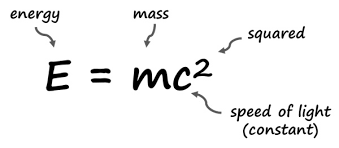
Mass-Energy Equivalence – derived the famous equation E = mc².
Academic Recognition (1909 – 1921)
Became a professor in Zurich, Prague, and Berlin.
Developed General Theory of Relativity (1915), a revolutionary theory of gravitation explaining gravity as the curvature of spacetime.
1919 Solar Eclipse Experiment confirmed his theory when starlight bent around the Sun, making him world famous.
Awarded the Nobel Prize in Physics (1921) – for the Photoelectric Effect (not relativity, as it was still debated).
Later Career & Global Impact (1922 – 1933)
- Emigration to the U.S.: Immigrated to the United States in 1933 after the Nazi Party came to power in Germany.
- World War II: Though a pacifist, he played a role in persuading President Roosevelt to initiate the Manhattan Project to develop the atomic bomb.
- Cultural Icon: Became a symbol of genius and intellectual curiosity, leaving an enduring legacy in science and popular culture.
Life in the United States (1933 – 1955)
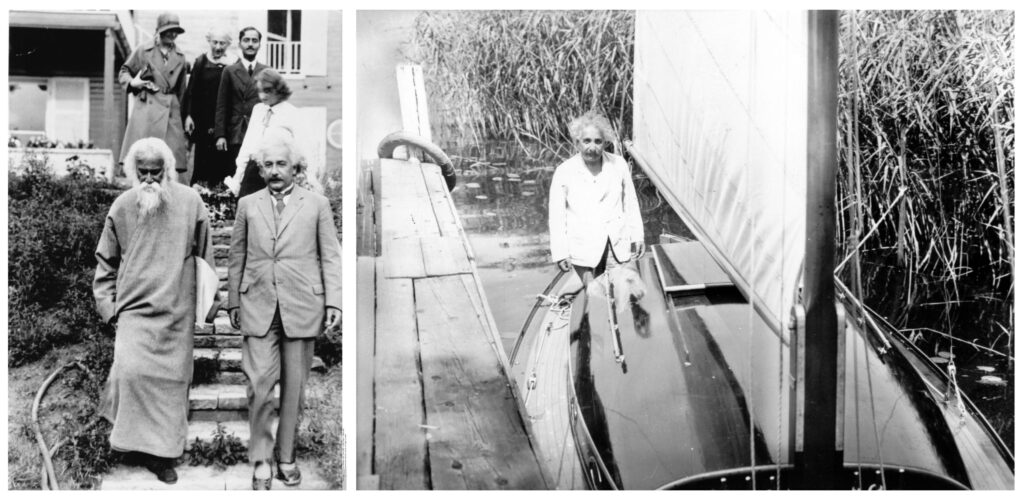
- Settled at the Institute for Advanced Study, Princeton.
- Helped raise funds for Jewish refugees escaping Nazi Germany.
- In 1939, co-signed the Einstein–Szilárd letter to Franklin D. Roosevelt, warning of Nazi nuclear weapons development. This led to the Manhattan Project.
- Though supportive of nuclear research for defense, Einstein was a lifelong pacifist and later opposed nuclear weapons.
Personal Life
First marriage: Mileva Marić (1903–1919).
Second marriage: Elsa Löwenthal, his cousin (1919–1936).
Known for eccentric personality, messy hair, love of music (played violin).
Died: 18 April 1955, Princeton, New Jersey, USA.
Cause: Abdominal aortic aneurysm.
Major Achievements of The Life and Achievements of Albert Einstein
Special Relativity (1905).
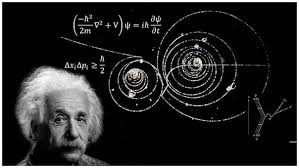
Albert Einstein’s 1905 theory of special relativity revolutionized modern physics by explaining how space, time, mass, and energy are interconnected, particularly for objects moving at constant high speeds. The theory is founded on two core postulates that challenged the concepts of classical Newtonian physics.
Principle of relativity: The laws of physics are the same for all observers in uniform, non-accelerating motion (known as inertial frames of reference).
Constancy of the speed of light: The speed of light in a vacuum, approximately 299,792 kilometers per second, is constant for all observers, regardless of the motion of the light source or the observer.
Key concepts and consequences
From these postulates, Einstein derived several startling and profound consequences that drastically altered the perception of the physical world:
Relativity of simultaneity: Events that appear to happen at the same time for one observer may occur at different times for another observer in relative motion. This concept shattered the classical notion of a universal, absolute time.
Mass-energy equivalence (E=mc2cap E equals m c squared𝐸=𝑚𝑐2): The most famous outcome of special relativity is the equation stating that mass (mm𝑚) and energy (
Ecap E𝐸) are interchangeable and fundamentally the same thing. The enormous value of the speed of light (
cc𝑐) squared means a tiny amount of mass can be converted into a vast amount of energy, a principle that is the basis for nuclear power and atomic weapons.
Time dilation: The passage of time is not absolute but is relative to an observer’s motion. A clock moving relative to an observer will appear to run slower than a stationary one. This has been experimentally proven with atomic clocks on high-speed flights and is a crucial factor for the accuracy of GPS satellites.
Length contraction: Objects in motion appear shorter in the direction of their movement relative to a stationary observer. The effect is negligible at everyday speeds but becomes significant as an object approaches the speed of light.
Universal speed limit: As an object with mass is accelerated, its mass increases, requiring an infinite amount of energy to reach the speed of light. This makes the speed of light the ultimate speed limit in the universe—it is impossible for any object with mass to travel at or faster than the speed of light.
General Relativity (1915).
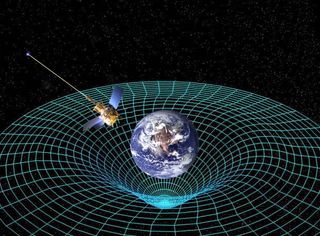
Published in 1915, Albert Einstein’s theory of general relativity expanded on his earlier work to describe gravity not as a force, but as a consequence of the curvature of four-dimensional spacetime caused by mass and energy. It superseded Isaac Newton’s law of universal gravitation by providing a more accurate framework for understanding the universe at large scales and in strong gravitational fields.
Spacetime curvature: The central idea of general relativity is that massive objects distort the “fabric” of spacetime. This can be visualized with an analogy of a bowling ball placed on a stretched trampoline sheet, causing a dip. Smaller objects, like marbles rolled nearby, will follow the curve created by the ball, appearing to be “attracted” to it.
Gravity as geometry: Rather than being an attractive force pulling objects together, gravity is described as a geometric phenomenon. Objects in free fall, like planets orbiting a star, are simply following the “straightest” possible path, known as a geodesic, through the curved spacetime around the massive body.
The equivalence principle: This foundational principle states that the effects of gravity are locally indistinguishable from the effects of acceleration. For instance, a person in a free-falling elevator would experience weightlessness, just as they would in deep space far from any gravitational source.
Einstein’s field equations
The mathematical heart of the theory is encapsulated in the Einstein field equations, which relate the geometry of spacetime to the distribution of matter and energy within it.
Gμν+Λgμν=8πGc4Tμνcap G sub mu nu end-sub plus cap lambda g sub mu nu end-sub equals the fraction with numerator 8 pi cap G and denominator c to the fourth power end-fraction cap T sub mu nu end-sub𝐺𝜇𝜈+Λ𝑔𝜇𝜈=8𝜋𝐺𝑐4𝑇𝜇𝜈
The equation shows that “matter tells spacetime how to curve, and spacetime tells matter how to move”.
The left side of the equation (Gμνcap G sub mu nu end-sub𝐺𝜇𝜈) describes the curvature of spacetime.
The right side (Tμνcap T sub mu nu end-sub𝑇𝜇𝜈) describes the distribution of matter and energy, which causes that curvature.
Photoelectric Effect → Nobel Prize (1921).
Albert Einstein was awarded the 1921 Nobel Prize in Physics “for his services to Theoretical Physics, and especially for his discovery of the law of the photoelectric effect”. Published in 1905, his explanation used the concept of light quanta (photons) and was a pivotal step in the development of quantum mechanics, earning him the prize ahead of his famous work on relativity.
The photoelectric effect explained
- The phenomenon: The photoelectric effect is the emission of electrons, called photoelectrons, from a material when light or other electromagnetic radiation shines on it.
- Classical physics’s failure: Before Einstein, classical physics treated light as a continuous wave and predicted that the energy of emitted electrons should increase with the light’s intensity. However, experiments showed this was not the case.
- The maximum kinetic energy of the electrons was found to depend only on the light’s frequency, not its intensity.
- There was a minimum “threshold frequency” below which no electrons would be ejected at all, regardless of how intense the light was.
- Einstein’s quantum hypothesis: In his 1905 paper, Einstein proposed a radical new idea: light energy is not spread out in a continuous wave but is contained in discrete packets, or “quanta,” later named photons.
- He postulated that the energy (
Ecap E𝐸) of each photon is directly proportional to its frequency (
νnu𝜈), a relationship first proposed by Max Planck:
E=hνcap E equals h nu𝐸=ℎ𝜈.
- This explained that for an electron to be ejected, a single photon must carry enough energy to overcome the material’s binding energy (the “work function”). Any excess energy becomes the electron’s kinetic energy.
- Increasing the light’s intensity simply means increasing the number of photons hitting the surface, which ejects more electrons but does not increase their individual kinetic energy.
- He postulated that the energy (
Brownian Motion Theory.
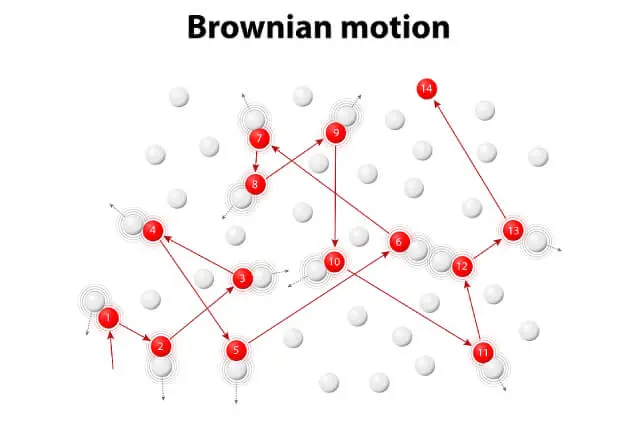
In one of his famous 1905 “Annus Mirabilis” papers, Albert Einstein provided a mathematical and physical theory for Brownian motion, offering definitive, observable evidence for the existence of atoms and molecules. This work helped resolve a decades-long scientific debate about the atomic nature of matter.
The phenomenon: Brownian motion
- Observation: In 1827, Scottish botanist Robert Brown observed that pollen grains suspended in water performed a “rapid oscillatory motion” or a chaotic, never-ending dance.
- Mystery: Initially, some thought the motion was biological, but Brown showed that even inorganic particles exhibited the same erratic, “jiggling” behavior, pointing toward an underlying physical cause.
- Cause: The microscopic particles are being constantly and randomly bombarded by the much smaller, unseen atoms and molecules of the surrounding fluid, which transfer kinetic energy and momentum upon collision.
Quantum Theory Contributions.

Albert Einstein’s contributions to quantum theory were foundational and revolutionary, even though he later became one of its most famous critics. His early work was crucial in establishing key concepts that form the basis of modern quantum mechanics, including the concept of the photon and wave-particle duality.
The photoelectric effect (1905): Einstein’s paper on the photoelectric effect proposed that light consists of discrete energy packets, later called photons. This idea explained the effect and earned him the 1921 Nobel Prize in Physics, providing proof that light behaves like particles.
Wave-particle duality: His work on the photoelectric effect was key to establishing that light has both wave-like and particle-like properties. He later suggested this dual nature also applied to matter.
Stimulated emission and laser theory (1917): Einstein predicted stimulated emission, where an excited atom emits a photon when stimulated by another photon, leading to a burst of coherent light. This theoretical prediction was crucial for the development of lasers.
Bose–Einstein statistics (1924–1925): Working with Satyendra Nath Bose, Einstein developed a new statistical method for particles with integer spin (bosons). This led to the prediction of the Bose–Einstein condensate, a state of matter where bosons behave as a single entity at very low temperatures, which was confirmed experimentally in 1995.
Bose–Einstein Statistics & Condensate.
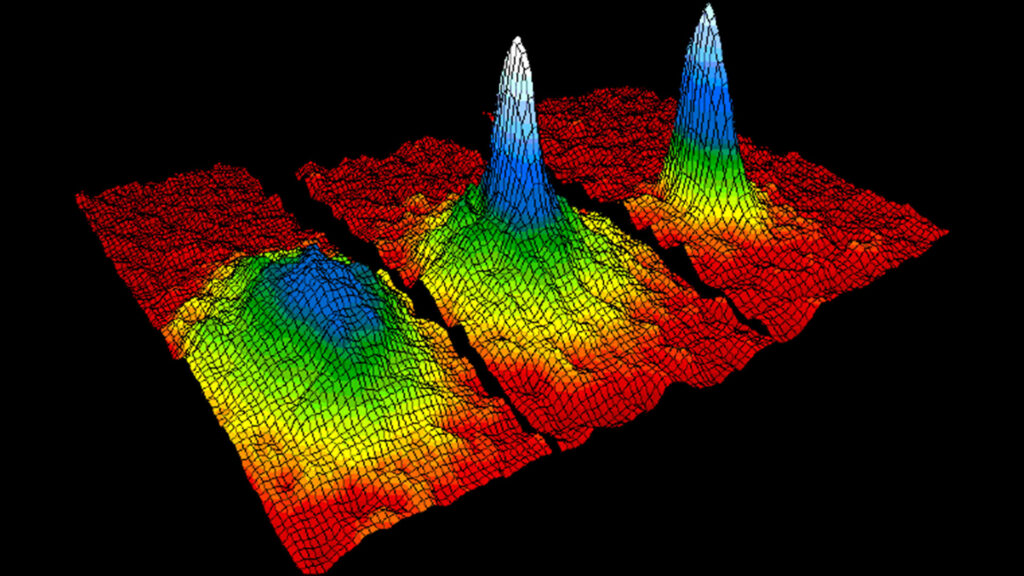
Bose–Einstein statistics and the Bose–Einstein condensate (BEC) are fundamental concepts in quantum mechanics that were developed by Satyendra Nath Bose and Albert Einstein in the 1920s. The theory describes the behavior of a class of particles called bosons and predicts a unique state of matter that forms when they are cooled to ultra-low temperatures.
Bosons: Bose and Einstein realized that a class of particles, later named “bosons” by Paul Dirac, are fundamentally indistinguishable and can occupy the same quantum state simultaneously. This is in contrast to “fermions” (like electrons), which are governed by the Pauli exclusion principle that restricts each particle to a unique state.
Indistinguishability: Bose’s initial key insight, applied to photons, was a new way of counting possible states for identical particles that could not be distinguished from one another.
Einstein’s extension: After Bose’s paper was initially rejected, he sent it to Einstein in 1924, who immediately recognized its significance, translated it into German, and arranged for its publication. Einstein then extended the statistical method to massive particles (like atoms) and predicted that they would exhibit similar behavior at low temperatures.
Bose–Einstein condensate
Significance and applications: The experimental creation of BECs opened a new field of quantum research and earned Cornell, Wieman, and Ketterle the 2001 Nobel Prize in Physics. Today, BECs are used for precision measurements, quantum simulation, and have potential applications in atom lasers, quantum computing, and studies of dark matter.
The prediction: As a direct result of extending Bose’s work, Einstein predicted that if a gas of bosons was cooled close enough to absolute zero, a macroscopic number of particles would “condense” into the lowest possible energy state. This bizarre, purely quantum state of matter, now called a Bose–Einstein condensate, was unlike anything known at the time.
Properties of the BEC: In a BEC, the wave functions of the individual atoms overlap to such a great extent that the entire group begins to behave as a single, coherent matter wave. This collective quantum behavior is what gives BECs their unique properties, such as superfluidity (frictionless flow).
Experimental realization: The existence of BECs remained a theoretical curiosity for decades until 1995 when physicists Eric Cornell, Carl Wieman, and Wolfgang Ketterle successfully created the first BEC in a lab using laser-cooled rubidium and sodium atoms.
Pingback: Universe Theories - Fact Hub