
Satya Nadella -Leadership style & Journey in Microsoft
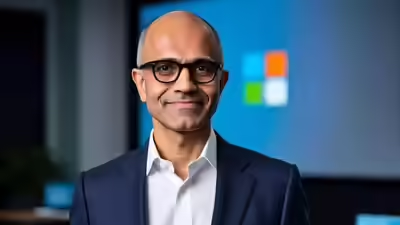
Satya Nadella, born on August 19, 1967, in Hyderabad, India, has transformed Microsoft from a struggling tech giant into the world’s most valuable company, valued at over $3 trillion as of early 2025. As CEO since 2014 and chairman since 2021, his journey reflects a blend of technical expertise, strategic vision, and empathetic leadership. Below, we explore his career progression at Microsoft and the distinctive style that has driven this resurgence.
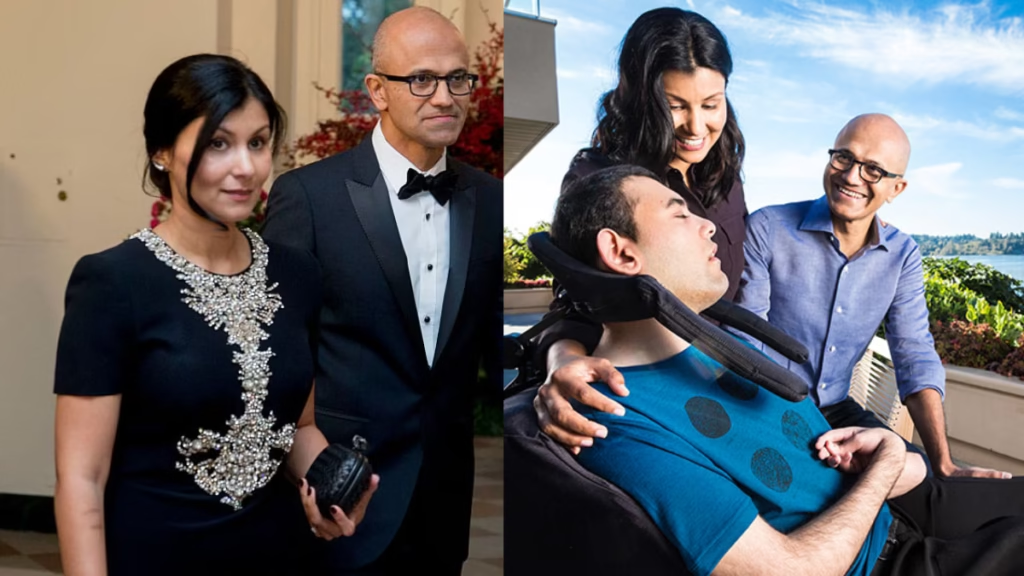
Satya Nadella Family (Wife and Children)
The Nadellas had three children, a son and two daughters.
- Zain Nadella (1996–2022): Their eldest child, Zain, was born with cerebral palsy and spastic quadriplegia, was legally blind, and was non-verbal.
- His birth had a profound and life-altering effect on Satya, changing his perspective on life, leadership, and empathy.
- Zain passed away in 2022 at the age of 26.
- Two daughters: The couple also has two daughters. One of their daughters has a learning disability, for which the family sought assistance from a specialized academy.
Parents
- B.N. Yugandhar: Satya’s father was an Indian Administrative Service (IAS) officer and economist. Satya has spoken about how his father instilled values of ethics and resilience.
- Prabhavati Nadella: His mother was a Sanskrit lecturer who encouraged his curiosity and passions.
Satya Nadella’s wife is Anupama Nadella, a trained architect and philanthropist. She has been described as the “backbone of the family” and has had a profound influence on Nadella’s personal values and leadership.
Networth
As of late 2025, Satya Nadella’s net worth is estimated to be between $1.1 and $1.4 billion. While this places him among the world’s billionaires, it is important to note that his wealth is significantly lower than that of Microsoft founders like Bill Gates and former CEO Steve Ballmer, largely because he does not have founder-level equity.
Early Life of Satya Nadella
Satya Nadella was born in Hyderabad, India, in 1967, and was raised in a middle-class family that valued education and curiosity. His formative years were shaped by his parents’ contrasting personalities and his own passions for cricket and technology.
Parents: Nadella’s father, B.N. Yugandhar, was an elite civil servant and economist in the Indian Administrative Service. His mother, Prabhavati, was a Sanskrit lecturer who fostered a love for literature and philosophy. Nadella has credited his parents for encouraging him to pursue his own passions and become his “own person”.
Childhood: As a boy, Nadella split his time between Hyderabad and his grandparents’ village of Bukkapuram. Growing up in a middle-class household presented challenges that helped him develop resilience and determination.
Education and early interests
Post-graduate studies in the U.S.: After completing his degree in India, Nadella moved to the United States to pursue a master’s degree in computer science from the University of Wisconsin–Milwaukee, which he received in 1990. He later earned an MBA from the University of Chicago Booth School of Business while working at Microsoft.
Schooling: Nadella attended the prestigious Hyderabad Public School, Begumpet, from 1978 to 1984. During this time, he was an above-average student who enjoyed extracurricular activities like debating and playing cricket.
Passion for cricket: Cricket was more than just a sport for Nadella. It taught him important lessons about teamwork and leadership, skills he would later apply in his career.
Engineering studies: After high school, Nadella was unable to gain admission to his first-choice engineering school. He went on to earn a bachelor’s degree in electrical engineering from the Manipal Institute of Technology in 1988.
Discovery of software: It was in college that Nadella’s fascination with computers took hold. He was drawn to the “malleability of software,” which became a lasting passion.
Career Journey at Microsoft
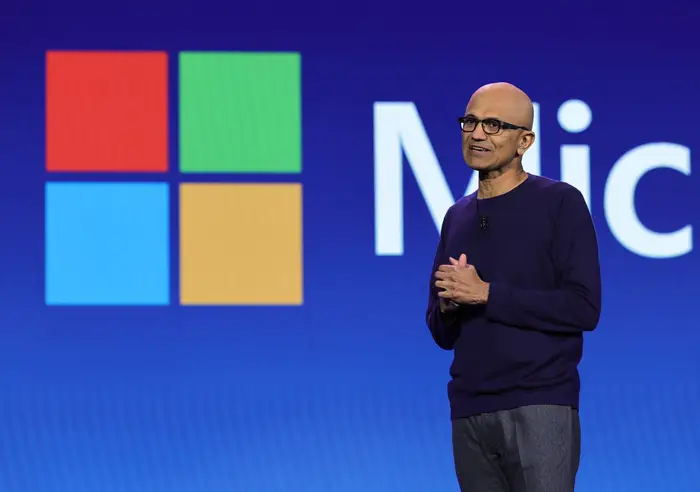
Satya Nadella’s career at Microsoft, which he joined in 1992, is a testament to his versatility and strategic vision. His journey from a technical program manager to Chairman and CEO saw him lead significant transformations in several major divisions, culminating in his revitalizing the company’s culture and market position.
Entry as a program manager: After an initial stint at Sun Microsystems, Nadella joined Microsoft in 1992. His first major project was contributing to Windows NT, a groundbreaking business-oriented operating system.
Balancing work and education: Demonstrating a formidable work ethic, he commuted on weekends from Microsoft’s Redmond, Washington, headquarters to Chicago to earn his MBA from the University of Chicago Booth School of Business, which he completed in 1997.
Early leadership roles: He moved into executive management in the late 1990s, becoming vice president of the Microsoft bCentral service, which provided web services for small businesses.
- Entry as a program manager: After an initial stint at Sun Microsystems, Nadella joined Microsoft in 1992. His first major project was contributing to Windows NT, a groundbreaking business-oriented operating system.
- Balancing work and education: Demonstrating a formidable work ethic, he commuted on weekends from Microsoft’s Redmond, Washington, headquarters to Chicago to earn his MBA from the University of Chicago Booth School of Business, which he completed in 1997.
- Early leadership roles: He moved into executive management in the late 1990s, becoming vice president of the Microsoft bCentral service, which provided web services for small businesses.
Before Microsoft, Nadella worked at Sun Microsystems (1990–1992) on technology staff, gaining early exposure to computing platforms. His internal promotions reflect Microsoft’s merit-based culture, but his cloud focus positioned him as the ideal successor to Steve Ballmer amid the company’s mobile and innovation struggles.
Nadella’s style is often described as transformational, emphasizing empathy, a “growth mindset,” and collaboration over the competitive “know-it-all” culture under predecessors like Ballmer. Influenced by his family’s experience raising a son with cerebral palsy, he views empathy as “the hardest skill we learn”—not a soft trait, but essential for innovation in a diverse, tech-driven world. This approach has fostered inclusivity, with Microsoft prioritizing diversity and employee well-being, boosting morale and creativity.
Legacy of Satya Nadella
Clarity, Energy, and Execution: Nadella seeks leaders who bring focus in ambiguity, energize teams, and deliver results in constrained environments. He promotes bold, long-term vision over short-term gains, as seen in his pivot to cloud computing
. Growth Mindset: Drawing from Carol Dweck’s philosophy, he shifted Microsoft from fearing failure to celebrating learning. Employees are encouraged to experiment, with mistakes as opportunities—evident in Azure’s rapid iterations.
Humility and Resilience: Nadella models curiosity and listening, apologizing publicly for missteps (e.g., a 2014 comment on women’s raises) and adapting swiftly. His resilient style navigates crises like the OpenAI board drama in 2023. Inclusivity and Empowerment: He champions diverse perspectives for better solutions, investing in teams’ potential through continuous learning. This has driven cultural reinvention, making Microsoft more agile and collaborative.
Satya Nadella’s legacy is defined by his profound cultural transformation of Microsoft, his successful strategic pivot to the cloud and AI, and his demonstration of empathetic, human-centric leadership. When he took the helm in 2014, Microsoft was seen by many as a fading giant. A decade later, he had not only revitalized the company but also significantly increased its market value, solidifying his reputation as a transformative and respected leader.
Empowering employees: He replaced the contentious “stack ranking” performance system, which pitted employees against one another, with a new focus on teamwork and individual growth.
Championing empathy: Drawing on personal experiences, including raising a son with special needs, Nadella championed empathy as a core leadership trait. This shift encouraged leaders to be more collaborative and to understand the unmet needs of customers.
Promoting diversity and inclusion: Under Nadella, Microsoft has strengthened its commitment to diversity and inclusion, recognizing that varied perspectives lead to more innovative and comprehensive solutions.
Strategic achievements
Nadella’s strategic vision was responsible for repositioning Microsoft for long-term success.
Activision Blizzard (2023): Significantly expanded Microsoft’s presence in the gaming industry.
Cloud-first strategy: A veteran of Microsoft’s cloud and enterprise division, Nadella boldly shifted the company’s focus from its declining Windows business to cloud computing. He accelerated the growth of Microsoft Azure, which emerged as a formidable competitor to Amazon Web Services (AWS) and a major revenue driver for the company.
Embracing open source: Nadella reversed Microsoft’s historically combative stance toward open-source technology. His famous statement “Microsoft ❤️ Linux” symbolized a new era of collaboration, which included joining the Linux Foundation as a Platinum member in 2016.
AI leadership: Recognizing the transformative potential of artificial intelligence, Nadella prioritized AI research and development. His strategic partnership with OpenAI, which involved a significant multi-billion-dollar investment, cemented Microsoft as a leader in generative AI.
Strategic acquisitions: Nadella oversaw several key acquisitions that diversified and strengthened Microsoft’s product portfolio:
LinkedIn (2016): Enhanced professional networking.
GitHub (2018): Bolstered developer services and embraced the open-source community.
Your article helped me a lot, is there any more related content? Thanks!