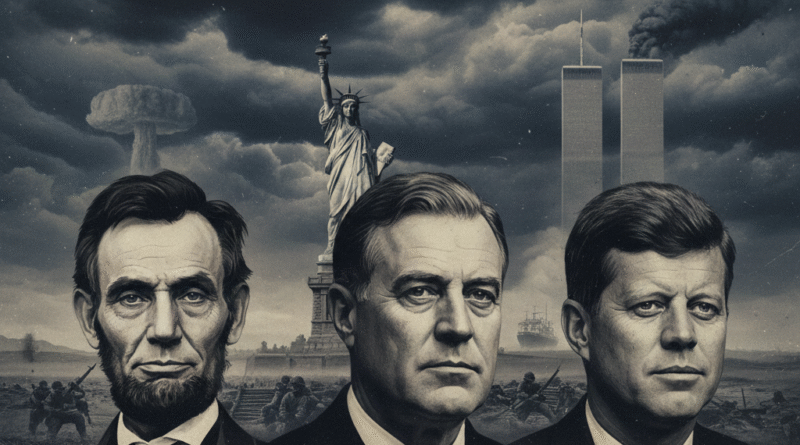
US Presidents & the Darkest Moments in American History
Several U.S. presidents have presided over what are widely considered the darkest moments in American history, including the Civil War, the Great Depression, and the forced relocation of Native Americans known as the Trail of Tears.
The List of Presidents of the America
1-George Washington from 1789 To 1797
Party name : Independent
Washington died between 10 and 11 PM on December 14, 1799, surrounded by family and friends.
American Revolution Leadership (1775- 1783)
George Washington is known as the “Father of the Nation.” Born in Virginia, he began his career as a surveyor and later joined the military.
His early experience in the French and Indian War shaped his leadership. In 1775, he became Commander-in-Chief of the Continental Army and led the American Revolution, ultimately securing independence after the victory at Yorktown in 1781.
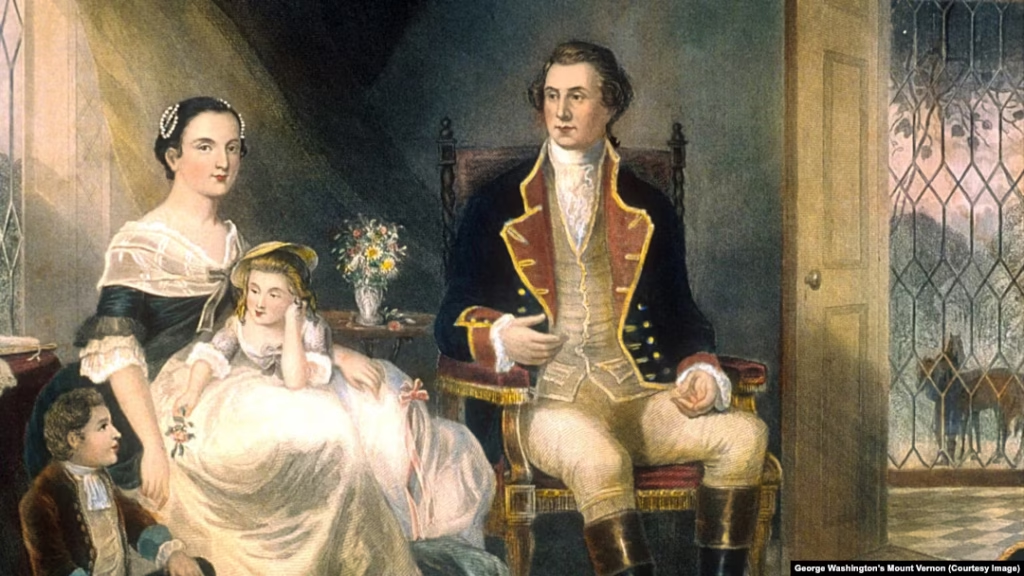
After the war, Washington became the first President of the United States (1789–1797). He established the foundations of the federal government, created the Cabinet system, supported the Bill of Rights, and strengthened the economy through the National Bank and unified taxation.
His Neutrality Proclamation defined America’s early foreign policy. By peacefully handling the Whiskey Rebellion, he proved federal authority.
After two terms, he voluntarily stepped down, setting a democratic tradition. Washington’s era built America’s political, military, and constitutional foundations.
2-John Adams (1797–1801)
Party name: Federalist
John Adams — Life, Key Events & Political Progress
John Adams ( was a key founder of the United States and the 2nd President. Born in Massachusetts, he became a leading lawyer and a strong voice for independence.
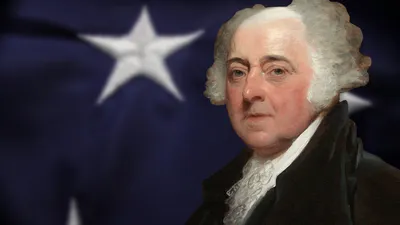
As a member of the Continental Congress, he helped push for and shape the Declaration of Independence. During the Revolution, he secured vital foreign support as a diplomat.
He served as the first Vice President and later became President in 1797. His presidency faced conflict with France, leading to the Quasi-War, expansion of the U.S. Navy, and the controversial Alien and Sedition Acts. After losing in 1800, he supported a peaceful transfer of power.
3-Thomas Jefferson (1801–1809)
His Political Career and Achievements
Thomas Jefferson (1743-1826) was the principal author of the Declaration of Independence and the 3rd U.S. President (1801-1809).
His political era saw the rise of the Democratic-Republican Party against the Federalists.
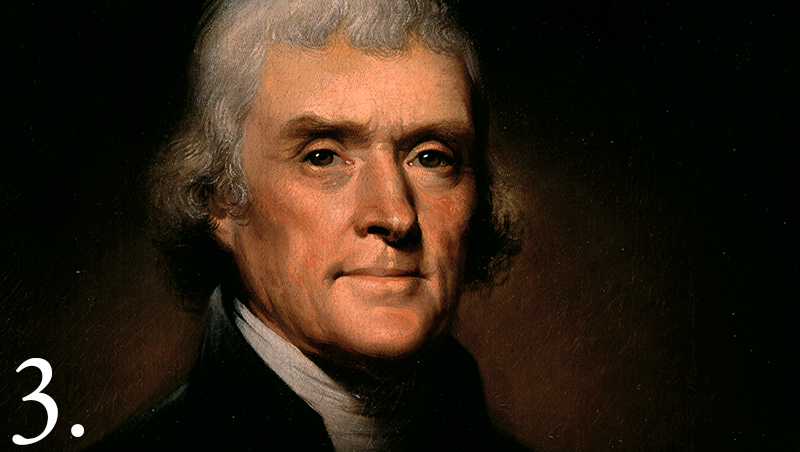
As President, he championed agrarian democracy and strictly limited the federal government.
His greatest achievement was the Louisiana Purchase in 1803, which doubled the size of the United States. He also commissioned the Lewis and Clark Expedition.
His second term was marred by foreign policy struggles, leading to the economically damaging Embargo Act of 1807.
How He Died:
Jefferson died on July 4, 1826, at his home, Monticello, in Virginia, precisely 50 years after the adoption of the Declaration of Independence.
The cause of death was a combination of conditions, including uremia (kidney failure) and complications from chronic diarrhea.
4-James Madison (1809–1817)
Party name : Democratic-Republican
James Madison Life, Key Events & Political Progress
Thomas Jefferson was the 3rd President of the United States and the principal author of the Declaration of Independence.
Born in Virginia, he was a lawyer, philosopher, and advocate for individual liberty. Before becoming president, he served as governor of Virginia, diplomat in France, and the first Secretary of State.
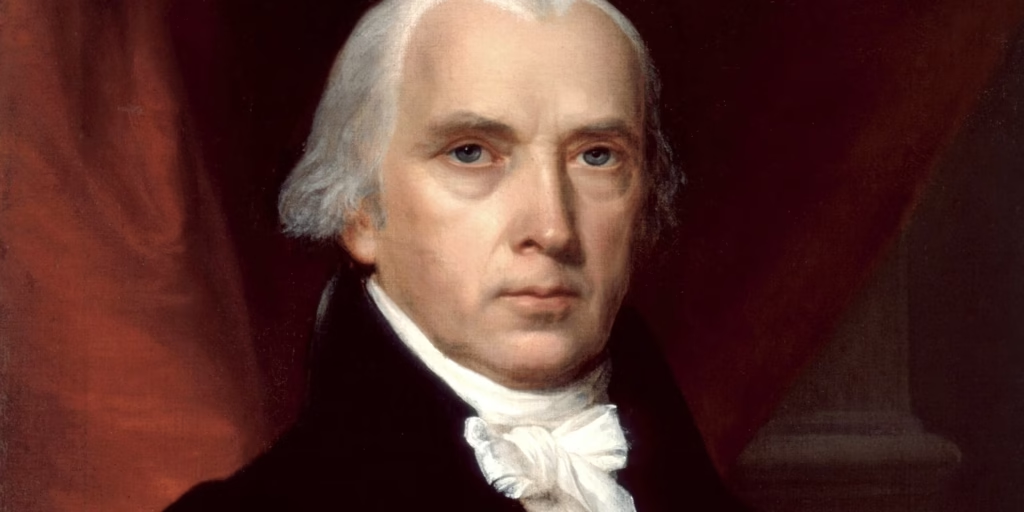
As President (1801–1809), he completed the Louisiana Purchase, doubling U.S. territory, and supported the Lewis and Clark Expedition. He reduced national debt, promoted agriculture, and limited federal power.
His Embargo Act of 1807 was controversial. Jefferson’s legacy remains central to American political and intellectual history.
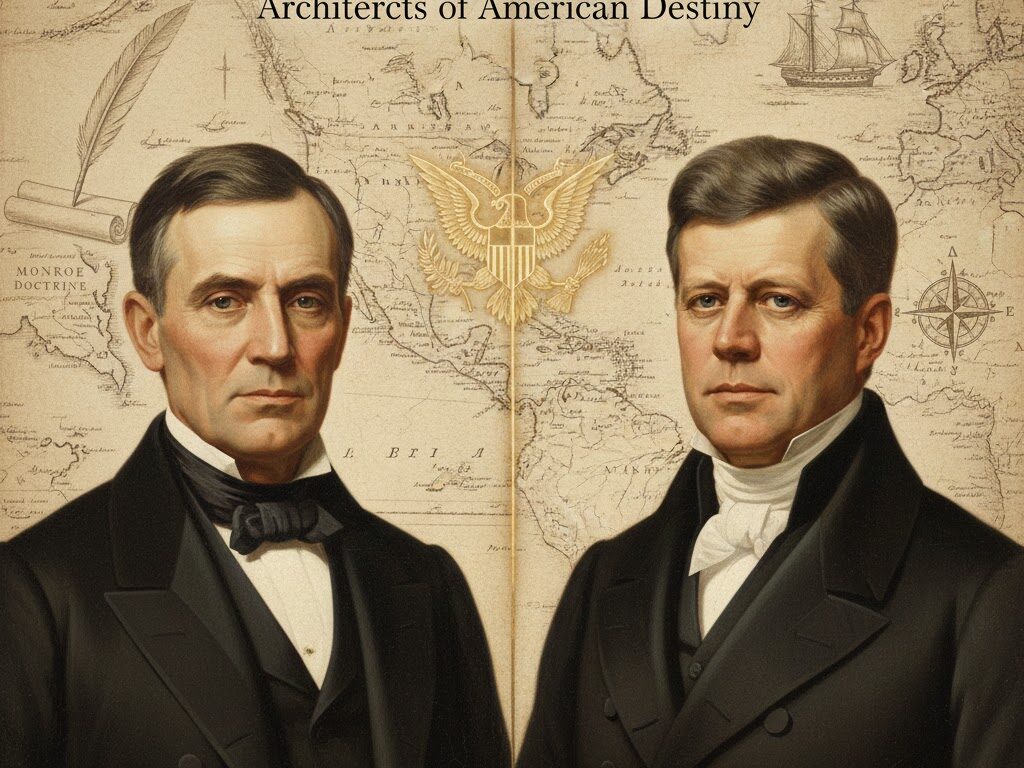
5-James Monroe (1817–1825)
party name:Democratic-Republican
Progress in his political Era
James Monroe , the 5th President of the United States, was a key figure in the nation’s early growth.
Born in Virginia, he served as a soldier in the American Revolution and later became a diplomat in France and Britain.
Before becoming president, he was a senator, governor of Virginia, and Secretary of State.
His presidency (1817–1825), known as the “Era of Good Feelings,” brought national unity and economic expansion.
The most important achievement was the Monroe Doctrine (1823), declaring that Europe must not interfere in the Americas.
He also supported the Missouri Compromise, balancing slave and free states.
Monroe oversaw westward expansion and strengthened America’s international standing.
6-John Quincy Adams (1825–1829)
Party name : Democratic-Republican / National Republican
His Political Career and Achievements
His Presidency (1825-1829), won by a controversial House vote, was marked by his ambitious “American System” proposals for federally-funded internal improvements (canals, roads) and a national university—most of which were blocked by a hostile Congress.
This era saw the collapse of the “Era of Good Feelings” and the definitive formation of the Second Party System, with his supporters forming the National Republicans against the rising Jacksonian Democrats.
After his defeat, he served 17 years in the House, earning the nickname “Old Man Eloquent” for his tireless and principled fight against slavery and the “gag rule”.
7-Andrew Jackson (1829–1837)
party name: Democratic
His Political Career and Achievements
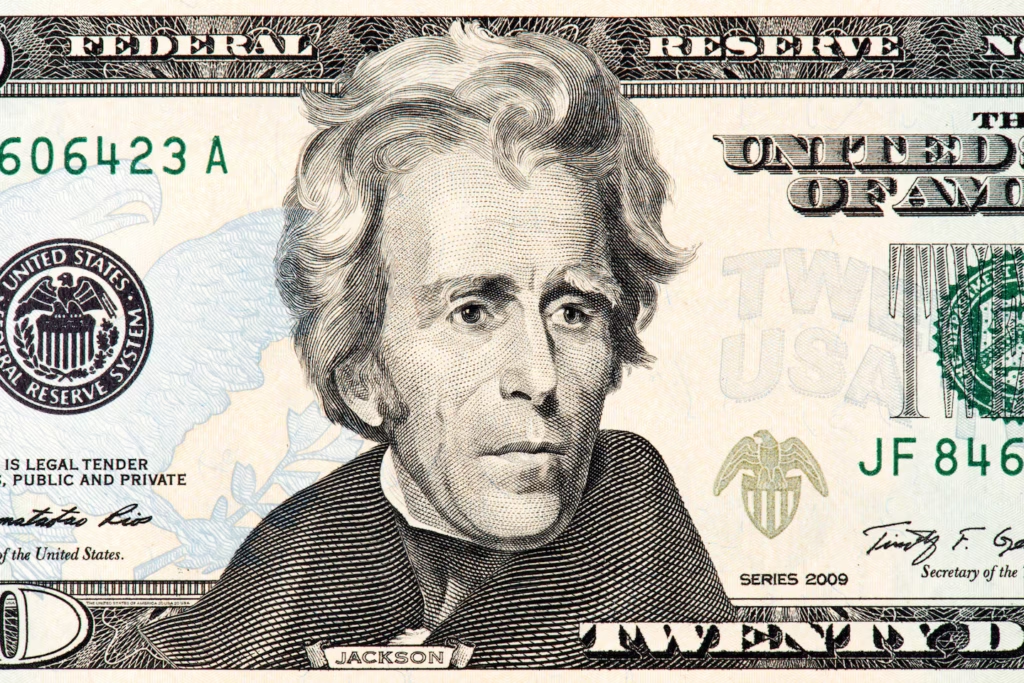
Andrew Jackson was a military hero, famous for his victory at the Battle of New Orleans (1815).
Elected the 7th President in 1828 as the champion of the “common man,” his era, known as Jacksonian Democracy, saw a massive expansion of suffrage to non-landowning white males and the birth of the modern Democratic Party.
His presidency (1829-1837) centered on executive strength and dismantling what he saw as aristocratic privilege.
Key events include his successful veto of the Second Bank of the United States recharter and his firm handling of the Nullification Crisis with South Carolina. However, his most criticized action was signing the Indian Removal Act (1830), which led to the forced relocation of Native American tribes on the “Trail of Tears.”
8-Martin Van Buren (1837–1841)
Party name: Democratic
Political journey and off-duty
His Presidency (1837-1841) was immediately defined by the severe Panic of 1837, a financial depression largely caused by Jackson’s policies.
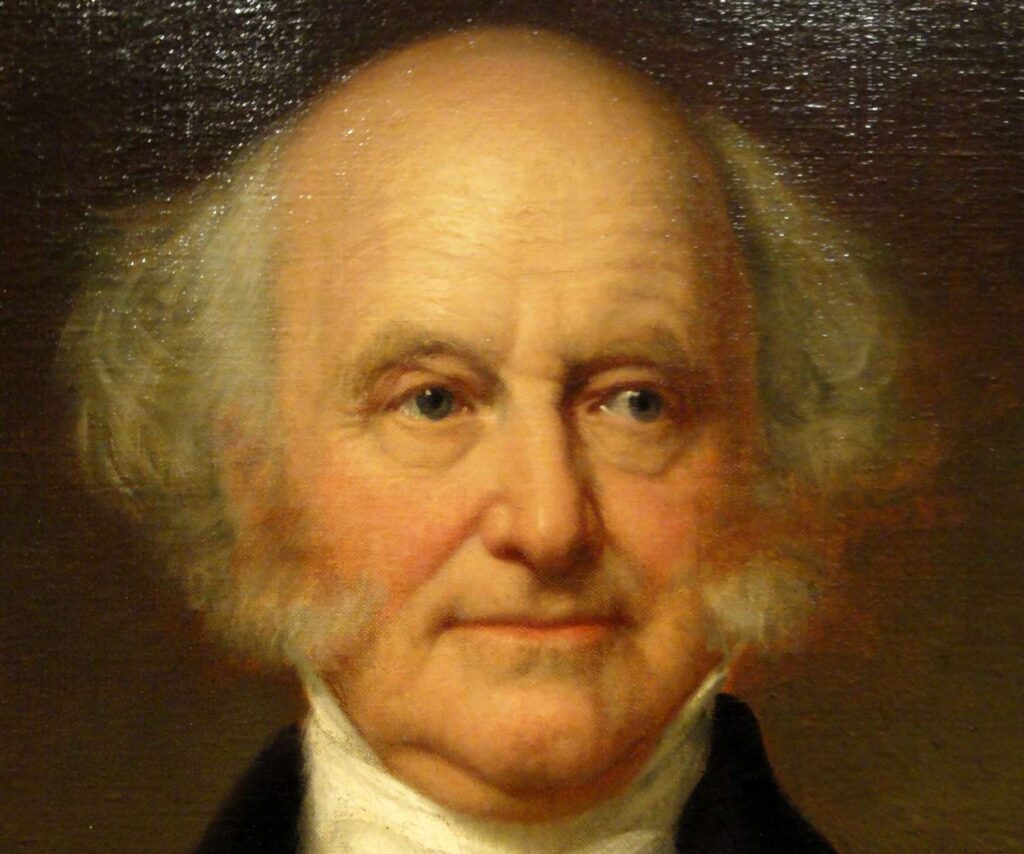
Van Buren opposed federal intervention, instead advocating for an “Independent Treasury” system to separate government finances from private banks—a measure finally enacted late in his term.
He lost re-election in 1840 to William Henry Harrison, largely due to the economic crisis and the rising political power of the Whig Party.
9-William Henry Harrison (1841)
Party name: Whig (died after 31 days)
Political journey and off-duty
His 1840 campaign against Martin Van Buren, run by the newly-formed Whig Party, was a populist spectacle with the slogan “Tippecanoe and Tyler Too,”
marking a shift to modern, mass-appeal politics. Elected the 9th U.S. President, he served the shortest term in history: 31 days.
How He Died:
Harrison died in office on April 4, 1841.
He fell ill shortly after delivering an extremely long inaugural address in cold, wet weather. His death was officially attributed to pneumonia.
However, modern research suggests he likely died from enteric fever (typhoid) contracted from Washington D.C.’s unsanitary water supply, which then weakened him against other infections.
10-John Tyler (1841–1845)
Party name: Whig / Independent
Political journey and off-duty
John Tyler (1790-1862), a Virginian Democrat and states’ rights advocate, was nominated as the Whig VP to balance the 1840 ticket.
He unexpectedly became the 10th President (1841-1845) upon William Henry Harrison’s death, setting the precedent for succession.
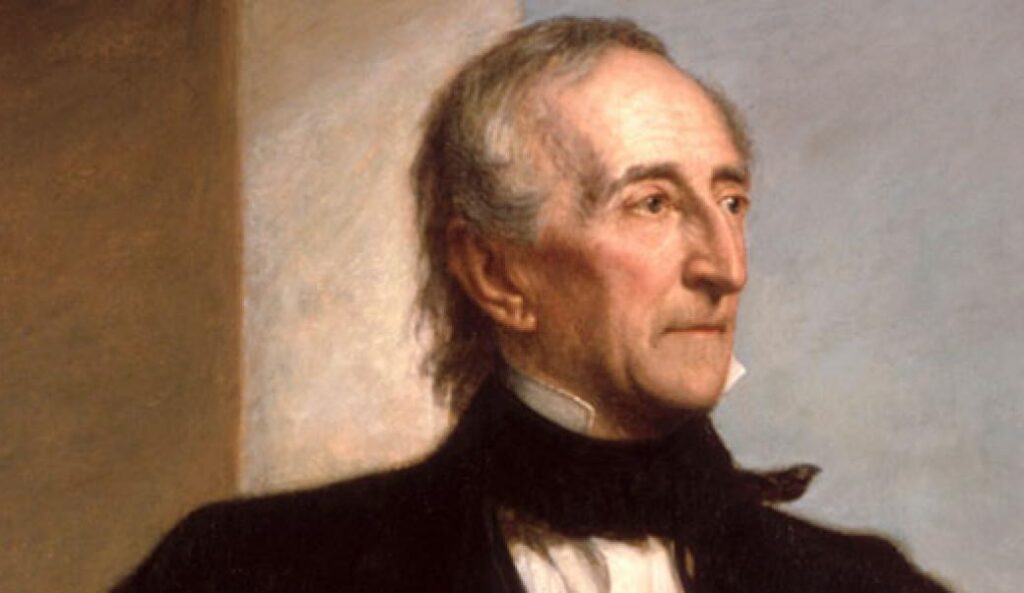
His Presidency was nicknamed “His Accidency” because his strict adherence to states’ rights clashed with the Whigs’ nationalist agenda. He was expelled from his own party after vetoing Whig-backed bills for a national bank. His major achievement was the annexation of Texas in 1845, fueling the expansionist “Manifest Destiny” era.
How He Died:
Tyler died on January 18, 1862, after suffering a stroke in Richmond, Virginia. Notably, he had sided with the Confederacy and was serving as an elected member of the Confederate House of Representatives at the time of his death.
11-James K. Polk (1845–1849)
Party name: Democratic
Political journey and off-duty
James K. Polk (1795-1849) was the 11th U.S. President and a fierce advocate of Manifest Destiny.
He was the first “dark horse” candidate, winning the 1844 election by promising to expand the nation.

His workaholic single term (1845-1849) saw him achieve all four of his major goals: settling the Oregon Territory boundary with Britain, securing the Walker Tariff reduction, re-establishing the Independent Treasury, and, most significantly, acquiring vast western lands through the Mexican-American War (1846-1848).
This expansion added California and the Southwest, dramatically reshaping the country, but also escalating the national debate over slavery.
How He Died:
Polk, exhausted from his rigorous presidency, died just three months after leaving office on June 15, 1849, in Nashville.
His death was caused by cholera, which he likely contracted while traveling through New Orleans.
12-Zachary Taylor (1849–1850)
Party name: Whig (died in office
Political journey and off-duty
Zachary Taylor (1784-1850), nicknamed “Old Rough and Ready,” was a career military general and national hero from the Mexican-American War (Buena Vista). Elected as the 12th U.S. President in 1848 on the Whig Party ticket, his brief 16-month term was consumed by the growing crisis over slavery’s extension into the new Western territories.
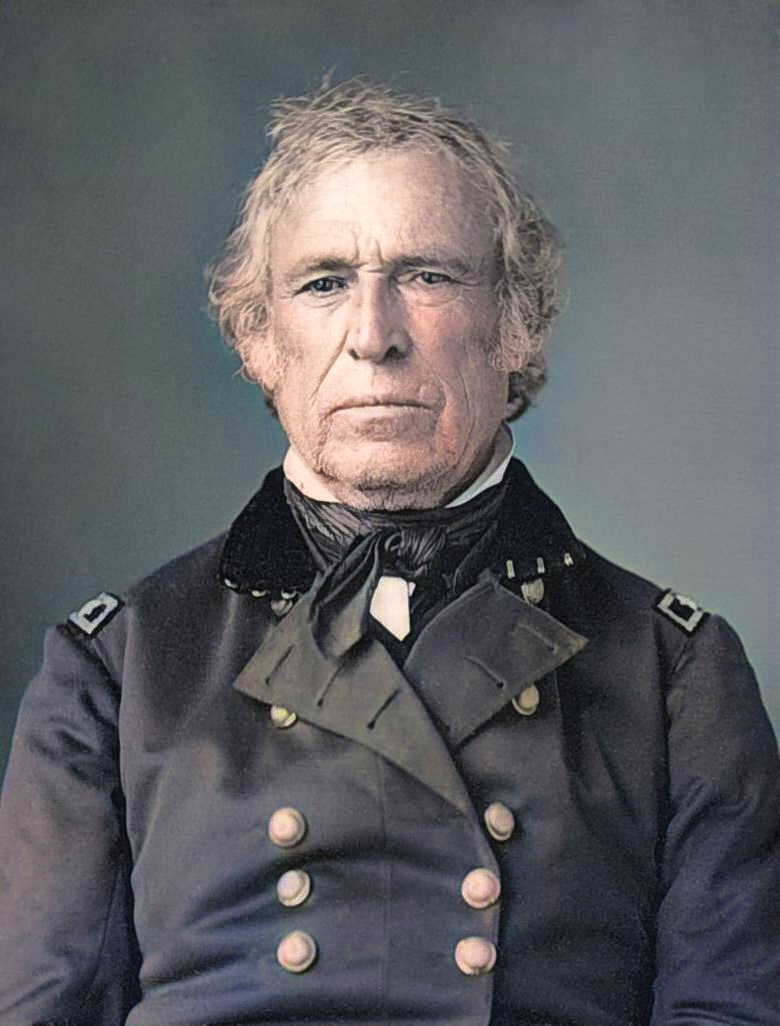
Though a Southern slaveholder, he was a staunch Unionist who strongly opposed secession.
To bypass the slavery debate in Congress, he urged California and New Mexico to draft free-state constitutions and apply for immediate statehood.
His uncompromising stance angered Southerners, escalating sectional tension.
How He Died:
Taylor died suddenly on July 9, 1850, after attending a Fourth of July ceremony and consuming large quantities of cold milk and fruit.
The official cause was gastroenteritis (cholera morbus), likely contracted from unsanitary water or food. His death left the divisive issue of the Compromise of 1850 to his successor, Millard Fillmore.
13-Millard Fillmore (1850–1853)
Party name: Whig
Political journey and off-duty
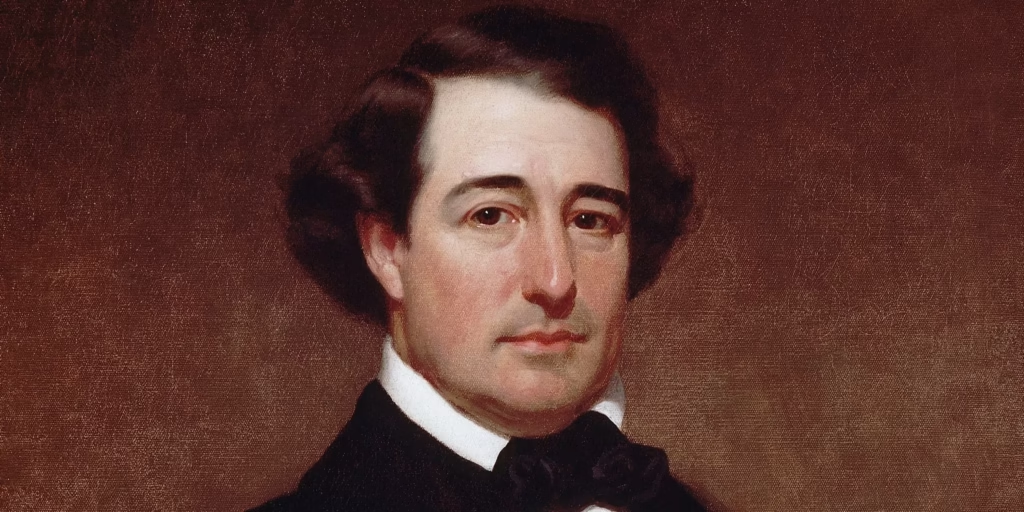
Millard Fillmore (1800-1874) rose from poverty to become the 13th U.S. President (1850-1853) upon Zachary Taylor’s death, and was the last Whig to hold the office.
His brief term was dominated by the crisis over slavery.
Fillmore decisively supported the Compromise of 1850, which temporarily preserved the Union but included the highly controversial and fiercely enforced Fugitive Slave Act.
This act alienated Northern abolitionists and destroyed the Whig Party, which failed to renominate him. In foreign policy, he launched the Perry Expedition to open trade with Japan.
How He Died:
Fillmore died on March 8, 1874, in Buffalo, New York, after suffering a stroke. He had largely faded from the national political scene after an unsuccessful 1856 presidential run for the anti-immigrant Know-Nothing (American) Party.
14-Fanklin Pierce (1853–1857)
Party name: Democratic
Political journey and off-duty
Franklin Pierce (1804-1869) was the 14th U.S. President (1853-1857) and a “dark horse” Democrat candidate.
His term was tragically preceded by the death of his last surviving son, which severely impacted his and his wife’s health and morale.
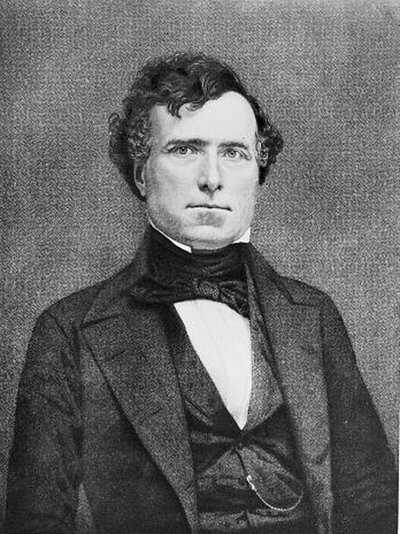
His Presidency was defined by the escalating sectional crisis. In a misguided attempt to secure peace, he supported the catastrophic Kansas-Nebraska Act (1854), which repealed the Missouri Compromise and allowed popular sovereignty to decide the slavery issue in new territories.
This led to violence in “Bleeding Kansas,” directly fueling the formation of the Republican Party and hastening the Civil War.
His administration also completed the Gadsden Purchase from Mexico.
How He Died:
Pierce died on October 8, 1869, in Concord, New Hampshire. A lifelong drinker, he struggled with alcohol dependency, and his death was primarily due to cirrhosis of the liver.
15-James Buchanan (1857–1861)
Party name: Democratic
Political journey and off-duty
James Buchanan (1791-1868) was the 15th U.S. President (1857-1861) and a veteran politician who had served as a congressman, senator, and Secretary of State. As a “Doughface” (a Northerner with Southern sympathies), he failed to stem the nation’s slide toward Civil War.
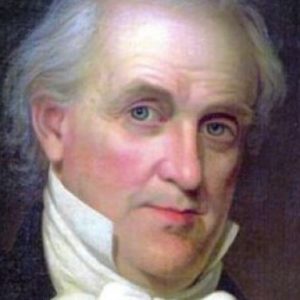
His Presidency was crippled by the Dred Scott Decision (which he supported), the violence of “Bleeding Kansas,” and the Panic of 1857. He believed secession was illegal but also that the federal government had no power to prevent it by force.
This indecision during the “secession winter” of 1860-1861, after Lincoln’s election, allowed seven Southern states to form the Confederacy before he left office.
How He Died:
Buchanan died on June 1, 1868, at his home, Wheatland, in Lancaster, Pennsylvania, at the age of 77. The cause was respiratory failure due to a severe case of rheumatic gout.
16-Abraham Lincoln (1861–1865)
Party name: Republican (assassinated)
Political journey and off-duty
Abraham Lincoln (1809-1865) was the 16th U.S. President and a self-educated lawyer who rose to lead the new Republican Party.
His 1860 election led seven Southern states to secede, plunging the nation into the Civil War (1861-1865).
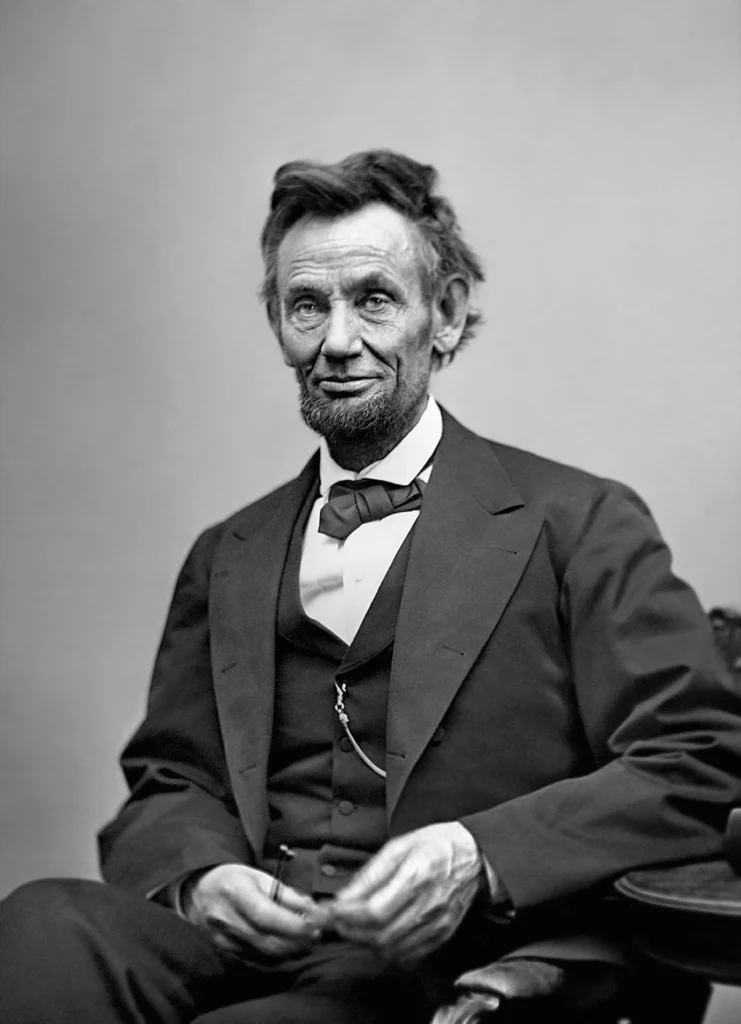
His primary goal was to preserve the Union.
As President, he successfully led the North, issuing the pivotal Emancipation Proclamation in 1863, which declared slaves in Confederate states free and redefined the war as a fight for abolition.
His Gettysburg Address (1863) remains a touchstone for democracy. He sought a generous Reconstruction plan, but his vision was cut short.
How He Died:
Lincoln was assassinated by Confederate sympathizer John Wilkes Booth on April 14, 1865, while attending a play at Ford’s Theatre in Washington, D.C., just five days after the Confederate surrender. He was shot in the back of the head and died the following morning on April 15, 1865.
17-Andrew Johnson (1865–1869)
Party name: National Union / Democratic
Political journey and off-duty
Andrew Johnson (1808-1875) rose from humble beginnings as a tailor to become the 17th U.S. President (1865-1869) after Lincoln’s assassination. A Southern Democrat who remained loyal to the Union, his Presidency was defined by the chaos of Reconstruction.
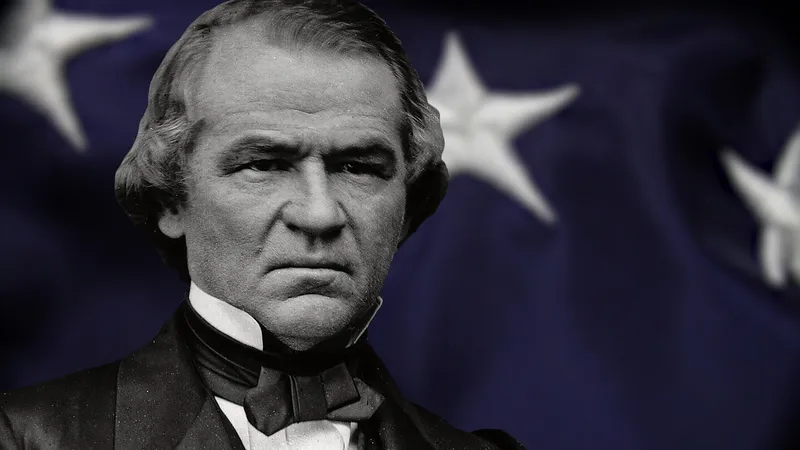
He favored a quick, lenient Presidential Reconstruction that offered easy pardons to ex-Confederates and allowed Southern states to implement restrictive “Black Codes.”
This directly clashed with Radical Republicans in Congress, who sought to protect freedmen’s rights. The resulting power struggle led to him being the first President impeached by the House in 1868 (he was acquitted by one Senate vote). He later served a short term in the Senate.
How He Died:
Johnson died on July 31, 1875, from a stroke while visiting his daughter in Tennessee, just months after having achieved his final political vindication by being elected back to the U.S. Senate.
18-Ulysses S. Grant (1869–1877)
party name: Republican
Political journey and off-duty
Ulysses S. Grant was the general who led the Union Armies to victory in the Civil War, receiving Robert E. Lee’s surrender in 1865.
Elected the 18th U.S. President (1869-1877), he led the Radical Reconstruction effort.
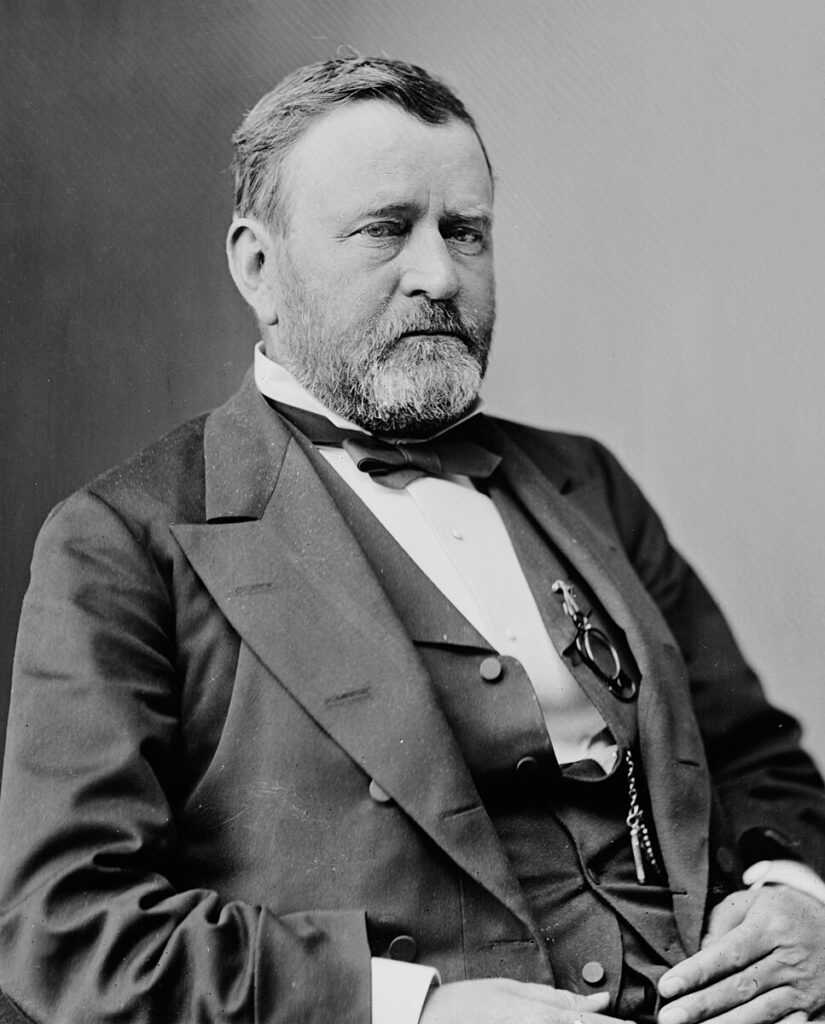
His administration focused on protecting the rights of freedmen, using the Department of Justice and the Force Acts to combat the Ku Klux Klan and enforce the 15th Amendment (Black suffrage).
Though honest himself, his two terms were plagued by corruption scandals involving his subordinates. He left office beloved by the North, but his reputation later suffered.
How He Died:
Grant died on July 23, 1885, from throat cancer, likely caused by heavy cigar smoking. Bankrupted by a financial fraud, he spent his final months in severe pain, racing against death to complete his acclaimed Personal Memoirs to secure his family’s financial future.
19-Rutherford B. Hayes (1877–1881)
Party name: Republican
Political journey and off-duty
Rutherford B. Hayes was the 19th U.S. President (1877-1881), a Civil War general, and three-term Ohio Governor.
His 1876 election was one of the most disputed in history, won via the Compromise of 1877 over Democrat Samuel J. Tilden, despite losing the popular vote.
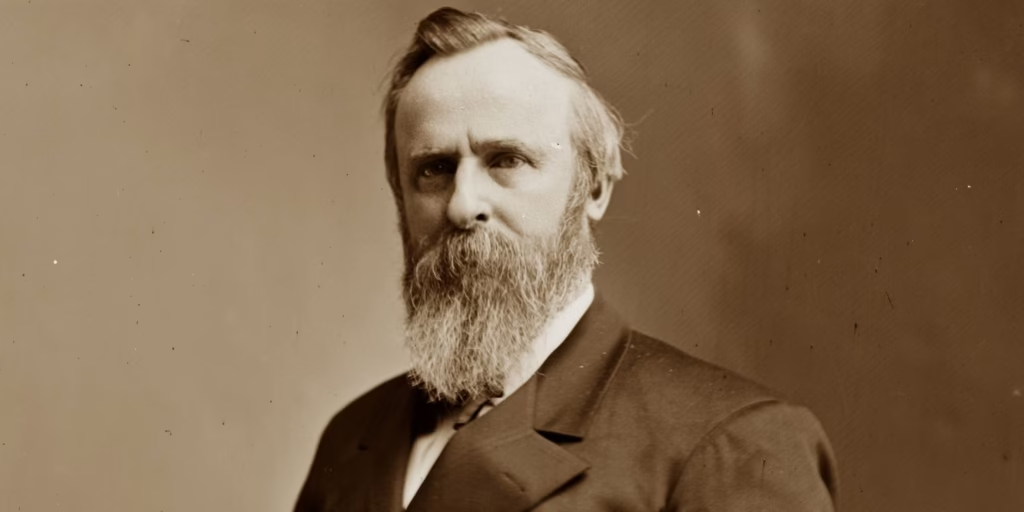
This “Corrupt Bargain” agreement resulted in Hayes withdrawing Federal troops from the South, thus ending the Reconstruction Era and allowing white Democrats to regain full control.
As President, he worked for Civil Service reform to end the “spoils system” and used Federal troops to quell the Great Railroad Strike of 1877, the nation’s deadliest labor conflict.
How He Died:
Hayes died on January 17, 1893, at his home in Fremont, Ohio, at the age of 70. He succumbed to complications from heart disease, specifically an attack of angina pectoris (severe chest pain due to inadequate blood flow to the heart).
20-James A. Garfield (1881)
Party name: Republican (assassinated)
Political journey and off-duty
James A. Garfield was a preacher, Civil War general, and nine-term Congressman before becoming the 20th U.S. President in 1881,
the last born in a log cabin. His election victory over Democrat Winfield Scott Hancock was one of the narrowest in history.
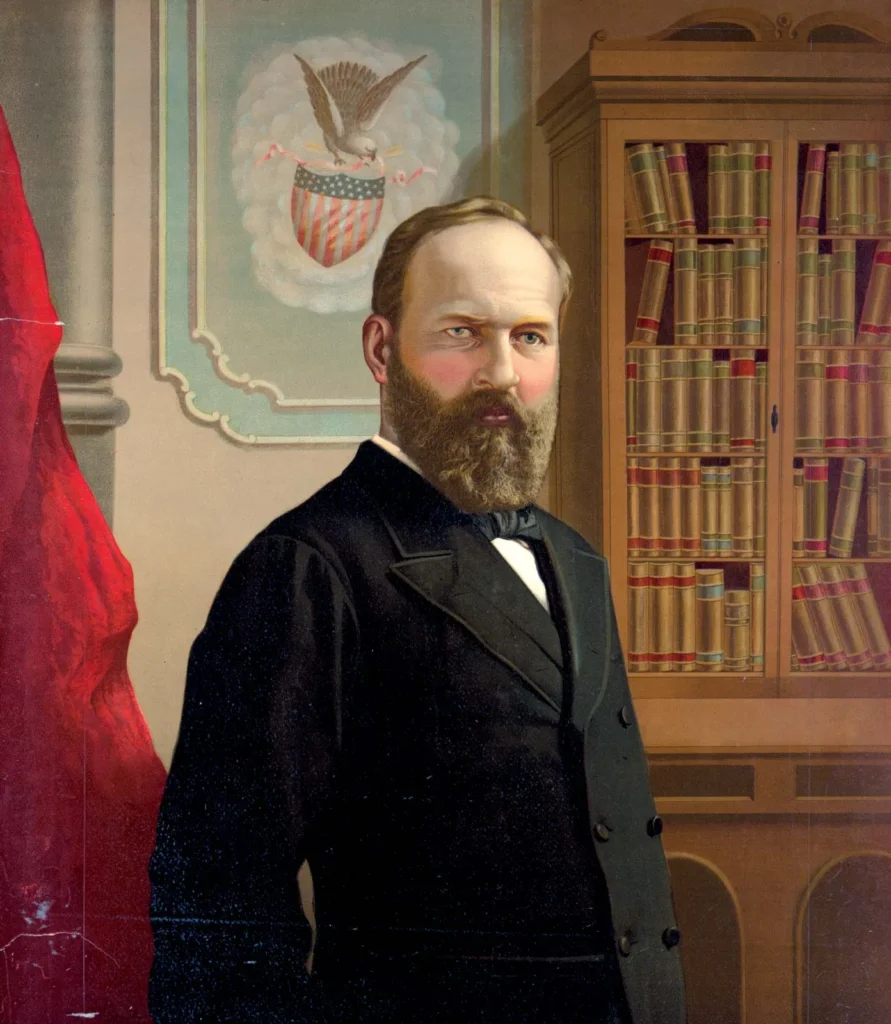
His brief 200-day term was dominated by a struggle against the “spoils system,” asserting presidential authority over appointments against the powerful Republican Stalwart faction led by Senator Roscoe Conkling.
Garfield advocated for Civil Service reform and launched an investigation into Post Office corruption (the Star Route frauds).
His efforts paved the way for the Pendleton Civil Service Reform Act of 1883.
How He Died:
Garfield was shot on July 2, 1881, by a disgruntled office-seeker, Charles J. Guiteau. He did not die immediately from the wound.
Instead, he suffered for 79 days before succumbing on September 19, 1881, to massive infection (sepsis) and internal hemorrhage.
His death is widely attributed to the unsanitary medical practices of his doctors, who repeatedly probed the wound with unsterilized fingers and instruments, unknowingly introducing fatal bacteria.
21-Chester A. Arthur (1881–1885)
Party name: Republican
Political journey and off-duty
Chester A. Arthur a product of New York’s political machine and a staunch Stalwart Republican,
became the 21st U.S. President (1881-1885) after Garfield’s assassination.
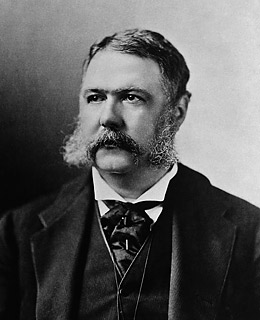
Expected to maintain the corrupt “spoils system,” Arthur surprisingly broke with his past and political patron to become a champion of reform.
His defining achievement was signing the Pendleton Civil Service Act (1883), which established a merit-based system for federal jobs, significantly curtailing political patronage.
His era also saw the passage of the Chinese Exclusion Act (1882) and the modernization of the U.S. Navy.
How He Died:
Arthur suffered from a then-incurable and fatal kidney disease called Bright’s disease (glomerulonephritis), which he kept secret during his presidency.
He died of a cerebral hemorrhage (stroke) on November 18, 1886, at his home in New York City, less than two years after leaving office.
22-Grover Cleveland (1885–1889)
Party name: Democratic
Political journey and off-duty
Grover Cleveland was the 22nd and 24th U.S. President (1885-1889 and 1893-1897)—the only one to serve two non-consecutive terms.
A principled, reform-minded Democrat, he was known for his blunt honesty and opposition to political corruption.
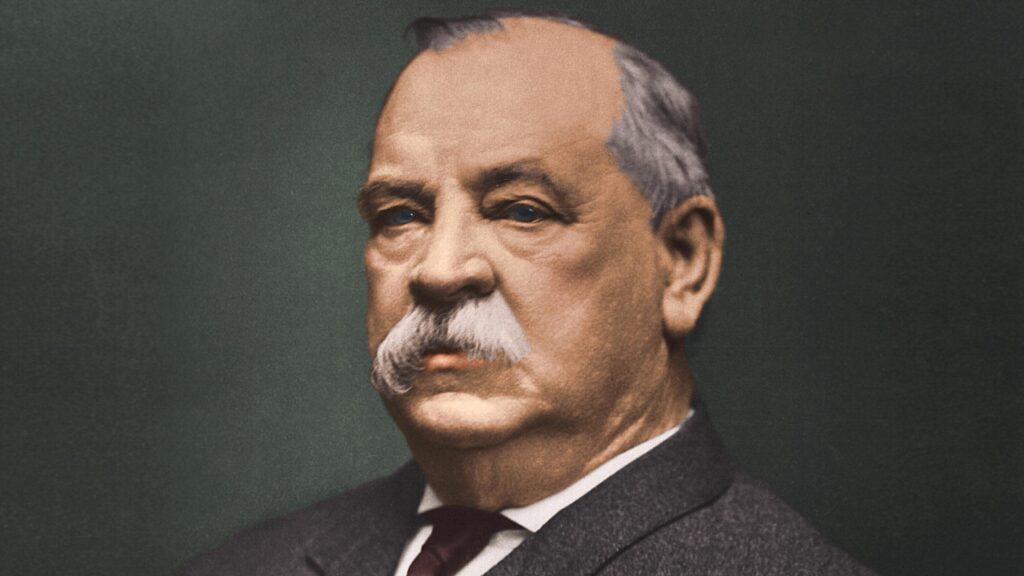
His first term focused on halting wasteful spending and vetoing hundreds of private pension bills.
His second term was dominated by the severe Panic of 1893, which caused a major depression.
He responded by securing the repeal of the Sherman Silver Purchase Act to protect the gold standard, and controversially used federal troops to break the Pullman Strike of 1894.
His conservative approach alienated many in the Democratic Party.
How He Died:
Cleveland died on June 24, 1908, at his home in Princeton, New Jersey, at the age of 71.
The cause of death was a combination of issues, primarily a final attack of coronary thrombosis (a blood clot in an artery of the heart).
23-Benjamin Harrison (1889–1893)
Party name:Republican
Political journey and off-duty
Benjamin Harrison was the 23rd U.S. President (1889-1893) and the grandson of President William Henry Harrison.
A Republican from Indiana, he defeated Grover Cleveland despite losing the popular vote, leading to a period of unprecedented Republican control.
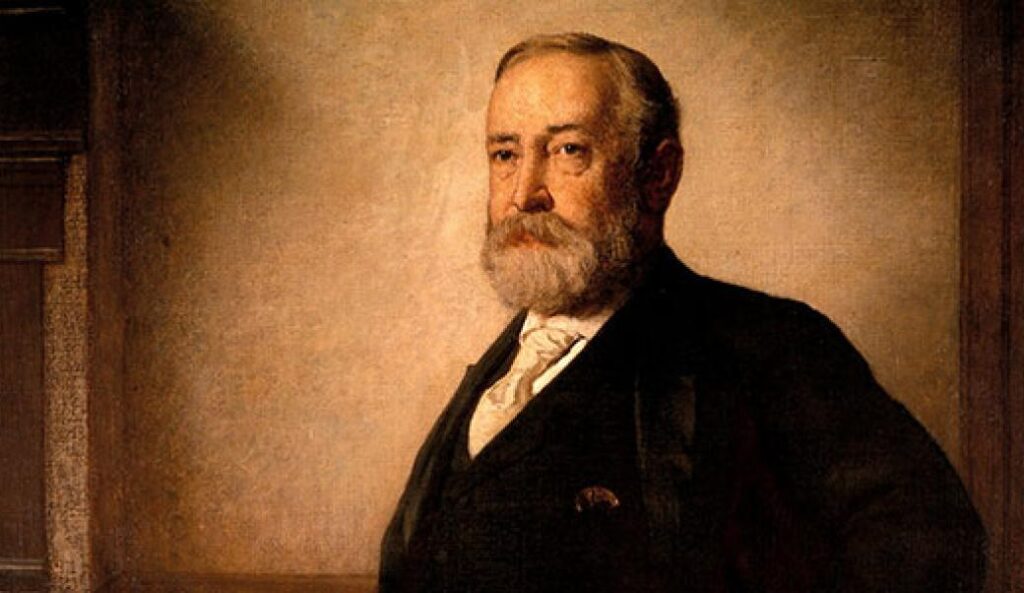
His administration, known as the “Billion Dollar Congress” for its massive spending, enacted the Sherman Antitrust Act (1890), the first federal law to limit monopolies, and the Sherman Silver Purchase Act, which expanded the money supply.
He signed the McKinley Tariff, the highest in U.S. history, but high taxes and spending led to a national backlash and his defeat in 1892.
How He Died:
Harrison died on March 13, 1901, at his home in Indianapolis, Indiana, at the age of 67.
His death was caused by pneumonia following an attack of influenza.
24-Grover Cleveland (1893–1897)
Party name:Democratic
Political journey and off-duty
Grover Cleveland was the 22nd and 24th U.S. President (1885-1889 and 1893-1897)—the only one to serve two non-consecutive terms.
A principled, reform-minded Democrat, he was known for his blunt honesty and opposition to political corruption.
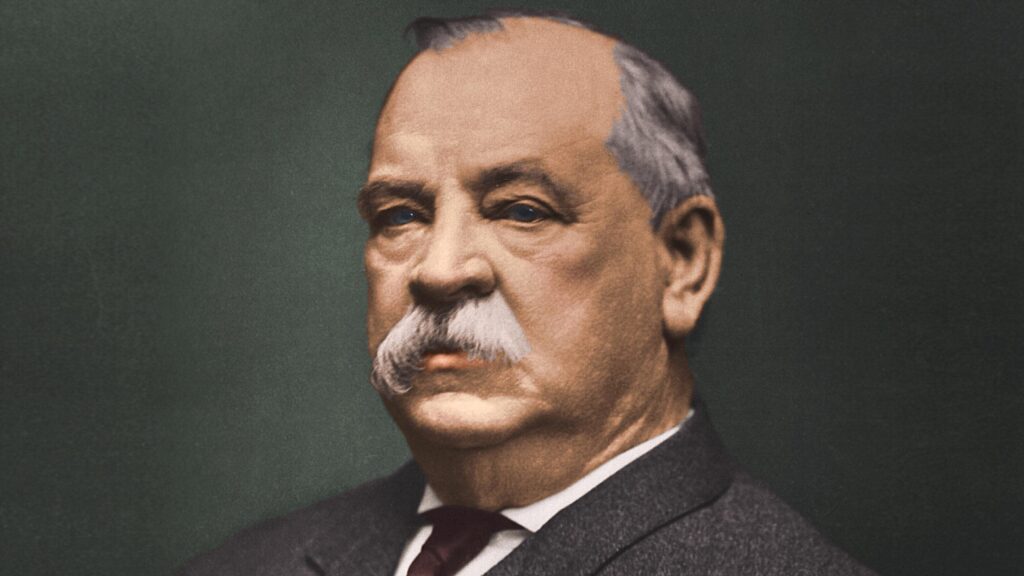
His first term focused on halting wasteful spending and vetoing hundreds of private pension bills. His second term was dominated by the severe Panic of 1893, which caused a major depression.
He responded by securing the repeal of the Sherman Silver Purchase Act to protect the gold standard, and controversially used federal troops to break the Pullman Strike of 1894.
His conservative approach alienated many in the Democratic Party.
How He Died:
Cleveland died on June 24, 1908, at his home in Princeton, New Jersey, at the age of 71.
The cause of death was a combination of issues, primarily a final attack of coronary thrombosis (a blood clot in an artery of the heart).
25-William McKinley 1897–1901
Party name: Republican
Political journey and off-duty
William McKinley was the 25th U.S. President (1897-1901) and a staunch Republican.
His 1896 campaign, managed by Mark Hanna, pioneered modern mass-media politics and upheld the gold standard against the populist call for “free silver.”
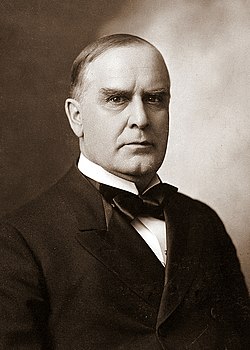
His administration focused on economic prosperity with the high Dingley Tariff and oversaw a major shift toward American imperialism.
The Spanish-American War of 1898 led to the acquisition of Puerto Rico, Guam, and the Philippines, making the U.S. a global power.
He won a popular re-election in 1900, symbolizing American victory and industrial strength.
How He Died:
McKinley was assassinated on September 6, 1901, by anarchist Leon Czolgosz at the Pan-American Exposition in Buffalo, New York.
He was shot twice and died eight days later on September 14, 1901, from gangrene caused by the bullet wounds and primitive medical care.
26-Theodore Roosevelt 1901–1909
Party name: Republican
Political journey and off-duty
Theodore Roosevelt (1858-1919), the 26th U.S. President (1901-1909), ascended to office after McKinley’s assassination, becoming the youngest president at 42.
He was a champion of the Progressive Era and known for his boundless energy.
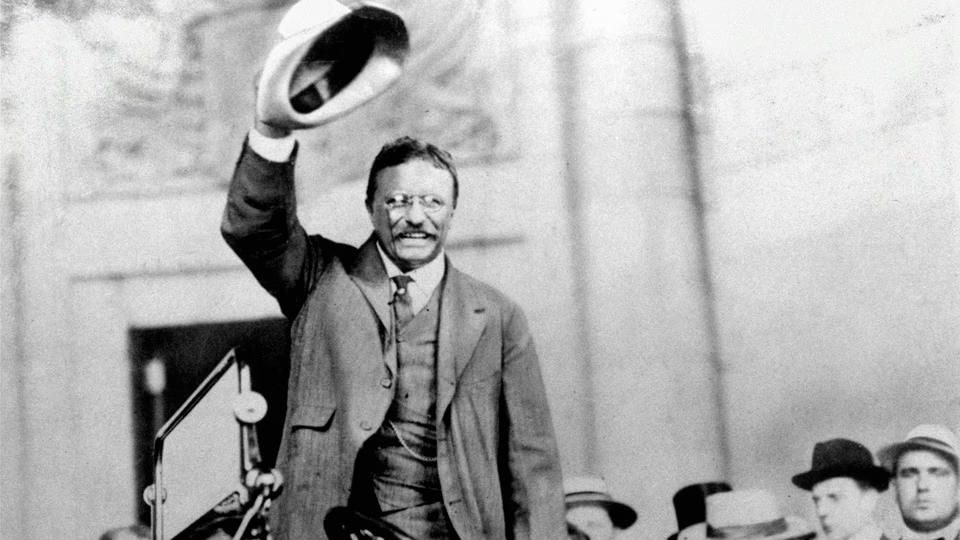
His “Square Deal” domestic policy aimed to protect consumers, regulate business, and conserve natural resources.
He was a vigorous trust-buster, breaking up corporate monopolies like Northern Securities.
In foreign policy, he articulated the “Big Stick” diplomacy, securing the route and construction of the Panama Canal and mediating the end of the Russo-Japanese War, for which he won the 1906 Nobel Peace Prize.
He ran again in 1912 as a third-party candidate (Bull Moose Party), splitting the Republican vote.
How He Died:
Roosevelt died suddenly in his sleep on January 6, 1919, at his home in Oyster Bay, New York. His death was caused by a coronary embolism (a blood clot that traveled to his heart or lungs), following years of declining health stemming from a bout of tropical fever contracted during his 1914 Amazon expedition.
27-William Howard Taft 1909–1913
Party name : Republican
Political journey and off-duty
William Howard Taft (1857-1930) was the 27th U.S. President (1909-1913), hand-picked by Theodore Roosevelt as his successor.
A Republican from Ohio, he was a distinguished jurist who later became the only person to serve as both President and Chief Justice of the Supreme Court.
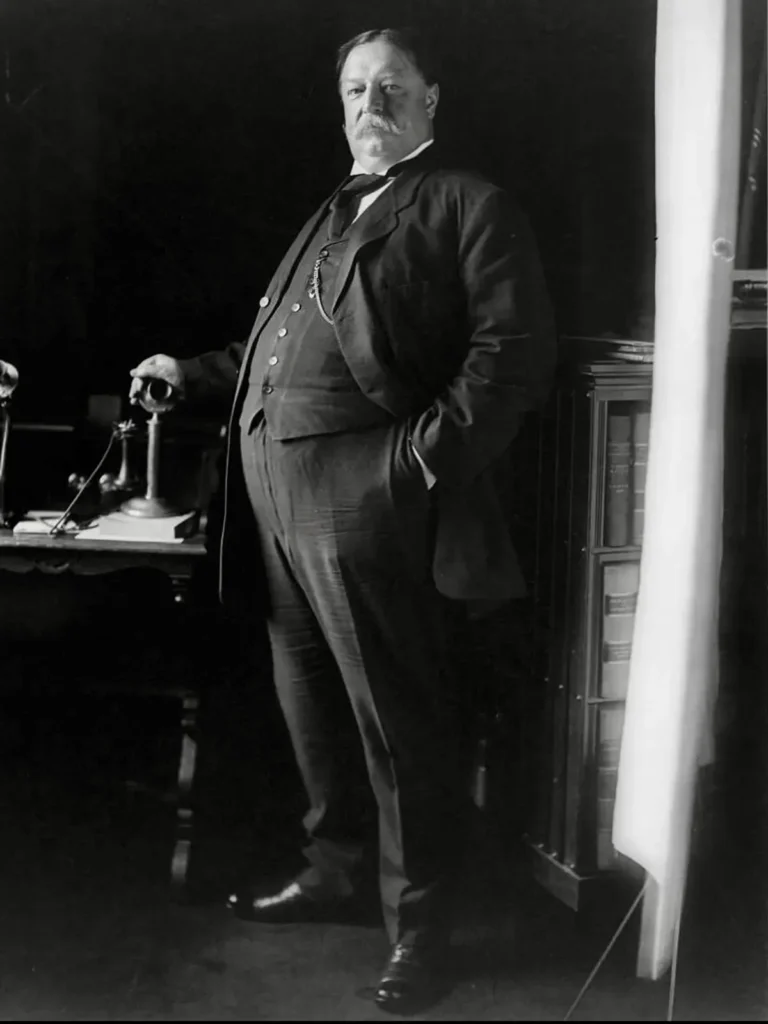
His Presidency was less charismatic than Roosevelt’s, but he was an effective trust-buster, initiating nearly double the antitrust cases of his predecessor.
However, he alienated the progressive wing of the Republican Party over tariff and conservation issues.
This political split led Roosevelt to challenge him in 1912, guaranteeing a victory for Democrat Woodrow Wilson.
Taft later achieved his lifelong ambition by being appointed Chief Justice in 1921.
How He Died:
Taft died on March 8, 1930, in Washington, D.C., due to heart disease and complications from high blood pressure (hypertension).
He was the first president to be interred at Arlington National Cemetery.
28-Woodrow Wilson 1913–1921
Party name :Democratic
Political journey and off-duty
Woodrow Wilson (1856-1924), a Progressive Democrat and former President of Princeton, was the 28th U.S. President (1913-1921).
His “New Freedom” domestic agenda fundamentally changed the economy, creating the Federal Reserve and introducing the modern income tax.
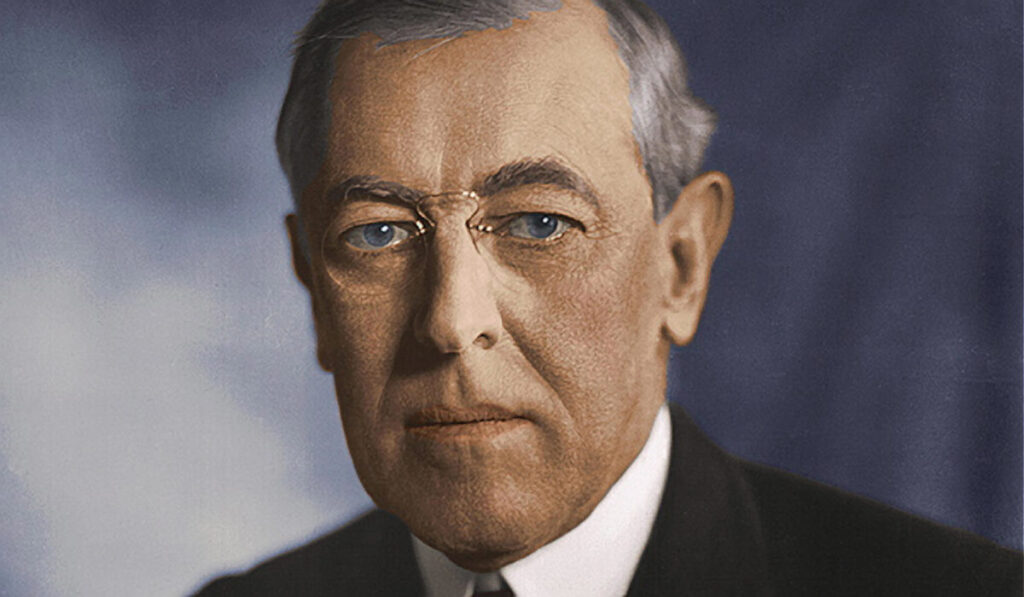
He reluctantly led the US into World War I (1917), proclaiming it a fight to “make the world safe for democracy.
” After the war, he championed his Fourteen Points and the creation of the League of Nations, for which he won the Nobel Peace Prize.
His failure to get the Senate to ratify the Treaty of Versailles was a crushing defeat.
How He Died:
Wilson suffered a severe, debilitating stroke in October 1919 while campaigning for the League of Nations, leaving him incapacitated for the remainder of his term.
He died in his Washington, D.C., home on February 3, 1924, from subsequent complications of the stroke and its resulting health issues.
29-Warren G. Harding 1921–1923
Party name: Republican
Political journey and off-duty
Warren G. Harding (1865-1923) was the 29th U.S. President (1921-1923), a Republican Senator from Ohio elected on a promise of “Return to Normalcy” following WWI.
He aimed to restore pre-war stability, favoring laissez-faire economic policies and high protective tariffs.
His administration achieved some success, notably establishing the Bureau of the Budget and hosting the Washington Naval Conference (1921–22) for international disarmament.
However, his tenure became synonymous with rampant corruption.
Though not personally implicated, his appointees were involved in scandals like the Teapot Dome, which became public after his death.
His era marked the start of the “Roaring Twenties.”
How He Died:
Harding died suddenly on August 2, 1923, in a San Francisco hotel while on a cross-country speaking tour.
The cause was likely a heart attack or stroke, exacerbated by poor health and stress.
Due to the rapid decline and the subsequent corruption revelations, there were unsubstantiated rumors of foul play.
30-Calvin Coolidge 1923–1929
Party name: Republican
Political journey and off-duty
Calvin Coolidge (1872-1933), the 30th U.S. President (1923-1929), was a taciturn Republican from Vermont, nicknamed “Silent Cal.”
He ascended to the Presidency after Harding’s death and was overwhelmingly elected in 1924.
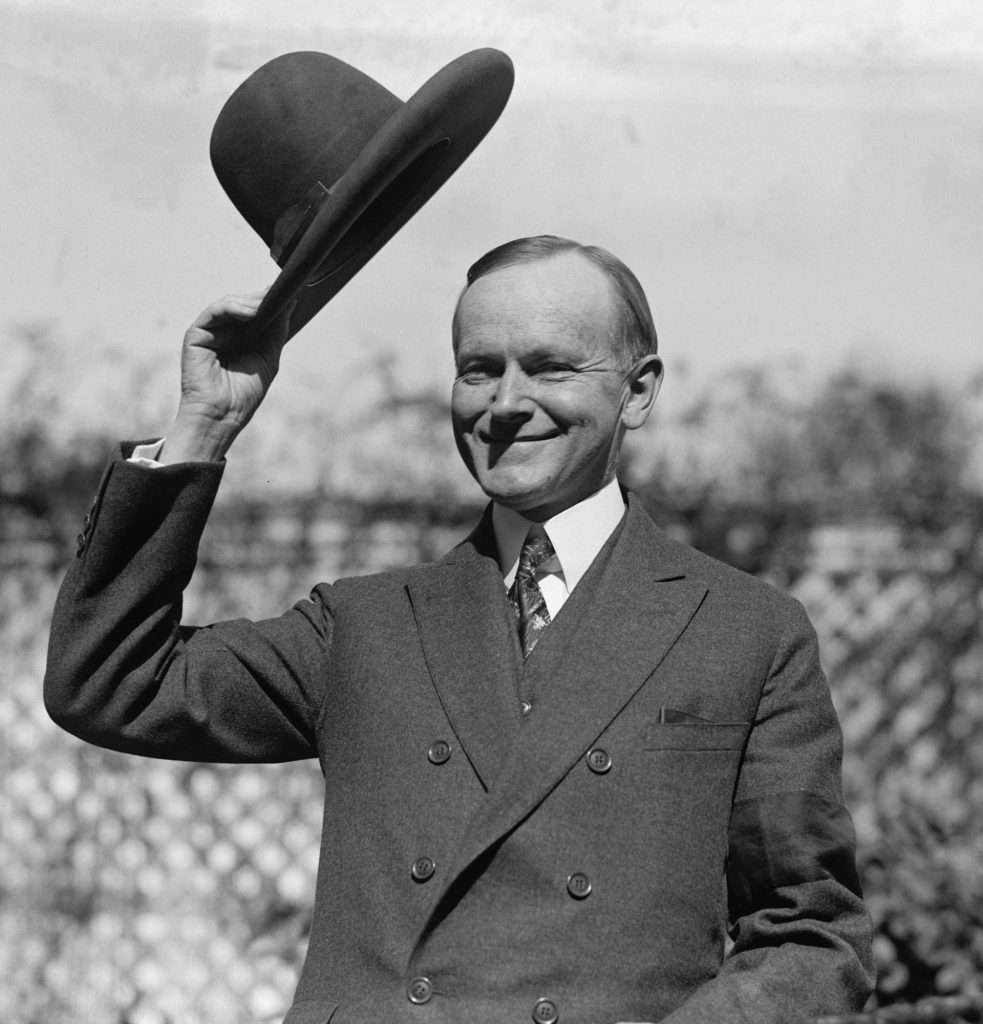
His administration fully embraced the economic boom of the “Roaring Twenties.
“ A firm believer in laissez-faire economics, he oversaw a period of rapid industrial growth, low taxes, and minimal government regulation.
He restored public trust following the Harding scandals by promoting integrity and reducing the national debt.
His policies, while popular at the time, contributed to the over-speculation that preceded the Great Depression.
He famously declined to run for re-election in 1928.
How He Died:
Coolidge died suddenly on January 5, 1933, at his home in Northampton, Massachusetts, at the age of 60.
The cause of death was a coronary thrombosis (a blood clot that formed in an artery of the heart, causing a heart attack).
31-Herbert Hoover (1929–1933)
Part name:Republican
Political journey and off-duty
Herbert Hoover (1874-1964) was the 31st U.S. President (1929-1933) and a renowned engineer and humanitarian who managed European relief efforts after WWI.
He was elected in 1928, promising continued prosperity.
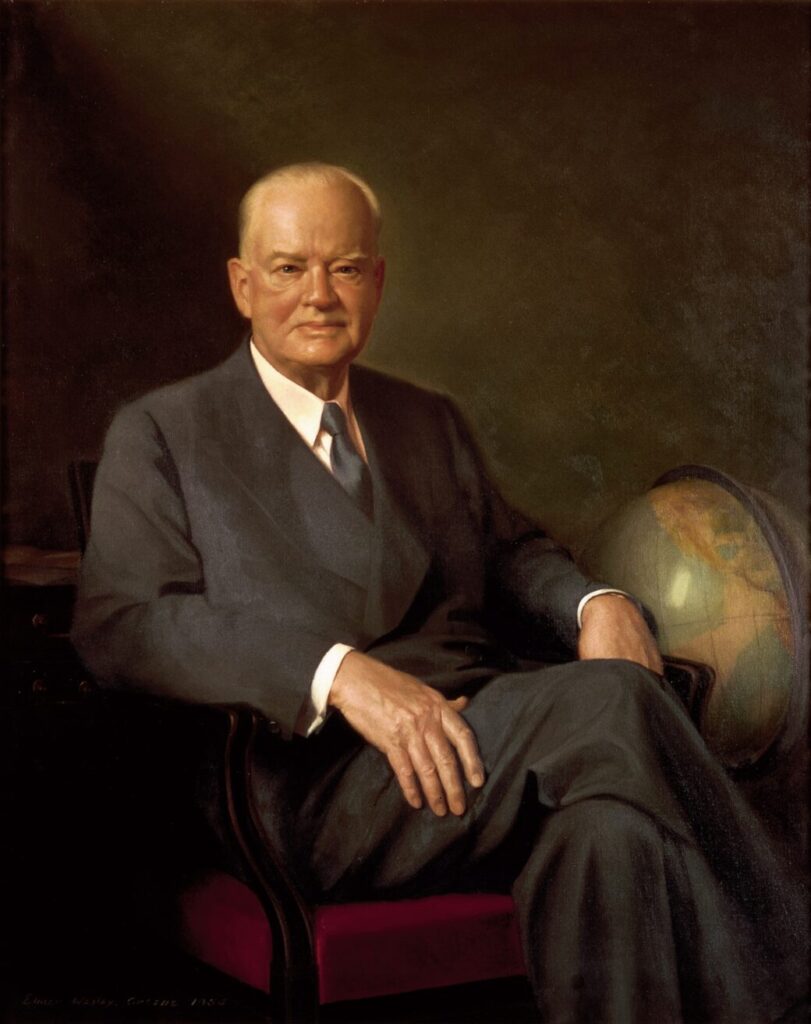
His Presidency was immediately defined by the Great Depression, which began with the stock market crash of 1929.
Hoover believed in limited government intervention, initially resisting direct federal aid and relying on voluntary cooperation and local charity. He signed the disastrously protectionist Smoot-Hawley Tariff (1930) and later authorized the Reconstruction Finance Corporation (RFC) to aid businesses.
His perceived inaction and inability to relieve suffering led to his overwhelming defeat in 1932.
He remained a vocal critic of his successors’ New Deal policies for decades.
How He Died:
Hoover died of massive internal hemorrhage at the age of 90 on October 20, 1964, in his suite at the Waldorf Astoria Hotel in New York City.
He was the second longest-lived U.S. President at the time of his death.
32-Franklin D. Roosevelt (1933–1945)
Party name: Democratic (died in office, only 4-term president)
Political journey and off-duty
Franklin D. Roosevelt (FDR) (1882-1945), the 32nd U.S. President (1933-1945), led the nation through the Great Depression and most of World War II, serving four terms—the longest tenure in history.
Stricken with polio in 1921, he became a symbol of perseverance.
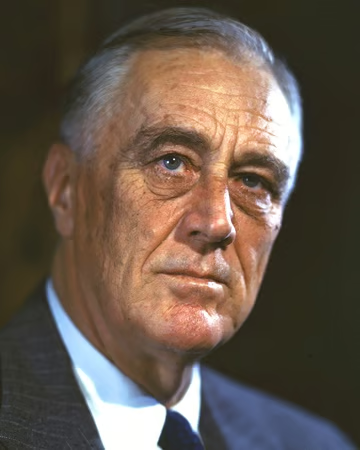
His Presidency was defined by the New Deal, a series of radical programs that expanded the federal government’s role in the economy, creating key agencies like the CCC, TVA, and Social Security to provide relief, recovery, and reform.
After the US entered World War II in 1941, he helped lead the Allies to victory, dramatically shifting America into the role of a global superpower.
How He Died:
FDR died suddenly on April 12, 1945, at his retreat in Warm Springs, Georgia, from a massive cerebral hemorrhage (stroke).
His health had been deteriorating for years due to severe hypertension (high blood pressure) and heart disease, accelerated by the immense stress of the war.
33-Harry S. Truman (1945–1953)
Party name: Democratic
Political journey and off-duty
Harry S. Truman (1884-1972) was the 33rd U.S. President (1945-1953), ascending to office after FDR’s death.
Thrust into the role of Commander-in-Chief, he authorized the atomic bombings of Japan, ending World War II.
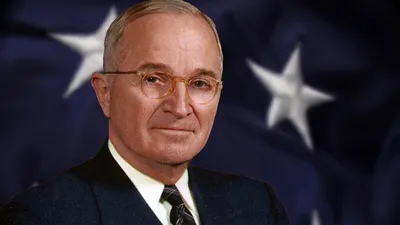
His Presidency defined the early Cold War.
He enacted the Truman Doctrine and the Marshall Plan to contain Soviet expansion, established NATO, and ordered US forces into the Korean War (1950).
Domestically, his “Fair Deal” agenda sought to expand New Deal reforms, and he made crucial strides in civil rights by desegregating the armed forces in 1948.
How He Died:
Truman died on December 26, 1972, at the age of 88 in Kansas City, Missouri.
He had been hospitalized weeks earlier with declining health, suffering from lung congestion, digestive system failure, and ultimately, cardiopulmonary arrest (failure of the heart and lungs).
34-Dwight D. Eisenhower (1953–1961)
Party name: Republican
Political journey and off-duty
Dwight D. Eisenhower (1890-1969), the 34th U.S. President (1953-1961), was the Supreme Commander of Allied Forces in Europe during World War II.
His military hero status led to his election as a Republican, promising to end the Korean War, which he did in 1953.
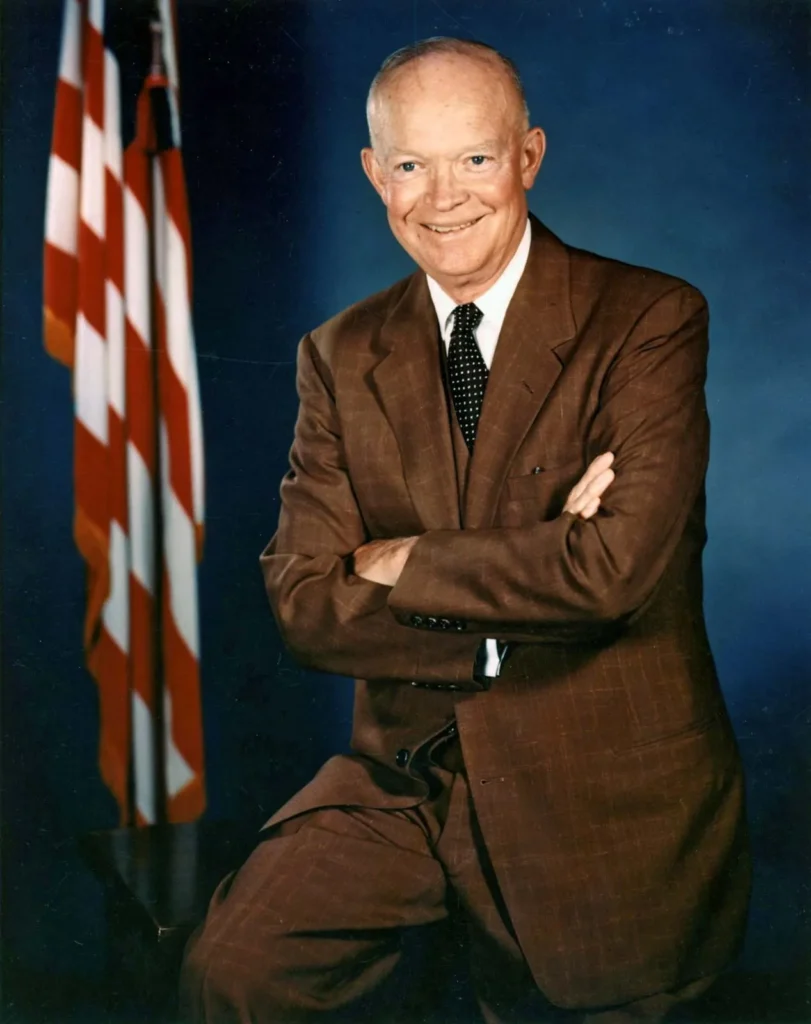
His Presidency focused on a moderate approach, known as “Modern Republicanism.”
He dramatically expanded the nation’s infrastructure by signing the Federal-Aid Highway Act of 1956, which created the Interstate Highway System.
In foreign policy, he managed the Cold War with a strategy of “massive retaliation” and warned of the dangers of the “military-industrial complex” in his farewell address.
He dispatched federal troops to enforce school integration during the Little Rock Crisis (1957).
How He Died:
Eisenhower died on March 28, 1969, at Walter Reed Army Medical Center in Washington, D.C., at the age of 78.
He had suffered from a long series of heart problems, and the immediate cause was congestive heart failure.
35-John F. Kennedy (1961–1963)
Party name: Democratic (assassinated)
Political journey and off-duty
John F. Kennedy (JFK) (1917-1963) was the 35th U.S. President (1961-1963) and the youngest person elected to the office.
His Presidency, dubbed the “New Frontier,” inspired national service and hope, but was dominated by intense Cold War challenges.
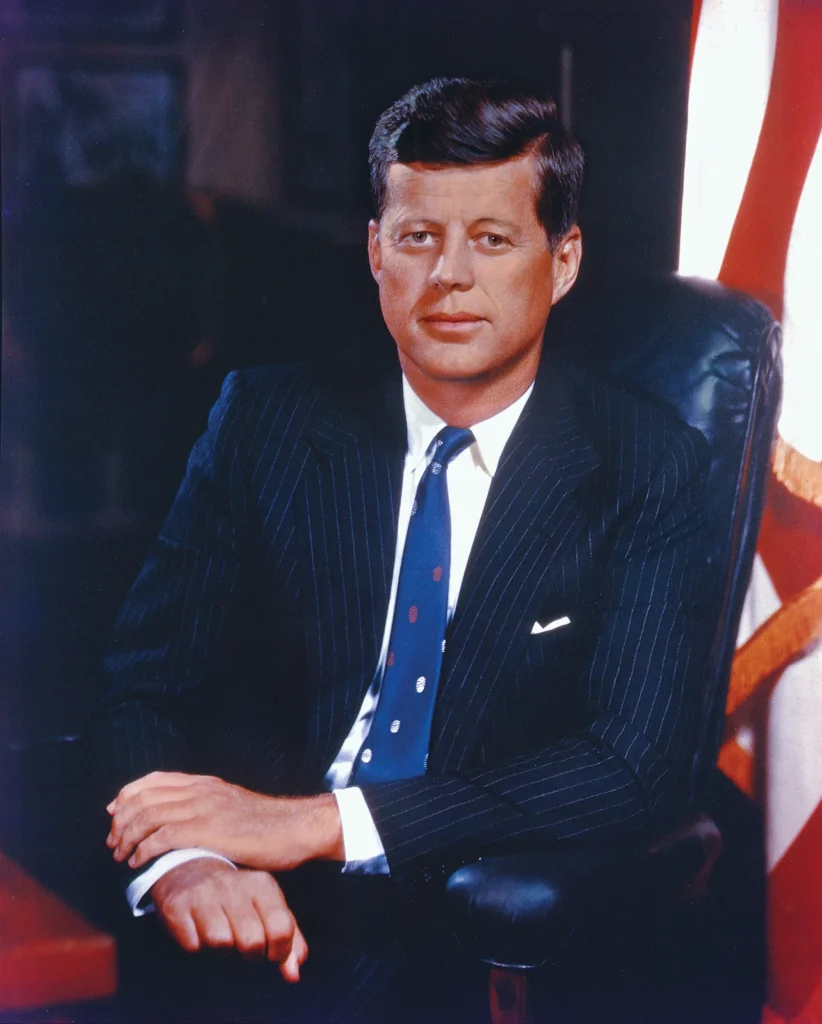
His administration faced crises like the Bay of Pigs invasion and the Cuban Missile Crisis (1962), the latter bringing the world closest to nuclear war.
He launched the Peace Corps and accelerated the Space Race, famously committing the nation to landing a man on the moon.
Domestically, he began to champion Civil Rights legislation.
His era embodied the optimism and tension of the early 1960s.
How He Died:
Kennedy was assassinated on November 22, 1963, while riding in a presidential motorcade in Dallas, Texas.
He was shot by Lee Harvey Oswald. His death shocked the nation and the world.
36-Lyndon B. Johnson (1963–1969)
Party name: Democratic
Political journey and off-duty
Lyndon B. Johnson (LBJ) (1908-1973), the 36th U.S. President (1963-1969), took office after JFK’s assassination.
A master legislator, he launched the “Great Society,” enacting landmark programs like Medicare, Medicaid, and significant Civil Rights legislation (1964 and 1965 Voting Rights Act) to combat poverty and racial injustice.
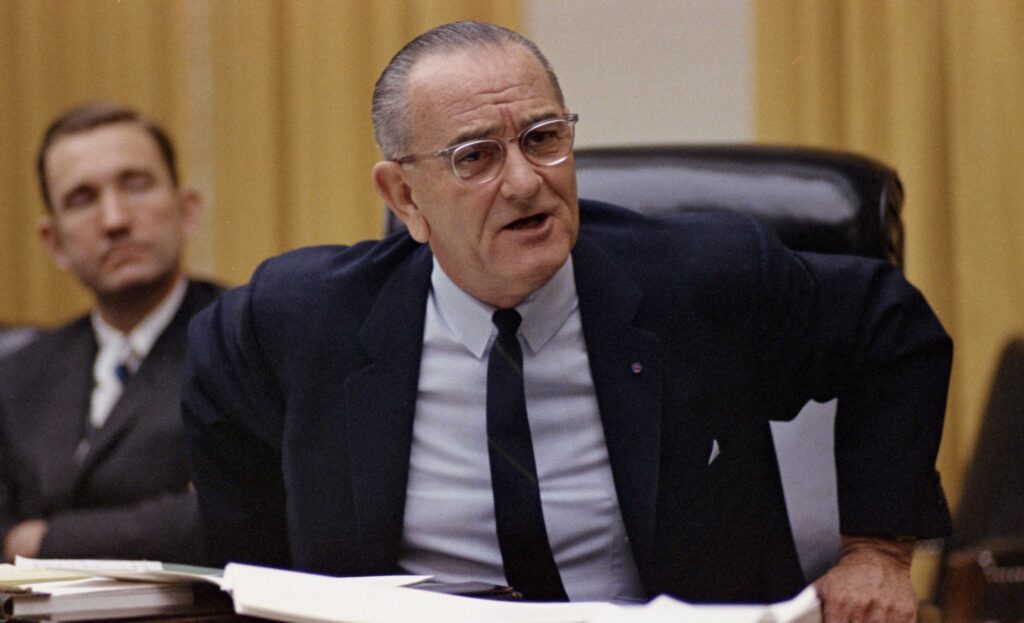
His domestic success was overshadowed by the escalating Vietnam War.
Despite major military commitment, the war grew unpopular, leading him to decline re-election in 1968.
How He Died:
LBJ died on January 22, 1973, at his ranch in Texas.
A heavy smoker for most of his life, he succumbed to a massive heart attack at the age of 64.
37-Richard Nixon (1969–1974)
Party name: Republican (resigned)
Political journey and off-duty
ichard Nixon (1913-1994) was the 37th U.S. President (1969-1974) and a Republican who rose to prominence as Vice President under Eisenhower.
His Presidency achieved significant foreign policy successes, including opening diplomatic relations with China and negotiating the SALT I treaty with the Soviet Union (détente).
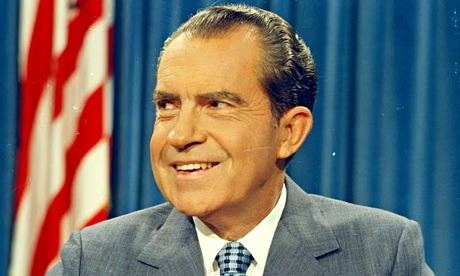
Domestically, he created the Environmental Protection Agency (EPA) and presided over the moon landing (1969).
However, his tenure was destroyed by the Watergate scandal, an abuse of power that led him to become the only US President to ever resign (August 9, 1974) to avoid impeachment.
How He Died:
Nixon died on April 22, 1994, in New York City, at the age of 81.
He had suffered a massive stroke four days earlier and remained in a deep coma until his death.
38-Gerald Ford (1974–1977)
Party name: Republican
Political journey and off-duty
Gerald Ford (1913-2006) was the 38th U.S. President (1974-1977), the only person to serve as both Vice President and President without being elected to either office.
He ascended after Nixon’s resignation, declaring, “Our long national nightmare is over.”
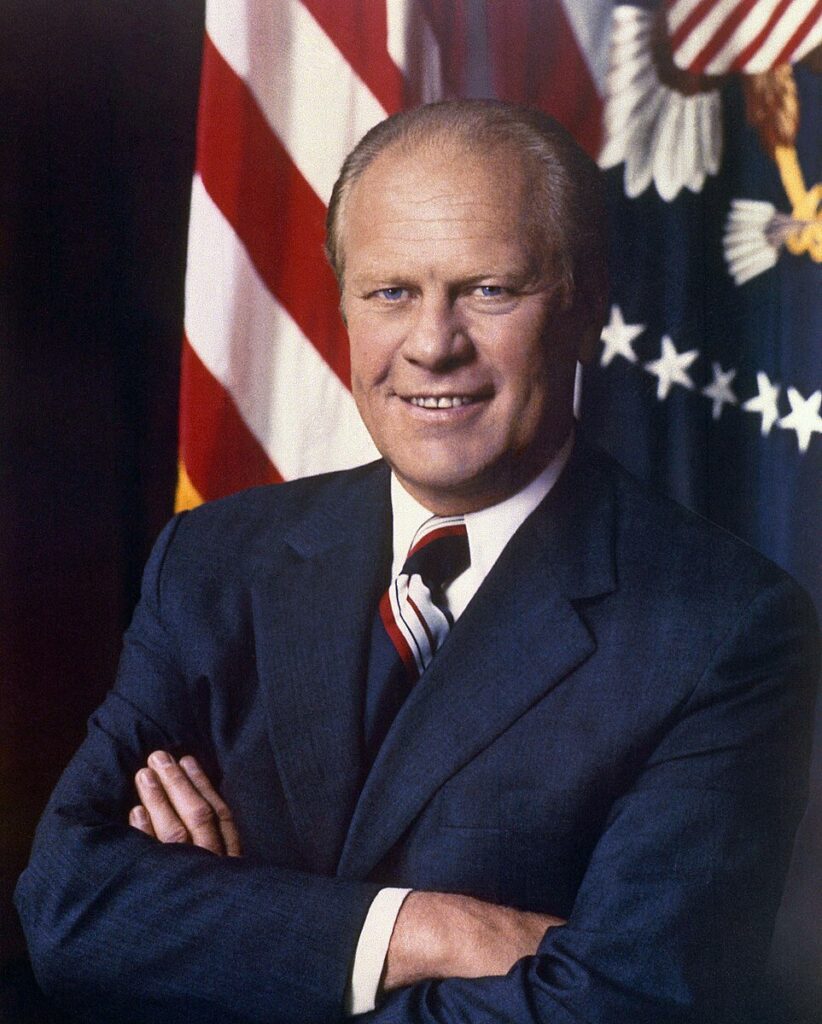
His defining, and most controversial, act was granting Richard Nixon a full pardon, an effort he claimed was necessary to heal the country.
The economy suffered from “stagflation” (high inflation and low growth). His term saw the collapse of US-supported South Vietnam and the passage of the Helsinki Accords, easing US-Soviet tension.
He lost the 1976 election to Jimmy Carter.
How He Died:
Ford died of atherosclerotic cardiovascular disease (progressive heart disease caused by plaque buildup) on December 26, 2006, at his home in Rancho Mirage, California, at the age of 93.
39-Jimmy Carter (1977–1981)
Party name: Democratic
Political journey and off-duty
Jimmy Carter (1924–Present), a former peanut farmer and Governor of Georgia, served as the 39th U.S. President (1977–1981).
A Democrat, he won the election as an honest outsider after the Watergate scandal.
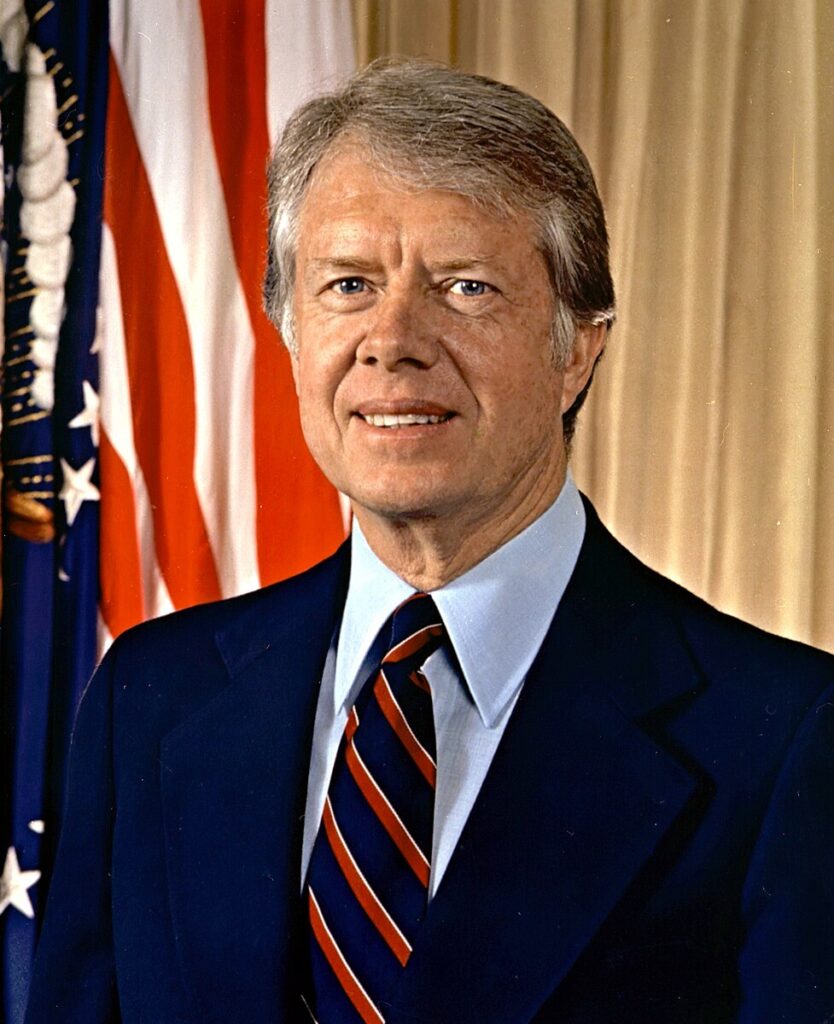
His Presidency focused on human rights as the cornerstone of foreign policy, mediating the landmark Camp David Accords between Israel and Egypt.
Domestically, his term was plagued by a severe energy crisis, high inflation, and the humiliating Iran Hostage Crisis.
His failure to resolve these issues led to his decisive loss in 1980.
After his Presidency, he became a renowned global humanitarian, founding the Carter Center and winning the Nobel Peace Prize (2002).
How He Died:
Jimmy Carter is still alive as of the current date.
He is currently receiving hospice care at his home in Plains, Georgia, a decision he announced in February 2023.
40-Ronald Reagan (1981–1989)
Party name: Republican
Political journey and off-duty
Ronald Reagan (1911-2004) was the 40th U.S. President (1981-1989), a former actor and two-term Governor of California.
His election ushered in the “Reagan Revolution” and the rise of modern American conservatism.
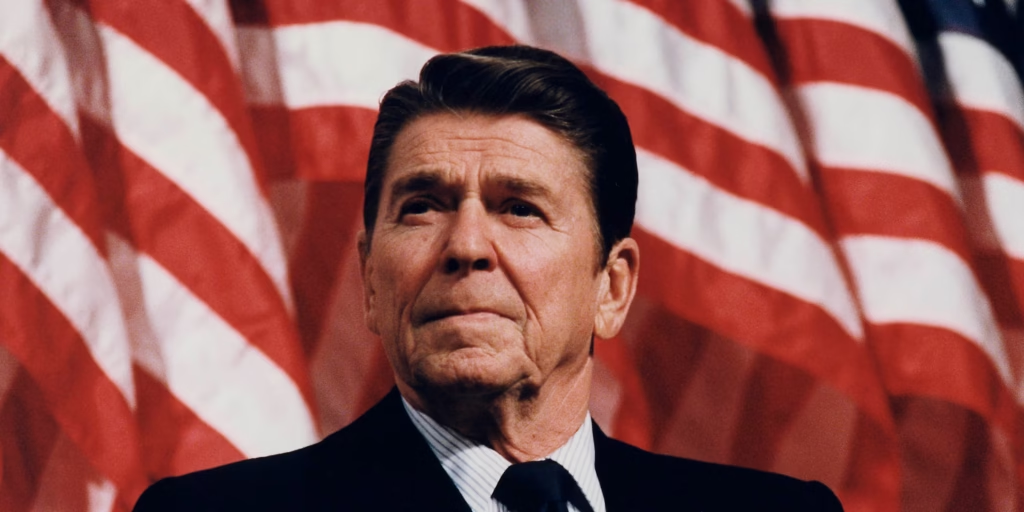
His administration focused on “Reaganomics,” characterized by supply-side economics: significant tax cuts, deregulation, and increased military spending.
He pursued an aggressive foreign policy, labeling the Soviet Union an “evil empire” and initiating the Strategic Defense Initiative (SDI). He is widely credited with accelerating the end of the Cold War.
His second term was marred by the Iran-Contra Affair.
How He Died:
Reagan died on June 5, 2004, at his home in Bel Air, California, at the age of 93.
For the last decade of his life, he suffered from Alzheimer’s disease.
His death was ultimately due to complications from the disease, primarily pneumonia.
41-George H. W. Bush (1989–1993)
Party name: Republican
Political journey and off-duty
George H. W. Bush (1924-2018), the 41st U.S. President (1989-1993), was a decorated WWII pilot, former Congressman, CIA Director, and Vice President under Reagan.
His Presidency was dominated by foreign policy.
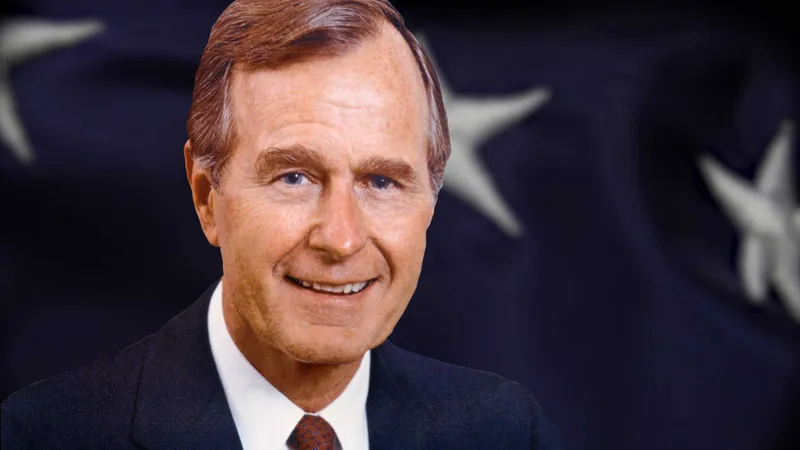
He successfully navigated the end of the Cold War and led a large international coalition to victory in the First Gulf War (1991), liberating Kuwait from Iraq.
Domestically, he signed the landmark Americans with Disabilities Act (ADA).
His popularity faded due to a weak economy and breaking his 1988 “read my lips: no new taxes” pledge, leading to his defeat by Bill Clinton in 1992.
How He Died:
Bush died on November 30, 2018, at his home in Houston, Texas, at the age of 94.
He suffered from a form of Parkinson’s disease and his immediate cause of death was vascular Parkinsonism, which restricted his mobility and led to complications.
42-Bill Clinton (1993–2001)
Party name: Democratic
Political journey and off-duty
Bill Clinton (1946–Present), the 42nd U.S. President (1993-2001) and former Arkansas Governor, was the first Democratic president after the Cold War.
His Presidency ushered in a period of unprecedented prosperity, focusing on a centrist approach known as the “Third Way.”
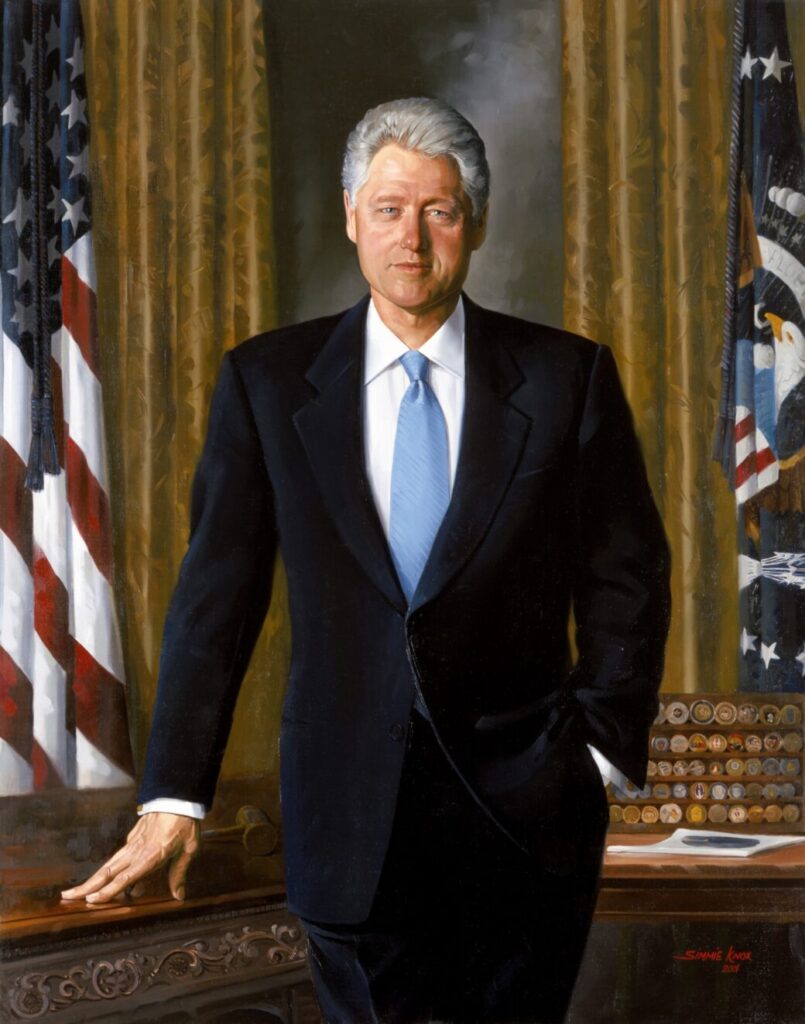
He signed the NAFTA trade agreement, oversaw major welfare reform, and achieved the first sustained budget surplus since 1969.
His second term was dominated by the Monica Lewinsky scandal, leading to his impeachment by the House in 1998 (he was acquitted by the Senate).
In foreign policy, he managed conflicts in Bosnia and Kosovo. After leaving office, he has become a global humanitarian.
How He Died:
Bill Clinton is still alive as of the current date.
He remains active in public life, focusing on philanthropy through the Clinton Foundation.
43-George W. Bush (2001–2009)
Party name: Republican
Political journey and off-duty
George W. Bush (1946–Present), the 43rd U.S. President (2001-2009) and former Governor of Texas, won the 2000 election after a Supreme Court decision halted a Florida recount.
His Presidency was defined by the September 11, 2001 (9/11) terrorist attacks.
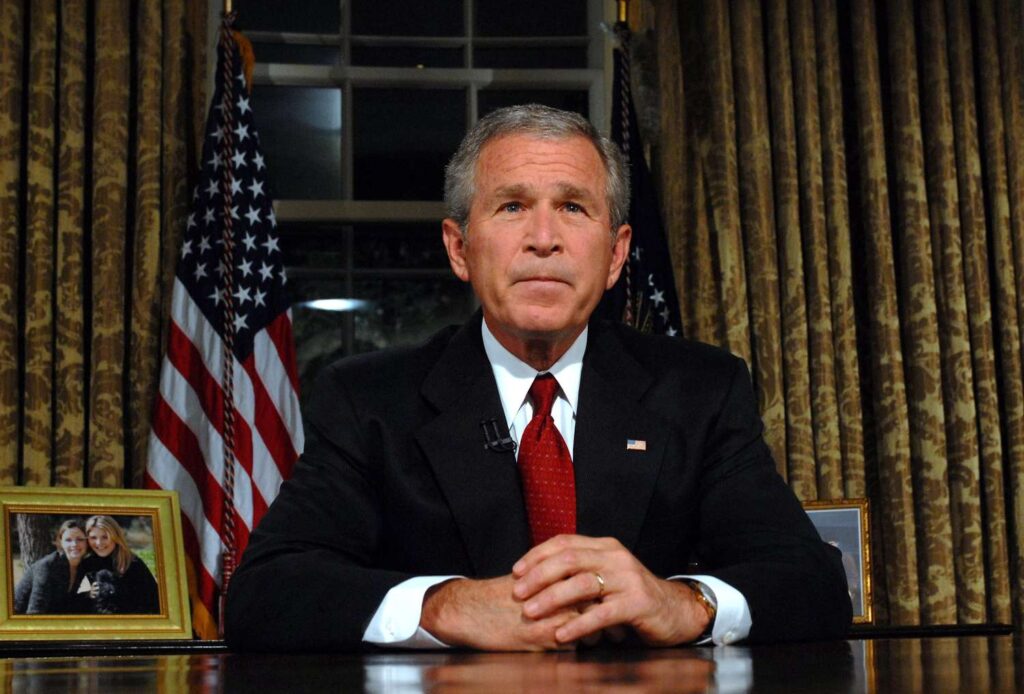
In response to 9/11, he launched the “War on Terror,” leading the invasions of Afghanistan (2001) and Iraq (2003).
Domestically, he signed the No Child Left Behind Act and created the Department of Homeland Security.
His second term struggled with the costly wars and the economic fallout of the Great Recession and Hurricane Katrina.
How He Died:
George W. Bush is still alive as of the current date.
He currently resides in Dallas, Texas, and is active in painting and philanthropic work.
44-Barack Obama (2009–2017)
Party name: Democratic
Political journey and off-duty
Barack Obama (1961–Present), the 44th U.S. President (2009-2017), was the first African American to hold the office.
A Democratic Senator from Illinois, he was elected on a message of hope and change.
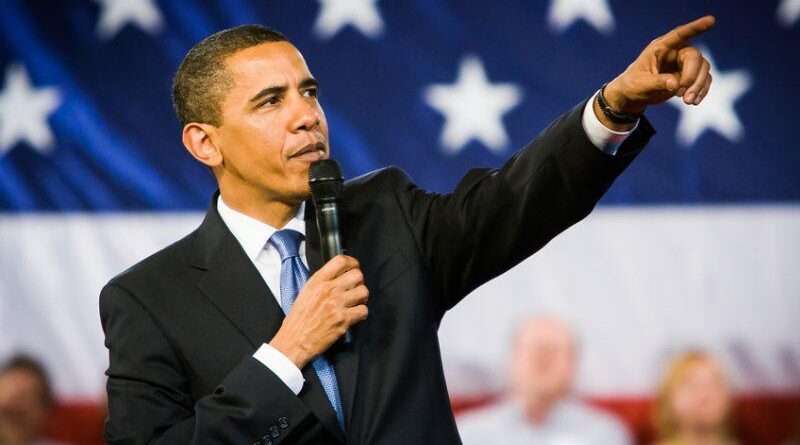
His Presidency focused on recovering from the Great Recession, signing the massive American Recovery and Reinvestment Act and the landmark Affordable Care Act (ACA).
He ended the war in Iraq and authorized the mission that killed Osama bin Laden.
His second term focused on passing the Dodd-Frank financial reforms and negotiating the Iran Nuclear Deal and the Paris Climate Accord.
How He Died:
Barack Obama is still alive as of the current date.
He currently resides in Washington, D.C., and remains active in public service and philanthropy.
45-Donald J. Trump (2017–2021)
Party name: Republican
Political journey and off-duty
Donald J. Trump (1946–Present) is the 45th and current 47th U.S. President (2017-2021 and 2025–Present), and a real estate developer and media personality.
His first Presidency was characterized by a focus on deregulation and an “America First” foreign policy.

Major events included appointing three conservative Supreme Court Justices, withdrawing the U.S. from the Paris Climate Accord, and passing significant tax cuts.
He oversaw the development of the COVID-19 vaccines (Operation Warp Speed) but lost the 2020 election to Joe Biden.
He successfully ran again and was elected in 2024.
How He Died:
Donald J. Trump is still alive as of the current date and is actively serving as the President of the United States.
46-Joe Biden (2021–2025)
Party name: Democratic
Political journey and off-duty
Joe Biden (1942–Present) is an American politician who served as the 46th U.S. President (2021-2025)
. A former Senator for 36 years and Vice President under Barack Obama, he won the 2020 election against Donald Trump.
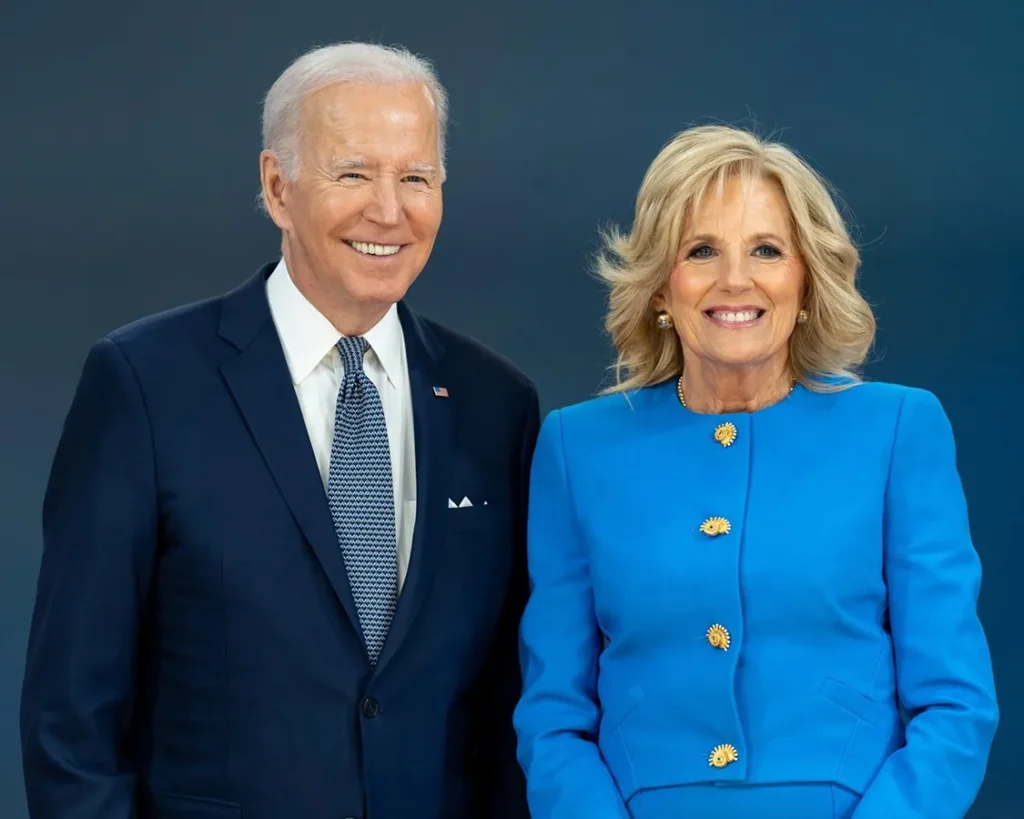
His administration focused on combating the COVID-19 pandemic, passing the American Rescue Plan Act, and overseeing the withdrawal of US troops from Afghanistan.
He signed major infrastructure and clean energy legislation.
His political era was marked by deep polarization and economic challenges, including high inflation.
He ran for re-election in 2024 but was defeated by Donald Trump.
How He Died:
Joe Biden is still alive as of the current date. He currently resides in Delaware and is active in public service.
47-Donald J. Trump (2025–present)
Trump was inaugurated on January 20, 2025, officially assuming the presidency at 12:00 pm, EST.
He was sworn in by Chief Justice John Roberts.
The inauguration occurred indoors in the Capitol Rotunda. Two days before the inauguration, Trump launched a meme coin, $Trump.
Pingback: 10 Rare Facts about World Presidents - Fact Hub