TOP 5 Ancient Inventions still used Today
1. Invention of Wheel
The invention of the wheel is shrouded in mystery, but the first evidence points to ancient Mesopotamia (modern-day Iraq) around 4200–4000 BC, possibly independently in China later. The earliest wheels were solid discs used as potter’s wheels, a significant use for shaping clay. The concept then evolved into wheeled vehicles, with the development of the wheel and axle, initially solid wood and later lighter, spoked designs, which revolutionized transportation and warfare by significantly reducing the effort needed to move heavy loads.
From Observation to Innovation
- Precursors: Before the wheel, humans used logs as rollers to move heavy objects.
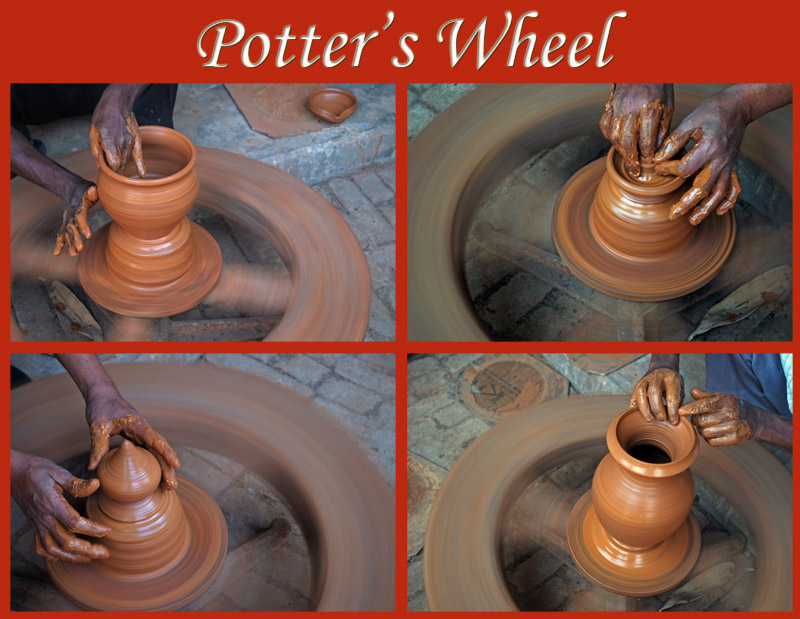
- The Potter’s Wheel: The earliest known wheels were not for transport but were potter’s wheels used to shape clay.
- The Wheel and Axle: The simultaneous invention of the wheel and axle was crucial, allowing the wheel to rotate around a fixed central point.
Evolution of the Wheel
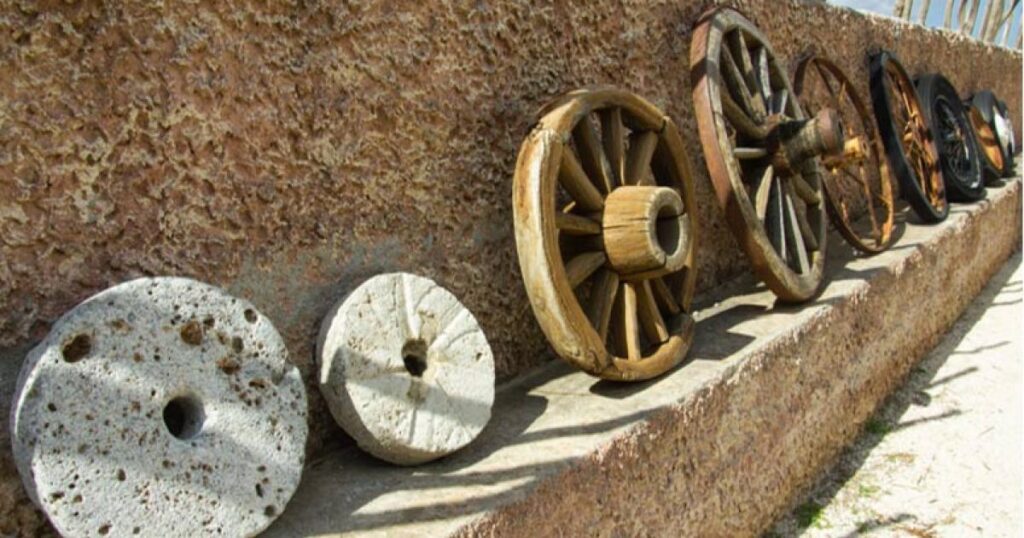
- Solid Wheels:Early transportation wheels were solid discs made from sliced tree trunks or wood planks.
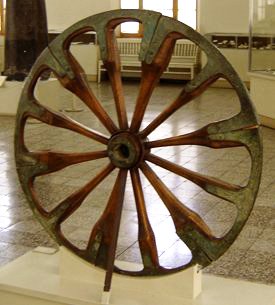
- Spoked Wheels:Around 2000 BC, the Egyptians developed the lighter, spoked wheel, which allowed for much greater speed, especially on chariots.
- Material Improvements:The invention of metals and later aluminum alloy improved wheel durability and performance, while the development of the pneumatic tire by John Boyd Dunlop in 1888 dramatically enhanced modern wheel applications.
Impact of the Wheel
- Transportation:The wheel was a revolutionary tool for transportation, drastically reducing the effort required to move goods and people.
- Industry:It also played a vital role in the Industrial Revolution by enabling new forms of rotary motion and machinery.
- Wider Applications:The basic principle of the wheel can be seen in countless modern devices, from watches to airplanes.
Usage of wheel
Wheels reduce friction, making it easier to transport heavy objects and facilitating movement by rolling instead of dragging. Their primary use is in transportation (vehicles, carts) and mechanization to perform work, such as water wheels powering mills, potter’s wheels shaping clay, and flywheels controlling machinery. Wheels are also used for controlling and directing movement, like a steering wheel on a car, and can be found in everyday items like fans, doorknobs, and rolling pins.
Transportation
- Reducing Friction:Wheels allow objects to roll, which drastically reduces the friction between the object and the ground, making it much easier to move heavy loads like carts and wagons.
- Vehicles:From cars and bicycles to roller skates and wheelchairs, wheels are the foundational component of most land vehicles, enabling efficient movement.
Mechanical Applications
- Power Generation: Water wheels and windmills use the force of water or wind to rotate wheels, which then power machinery for tasks such as milling grain or other industrial processes.
- Shaping and Crafting: A potter’s wheel is a rotating disc used to shape clay into ceramic ware.
- Machine Operation: Wheels act as gears to transmit rotational motion or control movement within larger machines, such as in electric fans, drills, and water taps.
2.Invention of Calendar
The story of the calendar is a global one, originating from the need to track seasons for agriculture and celestial events, with early civilizations like the Egyptians developing solar-based calendars around 3000 BCE, while others, such as the Babylonians, used lunar calendars. This led to the development of complex systems, such as the Maya calendar, and later, the Roman calendar which was reformed by Julius Caesar into the Julian calendar. The Julian calendar’s slight inaccuracy necessitated a further reform, resulting in the modern Gregorian calendar by Pope Gregory XIII in 1582.
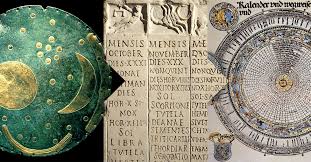
Early Calendars
- Ancient Egypt:Around 3000 BCE, the Egyptians created a sophisticated solar calendar based on the annual flooding of the Nile, which coincided with the heliacal rising of the star Sirius. Their 365-day year was divided into 12 months of 30 days, with five extra days reserved for festivals.
- Babylonians:The Babylonians used a lunar-based calendar, which was shorter than the solar year.
- Maya Civilization:The Maya developed a complex system including the 260-day ceremonial calendar (Tzolk’in) and a 365-day solar calendar (Haab’).
Roman Reforms
- Roman Calendar:25,996,094N/A·N/ABefore the Julian reform, the Roman calendar was less precise, and the practice of adding intercalary (extra) months was used to align it with the solar year.
- The Julian Calendar:In 46 BCE, Julius Caesar reformed the Roman calendar, creating the Julian calendar based on a 365.25-day year with a leap day added every four years.
The Gregorian Calendar
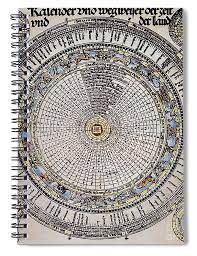
- Pope Gregory XIII and the Gregorian Calendar: The Julian calendar’s slight inaccuracy led to the drift of important dates, particularly the vernal equinox. In 1582, Pope Gregory XIII implemented a reform that adjusted the leap year rule and removed 10 days from the calendar to correct this drift, resulting in the much more accurate Gregorian calendar still used today.
Evolution of the Term
- The word “calendar” itself comes from the Latin calendarium, meaning “account book,” which was linked to the calends or first day of the month in the Roman calendar.
Usage of Calendar
Calendars are used to track dates, schedule appointments and events, and manage time effectively for personal, professional, and agricultural purposes. They provide a framework for organizing daily routines, setting goals, remembering important dates, and coordinating with others by offering a visual overview of commitments and deadlines. Beyond personal organization, calendars are fundamental to chronology, civil society, and religious and agricultural practices, serving as a complete timekeeping system to specify moments in time.
3.Paper Invention
- Origin: China
- Usage: Invented by the Chinese, paper is still a fundamental medium for writing, printing, and other cultural and information-based activities.
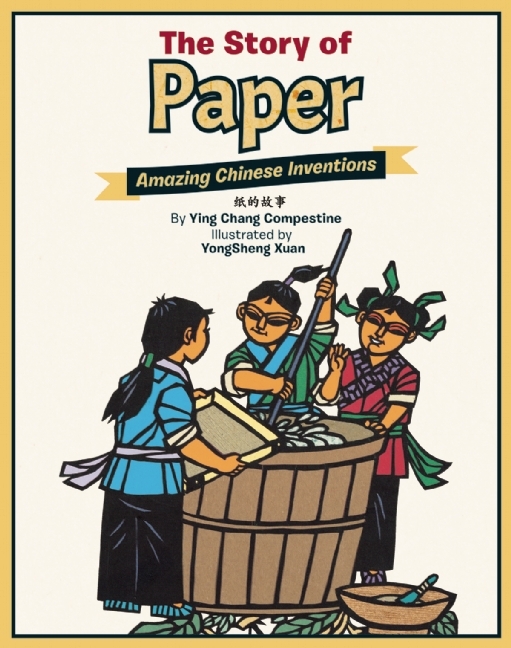
The story of paper’s invention begins in ancient China with court official Cai Lun around 105 CE, who refined an existing, but limited, method into a practical papermaking process. His innovation made paper cheaper, lighter, and more convenient than previous writing materials, fundamentally changing communication and the spread of knowledge across the globe.
Before paper: The need for a new material
Before the invention of true paper, civilizations relied on other, often cumbersome and expensive, materials for writing and record-keeping:
- China Documents were written on heavy bamboo strips or costly pieces of silk.
- Egypt A paper-like material called papyrus was created from reedy plants along the Nile, but it was made by laminating strips rather than felting fibers, and the plant’s limited availability made it difficult to mass-produce.
- Europe Animal-skin-based parchment and vellum were widely used but were expensive and time-consuming to prepare.
The invention of paper in China
Around 105 CE, Cai Lun, an official of the Han Dynasty court, improved upon existing methods to create a new papermaking process that was presented to the emperor:
- Inspiration According to legend, Cai Lun was inspired by watching wasps make their nests, which are made from chewed-up wood fibers.
- Process He pioneered a method that involved macerating materials like mulberry bark, hemp waste, old rags, and fishnets into a watery pulp.
- Final product He spread this fiber slurry onto a flat screen, pressed out the water, and let the remaining thin mat dry in the sun to form a lightweight and durable sheet that could be folded or rolled up easily.
- Early uses While it quickly became the primary material for writing and government bureaucracy, early paper was also used for wrapping valuable items, napkins, and even toilet paper in China by the 6th century.

Global spread and impact
Papermaking techniques remained a closely guarded Chinese secret for centuries before gradually spreading across the world and transforming society:
- The Islamic world Papermaking spread through Central Asia to the Islamic world, possibly after Chinese papermakers were captured in the Battle of Talas in 751 CE. Arab artisans refined the process and helped spread the craft across the Middle East and North Africa, where it replaced papyrus by the 10th century.
- Europe and the printing revolution By the 12th century, the technology reached Spain and Italy, laying the groundwork for the European paper industry. The availability of cheaper paper proved essential for the invention of the mechanical printing press by Johannes Gutenberg in the mid-1400s, which sparked the Printing Revolution and contributed to the Renaissance and the spread of literacy.
- Industrialization For centuries, paper was made from linen and cotton rags, leading to shortages in the 1800s. The discovery that paper could be made from abundant wood pulp, combined with new steam-powered machines, enabled mass production and made paper a cheap, everyday staple, from newspapers to packaging.

Usage of paper
Paper’s uses are diverse, encompassing communication (books, newspapers, documents), packaging (boxes, wrapping paper), hygiene (toilet paper, paper towels), decoration (wallpaper, origami), and filtration (filter paper, coffee filters). Made from plant fibers like wood pulp, paper is a versatile material for everything from currency and artistic creations to industrial insulation and creative crafts like paper mâché.
Here are some of the main uses of paper:
Communication & Information
- Writing and Printing: Paper is the primary medium for recording information, used for books, magazines, newspapers, documents, and notes.
- Maps and Plans: Used for navigation and design.
- Currency: Paper money is a vital use of paper in many economies.
Packaging & Protection
- Boxes and Cartons: Used for transporting goods.
- Wrapping: For gifts and products.
- Protective Linings: Used to protect items in packaging.
Hygiene & Cleaning
- Toilet Tissue and Paper Towels: Common in households and businesses.
- Wipes: Used for various cleaning and absorbing purposes.
Art, Crafts, & Decoration
- Origami: The art of paper folding.
- Paper Flowers and Sculptures: Creating decorative items and art.
- Wallpaper and Greeting Cards: Decorative and personal expression.
- Papier-mâché: Used to build sculptures and masks.
Industrial & Other Uses
- Filtration: In filters for various processes.
- Insulation: In car insulation and building materials.
- Construction: Used in various industrial applications.
- Fire Starter: Can be used as fuel for fires.
4.Invention of Clock
The invention of the clock is a story that begins with ancient observations of the cosmos and evolves through continuous innovation, from primitive sundials to the precise timekeepers we use today. The modern mechanical clock is rooted in the medieval era, transforming society from one governed by natural rhythms to one organized by measured time.
Pre-mechanical timekeeping
For millennia, humans used natural, continuous processes to measure time before the advent of mechanical clocks:
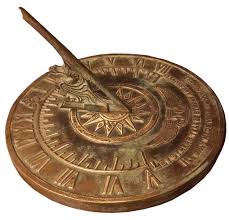
- Sundials and shadow clocks Early Egyptians and Babylonians used obelisks and shadow-casting devices to divide the day. The oldest known sundial dates to around 1500 BC in Egypt’s Valley of the Kings.
- Water clocks (clepsydras) These were used by many ancient cultures, including the Egyptians, Babylonians, Chinese, and Greeks. They worked by tracking the slow, steady flow of water from one vessel to another and were the most accurate timekeepers for thousands of years. Plato is even said to have designed a water-based alarm clock for his students.
- Candle and incense clocks Primarily used in China and Japan, these devices marked the passage of time as incense sticks or calibrated candles burned down. Some designs dropped weighted balls into a metal dish, serving as an audible alarm.
- Hourglasses By the 14th century, hourglasses became popular in Europe, particularly for use at sea where water clocks were unreliable due to the rocking of ships.
The mechanical clock revolution
The “story of the clock” as we know it truly began in medieval Europe with the development of the mechanical clock and the crucial “escapement” mechanism.
- The birth of mechanical clocks Between 1280 and 1320, the first purely mechanical clocks appeared, driven by falling weights rather than fluids. These early “horologes” were primarily installed in monasteries and church towers to regulate prayer times. They often lacked faces or hands and simply struck a bell on the hour, which is likely how the word “clock” (from the word for “bell”) originated.
- The verge escapement Credited to figures like Gerbert of Aurillac or medieval craftsmen around 1275, this mechanism was a pivotal invention. It used a stop-and-go motion to regulate the release of energy from the falling weight, creating the classic “tick-tock” sound.
- The pendulum’s role The next major leap in accuracy came from the work of Galileo Galilei and Christiaan Huygens.
- Galileo’s discovery In 1582, Galileo observed that a pendulum’s swing was consistent, regardless of its arc length, which he proposed could be used to regulate a clock.
- Huygens’ invention In 1656, the Dutch scientist Christiaan Huygens built the first working pendulum clock based on this principle. His invention was a massive improvement, increasing clock accuracy more than sixty-fold and making minute and second hands practical for the first time.
Modern timekeeping and beyond
Following these mechanical breakthroughs, the story of the clock continued to prioritize precision and portability.
- Portable watches Spring-driven clocks enabled the first portable timepieces in the 15th and 16th centuries. This eventually led to the development of the pocket watch and, later, the wristwatch.
- Solving the longitude problem The need for precise timekeeping at sea spurred John Harrison to build the first reliable marine chronometers in the mid-18th century, which allowed navigators to accurately determine a ship’s longitude.
- Quartz and atomic clocks
- The first electric clocks appeared in the 19th century.
- In 1927, the first quartz clock was invented, using the highly stable vibrations of a quartz crystal for unparalleled accuracy.
- Today, atomic clocks are the most accurate timekeepers in existence, regulated by the quantum vibrations of atoms. They can be accurate to within a few seconds over billions of years and are the basis for global time standards.
Usage of clock
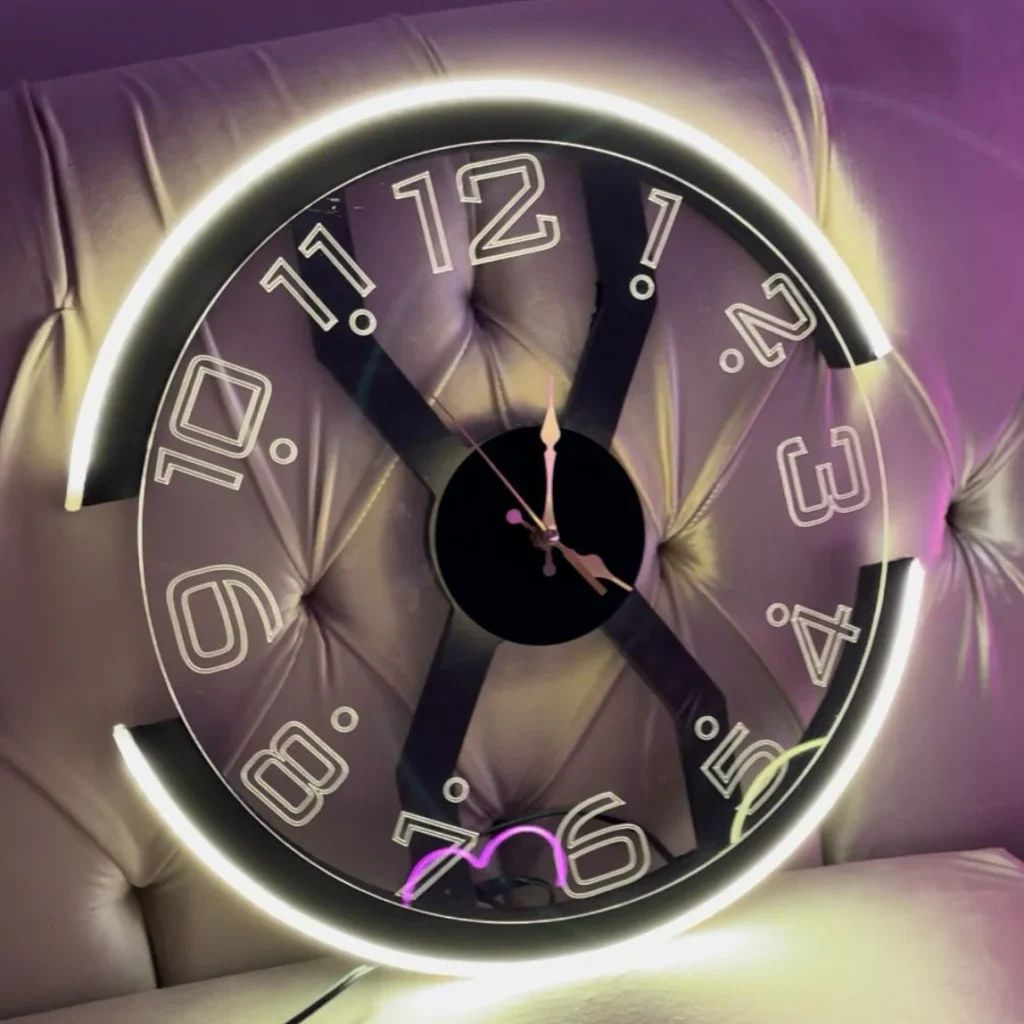
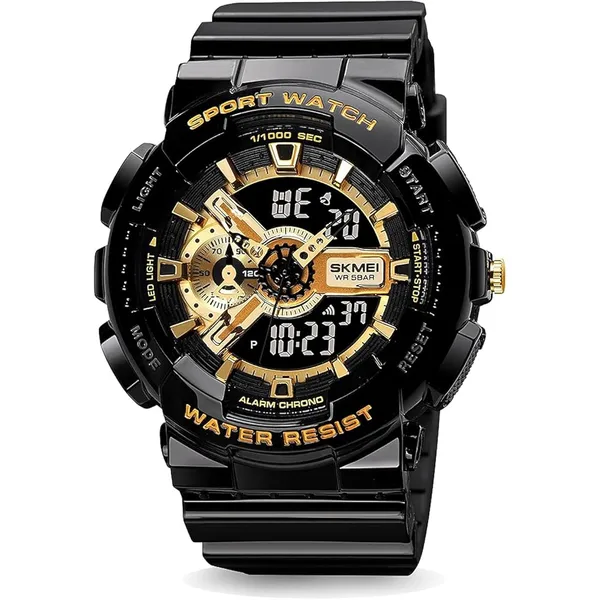
A clock’s primary usage is to measure, display, and record time, serving various functions from daily scheduling and work attendance to timing events like races and even acting as a decorative element. Modern applications of clocks include alarms for waking, signals in computers to coordinate events, and specialized tools like time clocks for recording work hours. The concept of a “clock” can also refer to the verb “to clock,” meaning to record the speed or time of something, such as a race or distance.
Core Uses of a Clock
- Telling Time:The most basic use is to show the current hour, minute, and second, allowing people to organize their day and know when events are happening.
- Alarm Function:Many clocks are equipped with an alarm to signal a specific time, often to wake someone up or remind them of a task.
- Work and Time Recording:Time clocks are used to record the arrival and departure times of workers, helping to track hours and ensure accurate payroll.
- Timing and Measurement:In sports or competitions, a clock or timer is essential for measuring the duration of an event or the speed of a participant.
- Scheduling and Coordination:Clocks are vital for coordinating activities, from managing appointments and meetings to scheduling complex events.
Figurative and Other Meanings
- Verb “To Clock”:The verb form can mean to measure or record the time or speed of something, as in “clocking a runner” or “clocking a car’s top speed”.
- Computer Synchronization:In a broader sense, a clock can refer to a timing mechanism within a computer that sends signals at regular intervals to synchronize other operations.
- Decoration and Aesthetics:Clocks are often used as decorative objects or as souvenirs to enhance the ambiance of a room or office.
- Motivation and Goal Setting:Clocks can serve as a reminder of time’s limited nature, motivating people to set and achieve goals by monitoring progress over time.
5.Door Lock
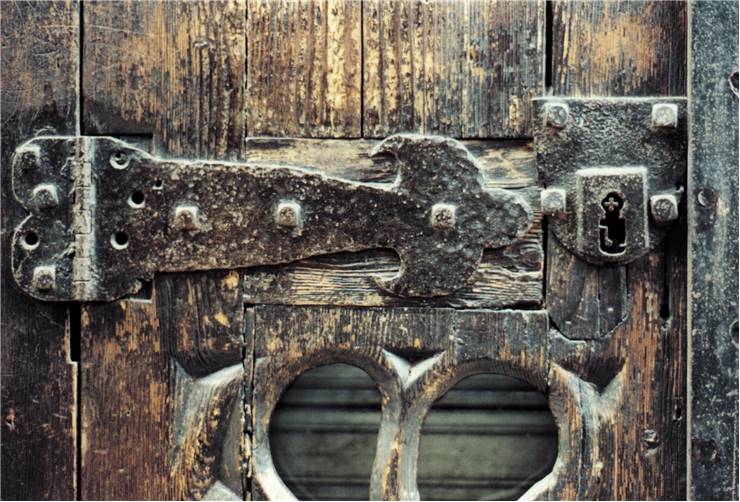
The story of the door lock began in ancient Egypt around 4000 BC with the invention of a wooden pin tumbler lock. This early mechanism used wooden pins that fell into corresponding holes, locking a bolt in place. A large, toothbrush-like wooden key with pegs was inserted to lift the pins, allowing the bolt to be moved. While rudimentary, this Egyptian invention formed the foundation for all future lock designs.
The Egyptian Wooden Pin Lock
- The Mechanism:The lock consisted of two wooden blocks. One block was attached to the door, and the other to the door frame.
- The Pins:The frame block had holes with wooden pins that would fall into the door block when the bolt was slid shut, securing it.
- The Key:A large, wooden key, resembling a giant toothbrush, had pegs that matched the arrangement of the pins.
- How it Worked:Inserting the key lifted the pins to the correct height, allowing the bolt to slide back and unlock the door.
Evolution and Modernization
- Roman Advancements:The Romans later advanced lock technology by introducing metal, such as iron and bronze, for more durable locks.
- The Pin Tumbler Lock:In the mid-19th century, Linus Yale Sr. and Jr. refined the ancient pin tumbler system. This modern design uses precisely machined pins of varying lengths, a key difference from the fixed-length pegs of the older wooden lock.
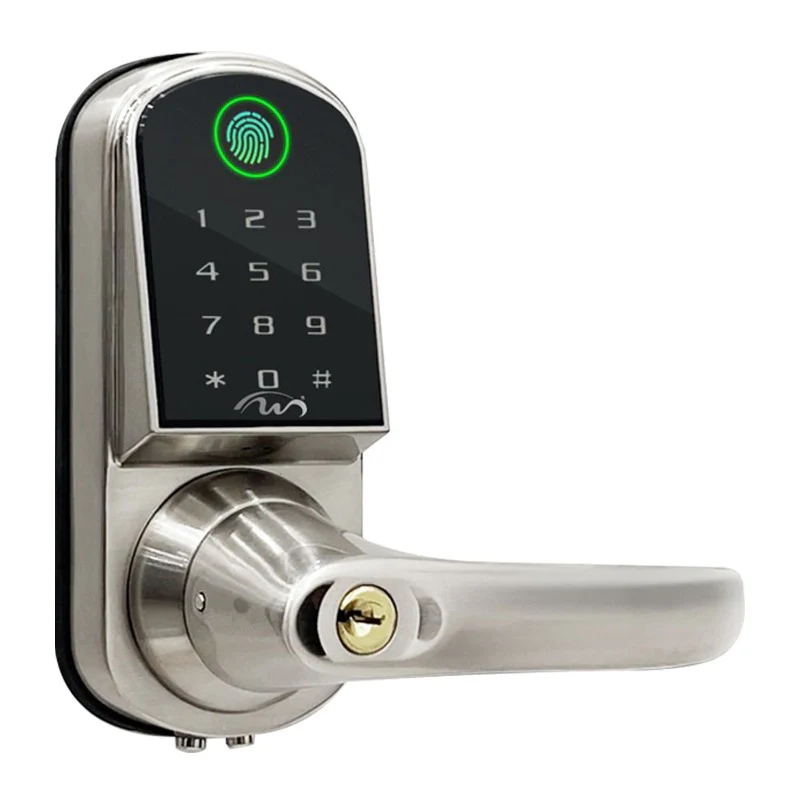
- Electronic and Smart Locks:The evolution continued with the development of electronic and smart locks in the late 20th and early 21st centuries.
- Future Prospects:The future of lock technology points toward even deeper integration with biometric and artificial intelligence.
Usage of Door Lock
The main uses of a door lock are to provide security, privacy, and control access to a space by preventing unauthorized entry. They protect people and property from theft, trespassing, and break-ins by requiring a key, code, or biometric feature to open the door. Door locks are essential in both homes and businesses for securing valuable assets and managing who can enter specific areas.
Security & Prevention
- Deters Intruders:A visible lock deters opportunistic criminals from attempting to enter a property.
- Secures Assets:Locks secure valuable items inside a building, such as furniture, equipment, and personal belongings.
- Protects Property:Locks prevent damage and vandalism to property, acting as a barrier against unauthorized access.
Privacy & Control
- Maintains Privacy:Locks provide privacy for inhabitants by controlling who can enter a room or entire dwelling.
- Access Control:They form part of an access control system, allowing only authorized individuals with the correct key or code to gain entry.
- Manages Access:In businesses, locks can prevent both external break-ins and internal unauthorized access by employees or other individuals.