
The Rise Of Elon Musk as a Tech Visionary
The rise of Elon Musk as a technology visionary is a remarkable story of ambition, innovation, and resilience, marked by his ability to transform industries through bold ideas and relentless execution. Born on June 28, 1971, in Pretoria, South Africa, Musk’s journey from a curious, self-taught programmer to a global influencer leading companies like Tesla, SpaceX, Neuralink, and The Boring Company showcases his unique approach to problem-solving and his commitment to advancing humanity’s future. Below is a comprehensive overview of his rise, supported by key milestones and insights into his visionary leadership, with an artifact summarizing his major achievements.
Early Life of Elon Musk and Formative Years
Childhood and Curiosity: Musk grew up in a privileged yet challenging environment. His father, Errol, was an electromechanical engineer, and his mother, Maye, a model and dietitian. From a young age, Musk displayed an insatiable curiosity, teaching himself to code at 10 using a VIC-20 computer manual. At 12, he sold his first video game, Blastar, for $500, marking his entrepreneurial spark (,).
Education and Move to North America: Facing bullying and South Africa’s mandatory military service, Musk moved to Canada at 17 via his Canadian-born mother’s citizenship. He attended Queen’s University in Ontario, then transferred to the University of Pennsylvania, earning dual bachelor’s degrees in physics and economics in 1997. His academic foundation in science and business shaped his ability to blend technical innovation with strategic thinking (,).
Early Ventures: Laying the Foundation
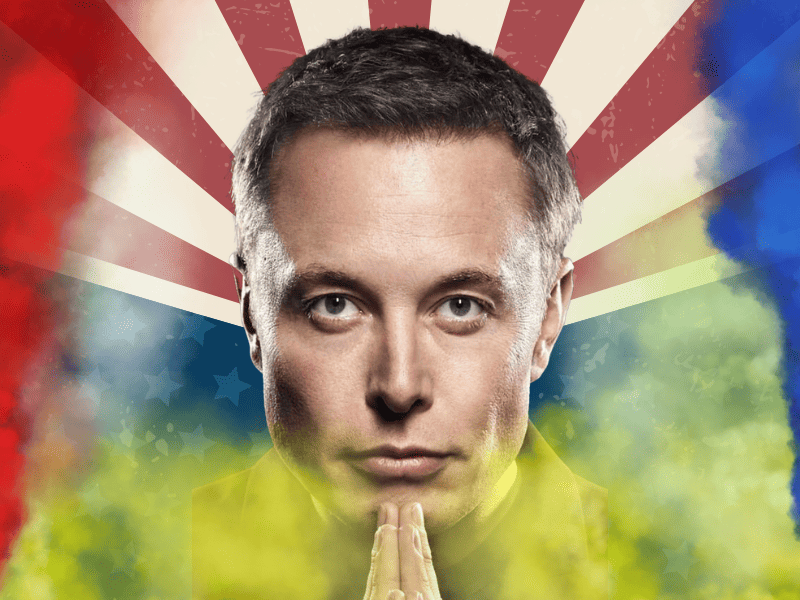
Zip2 (1995–1999): Musk co-founded Zip2 with his brother Kimbal, creating software for online city guides and maps for newspapers. Despite early struggles, Compaq acquired Zip2 for ~$300 million in 1999, netting Musk $22 million. This success established him as a tech entrepreneur (,).
X.com and PayPal (1999–2002): Musk founded X.com, an online payment platform, which merged with Confinity to form PayPal. Though ousted as CEO due to internal disagreements, eBay’s $1.5 billion acquisition of PayPal in 2002 earned Musk $165 million, providing capital for his future ventures. These early successes demonstrated his ability to identify and capitalize on emerging tech trends (,).

SpaceX: Revolutionizing Space Exploration
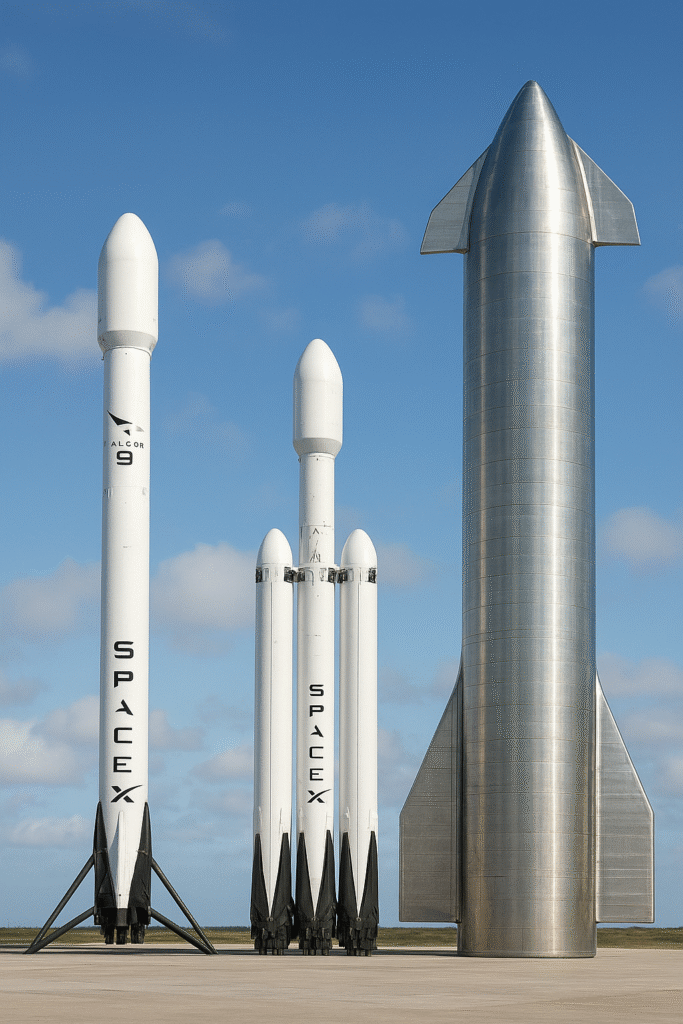
Founding and Vision (2002): Dissatisfied with the high cost of space travel, Musk founded SpaceX in 2002 to make humanity a “multiplanetary species.” His goal was to reduce launch costs and enable Mars colonization (,).
Falcon 9 and Heavy: The reusable Falcon 9 (2010) and Falcon Heavy (2018) slashed launch costs, with Falcon Heavy capable of carrying twice the payload of competitors at a third of the cost ().
Starship: SpaceX’s ongoing Starship project targets crewed missions to Mars, with Musk envisioning a self-sustaining colony (,).
Tesla: Redefining Transportation
Joining and Leadership (2004): Musk invested in Tesla Motors in 2004, becoming chairman and later CEO in 2008. He transformed Tesla from a struggling startup into the world’s most valuable carmaker by 2020 (,).
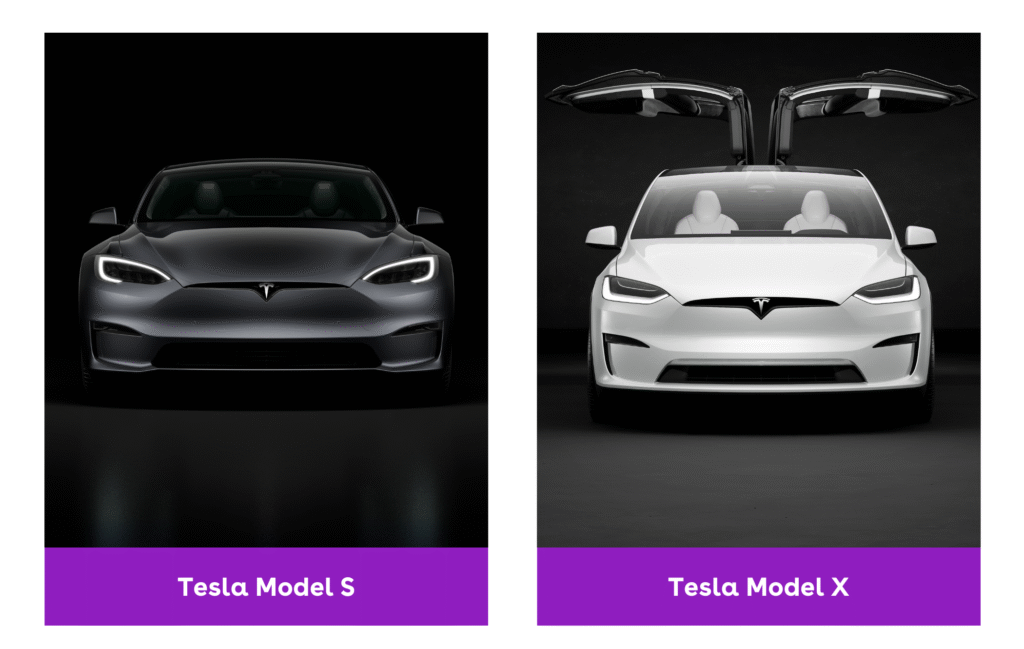
Model S, X, and 3: The Model S (2012) and Model X (2015) earned critical acclaim for performance and safety, while the Model 3 (2017) made EVs accessible, becoming the best-selling electric car ever ().
Impact: Tesla forced traditional automakers to invest in EVs, accelerating the transition to sustainable transportation. Musk’s vision reshaped consumer expectations, making EVs desirable (,).
Autopilot and Sustainability: Tesla’s Autopilot advanced autonomous driving, though controversies over safety claims persist. Its focus on sustainable energy spurred global EV adoption (,).
Global Impact and Legacy
Wealth and Influence: With a net worth of $424.7 billion by May 2025, Musk is the world’s richest person, wielding significant influence over technology, policy, and markets (,).
Inspiration for Innovation: His ventures have inspired a new generation of entrepreneurs, redefining industries like automotive, aerospace, and AI (,).
Critique of Progress: Critics argue Musk’s vision prioritizes technological grandeur over systemic issues like public transit or equitable access, highlighting the need for collective solutions ().
Controversies and Criticisms
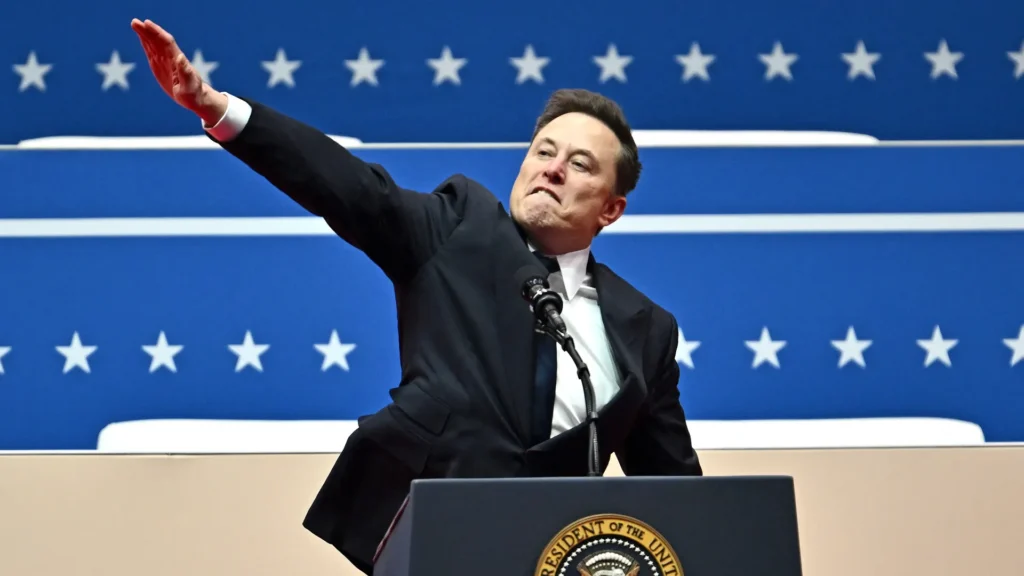
Management Style: Critics highlight Musk’s high-pressure work environments and unrealistic deadlines, impacting employee well-being ().
Public Statements: His comments on COVID-19, AI risks, and political issues (e.g., DOGE role in 2025) have sparked backlash, with some labeling them unscientific or polarizing (,).
Twitter/X Acquisition (2022): Musk’s $44 billion purchase of Twitter (rebranded X) and subsequent changes, like reduced content moderation, increased hate speech concerns, dividing public opinion (,).
Wow looking forward to be in the same working space as Elon Mersk.
YA SURE AM SLSO WORKING ON MUSK UPCOMMING IDEAS
Pingback: The Rise of Electric Vehicles - Fact Hub