
The Pioneering Women In Computer Science
Women have been instrumental in shaping computer science from its earliest conceptual stages to modern advancements, often overcoming significant barriers like gender bias and limited access to education. Despite comprising nearly half of the U.S. workforce in the 1940s and 1950s as “human computers” for projects like WWII ballistics calculations, women’s contributions were frequently overlooked until recent reevaluations through books, films like Hidden Figures, and initiatives like Ada Lovelace Day. Today, women make up about 25% of the computing workforce, but their foundational work laid the groundwork for algorithms, programming languages, and software engineering. Below is an overview of ten trailblazing women, selected for their diverse impacts across eras and subfields.
1. Ada Lovelace (1815–1852)
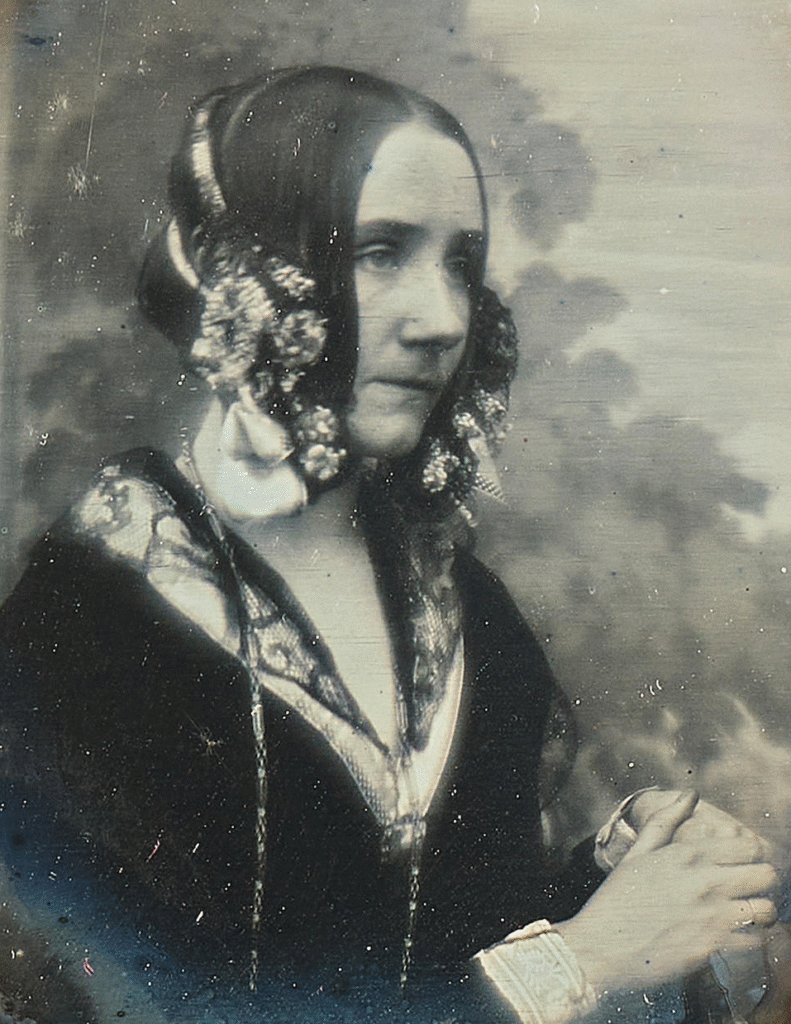
Ada Lovelace was a 19th-century English mathematician and writer who is celebrated as the world’s first computer programmer. She is best known for her visionary work on Charles Babbage’s proposed mechanical general-purpose computer, the Analytical Engine, and for recognizing the machine’s potential far beyond simple calculation.
Born: Augusta Ada Byron was born in London on December 10, 1815. She was the only legitimate child of the famed poet Lord Byron and his wife, Anne Isabella “Annabella” Milbanke Byron, a brilliant mathematician.
A mother’s influence: Lord and Lady Byron separated just a few weeks after Ada was born, and Ada never knew her father, who died when she was eight. Fearing that Ada might inherit her father’s “poetical” and erratic temperament, her mother pushed her to study mathematics and science, subjects considered unusual for women at the time.
Illness and curiosity: Despite suffering from frequent illnesses, including a bout of measles that left her temporarily paralyzed, Ada developed a passion for engineering and mathematics. At the age of 12, she wrote a book titled Flyology, in which she detailed her methodical study of bird anatomy and various materials to design a flying machine.
Mentorship: As a teenager, she studied with prominent mathematicians like Augustus De Morgan and met the inventor Charles Babbage, who became a lifelong friend and mentor.
Work on the Analytical Engine
Visionary insights: While Babbage primarily saw his machine as a tool for numerical calculation, Lovelace saw its potential to manipulate symbols beyond just numbers. She foresaw that such a machine could be used to create music, graphics, and other creative outputs, describing it as weaving “algebraical patterns just as the Jacquard loom weaves flowers and leaves”.
The Analytical Engine: Babbage’s Analytical Engine was a design for a complex mechanical device that featured many of the same characteristics as a modern general-purpose computer, though it was never fully constructed in his lifetime.
Translating and annotating: In 1842–1843, Lovelace translated an article from Italian by military engineer Luigi Menabrea about the Analytical Engine. She then added her own “Notes,” which were three times longer than the original article.
The first algorithm: In her notes, particularly “Note G,” Lovelace wrote what is considered the first computer algorithm—a step-by-step procedure for the machine to calculate Bernoulli numbers.
The daughter of poet Lord Byron, Ada Lovelace is widely regarded as the world’s first computer programmer. Collaborating with Charles Babbage on his Analytical Engine—a mechanical general-purpose computer—she wrote the first algorithm intended for machine execution, detailed in her 1843 notes on the engine’s potential beyond calculation (e.g., composing music)
2. Grace Hopper (1906–1992)
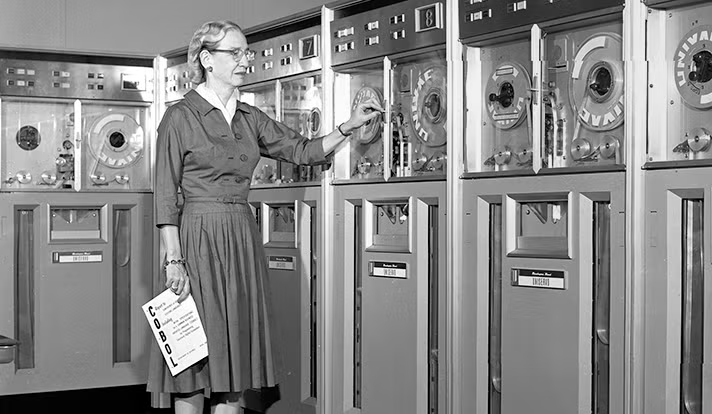
Grace Hopper was an American computer scientist, mathematician, and U.S. Navy Rear Admiral who was a pioneering figure in the development of computer programming. She created the first compiler for a computer programming language and co-developed COBOL, one of the first high-level languages. Her career, spanning both academia and the military, helped usher in the information age.
Early curiosity: Born Grace Brewster Murray in New York City in 1906, she showed an interest in gadgets and engineering from a young age.
Academic excellence: She graduated Phi Beta Kappa from Vassar College with degrees in mathematics and physics in 1928. She went on to earn her M.A. in 1930 and a Ph.D. in mathematics in 1934 from Yale University, where she also began her teaching career.
The Navy and the Mark I
- World War II service: In 1943, following the attack on Pearl Harbor, Hopper joined the U.S. Naval Reserve (WAVES) and was commissioned as a lieutenant.
- Pioneering programming: She was assigned to the Bureau of Ordnance Computation Project at Harvard University, where she learned to program the Mark I, the first large-scale electromechanical computer in the U.S.. She wrote the 561-page user manual for the Mark I and co-authored several papers on its capabilities.
- Popularizing “debugging”: In 1947, while working on the Mark II computer, a team member found that a moth had caused a malfunction. The moth was taped into the logbook, and Hopper is credited with popularizing the term “computer bug,” as well as the phrase “debugging” to fix a problem.
Contributions to computer languages
“Amazing Grace”: Throughout her long career, she was known for her brilliant and irreverent personality. Her nickname, “Amazing Grace,” reflected both her technical genius and her reputation for fearlessly challenging the status quo in the male-dominated fields of computing and the Navy.
The first compiler: After the war, Hopper joined the Eckert-Mauchly Computer Corporation and worked on the UNIVAC I, the first large-scale commercial electronic computer. In 1952, she and her team created the first compiler (known as A-0), a program that translated programming instructions into machine code.
Developing COBOL: Hopper pioneered the concept of writing programs in English-based words rather than mathematical symbols. This led to the development of FLOW-MATIC, a precursor to COBOL (Common Business-Oriented Language). In 1959, Hopper served as a technical consultant to the CODASYL committee, which developed COBOL, a standardized language still in use today.
- Final retirement: Hopper retired from the Navy for the final time in 1986 at the age of 79, as the oldest active-duty officer.
- Lasting impact: A guided-missile destroyer, USS Hopper, was named in her honor in 1997. She was also posthumously awarded the Presidential Medal of Freedom in 2016. Her legacy includes inspiring countless women to pursue careers in technology through events like the Grace Hopper Celebration of Women in Computing.
3. Katherine Johnson (1918–2020)
An African American mathematician at NASA, Johnson calculated trajectories for the Mercury and Apollo missions, including John Glenn’s 1962 orbital flight, where she verified electronic computers’ outputs by hand. Her work broke racial and gender barriers in STEM during the 1930s–1960s. Featured in Hidden Figures, she received the Presidential Medal of Freedom in 2015.
4. Dorothy Vaughan (1910–2008)
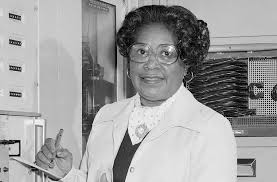
Dorothy Vaughan was a pioneering African American mathematician and human computer who rose through the ranks of the National Advisory Committee for Aeronautics (NACA), which later became NASA, despite facing gender and racial segregation. She was a leader, mentor, and expert programmer whose work was crucial to the success of the early American space program.
Born and educated: Born in Kansas City, Missouri, in 1910, Vaughan moved with her family to Morgantown, West Virginia. She was a brilliant student, graduating as valedictorian of her high school class at age 15.
Wilberforce University: She earned a bachelor’s degree in mathematics from Wilberforce University in 1929.
Teaching career: Following college, she worked as a high school mathematics teacher in Virginia for over a decade.
Career at NACA and NASA
Contributions to the space race: As a programmer, she made vital contributions to the Scout Launch Vehicle Program, which was crucial for sending satellites into orbit.
West Area Computing: In 1943, during World War II, Vaughan was hired by the NACA to work at the Langley Memorial Aeronautical Laboratory in Virginia. She was assigned to the segregated “West Area Computing” unit, which was composed entirely of African American female mathematicians. Her work involved performing complex mathematical computations for aerospace engineers.
First Black supervisor: In 1949, Vaughan was promoted to acting head of the West Area Computing unit, making her the NACA’s first Black female supervisor. This was a permanent position that she held for nearly a decade.
Advocacy and leadership: Vaughan was a fierce advocate for the women in her unit, both Black and white. She fought for equal pay and promotions and mentored her colleagues, including future NASA luminaries Katherine Johnson and Mary Jackson.
Mastery of computer programming: In the 1960s, as electronic computers began to replace human computers, Vaughan foresaw the shift and taught herself and her staff the programming language FORTRAN. Her foresight ensured that her unit would remain relevant and valuable to the new computer age.
Analysis and Computation Division: When NACA became NASA in 1958, the segregated facilities were eliminated. Vaughan and many of her colleagues joined the integrated Analysis and Computation Division (ACD), where she became an expert programmer.
- Posthumous honors: In 2019, Vaughan was posthumously awarded the Congressional Gold Medal. In 2024, NASA named a building at the Johnson Space Center in her honor.
. She self-taught FORTRAN to transition her team into programming roles as electronic computers replaced manual calculations, ensuring their relevance in the field. Also profiled in Hidden Figures
5. Margaret Hamilton (1936–Present)
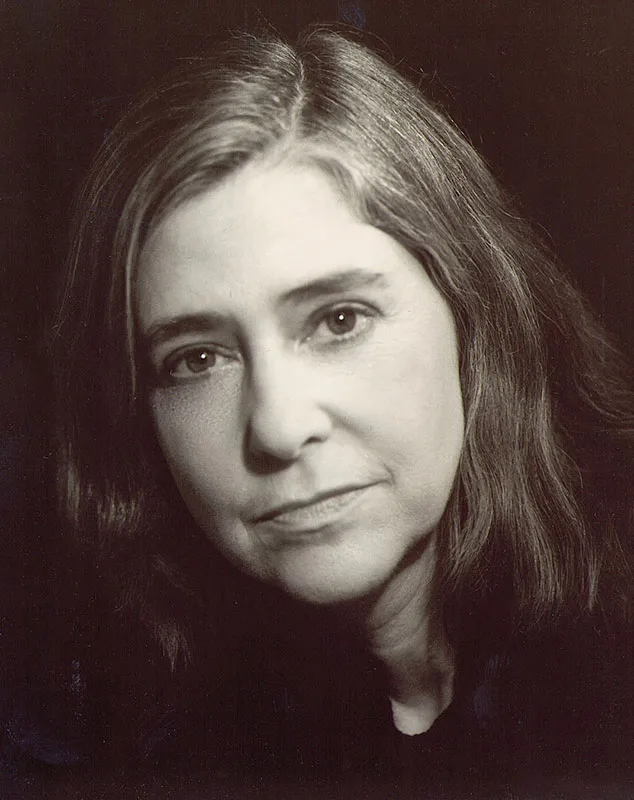
A software engineer for NASA’s Apollo program, Hamilton coined “software engineering” and developed onboard flight software that detected and recovered from errors, critical for the 1969 Moon landing. Her priority-based display system prevented crashes during Apollo 11. Awarded the Presidential Medal of Freedom in 2016, she founded Hamilton Technologies, advancing error-prevention methods.
Margaret Hamilton is a renowned American computer scientist, systems engineer, and business owner whose work was critical to the success of the Apollo space program. She famously led the team that developed the on-board flight software for the Apollo Guidance Computer (AGC) and is credited with coining the term “software engineering”. Her innovations in designing highly reliable software systems were foundational to modern software development.
Education: Hamilton earned a B.A. in mathematics from Earlham College in 1958.
Early projects at MIT: After graduating, she took a position at the Massachusetts Institute of Technology (MIT) and quickly began working on complex programming projects. In the early 1960s, she worked on software for weather prediction and the Semi-Automatic Ground Environment (SAGE) program, the first U.S. air defense system.
On-the-job training: At the time, computer science was not yet an academic discipline, and programmers largely learned on the job. Hamilton’s knack for mastering complex code and fixing difficult problems made her an ideal candidate for NASA’s space mission.
Apollo program and the birth of “software engineering”
“Man-in-the-loop” concept: Her innovative design put the pilot in the loop, allowing them to override the automatic system. This critical failsafe was demonstrated during the Apollo 8 mission, when her team’s software was used to quickly recover lost navigation data.
Director of software engineering: In 1965, Hamilton joined MIT’s Instrumentation Laboratory, which was tasked with developing the guidance system for the Apollo program. She became the Director of the Software Engineering Division and oversaw the development of all flight software for the Command and Lunar Modules.
Coining a term: To legitimize the work of her team and give their field the same recognition as hardware engineering, Hamilton began using the term “software engineering.” The phrase was initially met with skepticism but eventually became the industry standard.
Apollo 11 mission: During the Apollo 11 moon landing in 1969, an overload alarm was triggered just minutes before touchdown. An astronaut had mistakenly activated an unnecessary rendezvous radar, diverting the computer’s processing power.
Saving the mission: Thanks to Hamilton’s team, the software was programmed with a robust, asynchronous system that could detect errors, shed less critical tasks, and prioritize the landing functions. The AGC’s alarms signaled mission control, which told the astronauts to proceed. The software’s reliability prevented a mission abort and allowed for a successful landing.
Your point of view caught my eye and was very interesting. Thanks. I have a question for you. https://www.binance.info/register?ref=IHJUI7TF