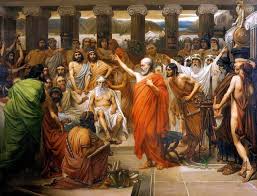
The Philosophy of Socrates
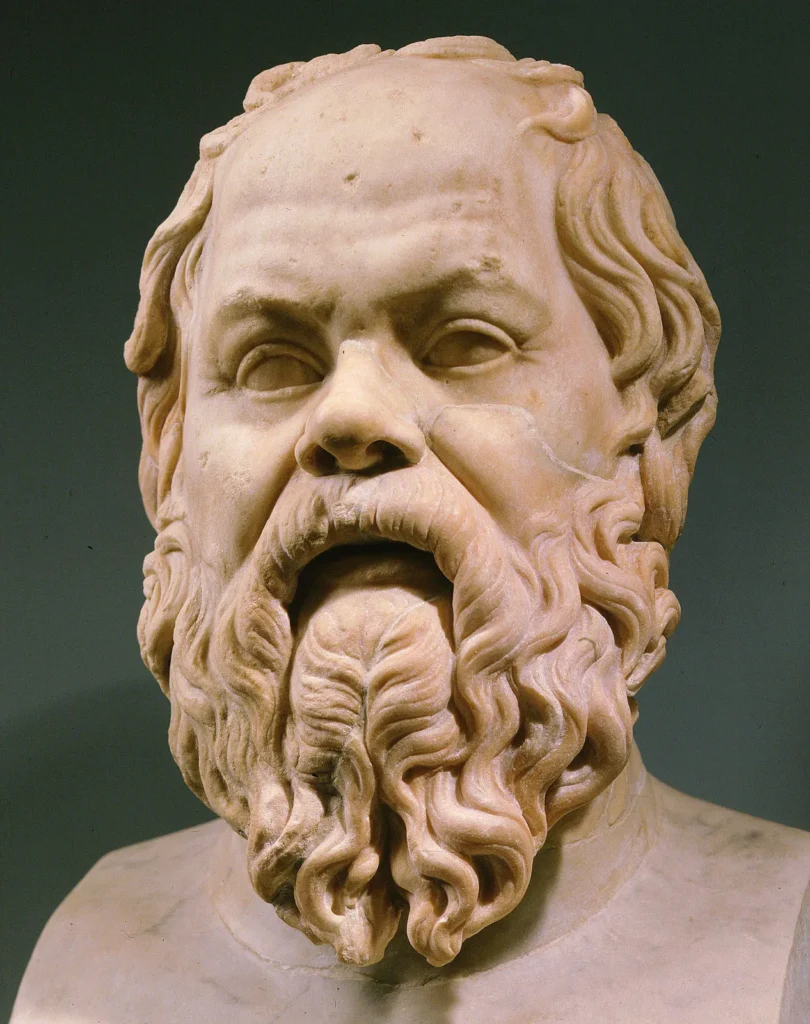
Socrates (c. 470–399 BCE) was an ancient Greek philosopher whose ideas and methods laid foundational stones for Western philosophy. Unlike many philosophers who wrote extensively, Socrates left no written works. His ideas are primarily known through the writings of his students, Plato and Xenophon, and later accounts by Aristotle. His philosophy centered on ethics, self-knowledge, and the pursuit of truth through critical inquiry, profoundly influencing how we approach knowledge, morality, and human existence.
Socrates lived in Athens during its Golden Age, a period of cultural and intellectual flourishing, but also political turmoil, including the Peloponnesian War (431–404 BCE). A stonemason by trade and a hoplite soldier in his youth, Socrates turned to philosophy, engaging Athenians in public spaces like the Agora. His unconventional style—questioning the powerful and challenging assumptions—made him both admired and controversial. In 399 BCE, he was tried and executed for “corrupting the youth” and “impiety,” a verdict reflecting Athens’ distrust of his influence during a time of social instability.
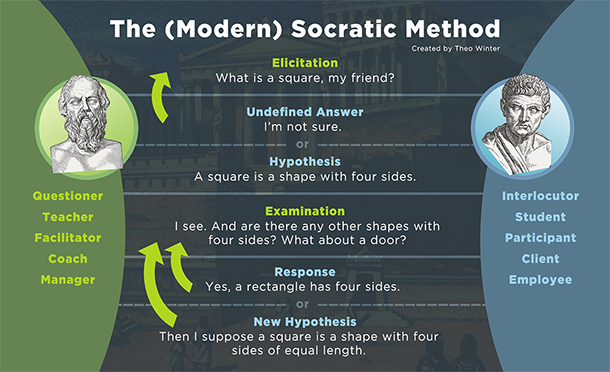
The Socratic Method
Questioning: Asking probing questions to expose contradictions or gaps in someone’s beliefs. Dialogue: Engaging in back-and-forth discussion to refine ideas and seek truth. Elenchus: A process of refutation, where false assumptions are dismantled, often leaving interlocutors aware of their ignorance.
Core Philosophical Ideas
Socratic Ignorance: Socrates famously claimed, “I know that I know nothing.” This wasn’t false modesty but a recognition that true wisdom lies in acknowledging one’s ignorance and remaining open to inquiry. Unlike the Sophists, who claimed expertise, Socrates saw himself as a seeker of truth. Virtue as Knowledge: Socrates believed virtue (aretē) is knowledge, and no one does wrong willingly. Ignorance causes immoral behavior; thus, understanding what is good leads to moral action. In Plato’s Meno, he explores whether virtue can be taught, concluding it requires self-awareness. The Examined Life: In Plato’s Apology, Socrates declares, “The unexamined life is not worth living.” He argued that self-reflection and questioning one’s beliefs are essential for personal growth and ethical living. The Soul’s Priority: Socrates emphasized the care of the soul (psyche) over material wealth or physical desires. He saw the soul as the seat of reason and morality, urging people to cultivate inner virtue over external success. Ethics Over Relativism: Unlike the Sophists, who taught that truth and morality were relative, Socrates sought universal definitions for concepts like justice, courage, and piety, believing in objective truths discoverable through reason.
The Socratic Method embodies Socrates’ belief that knowledge is not passively received but actively discovered through self-examination. Its emphasis on intellectual humility and rigorous inquiry remains influential, used today in education (e.g., Socratic seminars), law (e.g., cross-examination), and psychotherapy to foster critical thinking and self-awareness.
Legacy of Socrates
His method influenced modern disciplines like science, law, and ethics, emphasizing evidence-based reasoning and skepticism of untested claims. However, interpreting Socrates is complex due to the “Socratic Problem”: his reliance on oral teaching means we depend on secondhand accounts, primarily Plato’s dialogues, which may blend Socrates’ views with Plato’s own.
Controversies
- Impiety: Disrespecting Athens’ gods.
- Corrupting the Youth: Influencing young Athenians to question authority.
In Plato’s Apology, Socrates defends himself by arguing he serves Athens as a “gadfly,” stinging it awake to pursue truth. Refusing to compromise, he was convicted and sentenced to death by hemlock. His calm acceptance of death, depicted in Plato’s Phaedo, cemented his image as a martyr for truth.
Socrates’ emphasis on questioning authority and seeking truth resonates today, especially in debates over misinformation, free speech, and ethical leadership. Posts on X highlight his relevance, with users citing his method to critique dogmatic ideologies or encourage self-reflection. His ideas challenge us to navigate complex issues—like AI ethics or political polarization—with critical inquiry rather than blind acceptance.
It seems you’re interested in diving deeper into Socrates and his philosophy, but your response is brief, so I’ll assume you want more details on Socrates’ life, philosophy, or impact, building on the previous information. Since you haven’t specified a particular angle, I’ll provide a deeper exploration of his philosophy, focusing on key dialogues, his influence on specific philosophical concepts, and his relevance today, while addressing the “Socratic Problem” in more detail. If you meant something specific—like a chart, a particular dialogue, or a comparison—please clarify, and I can tailor the response further or generate a visual (e.g., a timeline of Socrates’ life).
Socratic Philosophy
Socrates (c. 470–399 BCE), an Athenian philosopher, is a pivotal figure in Western philosophy, renowned for his innovative approach to inquiry and ethics despite leaving no written works. His ideas, primarily recorded by his student Plato and historian Xenophon, emphasize critical thinking, self-examination, and the pursuit of virtue through dialogue. This exploration, spanning approximately 1000–2000 words, delves into the core tenets of Socratic philosophy—his method, views on virtue and knowledge, the examined life, and his enduring influence—while addressing his historical context and critiques.
Historical Context
Socrates lived during a turbulent period in Athens, marked by the Peloponnesian War (431–404 BCE) and a flourishing of intellectual and cultural activity. Athens was a hub of democratic ideals but also faced political instability and moral questioning. Sophists, itinerant teachers like Protagoras, taught rhetoric and practical skills for success in public life, often prioritizing relativism over absolute truth. Socrates emerged as a counterpoint, challenging societal norms and advocating for philosophical inquiry into ethics and truth. His unconventional approach—engaging citizens in public spaces like the agora—made him both influential and controversial.
Virtue and Knowledge
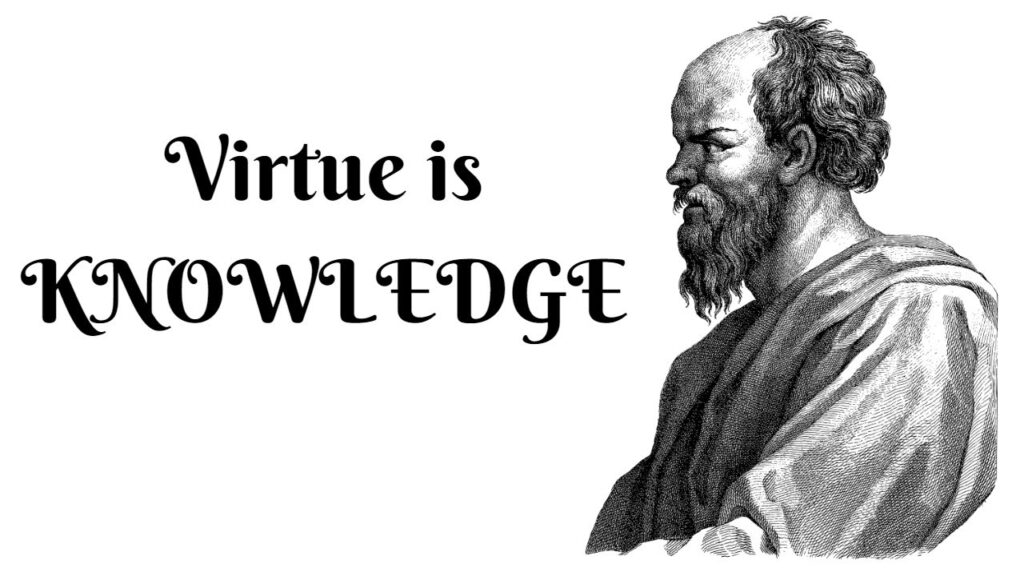
Socrates’ ethical philosophy hinges on the idea that virtue (aretē) is equivalent to knowledge. He argued that virtuous behavior—encompassing qualities like justice, courage, and wisdom—stems from understanding what is good. In Plato’s Meno, Socrates posits that no one knowingly does wrong; immoral actions result from ignorance of the good. This doctrine, often summarized as “virtue is knowledge,” suggests that ethical living requires intellectual insight rather than mere habit or social convention.
Socrates/Died
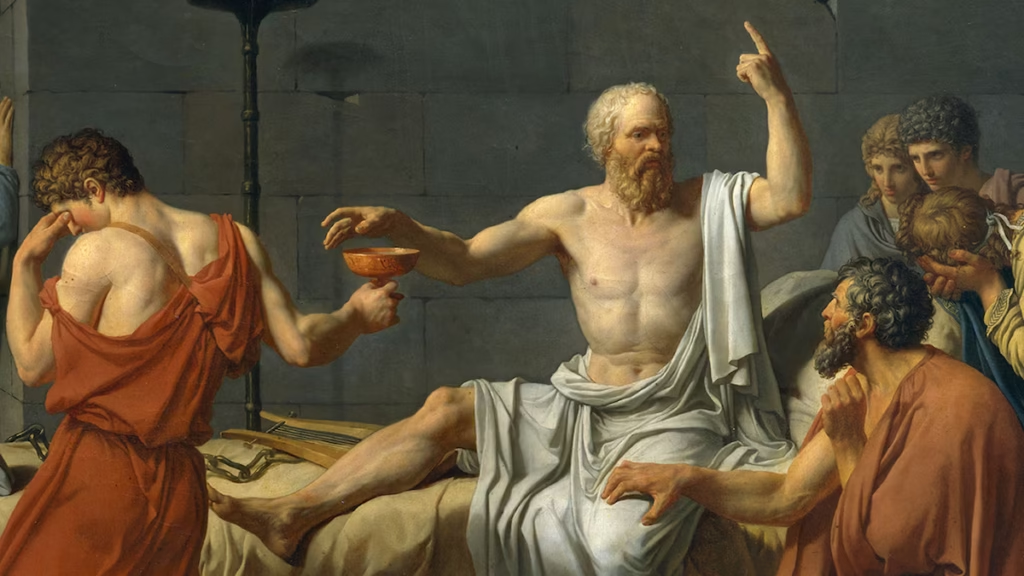
399 BC, Classical Athens
The death of Socrates in 399 BCE stands as one of the most poignant and philosophically rich events in Western history. Condemned to death by an Athenian jury for corrupting the youth and impiety, Socrates’ final days, as vividly portrayed in Plato’s dialogues Apology, Crito, and Phaedo, exemplify his unwavering commitment to philosophical principles, ethical integrity, and the pursuit of truth. Far from a mere historical tragedy, his execution transformed him into a martyr for free thought, influencing generations of thinkers and underscoring the tension between individual conscience and societal authority. This essay, approximately 1500 words, examines the circumstances leading to his trial, the events of his defense and sentencing, his refusal to escape, the circumstances of his final hours, and the profound legacy of his death.
Your article helped me a lot, is there any more related content? Thanks! https://www.binance.com/sl/register?ref=GQ1JXNRE