
The Persian Empire: Kings and Conquests
The Persian Empire, one of the largest and most influential empires in history, spanned from the 6th to 4th centuries BCE, covering vast regions from Egypt to India. Below is an overview of its key kings and their major conquests, focusing on the Achaemenid dynasty, which defined the empire’s peak.
Key Kings and Their Conquests
1.Cyrus the Great (r. 559–530 BCE)
Founding the Empire: Cyrus founded the Achaemenid Empire by overthrowing the Median Empire around 550 BCE, uniting the Persians and Medes.
Lydia (546 BCE): Defeated King Croesus, annexing Lydia (modern western Turkey) and gaining access to the Aegean. Babylonia (539 BCE): Captured Babylon, including Mesopotamia, Syria, and Judea, with minimal bloodshed, earning a reputation for clemency (e.g., freeing the Jews from Babylonian captivity). Central Asia: Subdued tribes in regions like Bactria and Sogdiana, extending Persian control to modern Afghanistan and Uzbekistan.Known for his humane governance, Cyrus established a model of centralized administration with satraps (governors) while respecting local customs.
2.Cambyses II (r. 530–522 BCE)
Egypt (525 BCE): Conquered Egypt, defeating Pharaoh Psamtik III at Pelusium, adding it to the empire. He also attempted campaigns into Nubia and Carthage but faced logistical setbacks.
Challenges: His reign was marred by accusations of tyranny and instability, including the mysterious death of his brother Bardiya. Cambyses died under disputed circumstances in 522 BCE, possibly by suicide or assassination.
Legacy: Expanded the empire westward but struggled with internal dissent and rebellion.
3.Xerxes I (r. 486–465 BCE)
Greco-Persian Wars (480–479 BCE): Led a massive invasion of Greece, capturing Athens and winning at Thermopylae, but suffered naval defeat at Salamis and a decisive loss at Plataea, halting Persian ambitions in Europe.
Legacy: Known for his grand building projects at Persepolis but also for the empire’s first major setbacks against the Greeks. He was assassinated in 465 BCE.

4.Darius I
Rise to Power: Seized the throne after a coup against a usurper (possibly Bordia or an impostor, Gautama).
India (c. 518 BCE): Annexed parts of the Indus Valley, incorporating northwest India into the empire.
Ionian Revolt (499–494 BCE): Crushed a rebellion of Greek city-states in Ionia (western Turkey), setting the stage for the Greco-Persian Wars.
Legacy: Darius reorganized the empire into 20 satrapies, standardized coinage (the daric), built the Royal Road for communication, and constructed Persepolis. His failed invasion of Greece at Marathon (490 BCE) marked a limit to Persian expansion.
5.Later Kings (465–330 BCE)
Artaxerxes I to Darius III: Subsequent kings faced internal strife, rebellions, and declining central authority. Notable events include:
- Darius III (r. 336–330 BCE): The last Achaemenid king, defeated by Alexander the Great at Issus (333 BCE) and Gaugamela (331 BCE), leading to the empire’s collapse by 330 BCE.
Scope and Impact of Conquests
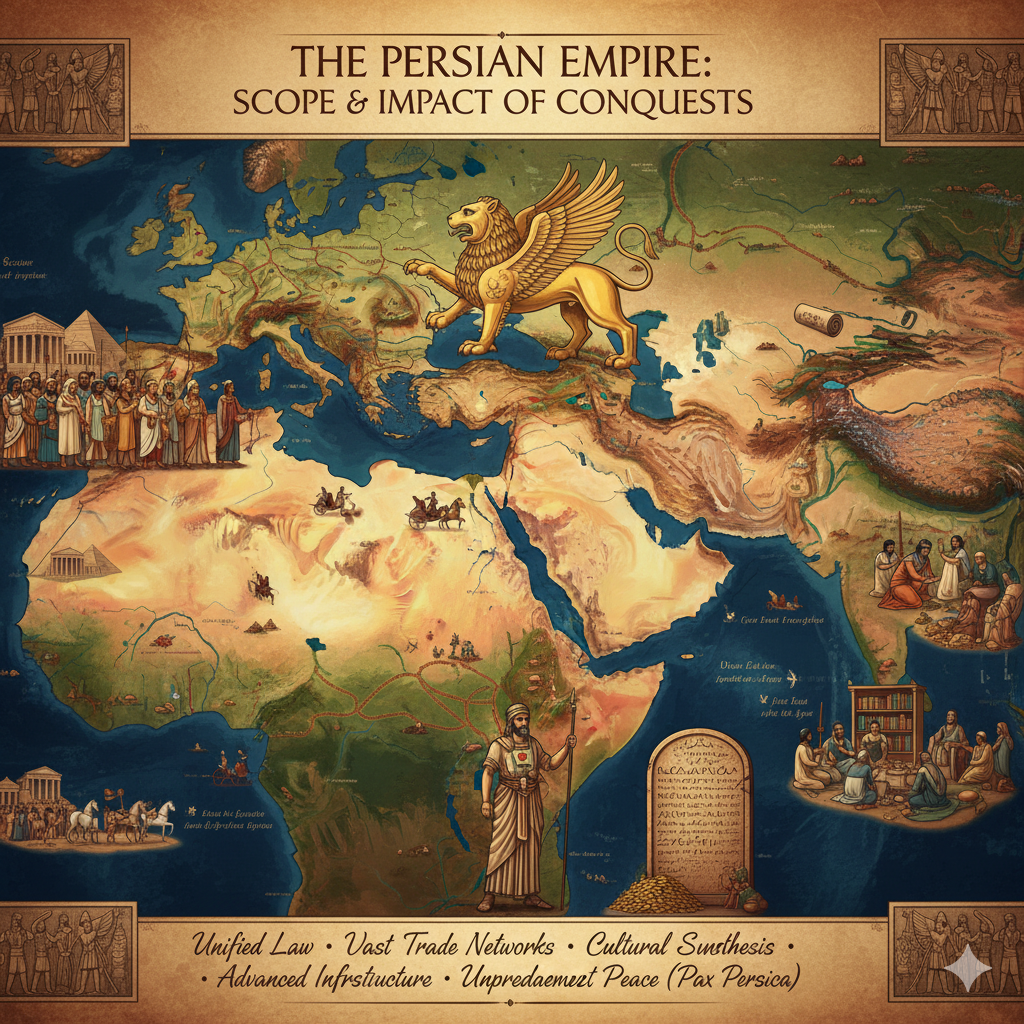
Geographic Reach: At its height under Darius I, the empire spanned three continents (Asia, Africa, Europe), covering roughly 5.5 million square kilometers, from the Indus River to the Danube.
Cultural Integration: The Persians adopted a policy of tolerance, allowing local customs, languages, and religions to persist under astragal governance.
Maintained a powerful army (including the elite Immortals) and a sophisticated economy with standardized coinage (the daric).Internal corruption, overextension, and Alexander’s conquests ended the empire, but its administrative systems influenced later empires like the Seleucids and Romans.
Your point of view caught my eye and was very interesting. Thanks. I have a question for you. https://www.binance.info/en-ZA/register?ref=B4EPR6J0
ask