
The History of the United Nations
The United Nations (UN) was established in 1945 in the aftermath of World War II to prevent future global conflicts, promote international cooperation, and maintain peace and security. Below is a concise history of the UN, its evolution, and its role in fostering global peace post-WWII, grounded in historical context and key examples.
Foundation of UN
1941: The Atlantic Charter, signed by U.S. President Franklin D. Roosevelt and UK Prime Minister Winston Churchill, outlined principles for post-war peace, including self-determination and economic cooperation. 1942: The term “United Nations” was coined by Roosevelt, and 26 Allied nations signed the Declaration by United Nations, pledging to defeat the Axis powers.
1943–1944: Conferences in Moscow, Tehran, and Dumbarton Oaks laid groundwork for the UN’s structure, proposing a Security Council and General Assembly. 1945: The San Francisco Conference (April–June) saw 50 nations draft the UN Charter. Signed on June 26, 1945, it entered into force on October 24, 1945, after ratification by major powers (U.S., USSR, UK, China, France).
Location
The United Nations’ main headquarters is located in New York City, on the eastern shore of Manhattan Island. The UN also has other major offices in Geneva, Nairobi, and Vienna, which act as regional centers and facilitate diplomatic work.
New York City: The primary headquarters, home to the UN Secretariat and the Security Council.
Geneva, Nairobi, and Vienna: These cities host important regional offices that support the UN’s global activities and specialize in different areas.
The Hague: Another location for important UN bodies, including the International Court of Justice.
The UN’s structure
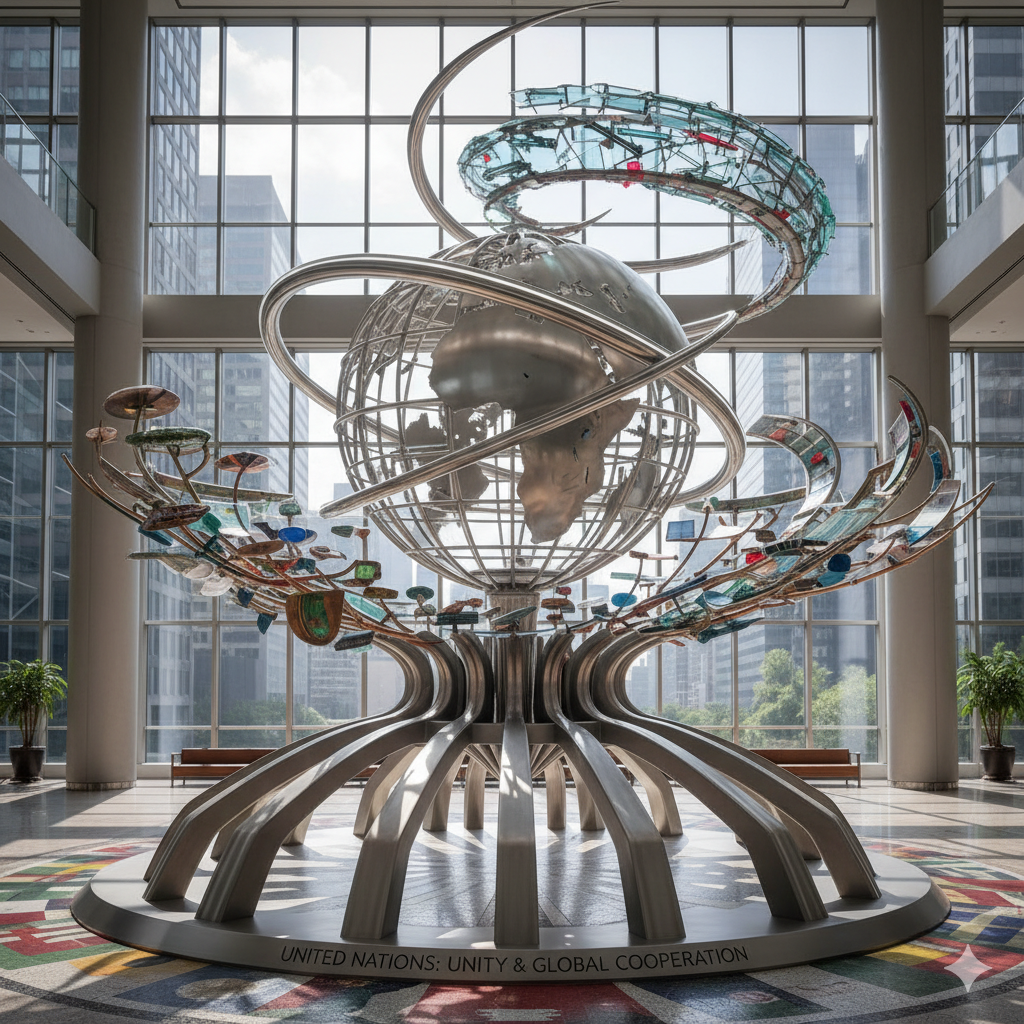
The term General Assembly most commonly refers to the United Nations General Assembly (UNGA), the main deliberative and policymaking body of the United Nations. All 193 UN member states have equal representation in this forum, with one vote per nation.
All 193 member states (as of 2025) have equal votes to discuss global issues and pass non-binding resolutions.
Annual sessions: The General Assembly meets annually in New York from September to December, with a resumed session from January to September as needed. The sessions begin with a “general debate” featuring speeches from heads of state or government.
Main committees: Much of the Assembly’s work is carried out by its six main committees, which focus on specific areas such as disarmament, economic and financial matters, human rights, and legal issues.
Decision-making: Decisions on important matters, including peace and security and budgetary questions, require a two-thirds majority vote. Other issues are decided by a simple majority, though many resolutions are adopted by consensus.
Security Council
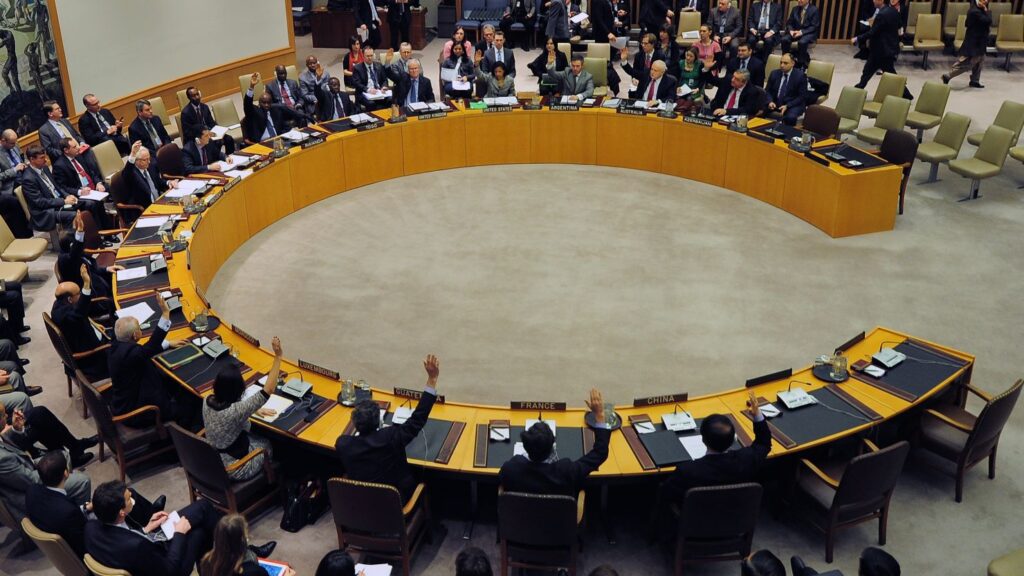
The Security Council is the United Nations’ organ with primary responsibility for maintaining international peace and security. All UN member states are obligated to carry out the council’s decisions.
15 members (5 permanent: U.S., Russia, China, UK, France; 10 rotating) hold primary responsibility for peace and security, with veto power for permanent members.
While the General Assembly can discuss issues related to international peace and security and make non-binding recommendations, the Security Council has the primary responsibility for enforcement actions. The two bodies often deal with the same issues in parallel, but the council’s decisions carry more weight because they are legally binding.
Veto power: The use of the veto by permanent members is controversial, as it can paralyze the council and prevent action on critical issues, as seen in the recent veto of a resolution on a ceasefire in Gaza.
Other Bodies
- The International Court of Justice (ICJ), Economic and Social Council (ECOSOC), and specialized agencies (e.g., WHO, UNESCO) support peace through justice, development, and humanitarian aid.
Role in Global Peace Post-WWII
1. Peacekeeping and Conflict Resolution
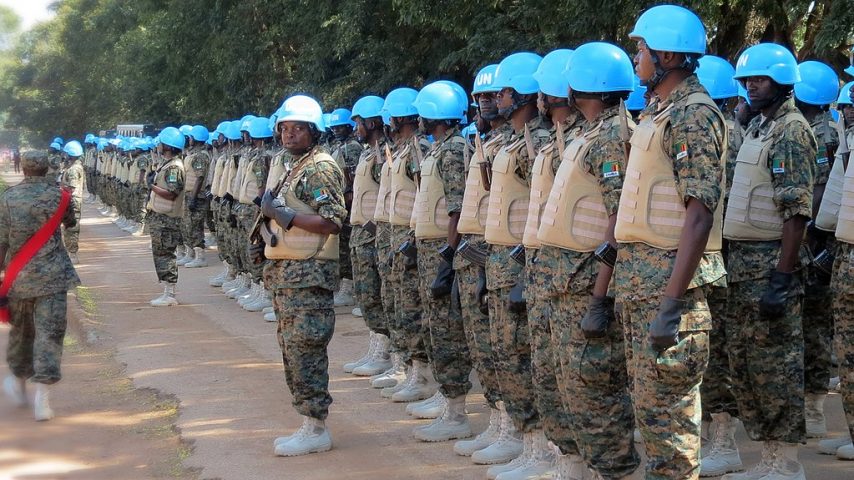
Peacekeeping Missions: Since 1948, the UN has deployed over 70 peacekeeping missions, involving 120,000 personnel at peak. Notable examples:
- 1948–1949: UN Truce Supervision Organization (UNTSO) monitored the Arab-Israeli armistice, one of the first peacekeeping efforts.
- 1956: The Suez Crisis saw the first armed peacekeeping force (UNEF), defusing tensions after Egypt nationalized the Suez Canal.
- 1990s: Missions in Bosnia (UNPROFOR) and Rwanda (UNAMIR) aimed to stabilize conflicts, though Rwanda’s failure to prevent genocide (1994) exposed UN limitations.
- 2000s–2020s: Missions in Mali, South Sudan, and the Democratic Republic of Congo addressed ongoing conflicts, with mixed success due to local complexities.
2. Decolonization and Self-Determination
Decolonization is the process by which colonies gain political independence from their colonizing power, driven by the principle of self-determination. This principle asserts the right of a people to freely determine their own political status and pursue their economic, social, and cultural development. The peak of modern decolonization occurred in the mid-20th century, particularly after World War II, fundamentally reshaping the global map and the international political system.
Resolution 1514 (1960): The Declaration on the Granting of Independence to Colonial Countries and Peoples called for the immediate end of colonialism.
Resolution 2625 (1970): The Declaration on Principles of International Law Concerning Friendly Relations extended the right of self-determination to peoples under foreign occupation.
Post-World War I: While US President Woodrow Wilson introduced the idea of self-determination, its application was initially restricted to Europe and largely ignored for colonial territories. The League of Nations’ mandate system maintained European control but introduced an idea of “sacred trust” for the well-being of colonized peoples.
Post-World War II: The devastating war significantly weakened European colonial powers and exposed the hypocrisy of fighting fascism while holding vast empires. The newly formed United Nations (UN) became a critical platform for anti-colonial movements.
3. Humanitarian and Development Efforts
- Protracted crises: Many humanitarian crises are no longer short-lived, with conflicts and climate change-related events creating prolonged emergencies. Resources that were once designated for development are now being redirected to immediate relief, a trend exacerbated by donor fatigue and growing humanitarian needs.
- Climate change: As a “threat multiplier,” climate change is increasing the frequency and intensity of natural disasters, fueling displacement, food insecurity, and conflict. Humanitarian agencies are integrating climate risks into their planning, while development projects focus more on climate adaptation and resilience.
Development goals: The UN Development Programmed (UNDP) focuses on long-term sustainable development. A core component of this work is the Sustainable Development Goals (SDGs), a set of 17 goals adopted by member states in 2015 to achieve “peace and prosperity for people and the planet” by 2030.
Timeline: Short-term and reactive.
Examples: Providing emergency food, shelter, and medical care to refugees or communities affected by a sudden flood.
Development aid is guided by principles of country ownership, effectiveness, and accountability.
Focus: Promoting sustainable growth and addressing the root causes of poverty and instability.
Timeline: Long-term and proactive.
4. Arms Control and Disarmament
Arms control and disarmament are two key international strategies for managing the risk of weapon proliferation and conflict, especially with weapons of mass destruction. Arms control generally involves limiting the development, production, and deployment of weapons through diplomacy and treaties. Disarmament, in contrast, aims for the outright reduction or elimination of weapons and military forces. While distinct in their objectives, the two concepts are often pursued in tandem.
The future of arms control remains uncertain. Prospects for major new treaties on nuclear weapons are poor, while existing agreements on conventional weapons face challenges of implementation and universality. The focus has largely shifted to smaller-scale agreements and regional initiatives. The erosion of decades-old treaties and the rise of new technologies suggest that the international community is at a critical juncture in the long-running effort to reduce the threats posed by modern weaponry.
Weapon Modernization: States are developing new weapons and capabilities, including hypersonic weapons and advancements in military artificial intelligence, which fall outside the scope of existing treaties.
5. Human Rights and Justice
Human rights and justice are central to the work of the United Nations, whose founding was a direct response to the atrocities of World War II. The international framework is built on the Universal Declaration of Human Rights (UDHR) of 1948, which sets out a “common standard of achievements for all peoples and all nations”. However, applying these standards remains a persistent global challenge.
International Criminal Court (ICC): An independent body created by the Rome Statute, the ICC prosecutes individuals for the most serious international crimes, including genocide, war crimes, and crimes against humanity. Despite landmark cases targeting powerful figures, it faces criticism over jurisdictional limits, selective enforcement, and lack of cooperation from some states.
UN Human Rights Council (UNHRC): This intergovernmental body, established in 2006, is responsible for strengthening the promotion and protection of human rights globally. It relies on various mechanisms, such as special procedures and the Universal Periodic Review, to monitor and address human rights situations.
Office of the High Commissioner for Human Rights (OHCHR): The OHCHR is the UN’s central focal point for human rights activities and serves as the secretariat for the Human Rights Council and other UN human rights bodies.
The UN’s role in global peace stems from its ability to provide a neutral platform for dialogue, coordinate collective action, and legitimize interventions. Its peacekeeping and humanitarian efforts have measurably reduced conflict and suffering, with studies showing a 40% drop in conflict-related deaths in UN-monitored zones. However, its effectiveness is hampered by geopolitical rivalries (Cold War, U.S.-China tensions) and structural flaws like the veto system. The UN’s success in decolonization and human rights set precedents for global norms, but enforcement remains a challenge in a world of sovereign states. Its adaptability—evident in addressing climate change and pandemics—suggests continued relevance, though reforms (e.g., Security Council expansion) are debated to enhance efficacy.
Your article helped me a lot, is there any more related content? Thanks! https://accounts.binance.info/register-person?ref=IXBIAFVY
yes Check Other Blogs