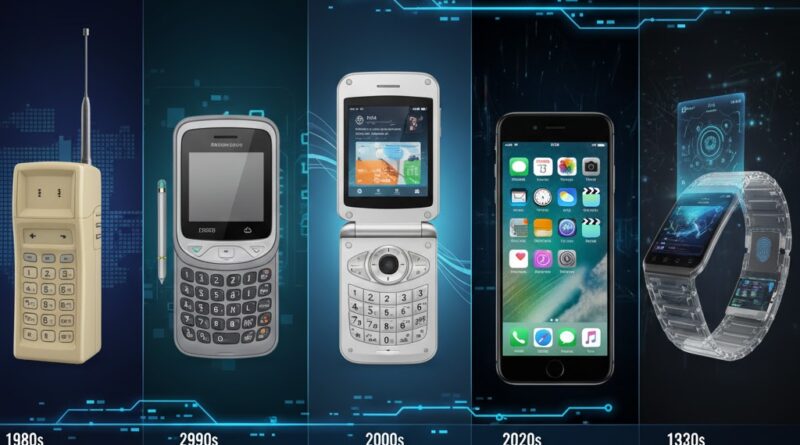
The history of evolution of smartphones
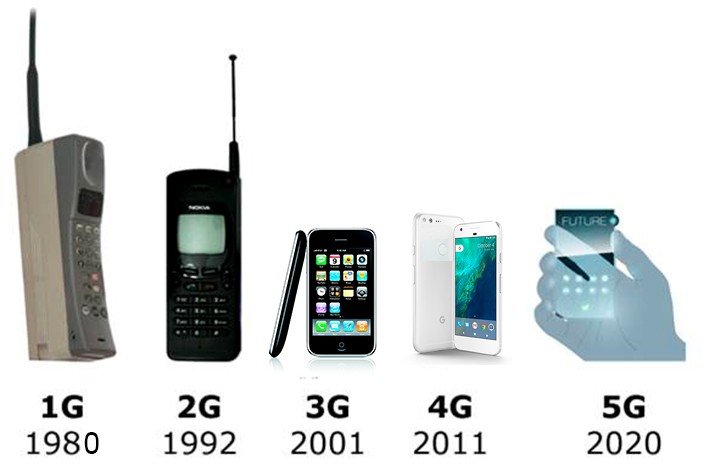
The smartphone’s history began with the IBM Simon in 1994, the first commercial device with a touchscreen, fax, and email capabilities, laying the groundwork for future innovation. The Ericsson R380 in 2000 was the first device to be officially marketed with the “smartphone” name. Major advancements followed with BlackBerry’s integrated messaging and the 2007 launch of the iPhone, which popularized touchscreens and app ecosystems. The subsequent rise of Android with the Samsung Galaxy S in 2010 further cemented the modern smartphone’s dominance, leading to devices with powerful processors, advanced cameras, and ubiquitous connectivity.
Early Developments (1990s)
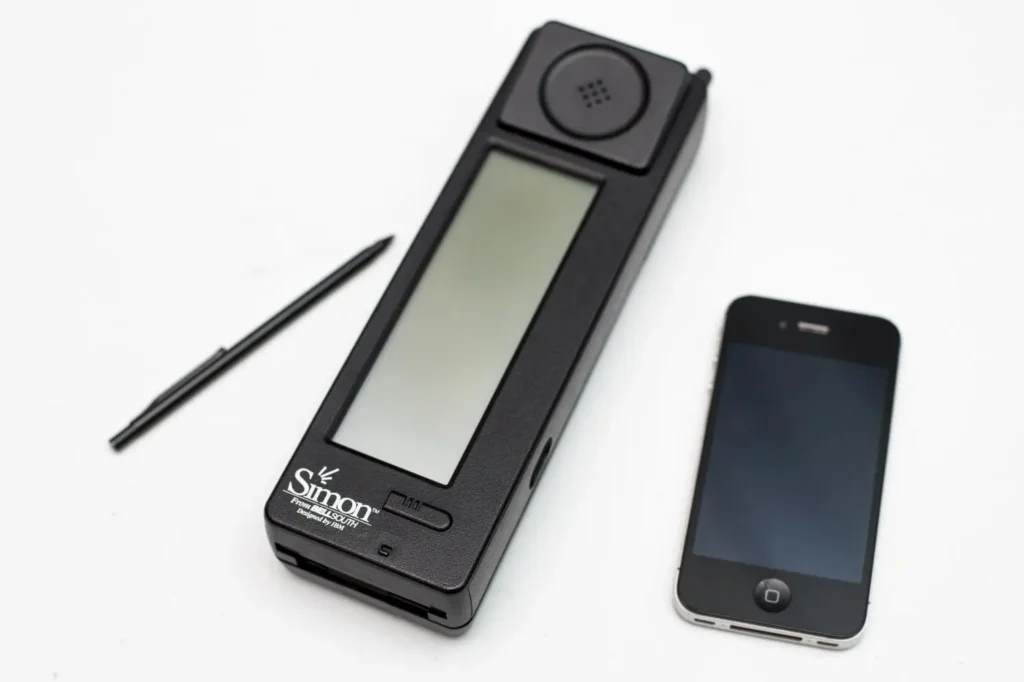
IBM Simon (1994):
Developed by IBM and marketed by BellSouth, the Simon Personal Communicator is considered the first commercially available smartphone. It combined mobile phone features with a touchscreen, email, and fax capabilities, demonstrating the potential for future handheld devices
Ericsson R380 (2000):
his device was significant as the first to be officially marketed as a “smartphone,” a term that was not widely recognized until this time. Release and Context: Launched in 2000, the Ericsson R380 was a groundbreaking device that combined mobile phone functionality with advanced personal digital assistant (PDA) features. It was developed by Ericsson, a Swedish telecommunications company, and was one of the first devices to run on the Symbian operating system (specifically EPOC, Symbian’s predecessor).The R380 helped establish Symbian as a leading mobile OS in the early 2000s, paving the way for more advanced Symbian devices like the Nokia 9210 Communicator. It influenced the design of future touchscreen phones, though its commercial success was modest due to high cost and niche market focus. Ericsson’s work on the R380 contributed to the eventual formation of Sony Ericsson in 2001, which continued mobile innovation.
The Rise of Key Players (2000s)
BlackBerry:
Blackberry devices are no longer manufactured, but used ones can be found, with prices varying greatly by model and condition, such as older models being available for around Rs. 8,500 to Rs. 15,000, while more recent ones like the BlackBerry KEY2 can range from Rs. 99,000 to Rs. 102,999 in Pakistan. For an accurate cost, you would need to check specific used phone marketplaces or retailers that still stock these device
Introduced integrated messaging and push email services, making BlackBerry devices extremely popular, particularly for business users.
The history and evolution of BlackBerry phones is a story of pioneering innovation, market dominance, and eventual decline, driven by technological shifts and competition. Below is a comprehensive overview based on reliable sources, focusing on key milestones, devices, and the factors that shaped BlackBerry’s trajectory in the smartphone industry.
Nokia and Symbian:
Nokia’s Symbian platform was a major player, offering smartphones with QWERTY keyboards and access to the internet and email.Nokia and Symbian played a pivotal role in the evolution of smartphones, with Nokia’s hardware dominance and Symbian’s operating system shaping the mobile industry from the late 1990s to the early 2010s. Below is a detailed history of their relationship, key devices, and the rise and fall of Symbian, grounded in reliable sources.
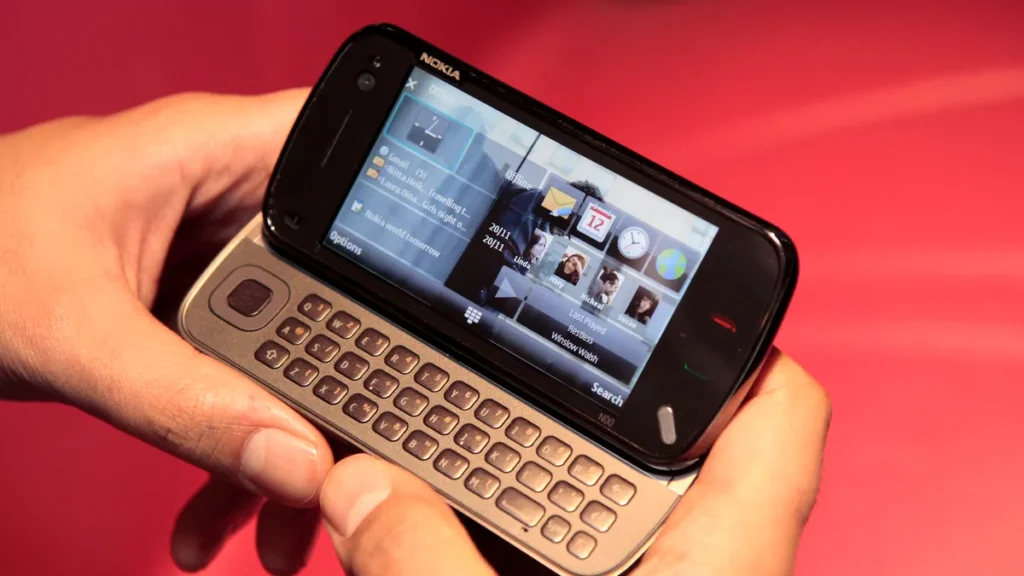
Nokia
Windows Mobile:
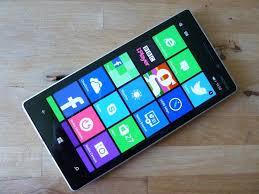
This platform also gained market traction, offering similar features like email and internet access for smartphones.Windows Mobile was Microsoft’s early attempt to create a mobile operating system for smartphones and PDAs, competing with Symbian, BlackBerry, and later iOS and Android. It powered a range of devices from the early 2000s to the early 2010s, primarily targeting business users with its integration of Microsoft Office and enterprise features. Below is a comprehensive history of Windows Mobile, its evolution, key devices, and its eventual decline, drawing from reliable sources and contextualizing it with contemporaries like the Ericsson R380, BlackBerry, and Nokia’s Symbian.
Strengths: Windows Mobile excelled in enterprise integration, offering robust Office and Exchange support, appealing to business users alongside BlackBerry. Its stylus-based PDAs influenced early smartphone designs. Weaknesses: Its complex, PC-like UI, reliance on resistive touchscreens, and weak app ecosystem made it less competitive against iOS and Android’s consumer-friendly platforms.
The Modern Smartphone Era (2007-Present)
Apple iPhone (2007):
The introduction of the iPhone revolutionized the industry by popularizing the all-touchscreen interface and a robust app ecosystem, shifting the focus from physical keyboards to a more intuitive user experience. The Apple iPhone, launched on June 29, 2007, marked a transformative moment in the history of smartphones, redefining user expectations and setting the standard for modern mobile devices. It combined a sleek design, innovative software, and a consumer-focused ecosystem, fundamentally altering the competitive landscape against contemporaries like the Ericsson R380, BlackBerry, Nokia’s Symbian, and Windows Mobile. Below is a detailed overview of the iPhone’s introduction, features, impact, and context, grounded in reliable sources.
Release: The iPhone went on sale June 29, 2007, exclusively through AT&T in the U.S., with a starting price of $499 (4GB) and $599 (8GB) with a two-year contract.
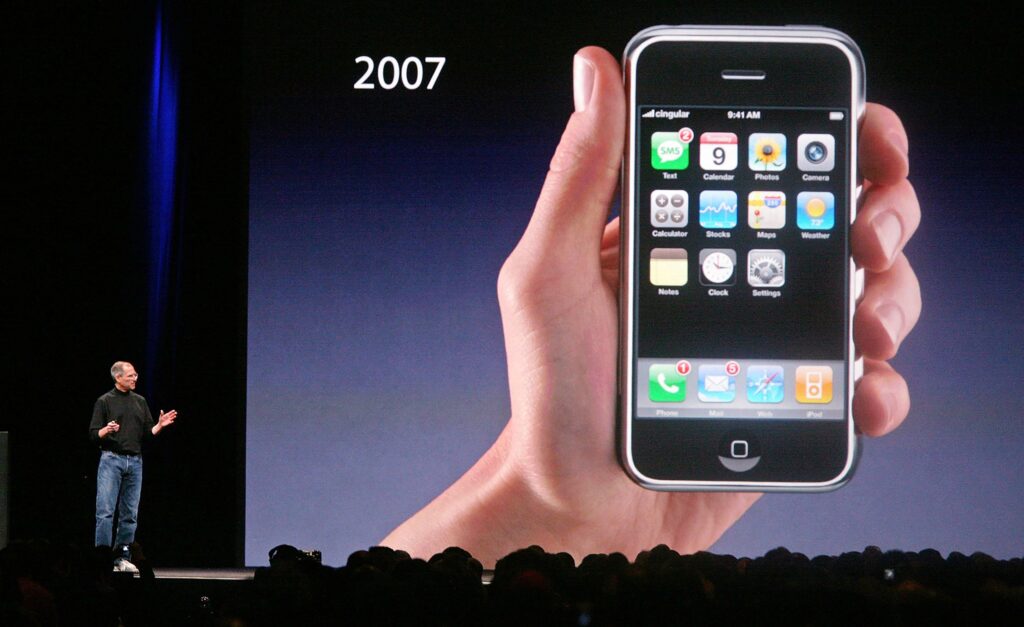
- Display: 3.5-inch capacitive touchscreen (320×480 pixels), the first smartphone to rely entirely on multi-touch gestures, eliminating the need for a stylus or physical keyboard.
- Build: Sleek aluminum and glass design, weighing 135g, with a minimalist single home button.
- Camera: 2MP rear camera (no front camera or video recording).
- Processor: 412 MHz ARM 11 processor with 128MB RAM, running iPhone OS (later renamed iOS).
- Connectivity: 2G EDGE (no 3G), Wi-Fi, and Bluetooth 2.0.
iPhone OS: A mobile-optimized version of macOS, offering a fluid, gesture-based UI with apps like Safari (full web browsing), Mail, Calendar, and a visual voicemail system.
Android and Samsung (2010):
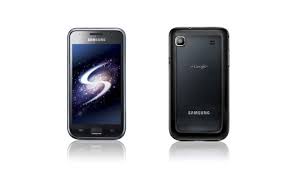
Samsung’s Galaxy S, released in 2010, became a flagship device for the Android operating system, helping Android become a dominant force in the smartphone market.
In 2010, Android and Samsung emerged as major forces in the smartphone industry, challenging Apple’s iPhone and reshaping the market previously dominated by Nokia’s Symbian, BlackBerry, and Windows Mobile. Android, Google’s open-source operating system, and Samsung, a leading hardware manufacturer, formed a synergistic partnership that propelled both to global prominence. Below is a detailed overview of Android and Samsung’s roles in 2010, their key devices, and their impact, contextualized with contemporaries like the Ericsson R380, BlackBerry, Nokia’s Symbian, and the iPhone, grounded in reliable sources.
Specs: 4-inch Super AMOLED display (480×800), 1GHz Cortex-A8 processor, 512MB RAM, 5MP camera, and Android 2.1 (Eclair, upgradable to 2.3). Features: TouchWiz UI, 720p video recording, and a vibrant display that rivaled Apple’s Retina display (iPhone 4, 2010). Sales: The Galaxy S sold 10 million units globally by early 2011, establishing Samsung as a premium Android brand.
Samsung’s Growth: The Galaxy S series evolved with models like the SII (2011) and SIII (2012), solidifying Samsung’s position. By 2025, Samsung’s innovations in foldables (e.g., Galaxy Z Fold) and 5G continue to drive Android’s ecosystem.
Continued Evolution:
Smartphones have continued to evolve with more powerful processors, higher-resolution displays, advanced camera systems, and ubiquitous connectivity (3G, 4G, and now 5G), deeply integrating into daily life.
The evolution of smartphones from 2010 to 2025 built on the foundational shifts driven by earlier devices like the Ericsson R380, BlackBerry, Nokia’s Symbian, Windows Mobile, and the transformative Apple iPhone (2007) and Android-Samsung partnership (2010). This period saw rapid advancements in hardware, software, connectivity, and use cases, consolidating the iOS-Android duopoly and introducing new form factors, AI integration, and sustainable designs. Below is a detailed continuation of the smartphone evolution from 2010
Phablets: The Samsung Galaxy Note (2011) popularized large-screen devices (5.3 inches), selling 10 million units by 2012. Apple followed with the iPhone 6 Plus (5.5 inches, 2014).
Samsung’s Galaxy Round (2013) and LG G Flex (2013) introduced curved and flexible screens, precursors to later foldables.
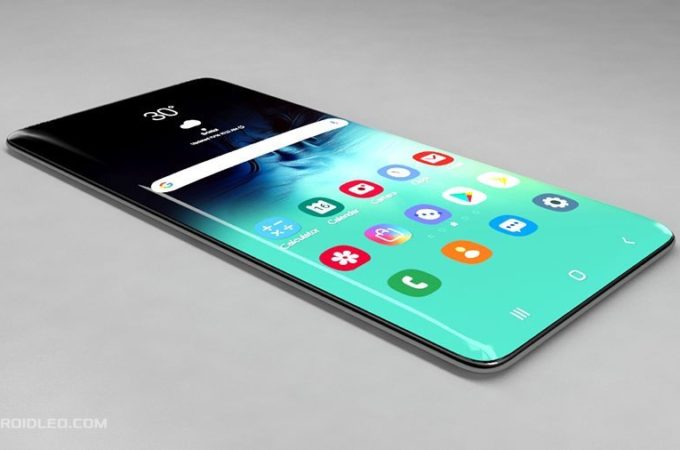
Cameras and Assistants: AI enhanced smartphone cameras with computational photography (e.g., Google Pixel’s Night Sight, 2016) and voice assistants like Google Assistant (2016) and Apple’s Siri improvements. Huawei’s Kirin chips and Apple’s Neural Engine optimized AI tasks. Features: AI-powered spam call detection, predictive text, and personalized recommendations became standard
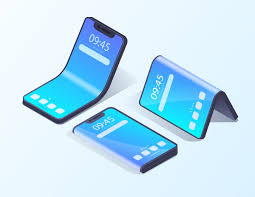
- Samsung’s Galaxy Z Fold (2019) and Huawei Mate X introduced foldable displays, offering tablet-like screens in a phone form factor, though early models faced durability issues.
Pingback: The Truth About Artifical Intelligence in Daily Life - Fact Hub
Your article helped me a lot, is there any more related content? Thanks!
Thanks for sharing. I read many of your blog posts, cool, your blog is very good.