
The History of Ancient Indian Civilization
Ancient Indian civilization is marked by several significant historical periods, from the urban innovation of the Indus Valley Civilization to the rise of major empires. The intellectual and cultural legacies of this era continue to influence modern society, with foundational contributions to science, mathematics, philosophy, and religion.
Stone Age Cultures: Archaeological evidence from sites like Bhimbetka (Madhya Pradesh) shows rock art and tools dating back to the Paleolithic and Mesolithic periods (~30,000–10,000 BCE), indicating early human activity.
Urban Sophistication: Centered in the Indus River basin, this civilization included major cities like Harappa, Mohenjo-Daro, and Dholavira. Known for advanced urban planning, grid layouts, drainage systems, and standardized weights.
Decline: By ~1900 BCE, the civilization declined, possibly due to climate change, river shifts, or invasions (debated).
Vedic Period (~1500–500 BCE)
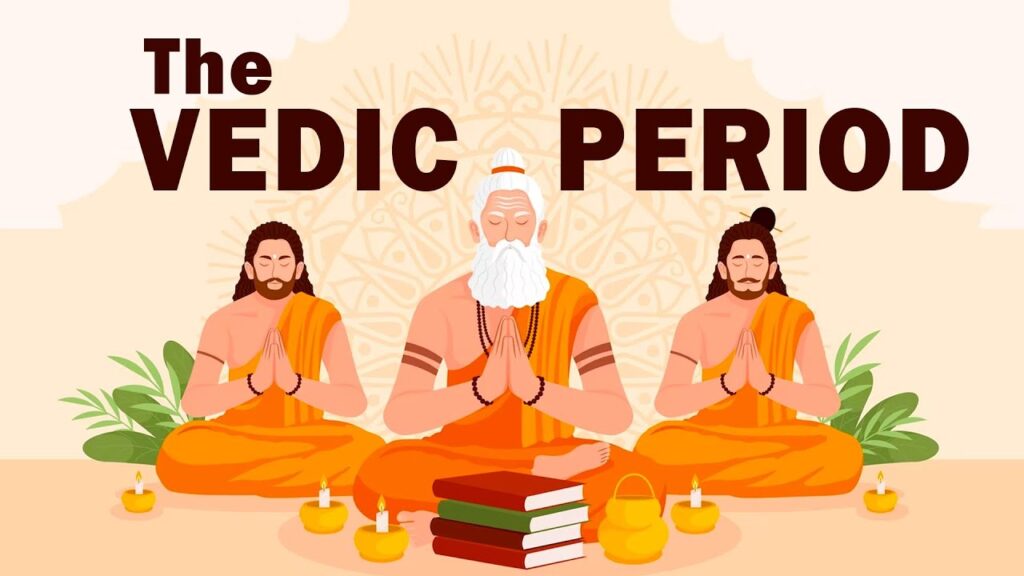
Arrival of Indo-Aryans: Indo-European-speaking groups migrated into northwest India, bringing pastoralism and Vedic culture.
Society and Economy: Tribal, pastoral society transitioned to settled agriculture. Social stratification emerged, with early varna (caste) divisions: Brahmins (priests), Kshatriyas (warriors), Vaishyas (traders/farmers), and Shudras (laborers). Small tribal kingdoms (janapadas) governed by chiefs (rajas), with assemblies like sabha and samiti.
Rise of Mahajanapadas
The rise of the Mahajanapadas in ancient India, around the 6th century BCE, was a pivotal transition from the smaller, tribal-based political units of the Vedic period. The emergence of these 16 powerful kingdoms and republics was driven by significant advancements in technology, economy, and society. This era is also known as the “Second Urbanization,” following the decline of the Indus Valley Civilization.
Increased productivity: This led to a substantial agricultural surplus, which was crucial for supporting a larger, non-agricultural population of warriors, administrators, and artisans.
Population growth: The food surplus fueled a significant rise in population and the development of settled, agrarian communities that eventually grew into urban centers.
The concept of political loyalty moved from being based on the Jana (tribe or clan) to being based on the Janapada (territory). This evolution culminated in the creation of the Mahajanapadas, or “great kingdoms”.
- Urbanization and Economy: Growth of cities like Pataliputra, use of iron tools, and trade expansion. Punch-marked coins indicate early monetization.
The agrarian surplus funded professional, standing armies, which kings used to expand their territory through conquest and consolidate power.
Mauryan Empire (~321–185 BCE)
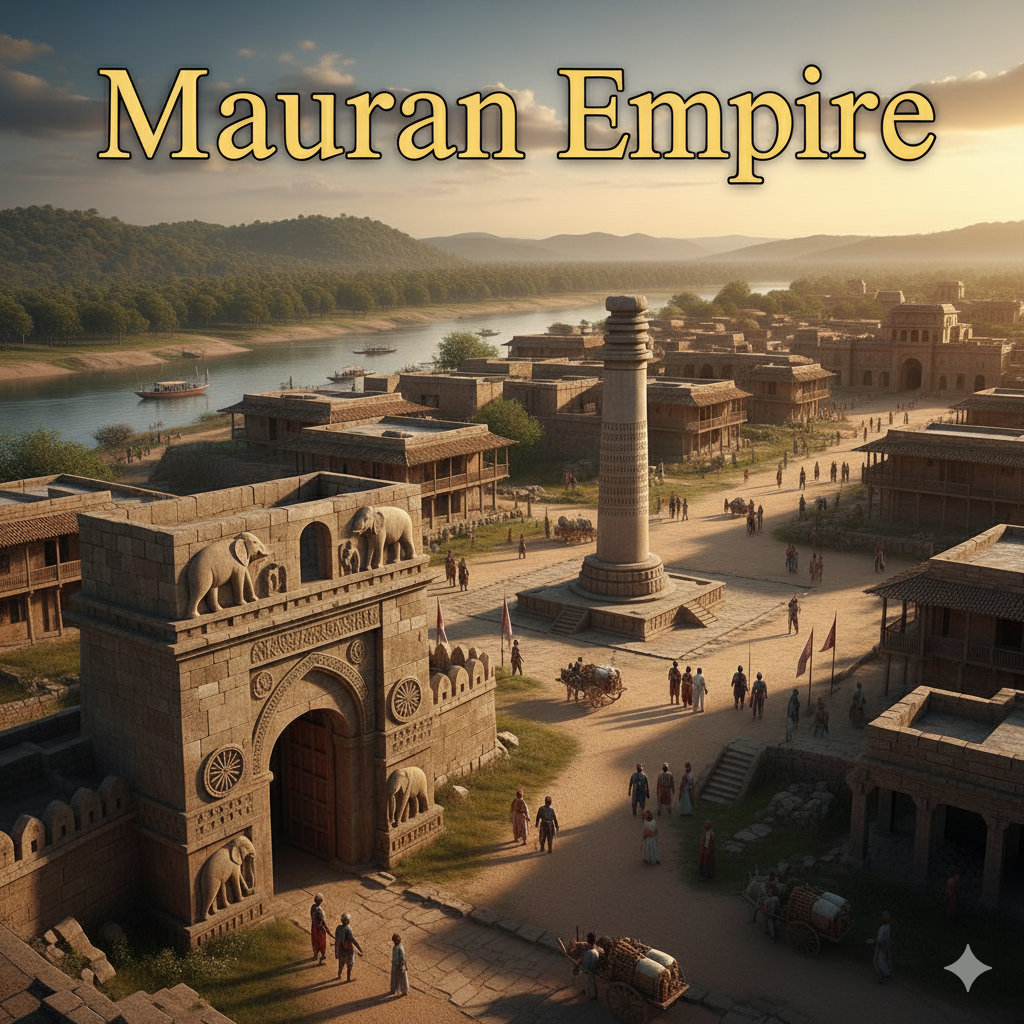
The Mauryan Empire (c. 322–185 BCE) was the first major empire to unify most of the Indian subcontinent under a single administration. Originating from the kingdom of Magadha, its reign marked a pivotal period in Indian history, characterized by sophisticated governance, extensive trade networks, and the wide dissemination of Buddhism.
Chandragupta Maurya (c. 322–298 BCE): The empire’s founder, he exploited the power vacuum left by Alexander the Great’s withdrawal from northwestern India. With the guidance of his advisor, Chanakya (also known as Kautilya), he overthrew the Nanda Dynasty and conquered vast territories spanning from Afghanistan and Iran in the west to Assam and Bengal in the east.
Bindusara (c. 298–272 BCE): Chandragupta’s son continued the expansion, extending the empire south into the Deccan Plateau.
Ashoka the Great (c. 268–232 BCE): As the third Mauryan emperor, Ashoka brought the empire to its territorial and cultural zenith. His brutal conquest of Kalinga (modern-day Odisha) led to his conversion to Buddhism and a change in state ideology from military expansion to the promotion of Dhamma, a moral code emphasizing compassion, non-violence, and tolerance.
Economic prosperity: The state standardized coinage and weights, built an extensive road network, and managed state-owned lands and irrigation projects. This stability enabled thriving agriculture, crafts, and trade, including international commerce with Hellenic kingdoms.
Religious pluralism: While Ashoka’s patronage spread Buddhism extensively across Asia, the empire was characterized by religious tolerance, with Hinduism, Jainism, and the Ajika sect also prevalent.
Assassination of the last ruler: The empire officially ended in 185 BCE when the last Mauryan ruler, Brihadratha, was assassinated by his commander-in-chief, Pushyamitra Shunga, who went on to establish the Shunga Dynasty.
Gupta Empire (~320–550 CE)
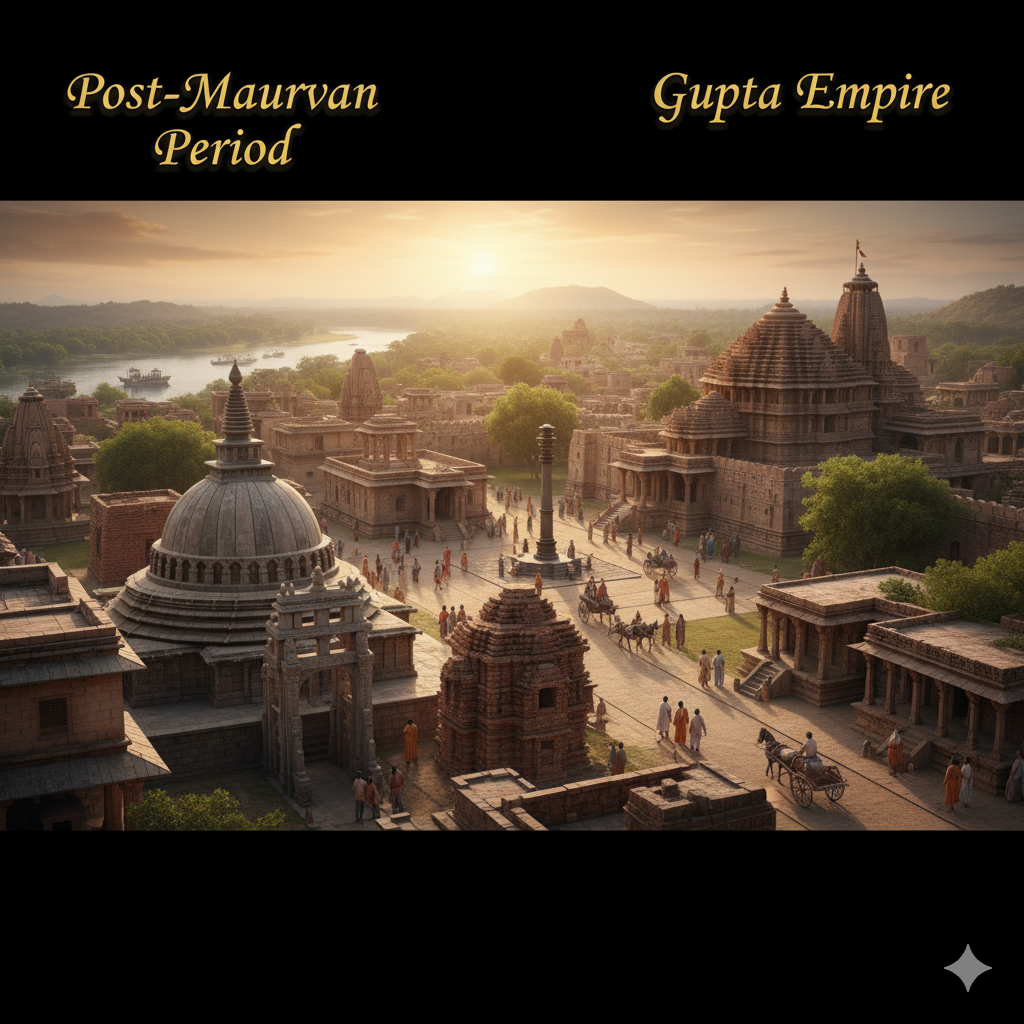
The Gupta Empire (c. 320–550 CE) presided over a period of peace, prosperity, and cultural brilliance, often referred to as the “Golden Age of India”. This era witnessed immense advancements in art, science, mathematics, and literature under a stable, centralized rule that followed the fragmentation of the Mauryan Empire.
Chandragupta I (c. 320–335 CE): The founder of the Gupta dynasty, he established the empire’s power through strategic alliances, most notably his marriage to the Licchavi princess Kumaradevi. He was the first to use the imperial title Maharajadhiraja (“great king of kings”).
Samudragupta (c. 335–375 CE): Chandragupta I’s son, known as the “Napoleon of India,” transformed the kingdom into a vast empire through extensive military campaigns. His conquests extended Gupta control across much of northern India and parts of the south.
Chandragupta II (c. 375–415 CE): Also known as Vikram Aditya, his reign marked the peak of the empire’s power and cultural achievements. He expanded the empire further, particularly by annexing territories in western India, which gave the Guptas control over crucial trade routes to the sea.
Metallurgy: The Iron Pillar of Delhi, built during the reign of Chandragupta II, is a testament to the metallurgical skill of the Gupta period, standing rust-free for over 1,500 years.
Literature: This era is the zenith of Sanskrit literature. The poet and playwright Kalidasa produced masterpieces like Shakuntala. The Hindu epics, the Mahabharata and Ramayana, were also formalized during this time.
Post-Mauryan Period (~185 BCE–320 CE)
The Post-Mauryan Period (c. 185 BCE–320 CE) is a historically transformative era that bridged the collapse of the unified Mauryan Empire and the rise of the Guptas. It was marked by significant political fragmentation, foreign invasions, and a dynamic exchange of cultures and religions.
Shunga Dynasty (c. 185–73 BCE): Founded by Pushyamitra Shunga, a Brahmin commander-in-chief, this dynasty established itself in Magadha, the heartland of the former Mauryan Empire. The Chunga’s presided over a resurgence of Brahmanical traditions and resisted early Greek incursions.
Kanva Dynasty (c. 73–30 BCE): This short-lived dynasty succeeded the Shungas in Magadha and was ultimately overthrown by the Satavahanas.
Satavahana Dynasty (c. 230 BCE–220 CE): Ruling over the Deccan region, the Satavahanas were a long-lasting power that controlled key trade routes connecting northern and southern India. The dynasty was known for its patronage of different religions and the use of matrilineal names by some of its kings.
Indo-Greeks (c. 200 BCE–10 CE): Originating from the Greco-Bactrian kingdom, the Indo-Greeks established control over large areas of modern-day Afghanistan and Pakistan. The most famous Indo-Greek king, Menander I (Milinda), was a known patron and convert to Buddhism.
Sakas (Indo-Scythians) (c. 150 BCE–400 CE): Nomadic tribes from Central Asia, the Sakas established kingdoms in northwestern India, most notably the Western Kshatrapas in modern Gujarat and Maharashtra.
Parthians (Indo-Parthians) (c. 247 BCE–224 CE): Originating from Iran, the Parthians controlled parts of northwestern India after the SaaS. The Christian Apostle Thomas is traditionally associated with the court of the Indo-Parthian king Gondophernes.
Sources and Further Reading
- The Wonder That Was India by A.L. Basham.
- Archaeological findings from the ASI (Archaeological Survey of India).
- Primary texts like the Rigveda, Arthashastra, and Ashokan edicts.
Recent discussions on X highlight ongoing interest in Harappan urban planning and Gupta scientific contributions, reflecting continued global fascination.
online weed delivery service offering fast and discreet shipping