
The Great Depression of 1929
The Great Depression, starting in 1929, was a severe global economic downturn that lasted roughly a decade, profoundly reshaping societies and economies worldwide. Below is a concise overview of its causes, global impacts, and key consequences, with reasoning grounded in historical data and economic analysis.
Causes of Joblessness
1.Stock Market Crash
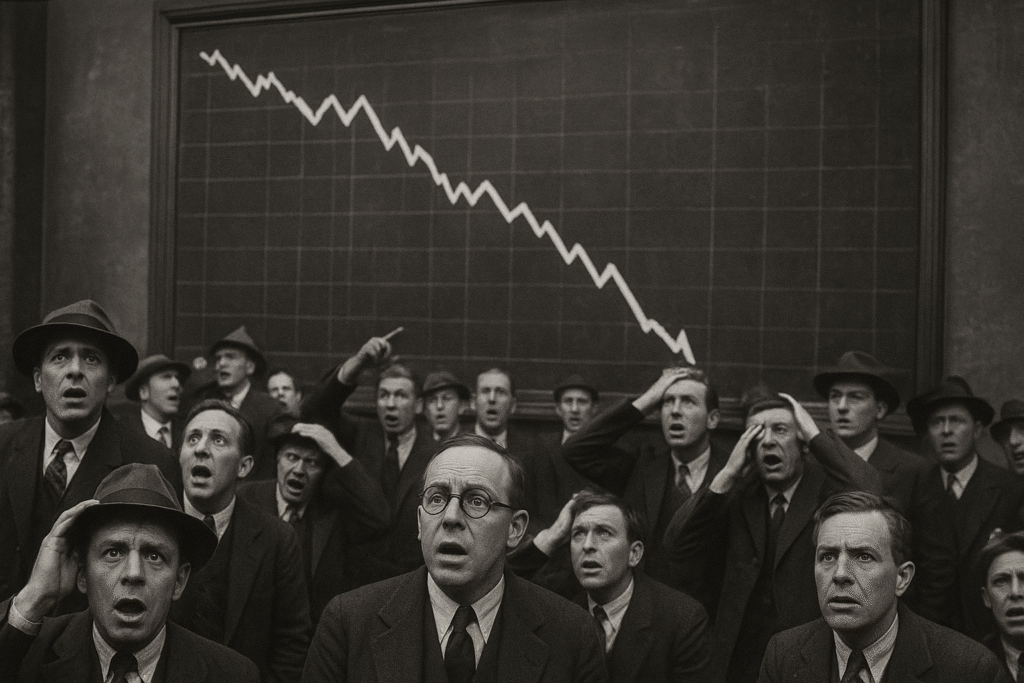
A stock market crash is defined as a sudden, steep, and often unexpected decline in stock prices, typically a drop of 10% or more over a few days. This distinguishes it from a market correction, which is generally a drop of more than 10% but less than 20% over a longer period, or a bear market, which signifies a sustained loss of 20% or more. On October 24, 1929 (Black Thursday), and October 29, 1929 (Black Tuesday), the U.S.
They can result in significant economic consequences, including decreased employment, reduced investment, and lower consumer spending.
Circuit breakers trigger trading pauses at specific thresholds of market decline, typically 7% (Level 1), 13% (Level 2), and 20% (Level 3).
2.Banking Failures
In the US, bank failures occur when a financial institution becomes insolvent, lacking the funds to cover customer deposits and other obligations, leading regulators like the Federal Deposit Insurance Corporation (FDIC) to intervene. The FDIC insures deposits, and no depositor has lost funds since 1933.
- The Santa Anna National Bank (Santa Anna, Texas) on June 27, 2025.
- Pulaski Savings Bank (Chicago, Illinois) on January 17, 2025.
- The First National Bank of Lindsay (Lindsay, Oklahoma) on October 18, 2024.
- Republic First Bank (doing business as Republic Bank, Philadelphia, Pennsylvania) on April 26, 2024.
- Citizens Bank (Sac City, Iowa) on November 3, 2023.
- Heartland Tri-State Bank (Elkhart, Kansas) on July 28, 2023.
- First Republic Bank (San Francisco, California) on May 1, 2023.
- Signature Bank (New York, New York) on March 12, 2023.
- Silicon Valley Bank (Santa Clara, California) on March 10, 2023
3.Unequal Wealth Distribution
Unequal wealth distribution is the disparity in the distribution of assets among individuals, groups, or countries. Globally and within countries, wealth is much more unequally distributed than income. It is a persistent issue with far-reaching consequences for economic growth, social stability, and individual well-being.
Several tools are used to measure wealth inequality. The Gini coefficient, a value between 0 and 1, is a common measure, with wealth typically having a higher coefficient than income. The Palma ratio compares the wealth share of the richest 10% to the poorest 40%, while other percentile ratios examine the distribution among different population segments. the top 1% held over 20% of income by 1929
4.Decline in International Trade
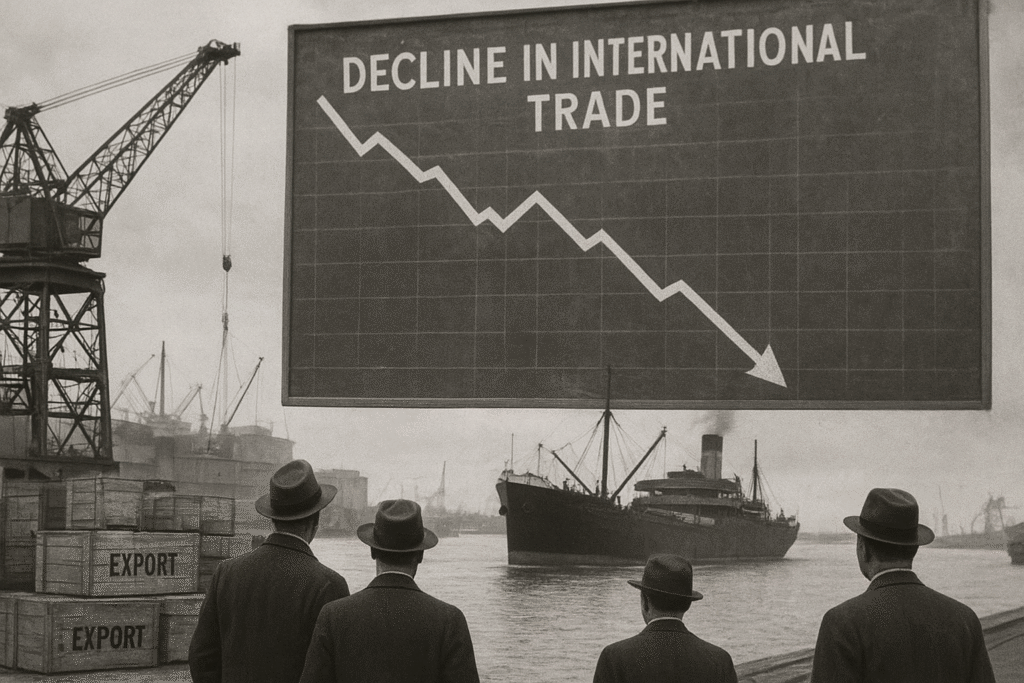
A decline in international trade is a contraction in the worldwide flow of goods, services, and capital. The World Bank and the World Trade Organization (WTO) have noted a significant slowdown since the 2008 global financial crisis, a trend exacerbated by recent geopolitical tensions and supply chain disruptions.
Lower economic growth: A decline in trade can be both a symptom and a cause of slower global economic growth. It reduces export opportunities, which are a major driver of growth for many nations, particularly developing economies.
Supply chain vulnerabilities: The push toward reshoring and diversification, while aimed at increasing resilience, can also lead to less efficient and more costly supply chains.
Heightened inflation: Tariffs and trade restrictions can lead to higher prices for consumers by increasing the cost of imported goods and reducing competition.
Weak economic growth: Slower growth in major economies, particularly China and advanced countries, directly reduces import demand. During the 2008 financial crisis, a drop in consumer and investment demand significantly reduced world trade volumes.
High tariffs, like the U.S. Smoot-Hawley Tariff Act of 1930, reduced global trade by 66% between 1929 and 1934, deepening the crisis.
5.Monetary Policy Failures
Monetary policy, managed by central banks to influence interest rates and the money supply, aims to stabilize prices and foster economic growth. However, its effectiveness can be compromised by several factors, potentially leading to policy failures.
Financial Instability: Failed policies can contribute to asset bubbles and financial crises.
Banking Crises: Ineffective policies can play a role in bank failures.
Slower Economic Growth: If monetary policy is ineffective, it can result in reduced growth, investment, and employment.
Inflation/Deflation: Policies may fail to meet inflation targets, leading to undesirable price level changes.
International Impacts: Monetary policy decisions in one country can affect others through capital flows and exchange rates. The U.S. Federal Reserve raised interest rates in the late 1920s to curb speculation, tightening credit at a critical time.
Japan (1990s onward): Cited as an example of a liquidity trap.
US Housing Bubble (early 2000s): Some argue low interest rates contributed to the housing boom.
Asian Crisis (1997): Incorrect monetary policy contributed to the crisis.
Japan (1990s onward): Cited as an example of a liquidity trap.
US Housing Bubble (early 2000s): Some argue low interest rates contributed to the housing boom.
Asian Crisis (1997): Incorrect monetary policy contributed to the crisis.
Global Impacts of Joblessness
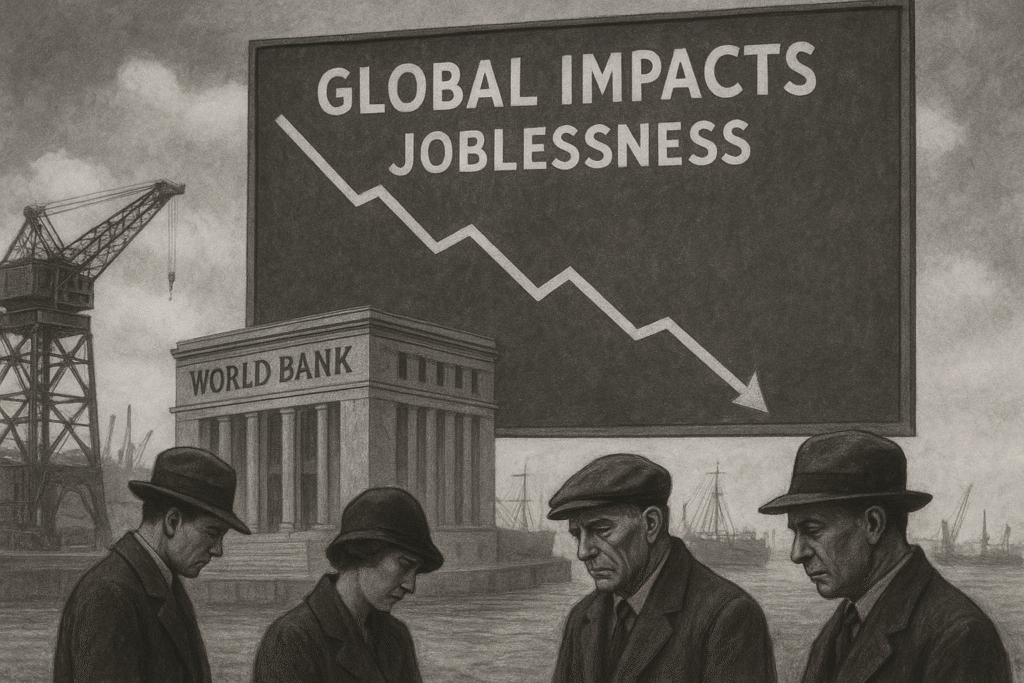
The global impact of joblessness extends far beyond the individual and their family, affecting economic growth, social stability, and public health worldwide. While overall global unemployment rates have remained near historic lows, significant challenges persist, such as high youth unemployment, persistent working poverty, and increasing inequality. The transition toward automation and digitalization is also reshaping job markets globally, with varying effects across developed and developing countries.
GDP fell by nearly 30% from 1929 to 1933. Unemployment soared to 25% by 1933, with millions jobless and homeless. Industrial production dropped by 47%, and thousands of businesses collapsed. The Dust Bowl, a severe drought in the Great Plains, displaced farmers and worsened rural poverty. President Franklin D. Roosevelt’s New Deal (1933–1939) introduced relief, recovery, and reform measures, including Social Security, public works (e.g., WPA, CCC), and banking reforms (e.g., Glass-Steagall Act).
Higher poverty rates: For many, unemployment is a primary cause of poverty. Financial hardship can lead to food insecurity, housing instability, and limited access to healthcare.
Mental and physical health decline: The loss of a job is a major source of stress, anxiety, and depression. Studies show that unemployment is linked to an increased risk of mental disorders, higher substance use, and higher suicide rates. The physical health of the unemployed and their families also often suffers.
Family stress: Financial stress from unemployment can strain family relationships and lead to conflicts, a higher risk of domestic violence, and family breakdown.
Increased social unrest and crime: Economic hardship and widespread feelings of hopelessness can contribute to rising crime rates and fuel social and political instability.