
The Future of Work: Remote jobs in 2025
The Future of Work: Remote jobs in 2025of November 2025, remote work has solidified its place as a cornerstone of the global job market, evolving from a pandemic-era experiment into a strategic norm. While the initial boom has moderated, with some quarterly dips in postings, the overall trajectory points to sustained growth driven by technology, employee demands, and economic pressures. Over 32.6 million Americans—about 22% of the workforce—now work remotely, a tenfold increase from pre-2020 levels. Globally, more than 40% of workers engage in remote or hybrid models, with projections estimating 90 million digital remote positions by 2030. Hybrid setups dominate, blending flexibility with collaboration, but fully remote roles persist in high-demand fields. Below, we’ll break down key trends, statistics, challenges, and opportunities shaping remote jobs this year.
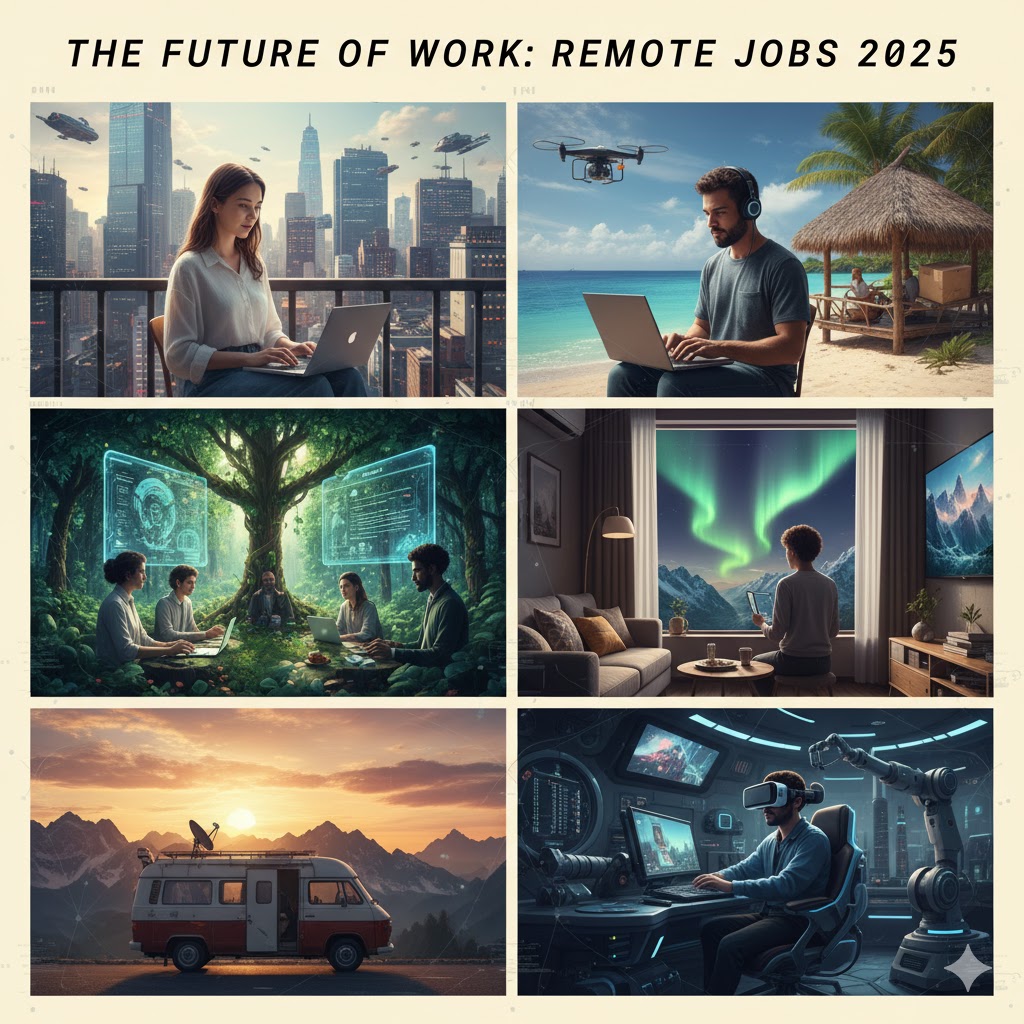
1-Hybrid Dominance with Structured Flexibility
Rather than fully remote or fully in-office, many organisations are adopting a hybrid model. Offices shift to being collaboration hubs rather than full-time desks.
For example: “Remote working is set to increase by 2025 … one-third of workforces working remotely now (36 %) and 44 % by 2025” according to a report.
(The Hybrid Workplace Example)
- Fixed Hybrid Model: The organization sets specific in-office days for certain teams, ensuring in-person collaboration while allowing remote work on other days (e.g., Google’s set Tuesday-Wednesday-Thursday requirement).
- Office-First or Remote-First with Flexible Days: A primary location is prioritized, but employees have a set number of flexible days they can use as needed.
2-AI and Tech & tools evolve fast
AI tools are automating 30-50% of routine tasks, from scheduling to data analysis, boosting efficiency in remote setups. Virtual reality (VR) meetings and AI assistants are standard for immersive collaboration. Fastest-growing remote roles include compliance, billing, data analysis, and process automation. Globally, nearshoring to regions like LATAM and the Philippines is rising, with 70% of U.S. tech firms tapping these talent pools for 24/7 overlap.
Human-AI Collaboration: The ability to work effectively alongside AI systems is an increasingly valuable skill.
Emergence of New Roles: New specialized job roles are emerging, such as AI specialists, machine learning engineers, and AI ethics experts.
Automation of Tasks: AI is increasingly automating routine and complex tasks across all industries, from data entry and customer service (chatbots) to code generation and testing in software development.
Increased Productivity: By handling mundane tasks, AI tools free up human workers to focus on higher-value activities such as strategic planning, creativity, and complex problem-solving.
3-Global talent & location flexibility
The modern workplace is characterized by a strong emphasis on leveraging a global talent pool and adopting location flexibility as a strategic imperative for growth and competitiveness. This shift has transformed traditional hiring models and offers significant advantages for both employers and employees.
Benefits for Employers
- Enhanced Talent Acquisition and Retention: Offering location flexibility is a powerful attractor for top talent. Many employees prioritize flexibility over higher salaries, which can improve retention rates and reduce turnover costs.
- Cost Efficiency: Businesses can significantly reduce operational costs related to office space, utilities, and on-site amenities.
- Increased Agility and Resilience: Distributed teams allow businesses to operate across multiple time zones, ensuring round-the-clock productivity and faster response times to market changes or customer needs.
- Market Insights: Employees based in different regions provide invaluable insights into local cultures, market trends, and consumer behaviors, which supports global expansion efforts.
4-Shift in Job Market Dynamics

The shift in job market dynamics is driven by several interconnected macrotrends, including rapid technological advancement (AI and automation), the green transition, demographic changes, and evolving employee expectations. These factors are fundamentally reshaping job roles, skill requirements, and the traditional models of employment.
Impact on Jobs and Skills
Skill Gaps and Lifelong Learning: The required skills are changing rapidly, with analytical thinking, creative thinking, resilience, flexibility, and AI/big data literacy topping the list of growing skills. Workers can expect a significant portion of their existing skill sets to become outdated, making continuous learning essential for career longevity.
Shift to Human-Centric Roles: As routine tasks are automated, “uniquely human” skills like emotional intelligence, leadership, and complex problem-solving are becoming more valuable.
5- Work culture & outcomes shift
1. Increased Flexibility and Autonomy
- 2. Enhanced Productivity and Efficiency
- 3. Data-Driven Decision Making
- 4. Attracting and Retaining Top Talent
The shift toward an outcome-oriented work culture is a strategic imperative for organizations aiming to be more agile, innovative, and resilient in a dynamic world. By focusing on what is achieved rather than when or where work is done, companies can foster an environment of trust, creativity, and high performance that benefits everyone.
Challenges
Remote doesn’t mean “easy”: Competition is intense; as more people apply for remote roles globally, you’ll need to stand out.
Not all jobs can be remote: Many roles still require in-person presence (manufacturing, some services, field-work).
Company policies vary: Some firms mandate return-to-office or hybrid models; remote-first is not universal.
Isolation & burnout: Remote work can blur boundaries; well-being is something you’ll need to manage actively.
Regulatory and compliance issues: Working remotely across countries may involve legal/tax/conflict issues.
Future jobs in pakistan
- Pakistan has a growing freelance & remote work culture already (Upwork, Fiverr etc). The global shift means more opportunity.
- Be able to showcase your setup: reliable internet, workspace, good communication. In remote job selection, such practicalities matter.
- Consider timezone fit: Some remote roles may demand overlap with US/Europe time zones. Be clear about your availability.
- Currency & payment considerations: If you work for a foreign employer, understand payment methods, exchange rates, taxes.
- Networking & portfolio building: Since you might be competing globally, build a strong portfolio, references, maybe open-source contributions.
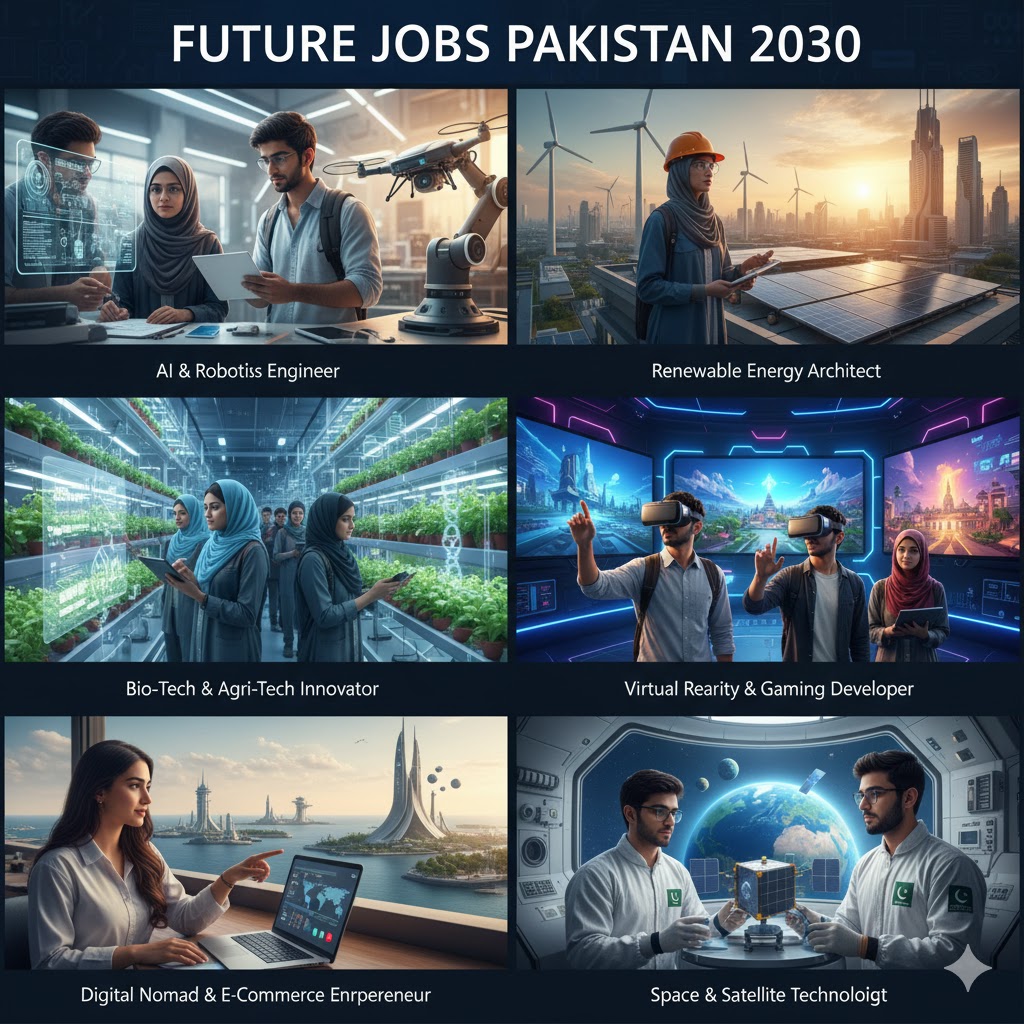
Future jobs demand in 2030-2025(For students)
- AI and Machine Learning Specialists
- Big Data Specialists
- Cybersecurity Experts
- Software and Application Developers
- Healthcare Professionals:
- Biotechnology and Genetics Professionals:
- Education and Lifelong Learning Professionals
- Analytical and creative thinking
- Resilience, flexibility, and agility
- Leadership and social influence
- Curiosity and lifelong learning
- Technological literacy
- Empathy and active listening
For students jobs
- AI and Machine Learning Experts
- Data Scientists and Analysts
- Cybersecurity Specialists
- Robotics and Automation Engineers
- AR/VR Developers
- Digital Marketing and Content Creation
- EdTech Developers
- Environmental Scientists