
The Discovery of Fire: Human Evolution
The control of fire was a pivotal moment in human history, profoundly shaping the biology, behavior, and technology of our ancestors. While the exact timeline remains a topic of debate, evidence suggests that the use of fire by early hominins, most likely Homo erectus, began between 1.5 and 2 million years ago. This mastery of a natural force, which likely started with the opportunistic use of wildfires, became a regular part of life by around 400,000 years ago. The impact of fire’s widespread adoption was far-reaching, setting the stage for the dramatic evolutionary changes that define modern humans.
Biological Evolution
Increased energy intake:
Beyond food, fire provided warmth, extending human habitation to colder regions and reducing energy expenditure on thermoregulation. This indirectly supported higher energy budgets for growth, reproduction, and brain development. Archaeological evidence, like hearths from 1.5 million years ago at sites such as Gesher Benot Ya’aqov, suggests early Homo species harnessed fire, with widespread controlled use by 400,000 years ago.
The discovery and use of fire by early humans significantly increased energy intake by revolutionizing food preparation and consumption. Fire allowed for cooking, which broke down complex nutrients, making them easier to digest and increasing the caloric yield from foods like meat, tubers, and seeds. For example, cooked starches provide about 30-40% more digestible energy than raw ones due to gelatinization. Meat, when cooked, becomes easier to chew and digest, potentially doubling the energy extracted compared to raw consumption. Studies show that the caloric intake from cooked starches can increase by 12–35%, and from cooked protein by 45–78%.
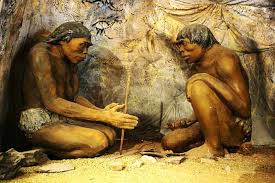
Reduced digestive system
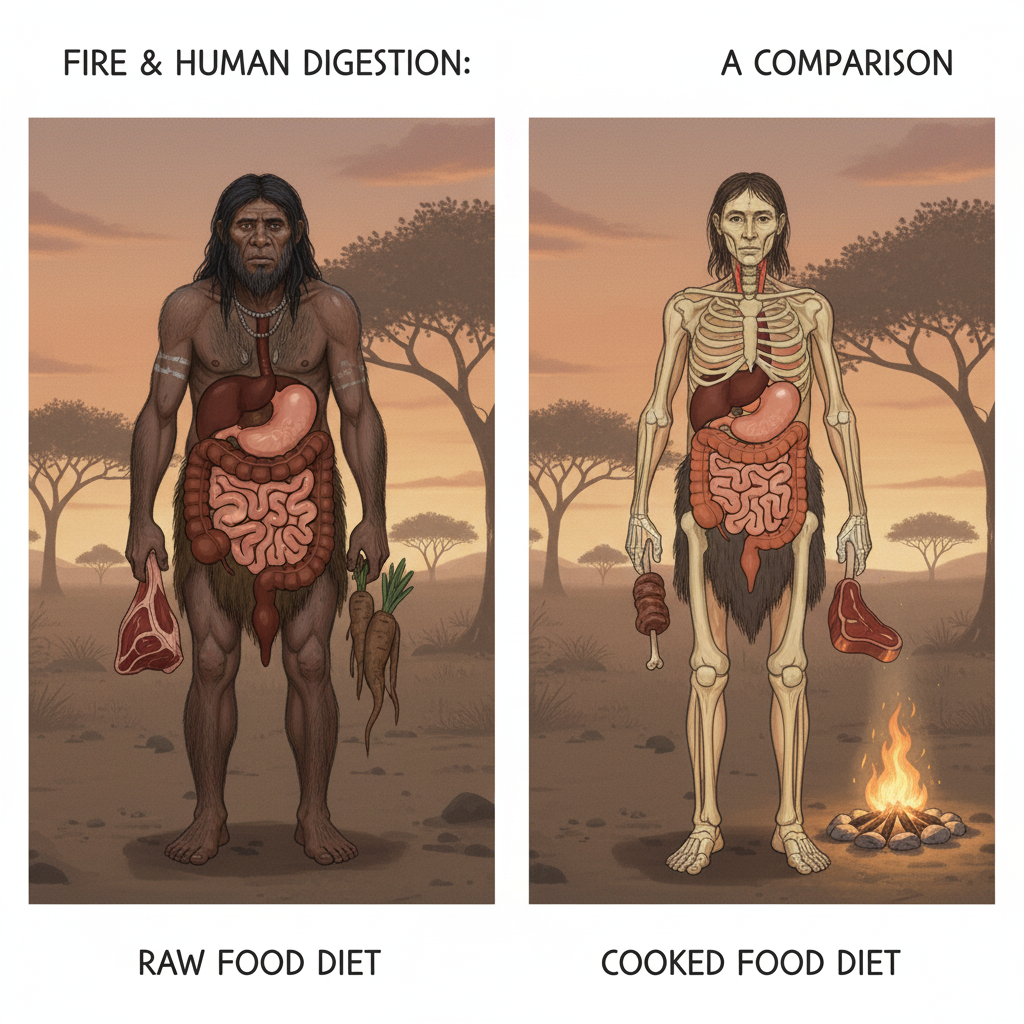
The use of fire for cooking likely contributed to a reduction in the size and complexity of the human digestive system over evolutionary time. Cooking food breaks down complex carbohydrates, proteins, and fibers, making them easier to digest. This “pre-digestion” reduces the energy and anatomical demands on the gut. For example, cooked starches are broken down into simpler sugars, and proteins in cooked meat are denatured, requiring less enzymatic effort to process. Studies suggest cooked foods yield 30-40% more energy than raw ones due to improved digestibility.
This aligns with the “expensive tissue hypothesis,” suggesting a trade-off between gut size and brain size in human evolution. The shift to a cooked diet put less strain on the digestive system. Over time, this led to an evolutionary reduction in the size of the stomach, cecum, and colon.
Smaller teeth and jaws:
Archaeological evidence suggests Homo erectus used fire as early as 1.5 million years ago (e.g., hearths at Gesher Benot Ya’aqov), with consistent use by 400,000 years ago. Over time, as cooking became widespread, human ancestors like Homo sapiens developed smaller jaws, reduced molar size, and weaker bite strength compared to earlier hominins like Australopithecus, who had larger, more robust dental structures for processing raw foods. This trend is evident in fossil records: modern humans have smaller mandibles and teeth than Neanderthals or Homo heidelbergensis, correlating with increased reliance on cooked diets.
Smaller teeth and jaws also freed up energy and space, potentially supporting larger brain development, as less skeletal structure was needed for chewing. Cultural advancements, like tool use for food preparation, further reduced dental demands.
like Australopithecus and indicates a dietary change enabled by cooking.
Disease reduction
Cooking and Pathogen Reduction
Improved Food Safety and Preservation
Environmental Control
Water Purification
Cooking and Pathogen Reduction: Cooking food with fire kills harmful bacteria, parasites, and pathogens present in raw meat, fish, and some plants. For example, heating food to above 60°C (140°F) eliminates pathogens like Salmonella, E. coli, or parasitic worms such as Trichinella found in wild game. This reduced the incidence of foodborne illnesses, which could have been significant for early humans consuming scavenged or hunted meat. Archaeological evidence of controlled fire use, such as hearths from 1.5 million years ago (e.g., Gesher Benot Ya’aqov), suggests cooking was widespread by the time of Homo erectus, likely lowering disease risk from contaminated food.
Wider dietary options
The controlled use of fire significantly expanded dietary options for early humans by making previously inedible or less digestible foods accessible and nutritious through cooking.
- Detoxification of Plants
- Improved Digestibility
- Enhanced Meat Consumption
- Preservation for Variety:
Archaeological evidence, such as hearths from 1.5 million years ago at sites like Gesher Benot Ya’aqov, shows early fire use by Homo erectus, likely expanding dietary options. This dietary flexibility supported human migration into varied ecosystems and fueled energy demands for brain growth and cultural development.
Nonetheless, there is wide agreement that cooking was a powerful influence that sustained and advanced brain and bodily evolution once it became a reliable part of the human tool kit.
Societal changes
1.Societal and behavioral changes
Fire provided light and warmth, extending active hours into the night. This allowed for storytelling, planning, and cultural activities beyond daylight, likely enhancing language development and knowledge transmission. Such activities are inferred from consistent hearth use in caves like Zhoukoudian (~700,000 years ago).Evidence from sites like Qesem Cave (~400,000 years ago) shows repeated hearth use, suggesting shared activities. This fostered social bonding, cooperation, and division of labor (e.g., cooking, fire maintenance), strengthening group cohesion and laying foundations for complex societies.For example, maintaining fire demanded foresight to gather fuel, likely encouraging task specialization. Smoke from fires also repelled insects, reducing disease and allowing focus on social interactions.
2.Increased safety and habitat expansion
The light and heat of fires, along with smoke, repelled animals, making campsites safer. Evidence of hearths at sites like Zhoukoudian (~700,000 years ago).By enabling habitation in regions like northern Europe or high-altitude areas, fire expanded viable habitats beyond warm, tropical zones. For example, fire use by Neanderthals in Ice Age Europe (e.g., at Abric Romaní, ~60,000 years ago) supported survival in harsh conditions, broadening the geographic range of human populations.These factors collectively made environments safer and more hospitable, enabling humans to expand into new territories and establish more secure living conditions. Fire’s role was pivotal in human dispersal and adaptation.
3.Specialized social roles
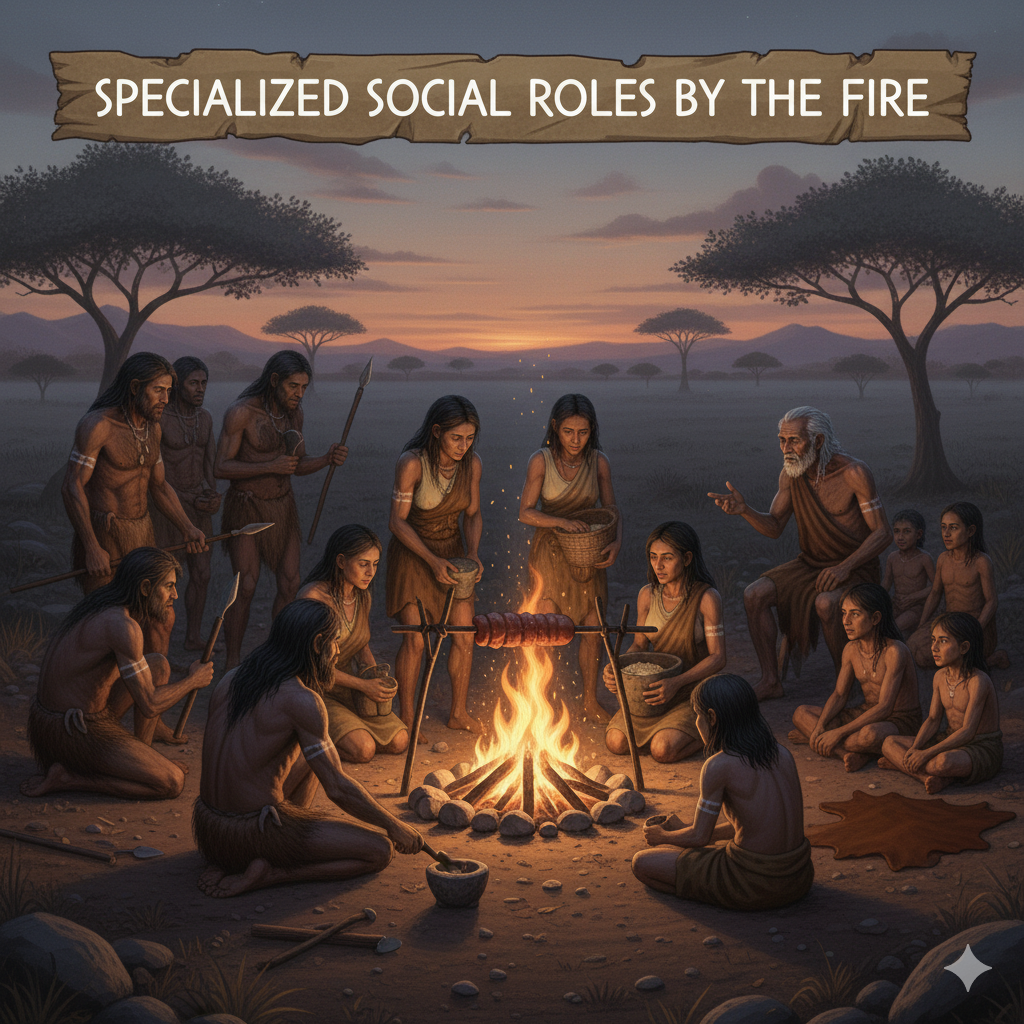
Ethnographic parallels, like fire-keeping roles in some indigenous societies, suggest early humans may have assigned specific group members to this task, as seen indirectly in consistent hearth use at sites like Qesem Cave (~400,000 years ago).
Fire enabled new technologies, like hardening wooden spears or crafting adhesives (e.g., birch bark pitch found at sites like Campitello, ~200,000 years ago). This created roles for skilled toolmakers who used fire to enhance hunting or processing tools, contributing to group survival and efficiency.
These specialized roles, emerging with fire use by Homo erectus ~1.5 million years ago and intensifying in later hominins, promoted division of labor, social complexity, and cooperation. They laid the groundwork for more structured societies by requiring interdependence and skill specialization.
Uses of FIRE In Life
Cooking: Fire is essential for preparing food, enhancing flavor, improving digestibility, and killing harmful pathogens. From roasting meat over an open flame to modern stovetops, fire remains central to culinary practices.
Heating: Fire provides warmth in homes and shelters, especially in cold climates. Wood-burning fireplaces, stoves, and modern gas or electric heaters replicate this function, ensuring comfort and survival.
Lighting: Before electricity, fire from candles, oil lamps, and torches was a primary light source. While less common today, fire-based lighting is still used in emergencies or off-grid settings.
Energy Production: Fire drives energy generation in many forms. Burning fossil fuels (coal, oil, gas) in power plants produces electricity, and controlled combustion powers engines in vehicles and machinery. Manufacturing and Industry: Fire is critical in processes like smelting metals, forging tools, firing ceramics, and producing glass. High-temperature furnaces and kilns are integral to industrial production.