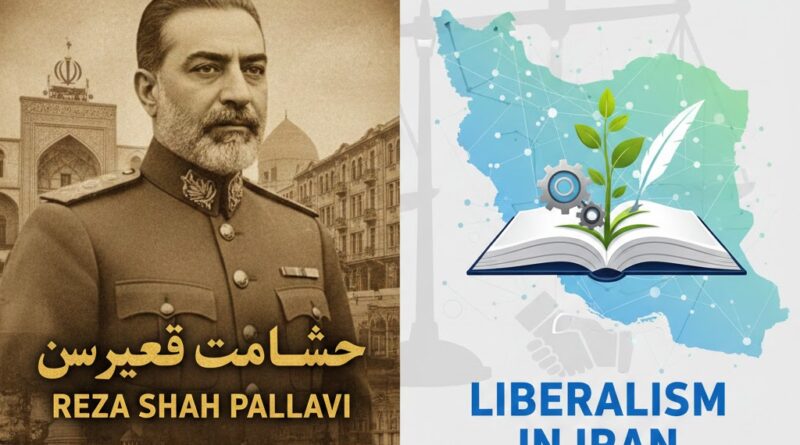
Reza Shah pahlavi and Liberalism in Iran
Reza Shah Pahlavi was the founder of the Pahlavi dynasty in Iran, ruling as monarch from 1925 to 1941.
He pursued top-down modernization and state-building, creating a centralized bureaucracy, modern army, national infrastructure, and secular education systems to transform Iran from a fragmented post-Qajar state into a more cohesive nation-state.
His reforms included new courts, railroads, and compulsory Western-style dress codes, and he restricted clerical power, sometimes harshly, to push modern change.
Liberalism in Iran during and after his era was limited: while he promoted Western-inspired reforms and reduced religious authorities’ influence, his government remained authoritarian with little political freedom or genuine democratic participation.
After the 1979 revolution, his son Reza Pahlavi (the exiled crown prince) has advocated for secular democracy, individual liberties, and separation of religion and state as part of a future political transition, but his role and vision remain debated among Iranians.
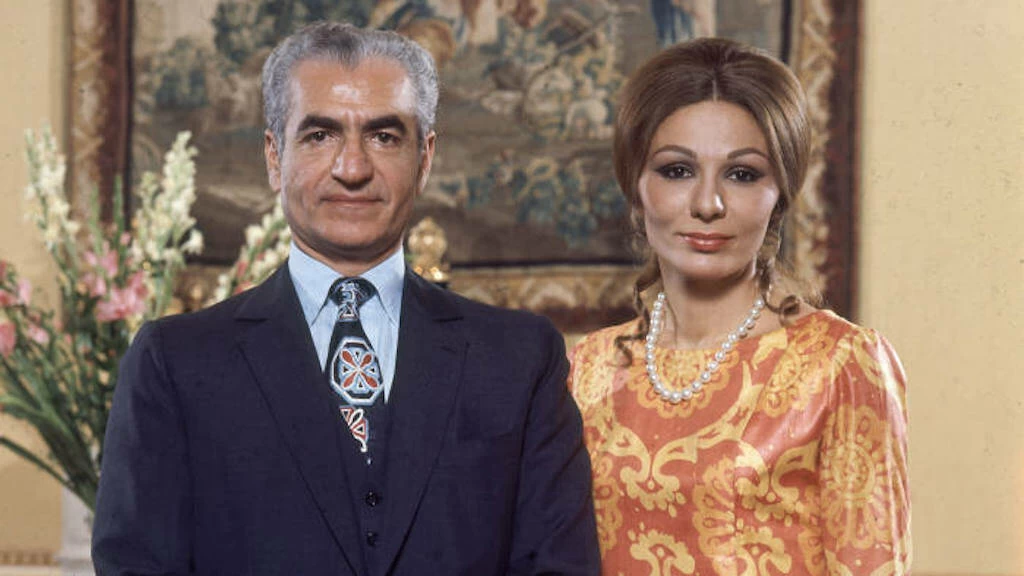
Who Was Reza Shah Pahlavi? The Founder of Modern Iran”
Reza Shah Pahlavi (born Reza Khan; March 15, 1878 – July 26, 1944) was the founder of the Pahlavi dynasty and the Shah of Iran from 1925 to 1941.
He is widely regarded as the founder of modern Iran due to his aggressive modernization efforts that transformed the country from a weakened, semi-feudal state under the Qajar dynasty into a more centralized, secular, and industrialized nation-state.
Early Life of Raza Shah Pehlvi
Reza Khan came from humble origins in the village of Alasht, Mazandaran province.
He joined the Cossack Brigade (a Russian-trained military unit) and rose through the ranks due to his discipline and leadership.
In the chaotic post-World War I period, when Iran was politically unstable and threatened by foreign influence, Reza Khan led a coup in 1921 with British support.
He quickly became commander of the army, then Minister of War, and eventually Prime Minister.
Infrastructure development
He oversaw the construction of the Trans-Iranian Railway (a massive project linking the Persian Gulf to the Caspian Sea), roads, schools, hospitals, and universities (including the University of Tehran in 1934).
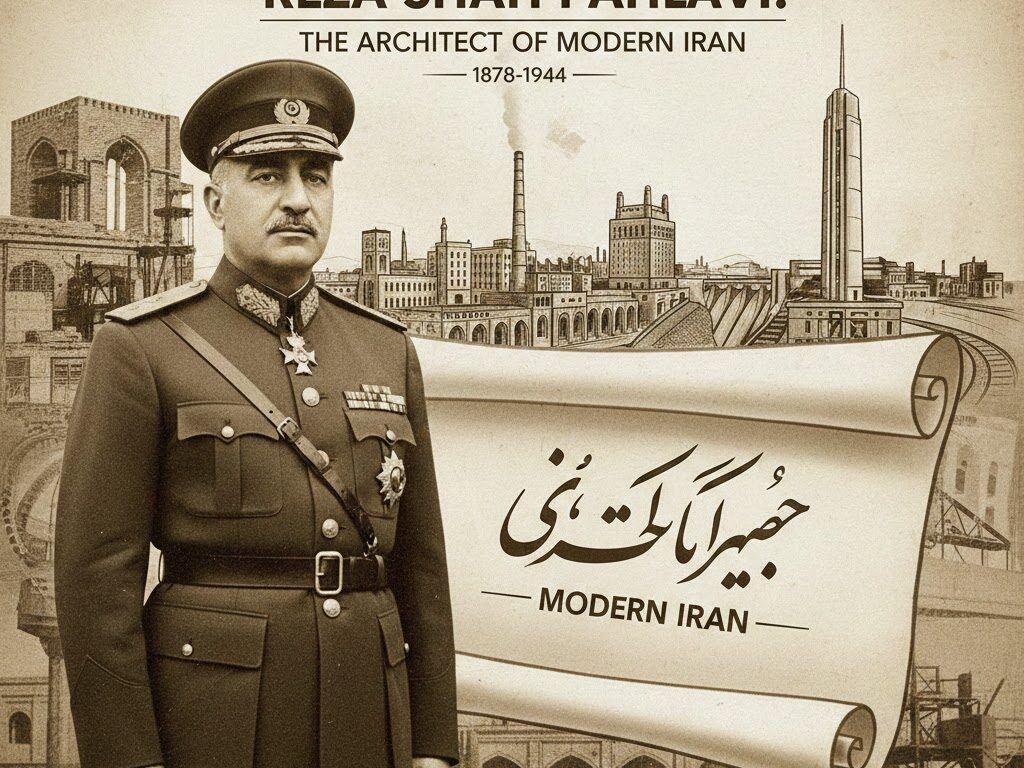
Women’s rights
In 1936, he banned the veil in public (Kashf-e hijab) and encouraged women to participate in education and society.
National identity
He emphasized Iran’s pre-Islamic heritage and officially changed the country’s name from “Persia” to “Iran” in 1935.
End of Reign and Legacy of Raza Shah and How it ended?
In 1941, during World War II, Britain and the Soviet Union invaded neutral Iran (fearing Reza Shah’s ties with Germany and needing supply routes to the USSR).
Outmatched, Reza Shah ordered his forces to stand down to avoid destruction. He was forced to abdicate on September 16, 1941, in favor of his son, Mohammad Reza Pahlavi.
He went into exile, first to Mauritius and then Johannesburg, South Africa, where he died in 1944.
Reza Shah Pahlavi and the Roots of Liberalism in Iran
To better appreciate the impact of the Islamic Revolution, we need to reacquaint ourselves with late-Pahlavi Iran and the impression it created around the world.
It is all too easy to forget that in the 1960s and 1970s, Iran was the emerging power, the new tiger economy to rival Japan’s economic achievements, with natural resources that Japan could only envy.
The Great Game was receding into history, and while critics of the shah might accuse him of being a lackey of the West, the reality by the end of the 1960s was a good deal more complex.
Iran was rich in hydrocarbon resources—the fourth-largest oil reserves and the second-largest gas reserves in the world—as well as other mineral and human resources, and the shah’s determination to reach the ‘great civilisation’ by the turn of the millennium seemed within reach.
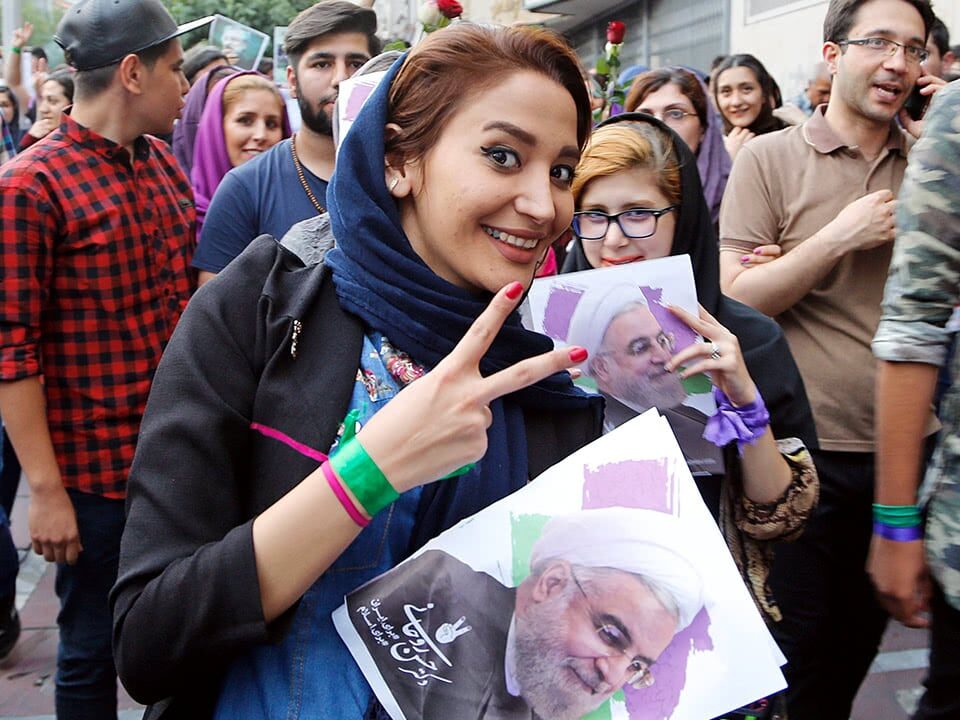
Indeed, the oil boom, largely orchestrated by the shah at the end of 1973, appeared to catapult Iran into the premier league of nations, with a growing industrial base, a generous welfare system, highly developed armed forces and a nuclear programme that was the envy of many.
While the reality was never as sublime as the image pretended, in the words of British Ambassador to Iran Sir Anthony Parsons, Iran’s Arab neighbours would envy the shah’s problems. In the public perception at least, the general attitude and expectations of Iran were very similar to those harboured towards China today. There were undoubted political flaws, and the shah appeared reluctant to pursue sincere political reform towards a form of democratisation, but Iran was emblematic of the modernisation thesis at work. As such, political change would follow the economic transformation of the country, much as night follows day
News about Liberism in Iran
As with all models, reality and the idiosyncrasies of agency—human emotion, for want of a better word—got in the way, and the shah’s confidence, complacency and ultimate hubris were to prove his undoing.
The revolution that resulted in his overthrow began, unedifyingly enough, with a routine article in a government newspaper on 8 January 1978 attacking the morals and integrity of one Ayatollah Ruhollah Khomeini, the erstwhile leader of the religious opposition to the shah’s rule.
Much as with the Arab Spring some 30 years later, this incongruous event sparked a cycle of protests that would unnerve and ultimately unseat the shah.
But like all seminal events, it was appreciated for its significance only some time later, not registering in contemporary diplomatic reports until the summer.
Indeed, for much of the first half of 1978, European diplomats argued that the periodic disturbances were a consequence of the shah’s programme of liberalisation.
Few were prepared for the realisation that what they were facing was not so much a crisis of the state as a profound crisis of confidence by a monarch who simply could not reconcile the protests with his self-proclaimed image of a shah loved by his people.
By the autumn it was apparent to the more astute that Iran was facing a fully fledged revolutionary upheaval.
Secularization vs. Traditional Authority under Reza Shah
In 1935, Reza Shah of Iran was pushing a rapid and harsh westernization campaign. This included banning traditional Islamic clothing and forcing men to wear European-style hats.
This angered many religious Iranians. In response, a cleric gave a sermon in the holy Imam Reza Shrine in Mashhad, criticizing the Shah’s anti-Islamic laws. Thousands of local people gathered inside the shrine in protest, comparing the Shah to a hated historical tyrant.
For four days, local forces refused to enter the sacred site. Finally, army reinforcements from another region were sent in. They broke into the shrine, opening fire on the crowd.
The violent crackdown killed and wounded hundreds, possibly thousands, of protesters. This massacre permanently broke the relationship between Reza Shah’s government and Iran’s Shia religious leadership.
Liberal Political Movements of the Pahlavi Era
The founder of the Pahlavi dynasty, Reza Shah Pahlavi (r. 19251941) was a key figure in the modernization of Iran by heavily modernizing the country with force.
But his relationship to the origins of liberalism in Iran is not straight forward, but one that can be characterized more as a precursorship of some liberal-oriented thoughts even though he ruled in an authoritative way.
Reza Shah Reforms and History.
Reza Shah became the prime minister and was crowned the shah in 1925 through a coup that had weakened the Qajar dynasty in 1921.
He aimed to make Iran a centralized, secular, and industrialized nation-state, based on the example of such countries as Atatürk Turkey and European states.
These changes aligned with aspects of liberal modernity—such as secular governance, individual rights in education and dress (especially for women), and anti-clericalism—echoing Enlightenment-inspired reforms.
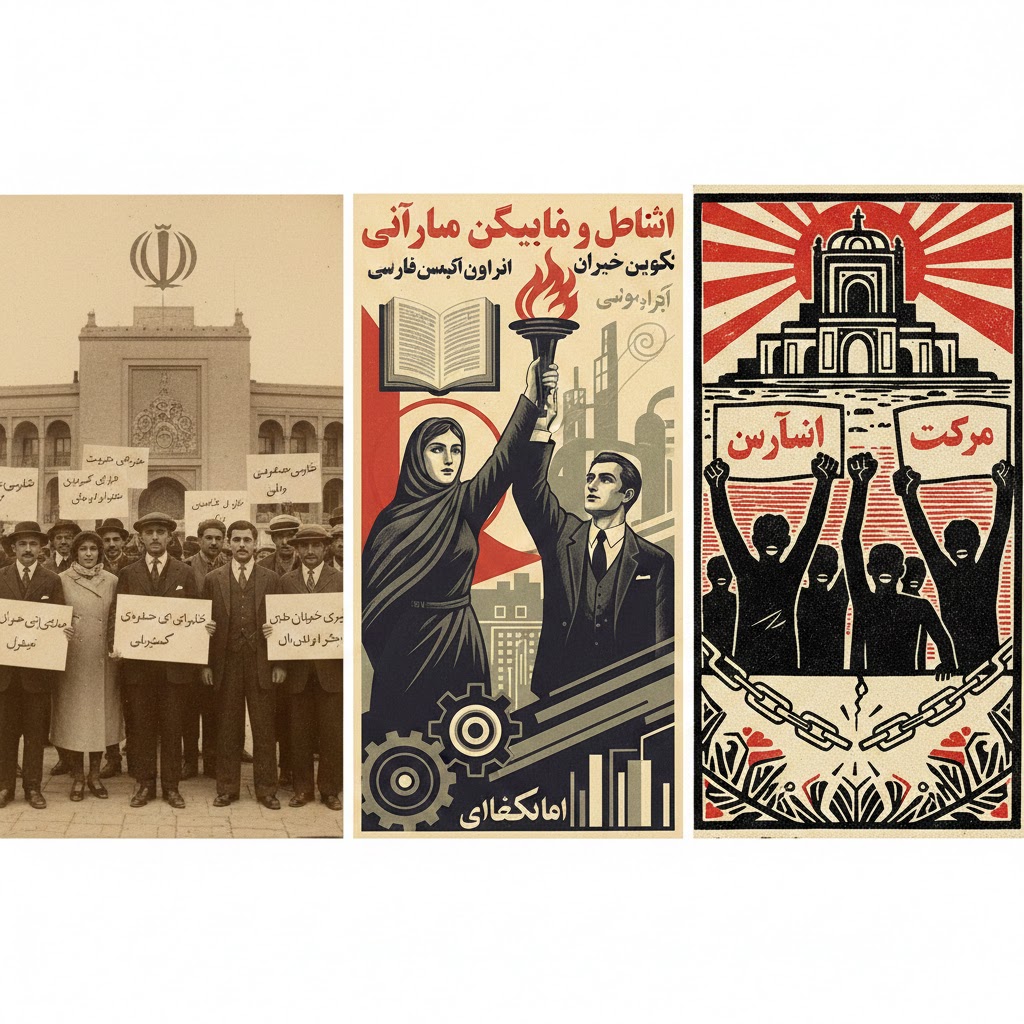
However, Reza Shah’s rule was fundamentally authoritarian: he suppressed dissent, dissolved independent parties, censored press, exiled opponents, and centralized absolute power.
Historians describe his style as “tutorial-authoritarian” or “oriental despot” in critics’ eyes—modernizing from above without political pluralism or genuine liberalism (e.g., no free elections, no tolerance for opposition).
Legacy and Modern Echoes
Reza Shah is also the father of modern Iran as he created a state capacity, although the process did not go well with many people (clergy, liberals, nationalists).
His son Mohammad Reza Shah further pursued modernization with some relative liberalization (e.g. cultural openness of the mid-reign), which was followed up by the 1979 Revolution that dethroned the monarchy in response to the autocratic backlash.
In exile, Reza Pahlavi (the son of Mohammad Reza, the grandson of Reza Shah) promotes a secular, democratic and liberal Iran, and presents himself as a figure of opposition, although his idea has more post-revolutionary democratic ideals than the legacy of his grandfather, the authoritarian.
To conclude, Reza Shah hastened secular and modernizing processes that overlapped with liberal ideas but he was no liberal per se, his rule was based on strong-state nationalism at the expense of individual freedom or democratic institutions.
Liberalism in Iran has much deeper origins than his (Constitutional era) and it developed autonomously, usually in contrast to Pahlavi authoritarianism.
Reza Shah and Legal-Institutional Reforms
Pahlavi Reza Shah (1925-1941) had a top-down agenda of wholesale legal and institutional reform to establish a modern, centralized, and secular nation-state out of Iran.
The following are the major aspects of his reforms: Legal System: He substituted the Islamic Sharia courts with a secular civil code and judicial system, which was modeled after the European style, limiting the judicial authority of the clergy, greatly.
Centralized Administration: He destroyed tribal and local internal governments forming a powerful and centralized government with an integrated bureaucracy, taxation system and police force whose control was under his directive.
New Infrastructure: He had spent a lot of money on national railroad, roads, and new industry to integrate the nation and stimulate the economy.
Education: He instituted a secular education system that is government-run, including the University of Tehran to produce a new generation of modern civil servants and workers.
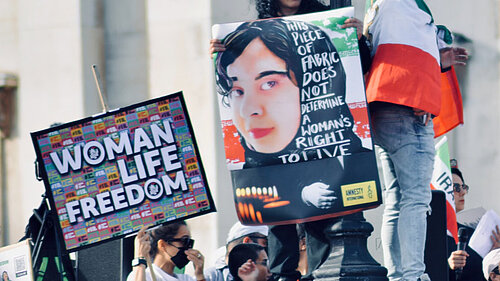
Effects: These reforms gave a phenomenal boost to the power of the state and initiated the modernization of the Iran institutions.
They were however autocratically imposed, with minimal involvement of the citizens and the force of dissenting opinions to the resulting violence formed resentment among the clergy and main stream members of the society, especially those belonging to traditional sectors.
His legacy is therefore an elaborate blend of state-building and modernization that was autocratic.
Reza Shah’s Rule and Human Rights Debates
The rule of Reza Shah Pahlavi (1925-1941) is one of the most debated topics regarding the issue of human rights, which were perceived in two oppositely different perspectives.
The Modernizing State-Builder Perspective. Supporters claim that his cruel ways were required to speed up modernization.
He destroyed feudalism and tribalism, created a centralized state where secular laws and courts existed, constructed national infrastructure and promoted the education of women.
In this perspective, he upheld the sovereignty of a nation and instituted the institutional foundations of a contemporary Iran, where the collective national advancement worked over the personal freedoms.
The Authoritarian Abuser Perspective.
Critics observe a dictatorship that was brutal and systematic in violation of the human rights.
This includes: Ruthless repression of dissent (e.g. Goharshad Mosque massacre of 1935).
Stamping out of tribal, ethnic and political dissent. Coercing people into cultural changes (such as enforced unveiling and dressing) with the state.
Torture, jails, and execution of dissidents were common.
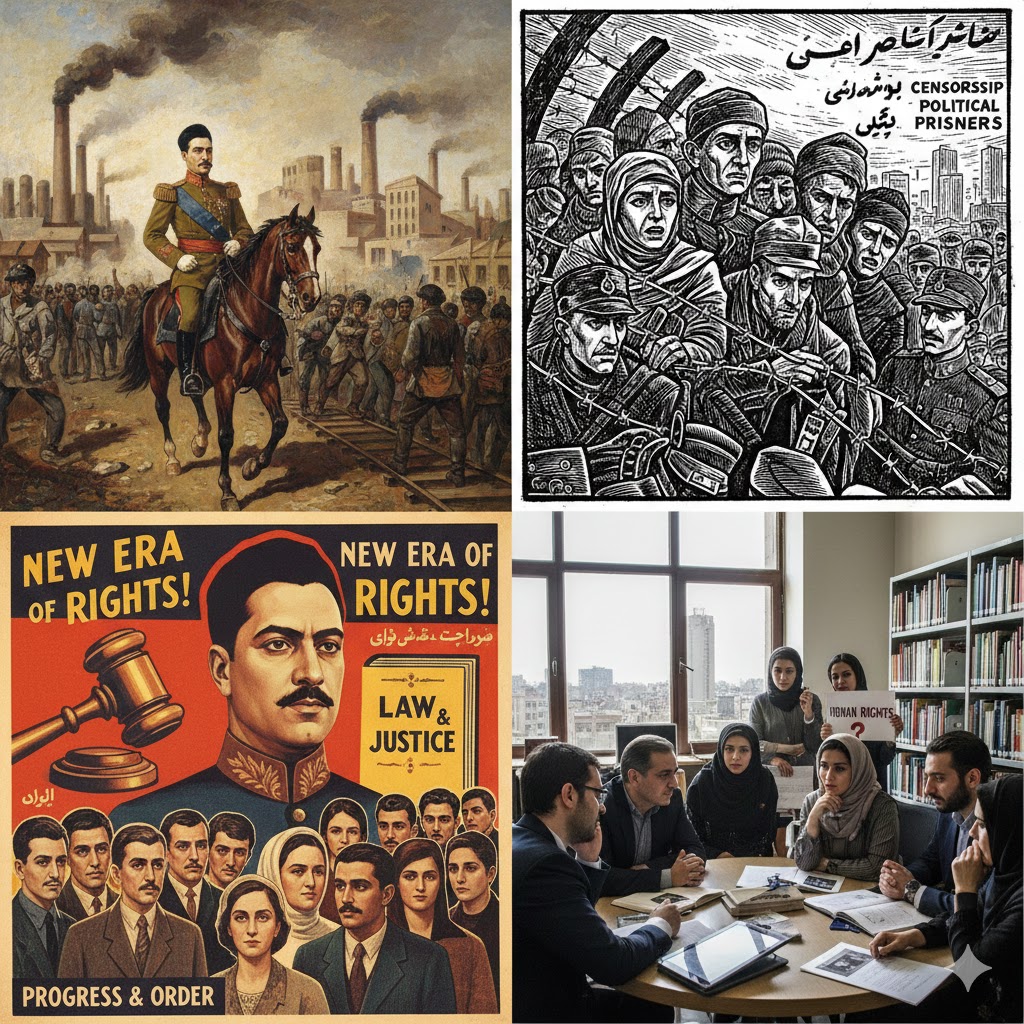
Reza Pahlavi (Son) and the Future of Liberal Democracy in Iran
It is a very topical and complicated modern-day question.
Position and Strategy of Reza Pahlavi.
Symbolic Figurehead: He is a symbol of the monarchy before 1979, a strong symbol to a number of the Iranians that was yearning back to its days of secularism and internationalism.
Proponent of Secular Democracy: He has openly denied his right to the throne and has strongly supported a future secular, democratic republic in Iran, which will be decided by a free referendum.
Coalition Builder: One element to his new policy has been an effort to bring together the divided opposition – republicans, secular leftists, ethnic minorities – around the bare minimum of a goal of toppling the Islamic Republic.
He was a strategist of such organizations as the signatories of the Mahsa Charter.
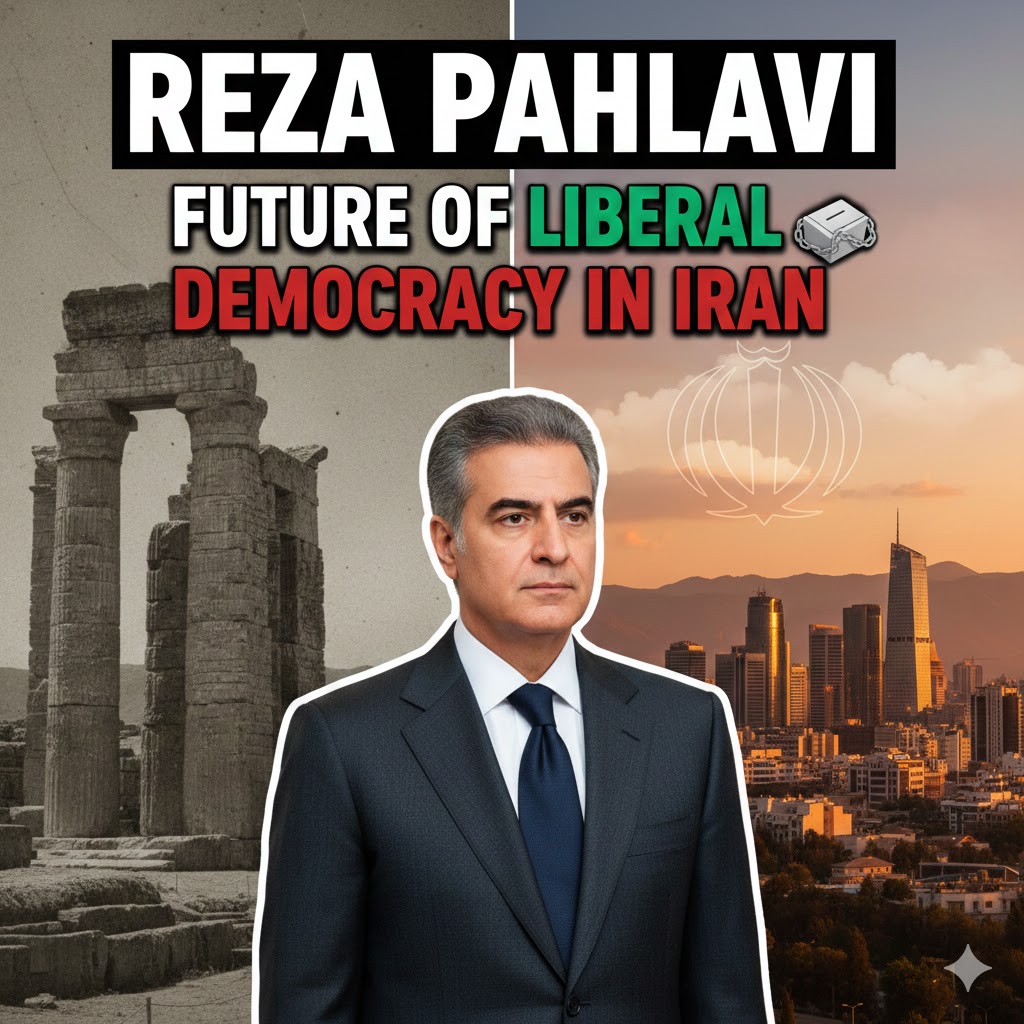
The Arguments in His Favor Unifying Symbol: To others, he can cut across political lines and build a wide base, particularly with the diaspora and older generation.
Secular Guarantee: His high level of secularism is attractive to those who are afraid that a revolution may be consonanced by another ideology.
International Recognition: He has been able to disrupt links with the Western governments, and think tanks, and maybe viewed as a probable interlocutor.
The most significant Criticism and Objections.
Historical Baggage: Pahlavi dynasty has its own history of authoritarianism, human rights violations of SAVAK, and the 1953 coup.
Most of the leftists and other Iranians do not want to be associated with the monarchy.
Weakness in Grassroots In Iran: His direct connection to the networks and activists inside Iran is unclear and controversial, though he has a support of the much smaller diaspora.
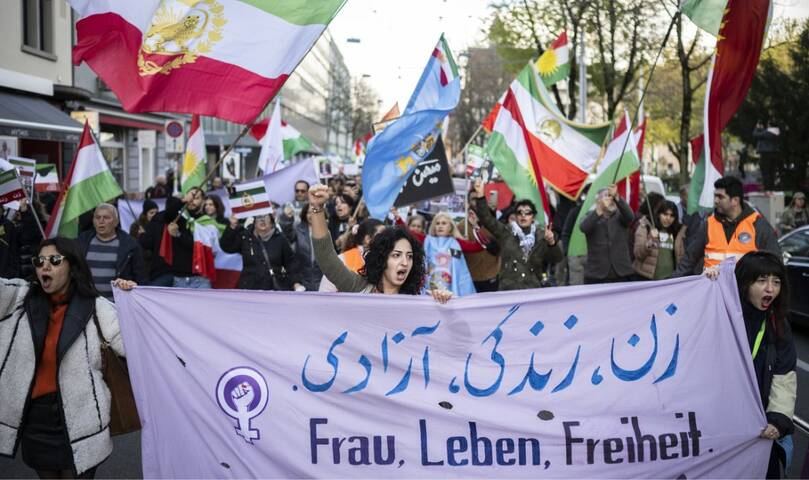
The 2022 protests were also very leaderless and republican in nature.
Democratic Credibility: Skeptics also wonder whether his adherence to republicanism is not merely a political maneuver and he will revert to the monarchical powers.
One Personality, Multiple Generations: The internal Iranian opposition is multigenerational.
The future is perceived by many new activists as pluralistic and they do not trust in one particular savior or leader who is pre-determined.
Liberal Democracy in Iran in Future. The future is extremely unpredictable and depends on the domestic processes.
Current Situation of Iran
Iran’s Judiciary chief Gholamhossein Mohseni Ejei said on Monday that those involved in the unrest would be “dealt with seriously and severely”.
And prosecutors have said some will be charged with “enmity against God”, a national security offence that carries the death penalty.
Türk also demanded that Iranian authorities restore full access to the internet and other communication services.
Some international calls from Iran went through on Tuesday, but the internet shutdown has now passed 132 hours, according to monitor NetBlocks.
One person living near Tehran with access via the Starlink satellite service told BBC Persian that there were “checkpoints in every block”, where cars and the phones of their occupants were being inspected by security forces.
New videos of protests in recent days have also emerged, with BBC Persian verifying those filmed in the central city of Arak and the western cities of Tabriz, Urmia and Khorramabad.
In the footage from Khorramabad, gunfire can be heard during clashes between security forces and protesters, some of whom are throwing stones.
The protesters chant slogans “Death to the dictator” – a reference to Ayatollah Khamenei – and “Reza Shah, may your soul rest in peace” – referring to the late monarch Mohammad Reza Pahlavi, who was overthrown in the 1979 revolution and whose son Reza lives in exile.