Quaid-e-Azam Muhammad ALI Jinnah complete Biography.
Quaid-e-Azam Muhammad Ali Jinnah, widely revered as the Father of the Nation of Pakistan, was a visionary leader, lawyer, and politician whose determination and leadership laid the foundation for an independent homeland for Muslims in the Indian subcontinent.
Born on 25th December 1876 in Karachi, Jinnah emerged as a champion of justice, unity, and political foresight.
His unwavering commitment to the Two-Nation Theory, democratic principles, and the rights of minorities transformed the dreams of millions into the reality of Pakistan in 1947.
Beyond politics, Jinnah was known for his eloquence, sharp intellect, and a profound sense of responsibility, making him one of the most influential figures in South Asian history.
Early life and Education of Quaid-e-Azam
Muhammad Ali Jinnah was born on 25th December 1876 in Karachi, which was then part of British India.
He belonged to a Gujarati-speaking Khoja family engaged in business. From a young age, Jinnah showed remarkable intelligence, determination, and a disciplined nature that would later define his leadership.
His father, Jinnah Poonja, was a successful merchant, and his mother, Begum Mithibai, ensured that he received a solid moral and religious upbringing.
Jinnah was exposed to both traditional Islamic teachings and modern education, which helped shape his balanced worldview.
For his early education, Jinnah attended the Sindh Madrasa-tul-Islam in Karachi and then moved to the Christian Missionary School, where he learned English fluently—a skill that proved crucial in his future career as a lawyer and politician.
In 1892, at the age of 16, Jinnah traveled to London, England, to pursue higher studies in law.
He joined Lincoln’s Inn, one of the most prestigious legal institutions in London, and after rigorous training, he qualified as a barrister.
This European education exposed him to Western political ideas, parliamentary democracy, and legal systems, all of which would later influence his political strategies and vision for Pakistan.
Jinnah’s early life and education not only equipped him with academic knowledge but also instilled in him values of discipline, perseverance, and leadership, laying the foundation for his future role as the founder of Pakistan.
Life of Quaid-e-Azam Muhammad Ali Jinnah in England
In 1892, at the age of 16, Muhammad Ali Jinnah traveled to England to pursue his higher education in law.
Settling in London, he joined Lincoln’s Inn, one of the most prestigious legal institutions, to train as a barrister.
Life in England was a turning point for Jinnah. Coming from a conservative family in Karachi, he faced the challenges of adjusting to a new culture, climate, and lifestyle.
Despite these challenges, his dedication and discipline helped him excel academically.
Jinnah immersed himself in legal studies, mastering British law and parliamentary procedures.
He developed a deep appreciation for Western political thought, democracy, and constitutional law, which later influenced his approach to politics in India.
Jinnah also socialized with London’s elite circles, gaining exposure to international politics and diplomacy, which broadened his worldview.
In 1896, after years of rigorous study and preparation, Jinnah was formally called to the Bar at Lincoln’s Inn, officially becoming a barrister.
His time in England not only gave him legal expertise but also shaped his personality, making him confident, articulate, and visionary—qualities that would define his leadership in the struggle for Pakistan decades later.
Quaid-e-Azam: From Hindu-Muslim Unity to Champion of Pakistan
In the early stages of his political career, Muhammad Ali Jinnah strongly supported Hindu-Muslim unity.
After returning from England as a qualified barrister in the late 1890s, he joined the Indian National Congress and later became a member of the All India Muslim League.
Jinnah believed in a united India, where Hindus and Muslims could coexist peacefully under a democratic framework.
He worked closely with leaders like Gopal Krishna Gokhale and emphasized constitutional methods to secure rights for all communities.
He was even called “Ambassador of Hindu-Muslim Unity” for his efforts in bridging differences and encouraging collaboration between religious groups.
However, over the years, Jinnah’s perspective began to shift due to growing political and social tensions between Hindus and Muslims in British India:
Congress Policies
The Indian National Congress, dominated by Hindu leadership, often ignored Muslim political interests, creating fear among Muslims about losing representation in a majority-Hindu India.
Separate Electorates Debate
The demand for separate electorates for Muslims and resistance from some Congress leaders made Jinnah realize that Muslims needed independent political safeguards.
Communal Riots
The rise in communal violence in the 1920s and 1930s further convinced him that mere unity without security for Muslims was insufficient.
Two-Nation Theory
By the 1940s, Jinnah fully embraced the idea that Muslims were a distinct nation with their own religion, culture, and political identity, leading him to champion the creation of Pakistan.
Thus, what began as a vision of Hindu-Muslim unity evolved into a determined struggle for an independent Muslim homeland, making Jinnah the undisputed leader of the Muslims of India and the Father of Pakistan.
Quaid-e-Azam’s Role in the Establishment of Pakistan
Quaid-e-Azam Muhammad Ali Jinnah played the central and decisive role in the creation of Pakistan, transforming the political aspirations of Muslims in British India into reality.
His leadership was marked by vision, strategy, and unwavering determination.
Leadership of the Muslim League:
Jinnah became the President of the All India Muslim League in 1934.
Under his leadership, the League emerged as the voice of Muslims, advocating for their political rights and protection in a Hindu-majority India.
Champion of the Two-Nation Theory:
Jinnah firmly believed that Muslims and Hindus were distinct nations with separate religions, cultures, and interests.
He argued that Muslims could not be guaranteed justice in a united India dominated by the Hindu majority, making a separate homeland necessary.
Negotiations with British and Congress:
Jinnah engaged in negotiations with the British government and leaders of the Indian National Congress, including Gandhi and Nehru.
Despite initial compromises and efforts for unity, the Congress repeatedly ignored Muslim demands, strengthening Jinnah’s resolve for independence.
Pakistan Resolution of 1940:
Jinnah inspired the Muslim League to pass the Lahore (Pakistan) Resolution on 23rd March 1940, demanding independent states for Muslims in northwest and eastern India.
This resolution became the formal political declaration for the creation of Pakistan.
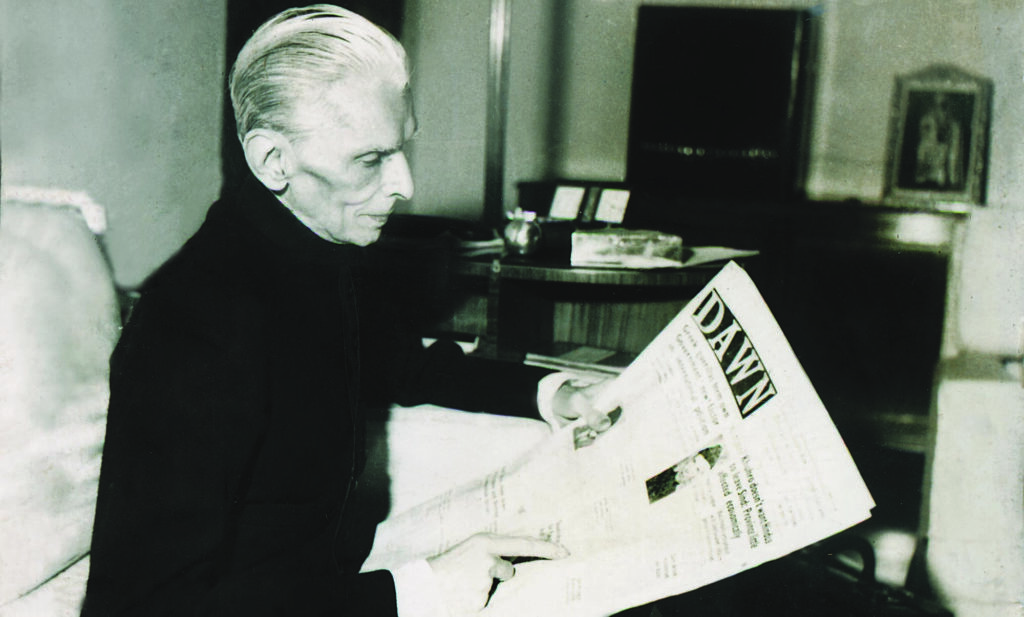
Struggle for Rights and Independence:
During the 1940s, Jinnah mobilized Muslims across India, uniting them under a single political cause.
He skillfully used constitutional, legal, and political strategies to pressure the British to grant Muslims a separate nation.
Creation of Pakistan:
On 14th August 1947, Jinnah’s efforts culminated in the birth of Pakistan, a homeland for millions of Muslims.
As Pakistan’s first Governor-General, he worked tirelessly to lay the foundations of governance, law, and administration in the new country.
Family of Quaid-e-Azam Muhammad Ali Jinnah
Father
Jinnah Poonja, a successful merchant who instilled in Jinnah a strong work ethic and disciplined upbringing.
Mother
Mithibai Jinnah, a pious and caring woman who influenced his moral and religious values from a young age.
Siblings
Jinnah had several siblings, though most did not become prominent in public life.
His family background gave him stability and support throughout his early years.
Spouse
Jinnah married Rattanbai Petit (commonly called Ruttie), the daughter of a wealthy Parsi family, in 1918.
Their marriage, though based on love, faced challenges due to religious and cultural differences.
Ruttie converted to Islam upon marriage.
Unfortunately, Ruttie passed away in 1929, leaving Jinnah deeply affected.
Children
Jinnah and Ruttie had one daughter, Dina Wadia, born in 1919.
Dina later married Neville Wadia, a prominent Parsi businessman.
Despite religious differences, Jinnah maintained a close bond with his daughter.

Death of Quaid-e-Azam Muhammad Ali Jinnah
Quaid-e-Azam Muhammad Ali Jinnah, the founder of Pakistan, passed away on 11th September 1948 in Karachi, just over a year after the creation of Pakistan.
Health Struggles:
Jinnah had been suffering from tuberculosis, a serious lung disease, for many years.
Despite his declining health, he continued to work tirelessly for the new nation, often ignoring medical advice and avoiding rest.
He kept his illness mostly private, even from colleagues and the public, to avoid causing panic or appearing weak.
Final Days:
By 1948, his health had deteriorated significantly, and he faced severe respiratory issues and weakness.
Even during this period, he remained actively involved in state affairs, guiding the new government, dealing with administrative challenges, and planning for Pakistan’s future.
Death:
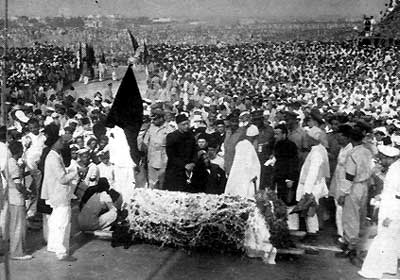
On 11th September 1948, Quaid-e-Azam passed away in Karachi, leaving a nation mourning the loss of its visionary leader.
His death was widely grieved across Pakistan and the Muslim world.
The nation lost a leader whose vision, dedication, and determination had made Pakistan a reality.
Legacy:
Even after his death, Jinnah’s principles, including justice, democracy, and equality, continue to inspire generations of Pakistanis.
He is remembered as the “Father of the Nation”, and his resting place in Karachi remains a symbol of respect and devotion.
Is Quaid dead in ambulance? What is the reality?
The reality is that on 11 September 1948, after arriving by plane in Karachi from Ziarat/Quetta, the ambulance transporting him (on a stretcher) broke down shortly after starting the journey (due to running out of petrol/engine failure according to most accounts).
This caused a delay of about 1–2 hours in the intense heat while waiting for a replacement ambulance.
He was then shifted to the new ambulance and finally reached the Governor-General’s House (Government House) around 6:10 pm.
He died later that evening at around 10:20 pm (some accounts say 10:25 pm) in his room at the Governor-General’s House, after resting and receiving medical attention, due to advanced tuberculosis and extreme weakness.