
Pakistan’s 27th Constitutional Amendment Bill: Overview and Controversy
As of November 11, 2025, the 27th Constitutional Amendment Bill has sparked intense debate in Pakistan’s political landscape. Introduced by the PML-N-led coalition government, the bill seeks to overhaul the judicial system, military command structure, and federal-provincial relations.
It was tabled in the Senate on November 8, approved by the federal cabinet under Prime Minister Shehbaz Sharif, and passed the Senate on November 10 with a two-thirds majority (64 votes in the 96-member house) amid opposition walkouts.
It was formally presented in the National Assembly (NA) today, November 11, by Law Minister Azam Nazeer Tarar, where debates and voting are ongoing . The amendment draws from the 2006 Charter of Democracy but has been criticized as a power consolidation move favoring the military and executive.
27th Amendment draft
Creation of a Federal Constitutional Court (FCC) separate from the Supreme Court of Pakistan, with powers over constitutional interpretation and disputes.

Changes to the command structure of the armed forces: amending Constitution of the Islamic Republic of Pakistan Article 243 (which addresses federal “control and command” of the armed forces) to consolidate authority under the Army Chief (who would also serve as Chief of Defence Forces) and abolish the office of the Chairman Joint Chiefs of Staff Committee from 27 November 2025.
Granting lifetime status or privileges to certain military/defence designations (e.g., Field Marshal, etc) in the constitutional text
Legal-immunity provisions for the President (and possibly other high officials) for life, preventing criminal proceedings or arrest even after office.
Amendments affecting provincial-federal fiscal relations (via the National Finance Commission award) and increased federal control over some subjects (education, etc) previously in provincial domain.
Changes to judicial appointment & transfer processes (for High Courts, etc) and potentially reducing some powers of the Supreme Court.
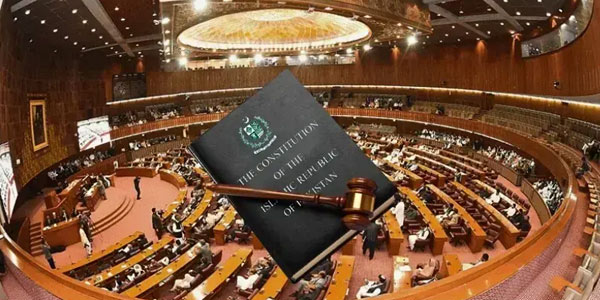
Details of 27th amendment in constitution of pakistan points
Establishes a new court with equal representation from all provinces (one judge each, plus a chief). Transfers constitutional petitions from the Supreme Court (SC), limiting SC’s original jurisdiction. President and PM to play central roles in judge appointments;
Parliament sets judge numbers.Creates the post of Chief of Defence Forces (CDF), merging it with the Chief of Army Staff (COAS) role. Abolishes the Chairman Joint Chiefs of Staff Committee. Grants lifetime “Field Marshal” rank and immunity-equivalent privileges to the CDF (currently Gen. Asim Munir).
President retains supreme command, but operational control shifts to CDF.Judicial Commission of Pakistan to handle judge transfers. Enhances parliamentary role in SC appointments (building on 26th Amendment).Increases provincial cabinet threshold from 11% to 13% for smaller provinces. Revisits NFC Award protections
for provincial shares; shifts education and population planning back to federal control.Grants lifetime immunity from criminal proceedings to the President.Lifetime retention of military titles (e.g., Field Marshal) for national heroes; empowers executive magistrates; resolves ECP appointment deadlocks.
Political and Public Reaction about 27th constitutional amendment bill
Government Stance: Law Minister Tarar described it as fulfilling the Charter of Democracy, emphasizing efficiency and consensus-building with allies like PPP, MQM-P, and PML-Q. A joint parliamentary committee approved minor tweaks on November 9, boycotted by opposition
Opposition Backlash: PTI and allies boycotted sessions, tore bill copies in protest, and one PTI senator resigned after voting in favor. Jamaat-e-Islami’s deputy ameer called it “deadlier than the 26th Amendment.” Legal experts warn of weakened civilian oversight and judicial erosion.
Public Discourse on X: Recent posts reflect polarization. Supporters like @Muhammad_Naqi12 view it as efficiency-driven, not a “power grab.”
Critics, including @TOP__FLW, decry it as a “time bomb” handing power to an “unstable” figure. PTI’s Ali Muhammad Khan shared a fiery NA speech against it. Hashtags like #آئین_کی_قاتل_27_ترمیم (Killer of the Constitution) trend amid harassment claims against pro-bill lawmakers.

The federal government, led by Shehbaz Sharif and its coalition, argued the amendment is aimed at “modernising” the Constitution, improving governance, strengthening federal-provincial relations, and enhancing defence arrangements.
Some allied parties were consulted in the process and claimed that the amendments reflect “wider interests of the federation”.
27th constitutional amendment passed
Government: PM Sharif and allies hail it as “historic reform” for efficiency and CoD fulfillment. Ishaq Dar called the FCC a long-overdue step.
Opposition & Civil Society: PTI’s boycott deemed “unwise” by some, but protests rage—e.g., lawyers’ coalition statement calls it an “assault on judicial independence.” Ex-Senator Afrasiab Khattak: “Welcome to militarised constitution 2025, passed by unelected parliament.” Aurat March Lahore: “Affront to the Constitution’s spirit.”
On X: Polarized discourse—e.g., @HamidMirPAK on security lapses amid passage; @khadijasid751 urging #Scrap27thAmendment; users linking today’s blast to “false flag” for military backing. Hashtags like #27thAmendment trend with calls for resistance.
This entrenches a hybrid civil-military model, potentially stabilizing short-term governance but risking long,term instability amid economic woes (inflation at 12%) and security threats (TTP attacks up 50% YOY).
Legal challenges may arise in the new FCC itself. Internationally, it draws quiet U.S./EU concern over democratic backsliding. For Pakistanis, it’s a pivotal shift:
as one X post quipped, “They passed it in the dark so we’d wake up in chains.” Monitor PTV Parliament or X for assent confirmation.
Your point of view caught my eye and was very interesting. Thanks. I have a question for you. https://www.binance.com/ph/register?ref=IU36GZC4