
Nawab Sir Sadiq Abbasi
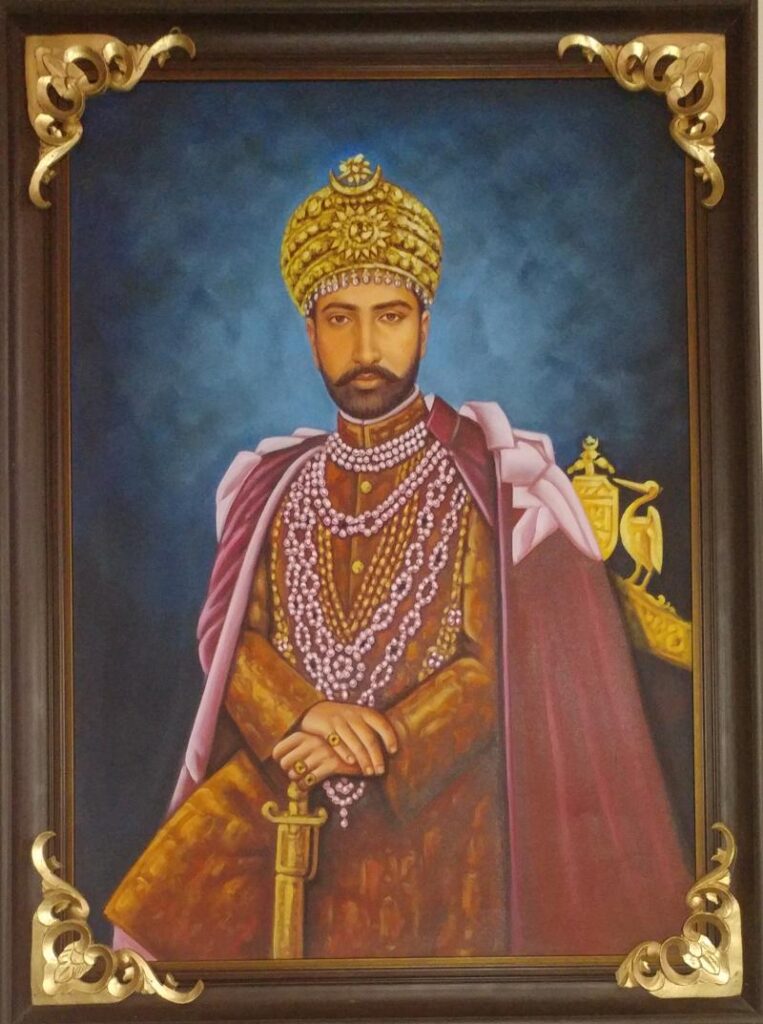
Nawab Sir Sadiq Muhammad Khan V Abbasi (also known as General Nawab Sir Sadiq Mohammad Khan V Abbasi GCSI GCIE KCVO) was a prominent figure in South Asian history, renowned as the 14th and final ruling Nawab of the princely state of Bahawalpur. He played a pivotal role in the state’s modernization and was instrumental in its accession to Pakistan in 1947.
His life spanned from colonial India to the early years of Pakistan, marked by visionary leadership, military service, and substantial contributions to education, infrastructure, and national development.Here’s a detailed overview of Nawab Sir Sadiq Muhammad Khan Abbasi V, the last ruler of the Bahawalpur State — one of the most important princely states in pre-partition India.He became the ruler of Bahawalpur at the age of 3 years, after his father’s death in 1907. During his minority, the state was administered by a British Council until he assumed full powers in 1924.
Full Name: Nawab Sir Sadiq Muhammad Khan Abbasi V
Birth: 29 September 1904, Derawar, Bahawalpur State (now in Pakistan)
Father: Nawab Bahawal Khan Abbasi V
Mother: Nawab Begum Munawar Sultana
Nawab of Bahawalpur (1907–1955)
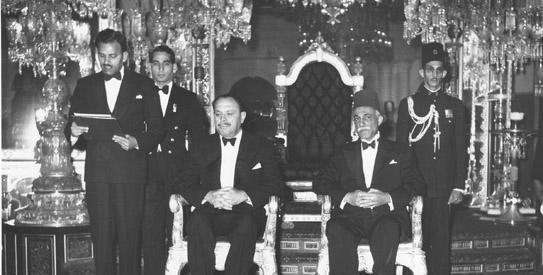
The Nawab of Bahawalpur who ruled from 1907 to 1955 was Sadiq Muhammad Khan Abbasi V (also known as Nawab Sir Sadiq Muhammad Khan V). He was the 14th and last ruling Nawab of the princely state of Bahawalpur.
Accession and Regency: He was born in 1904 and succeeded his father, Mohammad Bahawal Khan V, on February 15, 1907, at the age of three. A Council of Regency administered the state on his behalf until he was invested with full ruling powers by the Viceroy of India in March 1924.
Accession to Pakistan: In August 1947, as British rule ended, he initially delayed accession but then became the first ruler of a princely state to accede to the new Dominion of Pakistan on October 3, 1947. He provided significant financial support to the nascent nation, donating 70 million rupees to the government and funding the salaries of government departments for several months.
Legacy: He is remembered as a “Muhsin-e-Pakistan” (Benefactor of Pakistan) for his crucial contributions during the country’s formation. He died in London in 1966 and was buried in the ancestral graveyard at Derawar Fort.
Education: He founded Sadiq Public School in Bahawalpur in 1954 (though planning began earlier), one of Pakistan’s premier institutions, emphasizing modern education for boys. He also supported the establishment of colleges and scholarships, promoting literacy across the state.
Infrastructure and Agriculture: Sadiq spearheaded the Sutlej Valley Irrigation Project, which harnessed the Sutlej River to irrigate vast arid lands, boosting agricultural productivity and transforming Bahawalpur into a prosperous cotton- and wheat-producing region. He oversaw the construction of palaces like Noor Mahal and the development of royal buildings, including Dolat Khana and Sadiq Garh Palace. Military and Honors: Commissioned into the British Indian Army, he rose to the rank of general and commanded the Bahawalpur State Forces. His titles evolved over time, reflecting growing prestige: from KCVO in 1922 to GCIE and KCSI by 1931, and GCSI later. He was styled as Rukn ud-Daula, Saif ud-Daula, Hafiz ul-Mulk, Mukhlis ud-Daula wa Muin ud-Daula, Nawab Sir Sadiq Muhammad Khan Abbasi V Bahadur, Nusrat Jung.
Role in the Partition and Pakistan’s Formation
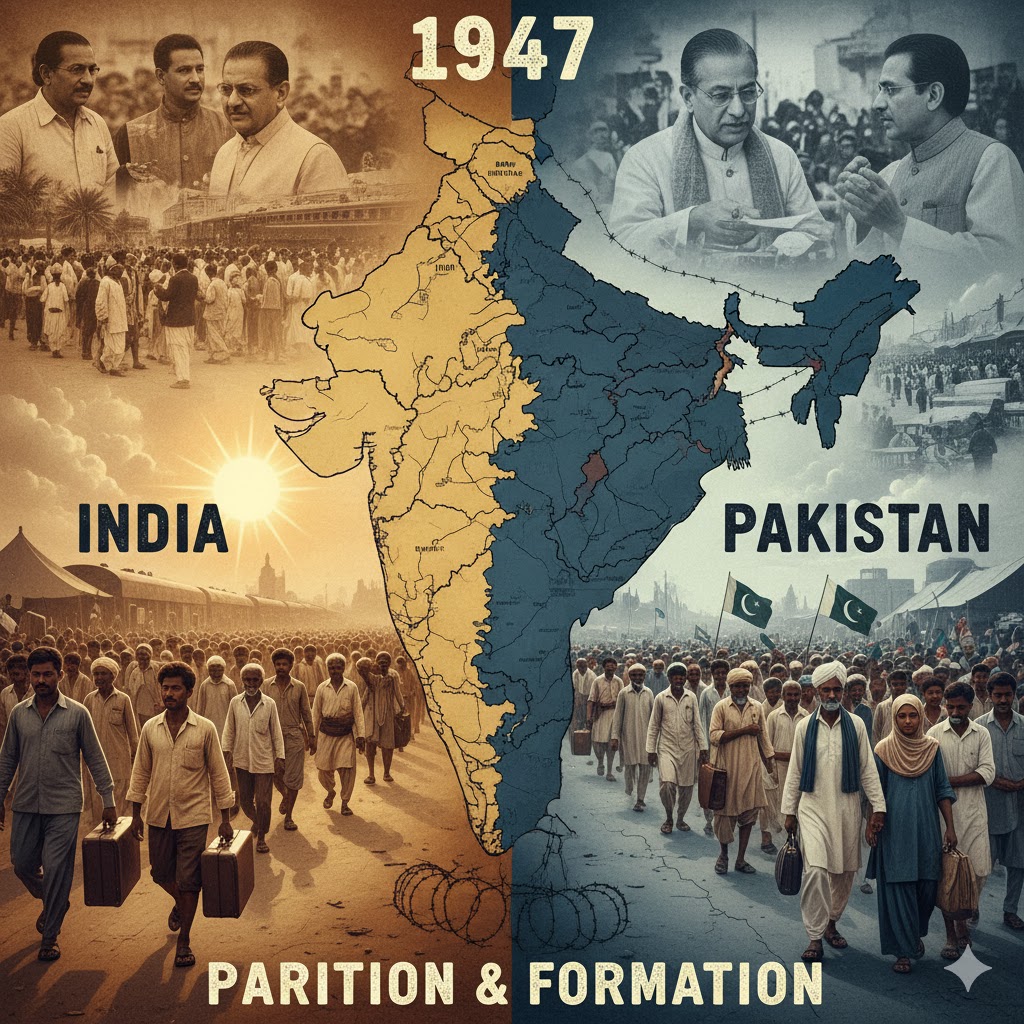
As independence approached in 1947, Sadiq was among the first princely rulers to pledge allegiance to Pakistan. On July 30, 1947—just weeks before Partition—he signed the Instrument of Accession, donating 5,000 square miles of territory, a fully equipped infantry division, and a staggering 20 million rupees (equivalent to billions today) to the new nation. This financial and military aid was crucial during the chaotic early months of Pakistan, helping fund refugee rehabilitation and defense efforts. Prime Minister Liaquat Ali Khan hailed him as a “pillar of the state.”
As Nawab of Bahawalpur, Sadiq Muhammad Khan Abbasi V played a pivotal role in the Partition and the formation of
Pakistan through his state’s accession and generous financial contributions. His actions provided crucial support to the nascent nation during its early, tumultuous months.
Role in the Accession to Pakistan
Initial Hesitation: In August 1947, when British India was partitioned, the Nawab initially considered becoming an independent ruler rather than immediately acceding to either India or Pakistan.
Decisive Accession: After a period of negotiation, the Nawab officially acceded the state of Bahawalpur to Pakistan on October 3, 1947, becoming the first ruler of a princely state to do so. His decision was a significant moment for the new dominion.
Nawab sir sadiq Net Worth
Nawab Sir Sadiq Muhammad Khan V Abbasi (1904–1966), the last ruling Nawab of Bahawalpur, did not have a “net worth” in the modern sense of personal liquid assets or Forbes-style rankings, as his wealth was deeply intertwined with the princely state’s treasury, vast agricultural lands (spanning ~17,726 square miles), palaces, and other immovable properties. Bahawalpur was one of the wealthiest princely states in British India, generating substantial revenue from cotton, wheat, and irrigation projects like the Sutlej Valley scheme he championed. Exact figures are elusive due to the era’s limited financial transparency, but historical records provide concrete indicators of his (and the state’s) immense fortune through donations, investments, and state revenues
.Annual Revenue of Bahawalpur State: By the mid-1940s, the state treasury collected approximately Rs 80 million per year (equivalent to roughly $17 million USD at 1947 exchange rates, or about $900 million USD in 2025 terms when adjusted for inflation). This stemmed from land taxes, trade, and agriculture, making Bahawalpur fiscally self-sufficient and debt-free—rare among princely states.
Personal Assets and Lifestyle: The Nawab owned opulent properties like Noor Mahal, Sadiq Garh Palace, and Derawar Fort, plus jewels, vehicles (including Rolls-Royces), and international holdings. He funded free education/healthcare, scholarships abroad, and refugee rehabilitation from his purse. In 1917 (as a minor), he donated £5,000 (~Rs 70,000) to the Punjab Aeroplane Fund for World War I efforts.
The Abbasi Family of Bahawalpur Today
The Abbasi family, descendants of Nawab Sir Sadiq Muhammad Khan V Abbasi (1904–1966), continues to hold a prominent place in Pakistani society, particularly in politics, philanthropy, and cultural preservation in the Bahawalpur region. Though the princely state merged into Pakistan in 1955, the family maintains its titular royal status and influences South Punjab politics. They are known for advocating Bahawalpur’s restoration as a separate province and managing trusts like the Sir Sadiq Muhammad Khan Trust. Below is an overview of key living descendants and branches as of 2025, based on public records.
Nawab Salahuddin Ahmed Abbasi (b. circa 1950s)
Prince Muhammad Bahawal Abbasi
Princess Aiysha Yasmien Abbasi and Princess Safia Nausheen Abbasi
Saeed-ur-Rashid Abbasi (d. 2010s?)
Begum of Bahawalpur
Nawab Brig. Muhammad Abbas Khan Abbasi’s Line
Nawab sir sadiq Abbasi wife & Childs
Background and Marriage: Born into the Abbasi clan, Jamila Begum was the daughter of Major Sahibzada Haji Faiz Muhammad Abbasi (a prominent military figure and son of Sahibzada Mahabhat Khan Abbasi). She married the Nawab in 1921 at Derawar Fort, when he was 17 and still under the Regency Council (he assumed full powers in 1924). The union strengthened intra-family ties and was typical of princely alliances.
Nawab Muhammad Abbas Khan Abbasi (1924–1988): Eldest son; succeeded as titular Nawab, served as Punjab Governor (1974) and Federal Minister for Religious Affairs.
Saeed-ur-Rashid Abbasi (d. circa 2010s): Second son; Federal Minister for Production and Religious Affairs under Zulfikar Ali Bhutto and Zia-ul-Haq. A third son (details less documented, possibly involved in family estates). Two daughters: Sahibzadi Sophian (Sofia) Begum and Sahibzadi Ayesha Begum, who married into other noble families, including branches of the Abbasis.
The Rolls-Royce Story of Nawab Sir Sadiq Khan V Abbasi
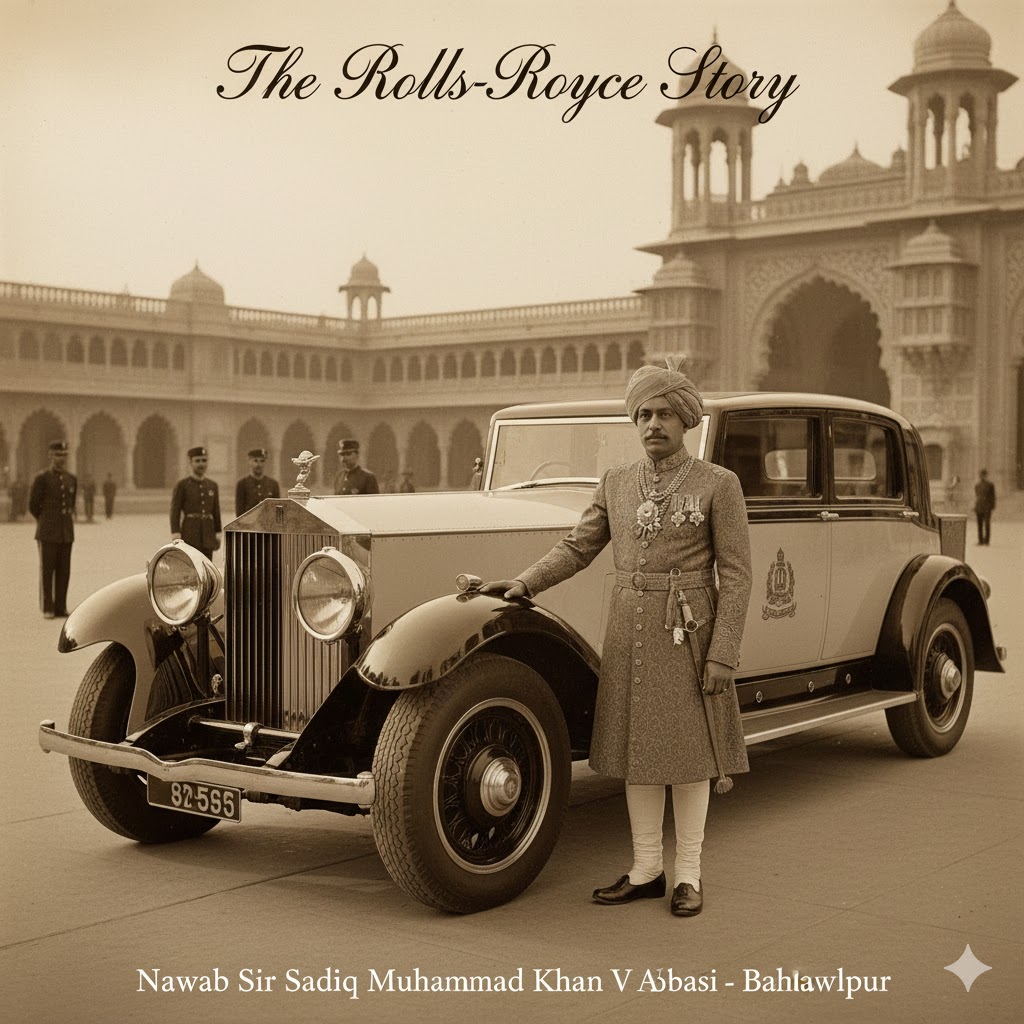
The query appears to reference the famous anecdote about Nawab Sir Sadiq Muhammad Khan V Abbasi (1904–1966), the last ruling Nawab of Bahawalpur, and his legendary “revenge” involving Rolls-Royce cars. Often called the “Rolls-Royce Garbage Collection Story,” it’s a tale of dignity, wit, and royal extravagance that has been retold in Pakistani folklore, though it shares similarities with similar legends attributed to other Indian princely rulers (e.g., the Maharaja of Alwar or Nizam of Hyderabad). While the core events are apocryphal and vary in details across sources, they highlight the Nawab’s known passion for automobiles—he owned over 70 cars in his lifetime, including at least 13 Rolls-Royces—and his no-nonsense approach to perceived slights. Below is the most commonly circulated version, drawn from historical accounts and family lore.
The next day, the Nawab orchestrated a spectacle of royal protocol. He arrived at the showroom in full regalia: accompanied by a contingent of servants, aides, and possibly his state guards, with the Union Jack and Bahawalpur’s banner fluttering. Announcing himself as His Highness Nawab Sir Sadiq Muhammad Khan V Abbasi, Ruler of Bahawalpur, he was now met with the red-carpet treatment—bowing staff, champagne, and deference.
Without referencing the prior slight, he proceeded to buy every single Rolls-Royce in the showroom (typically cited as six cars, though some versions say all available stock). He paid in full, including delivery costs, and had them shipped immediately to Bahawalpur.
These were no ordinary purchases; the Nawab was already a connoisseur. Historical records confirm he acquired models like the Rolls-Royce Silver Ghost (e.g., chassis 82RM, a 1922 Barker Pullman limousine) and Phantom I (e.g., 45WR, bought in Cairo in 1929 during a visit to King Fuad I of Egypt). His fleet included armored tourers, cabriolets, and limousines, many custom-bodied by firms like Barker or Thrupp & Maberly,The humiliation prompted swift action from Rolls-Royce. Executives investigated, uncovered the salesman’s blunder, and dispatched an official apology via telegram to the Nawab.
In some versions, the company owner (or a high-ranking director) personally visited Bahawalpur to grovel, begging him to halt the “degradation” of their brand. Touched by the remorse—or simply satisfied with the lesson—the Nawab accepted, ordering the cars retired from sanitation duty.
As a gesture of goodwill (and damage control), Rolls-Royce gifted him six new Rolls-Royces, free of charge. These joined his personal collection, which by the 1940s included over a dozen from the marque. One such gifted car, a Silver Ghost, held special historical significance:
The Nawab loaned it for Pakistan’s independence ceremonies in 1947, in which Lord Mountbatten and Quaid-e-Azam Muhammad Ali Jinnah rode during the signing in Karachi—marking it as the first Rolls-Royce on Pakistani soil for such an occasion. Another was gifted to King Saud of Saudi Arabia during his 1950s visit, making it the first Rolls-Royce to grace Saudi roads.
Death of Nawab Sir Sadiq Muhammad Khan V Abbasi
Context: By the 1960s, the Nawab had largely withdrawn from active public life following Bahawalpur’s merger into West Pakistan in 1955. He focused on family, philanthropy, and managing his estates, including the Sir Sadiq Muhammad Khan Trust for education. His health had been stable, but London served as a hub for medical care available at the time.
Funeral and Burial: His body was repatriated to Bahawalpur with full state honors. He was laid to rest in the family graveyard at Derawar Fort, the ancient Abbasi stronghold in the Cholistan Desert. The ceremony drew dignitaries from Pakistan and abroad, reflecting his stature as a “pillar of the state” for his 1947 contributions to Pakistan’s founding. Succession: Upon his death, his eldest son, Nawab Muhammad Abbas Khan Abbasi (1924–1988), succeeded him as the titular Nawab and Amir of Bahawalpur. Abbas Khan later served as Punjab Governor (1974) and continued the family’s political influence. The title remains ceremonial today, held by his grandson, Nawab Salahuddin Ahmed Abbasi.