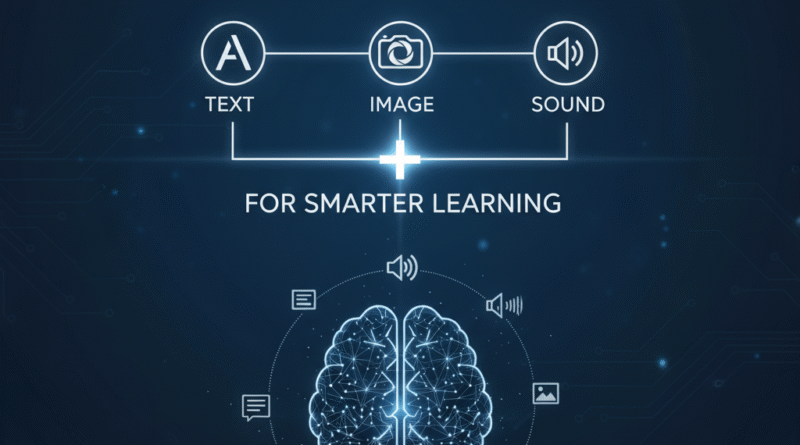
Multi-Modal Combining Text ,Image & Sound for Smarter Learning
Multi-modal learning—integrating text, images, and sound—creates richer, more memorable experiences than any single medium alone. The brain processes each modality in parallel (visual cortex for images, auditory cortex for sound, language areas for text), leading to stronger neural connections and better retention.
Text + Image
In communication, visual anchoring refers to using an image to create a fixed point of reference for an accompanying text. The image guides the viewer’s attention and influences how they interpret the message, ensuring greater clarity and impact. This technique is used across digital and physical media, from user interface (UI) design to print advertising.
- How to do it:
- Use infographics or annotated diagrams instead of walls of text.
- Highlight key terms on images (e.g., label parts of a cell in a diagram).
- Create mind maps with icons/symbols for each branch.
Text + Sound
Auditory reinforcement, in the context of text, involves using sound to strengthen, clarify, or contextualize a written message. This combination creates a powerful multisensory experience that enhances a user’s engagement, comprehension, and memory. The sound serves as an anchor for the text, similar to how an image provides a visual reference.
How to do it:
Use podcasts + transcripts (read while listening).
Record voice summaries of notes (use apps like Noted or Voice Memos).
Pair flashcards with audio pronunciations (Anki supports this).
Image + Sound
Contextual immersion is the use of image and sound to create a multisensory experience that places the audience directly within a story, scene, or environment. This technique goes beyond simply matching an audio file to a picture; it involves crafting a cohesive and dynamic auditory landscape that enhances and deepens the meaning of the visual elements. When done well, the sound is not just heard but felt, making the experience more engaging and memorable.
How to do it:
Watch explainer videos with visuals + narration (Khan Academy, 3Blue1Brown).
Use VR/AR apps (e.g., Google Earth VR for geography with ambient sounds).
Create sound-augmented flashcards (image of Eiffel Tower + Parisian street audio).
Tools for Multi-Modal Learning
Google Gemini:
- Integrates and processes various data types like images and text for content creation and understanding.
GPT-4V(ision):
- AI model that can process images and text, and is capable of visual content generation.
DALL-E 3:
- An OpenAI model that generates high-quality images from text prompts.
Runway Gen-2:
- Uses text prompts to create dynamic video.
Meta ImageBind:
- Connects six data modalities (text, image, video, thermal, depth, audio).
Hugging Face’s Transformers:
- A library for building AI systems that can process audio, text, and images.
Phi-4 Multimodal:
- A model optimized for real-time applications, excelling at tasks like image captioning and speech-to-text interactions.