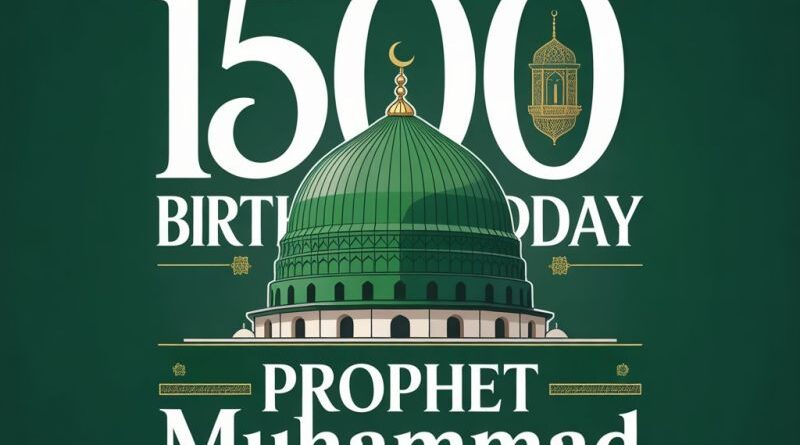
Merciful Birth Of The PROPHET S.A -A gift to Humanity
1500 Anniversary of PBUH (MUHAMMAD S.A.W)
The life of Prophet Muhammad (PBUH) brought about significant and transformative changes to the world, particularly in the Arabian Peninsula and beyond. His teachings and actions led to the establishment of a new faith, Islam, which fundamentally reshaped social, political, and spiritual landscapes. Key changes include the unification of warring tribes, the establishment of a just and equitable society based on Islamic principles, the elevation of women’s status, and the spread of knowledge and ethical conduct. His father name was Hazarat Abdullah (R.A)
Reference from holy Quran
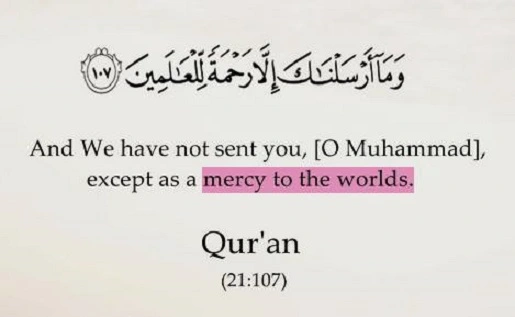
“And We have not sent you, [O Muhammad], except as a mercy to the worlds.” This verse emphasizes the universal nature of Prophet Muhammad’s message and his role as a mercy for all of creation Surah Al-Anbiya (21:107)
Certainly did Allah confer [great favor] upon the believers when He sent among them a messenger from themselves, reciting to them His verses and purifying them and teaching them the Book and wisdom, although they had been before in manifest error.” This verse emphasizes Allah’s favor in sending Prophet Muhammad as a guide and purifier. Surah Al-Imran (3:164)
REFRENCE FROM HADITH
The Prophet Muhammad’s (PBUH) birth is referenced in several hadith, with the most prominent being the one narrated by Abu Qatada Ansari, where the Prophet himself states that he was born on a Monday and that it was also the day the first revelation was sent to him. While the exact date is debated, many scholars, including Ibn Ishaq, believe it was the 12th of Rabi’ al-Awwal, a Monday, in the Year of the Elephant (570 or 571 CE).
Key Changes Introduced by Prophet Muhammad (PBUH):
- Unification of Arabia:
Prior to Islam, the Arabian Peninsula was fragmented into numerous tribes with frequent conflicts. The Prophet (PBUH) united these tribes under the banner of Islam, fostering a sense of brotherhood and shared identity.
- Establishment of a Just and Equitable Society:
Islam, as taught by the Prophet (PBUH), emphasized justice, fairness, and the rights of all individuals, including the poor, orphans, and widows.
- Elevation of Women’s Status:
While societal norms in pre-Islamic Arabia were patriarchal, Islam, as interpreted and practiced by the Prophet (PBUH), granted women certain rights and protections, including the right to inheritance, education, and divorce.
- Spread of Knowledge and Ethical Conduct:
The Prophet (PBUH) emphasized the importance of seeking knowledge and encouraged the pursuit of learning. His teachings also stressed ethical conduct, honesty, and compassion in all aspects of life.
- Founding of the Islamic State:
The Prophet (PBUH) established the first Islamic state in Medina, creating a framework for governance based on Islamic principles. This state provided a foundation for the subsequent expansion of Islam and its influence.
- Introduction of the Islamic Calendar:
The Hijri calendar, with its lunar year, was established, marking a new era in timekeeping for Muslims.
- Development of Islamic Law:
The Prophet (PBUH) laid the groundwork for Islamic jurisprudence (Fiqh), which continues to guide Muslims in various aspects of life.
- Building of the First Mosque:
The Prophet’s (PBUH) Mosque in Medina (Masjid an-Nabawi) became a central place for worship, learning, and community gathering.
- Introduction of Adhan:
The call to prayer (Adhan), a distinctive feature of Islamic practice, was introduced, and Bilal ibn Rabah was appointed as the first muezzin.
- Treaty of Medina:
The Prophet (PBUH) established a treaty with the Jewish tribes in Medina, outlining principles of peaceful coexistence, mutual defense, and religious freedom.
- Emphasis on Prayer and Worship:
The Prophet (PBUH) emphasized the importance of prayer (Salah) and other acts of worship, encouraging Muslims to connect with God and seek His guidance.
The Prophet’s (PBUH) life and teachings continue to inspire and guide Muslims worldwide, shaping their beliefs, practices, and interactions with the world.
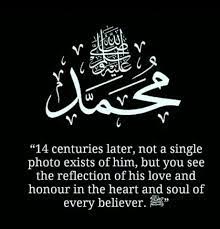
Beneficence of Muhammad on ummah
Prophet Muhammad (ﷺ) is considered a great blessing to the Muslim Ummah (community) because he is the final prophet and messenger of God, bringing the complete and final revelation of Islam through the Quran and his exemplary life (Sunnah). His teachings and example guide Muslims in all aspects of life, fostering spiritual, moral, and social well-being. He is a mercy to all mankind, and his life is a perfect model for Muslims to follow.
Here’s how the Prophet (ﷺ) is a blessing:
- Completing the Message of God:
He is the last prophet in a long line, and through him, God’s final message of Islam was revealed, completing the divine guidance for humanity.
- Perfect Role Model:
His life, as documented in the Quran and Hadith, provides a comprehensive guide for Muslims on how to live a righteous life, covering all aspects of faith, worship, and social interactions.
- Source of Guidance:
The Prophet (ﷺ) taught Muslims how to worship God, treat each other with kindness, establish a just society, and live a fulfilling life.
- Eliminating Ignorance:
He brought light and knowledge to a world shrouded in ignorance, replacing superstition and tribalism with a message of monotheism and social justice.
- A Mercy to All Mankind:
Verse 21:107 of the Quran states that the Prophet (ﷺ) was sent as a mercy to all the worlds, indicating his universal message of compassion and guidance, according to Muslim Hands South Africa.
- Intercessor on Judgment Day:
Muslims believe that on the Day of Judgment, Prophet Muhammad (ﷺ) will intercede on behalf of his followers, further highlighting his special status and blessing.
- Source of Blessings:
The Prophet (ﷺ) is a source of blessings for Muslims in this life and the hereafter, and his teachings continue to guide and inspire millions
DATE OF BIRTH of Holy Prophet
570 AD
According to modern estimations- Monday 20th April, 9th Rabiul Awwal of 571 CE is the most likely Birth date of Prophet Muhammad (SAW). The calculations were made based on back tracking from the day his son Ibrahim died, on Monday 27 January 632 CE when there was a solar Eclipse
12 rabi ul awal IMPORTANCE
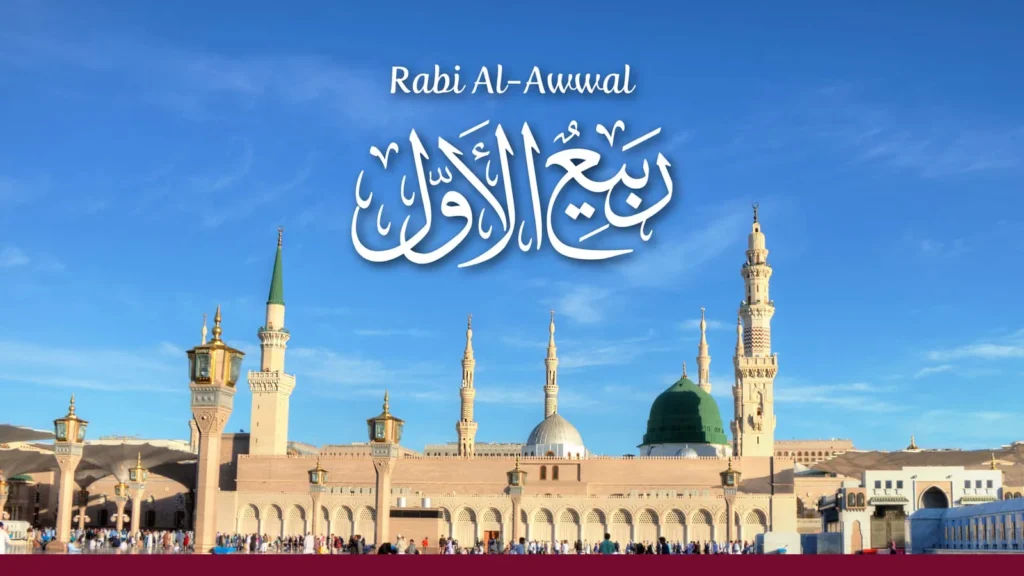
12th Rabi’ al-Awwal, also known as Mawlid al-Nabi, is celebrated by Muslims as the birth anniversary of the Prophet Muhammad (peace be upon him). It’s a day of immense significance for Muslims worldwide, prompting reflection on the Prophet’s life, teachings, and legacy.
Here’s why this day is celebrated:
- Birth of the Prophet:
12th Rabi’ al-Awwal is believed to be the day Prophet Muhammad (PBUH) was born in Mecca.
- Reflection on his life:
The day provides an opportunity to study and learn from the Prophet’s life, his character, and his teachings.
- Spiritual significance:
Muslims commemorate the birth of the Prophet as a blessing and a source of guidance for humanity.
- Celebrations:
Many Muslims celebrate by organizing religious gatherings, reciting the Quran, listening to Naat (poems about the Prophet), and participating in charitable activities.
- Community Building:
Celebrations often involve feasts, decorations, and processions, fostering a sense of unity and community.
- Expressing Love and Gratitude:
12th Rabi’ al-Awwal is a time to express love and gratitude for the Prophet (PBUH) and his message.
12 Rabi’ al-Awwal holds immense religious and historical significance for Muslims around the world, primarily because it is widely recognized as the birthdate of the Prophet Muhammad (peace be upon him).
- According to many scholars and Islamic traditions (especially in the Sunni tradition), the Prophet was born on Monday, 12 Rabi’ al-Awwal, in 570 CE (Year of the Elephant).
- This day is celebrated as Mawlid al-Nabi (مَولِدُ النَّبِيّ), which means “the birth of the Prophet.”
“I was born on a Monday.”
— Sahih Muslim 1162a
“And We have not sent you, [O Muhammad], except as a mercy to the worlds.”
— Qur’an, Surah Al-Anbiya (21:107)
The 1500th birthday of Prophet Muhammad (PBUH).
The 1500th birthday of Prophet Muhammad (PBUH) would be a significant milestone, and calculating it depends on whether you’re using the Gregorian (solar) or Hijri (lunar) calendar.
1. Gregorian (Solar) Calendar
Prophet Muhammad (PBUH) is believed to have been born in 570 CE (some sources say 571 CE).
So, the 1500th Gregorian birthday of Prophet Muhammad (PBUH) would fall in 2070 CE.
2. Hijri (Lunar) Calendar
Prophet Muhammad (PBUH) was born in Rabi’ al-Awwal, 53 BH (Before Hijrah), which corresponds to around April 570 CE.
- The Islamic (Hijri) year is about 10–11 days shorter than the Gregorian year.
- The 1500th Hijri birthday would fall in the year 1500 AH.
So, the 1500th Hijri birthday would occur around 2077 CE.
The year 2025 will mark the 1500th birth anniversary of Prophet Muhammad (PBUH). This milestone will be commemorated on the 12th of Rabi’ al-Awwal, which falls on September 5, 2025, according to the Islamic calendar. Muslims worldwide are planning celebrations to mark this historic occasion, including the construction of mosques and various other religious and cultural events.
How many years has it been since prophet Muhammad died
It has been 1393 years since Prophet Muhammad’s death. He passed away on June 8, 632 CE. Today is August 16, 2025.
To calculate the difference: 2025 – 632 = 1393 year
Pakistan has a policy rooted in Islamic principles, particularly emphasizing the reverence and protection of Prophet Muhammad (PBUH). This policy is reflected in laws, public discourse, and educational initiatives, aiming to uphold the sanctity of the Prophet and promote interfaith harmony.
Here’s a breakdown of the key aspects:
Legal Framework:
- Pakistan’s Penal Code includes provisions like Section 295-C, which criminalizes blasphemy against the Prophet Muhammad.
- The government has reaffirmed its commitment to enforcing these laws and taking measures to prevent their misuse.
There are ongoing calls to declare desecration of religious sanctities an international crime
Section 295C of the Pakistan
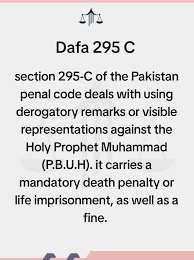
Section 295C of the Pakistan Penal Code (PPC) deals with the offense of defiling the name of the Holy Prophet Muhammad (peace be upon him). Specifically, it prescribes the death penalty or life imprisonment, along with a fine, for anyone who uses derogatory remarks, either spoken or written, or through visible representation, or any imputation, innuendo, or insinuation, directly or indirectly, that defiles the sacred name of the Holy Prophet Muhammad.
Key aspects of Section 295-C:
- Offense:
Defiling the name of the Holy Prophet Muhammad (PBUH) through various forms of expression.
- Punishment:
Death penalty or life imprisonment and a fine.
- Scope:
The section covers a wide range of expressions, including spoken words, written statements, visible representations, and insinuations.
- Controversy:
Section 295-C has been a subject of much controversy and criticism, with concerns raised about its potential for misuse and the severity of its punishment.
- International Criticism:
International human rights organizations and UN bodies have criticized the law for violating international human rights law and urged Pakistan to repeal or amend it.
- Implementation:
The law has been used to prosecute individuals, often leading to lengthy legal battles and imprisonment.
- Blasphemy Laws in Pakistan:
Section 295-C is part of Pakistan’s broader blasphemy laws, which cover various offenses related to religion and religious sentiment
SENATE New POLICY ABOUT CELEBRATING 1500th ANNIVERSERY OF HOLY PROPHET
Most Recent Senate Action (August 2025)

The Senate of Pakistan has unanimously passed a significant resolution to commemorate the 1500th birth anniversary (Milad‑un‑Nabi) of Prophet Muhammad (PBUH) with reverence and nationwide engagement. Key highlights include:
- Date passed: August 15, 2025.
- Lead sponsor: Senator Irfan-ul-Haque Siddiqui of PML‑N.
- Resolution contents:
- Federal and provincial governments are urged to launch high-level national programs, including Mahafils, media campaigns, welfare drives, and wide-scale decoration and illumination of public and private buildings as well as highways. All institutions—governmental, educational, commercial, and media—are encouraged to promote peace, tolerance, brotherhood in alignment with the teachings and Seerah of Prophet Muhammad (PBUH
- The Senate reaffirmed its commitment to promoting the Sunnah and Seerat of the Prophet and urged the nation to observe the occasion “with devotion, respect, unity, and solidarity.”
An earlier resolution passed by the Senate called for designating September 7 as “Finality of Prophethood Day”, celebrating the 1974 constitutional declaration affirming the finality of Prophet Muhammad (PBUH):
New resolution of celebrating annivresery of Muhammad (PBUH)
- Passed on: September 16, 2024.
- Proposed by: Senator Atta‑ur‑Rehman of JUI-F. Details:
- It urged the government to declare September 7 as a national holiday, marking the 1974 parliamentary resolution that formally declared Ahmadis (Qadianis) as a non‑Muslim minority. There was also a recommendation to award medals to parliamentarians instrumental in safeguarding the doctrine of the finality of prophethood

Your point of view caught my eye and was very interesting. Thanks. I have a question for you. https://accounts.binance.com/ar/register?ref=PORL8W0Z
Thanks for sharing. I read many of your blog posts, cool, your blog is very good.