
Malala Yousafzai
Her Biography:
Malala Yousafzai speaks or understands at least four languages: her native Pashto, Urdu, and English, which she learned as a child, as well as Arabic, which she understands from studying the Quran. Here are the languages:
- Pashto: Her mother tongue, native to her region of Pakistan.
- Urdu: The national language of Pakistan.
- English: She learned from a young age and became fluent, which was useful when she moved to the UK in 2013.
- Arabic: She can understand it from studying the Quran and has used apps to improve her skills.
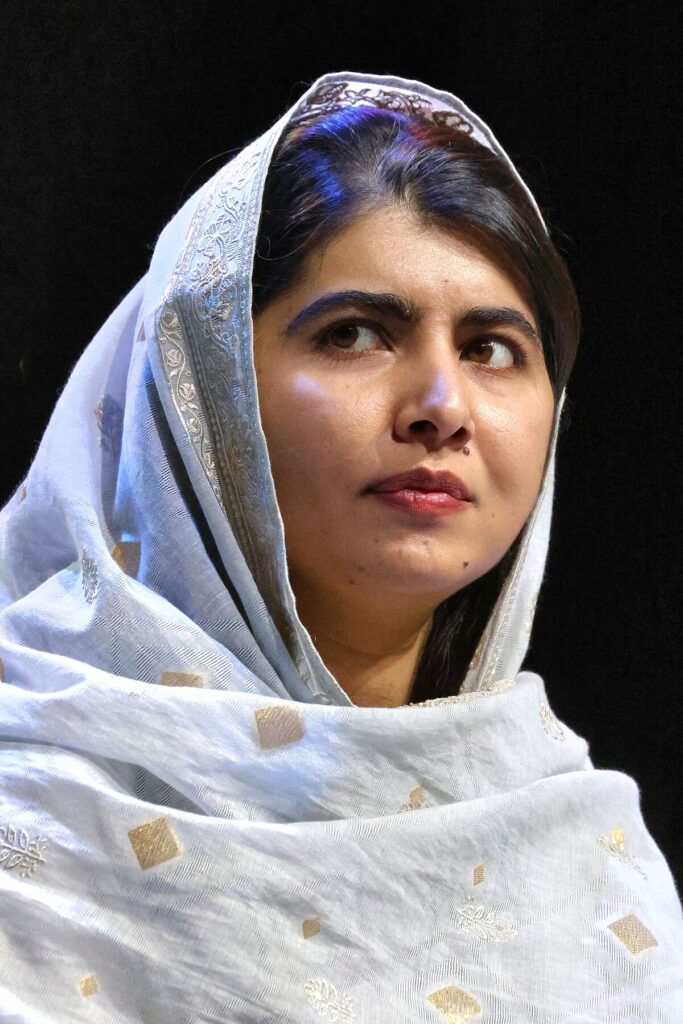
Wearing hijab
She is wearing a hijab Hijab A piece of clothing that covers the head, worn in public by some Muslim women. , a head covering worn by some Muslim women. It reflects the fact that she is a practicing Muslim and that her faith is an important part of her cultural identity.
Her words
MALALA YOUSAFZAI:I don’t have a phone, but I do have an iPad.
Malala Yousafzai is a Pakistani education activist and the youngest Nobel Prize laureate, born on July 12, 1997, in Mingora, Pakistan. After the Taliban banned girls’ education in her region, she became an outspoken advocate for girls’ rights, blogging for the BBC and gaining international attention. In 2012, a Taliban gunman shot her, but she survived the assassination attempt and continued her global advocacy, co-founding the Malala Fund and receiving the Nobel Peace Prize in 2014.
Early Life and Activism
Born:
Malala Yousafzai was born on July 12, 1997, in Mingora, Swat Valley, Pakistan.
Influential Father:
Her father, Ziauddin Yousafzai, was a teacher and ran a girls’ school, inspiring her passion for education from a young age.
Taliban Takeover:
The Taliban’s rise in Swat Valley led them to ban television, music, and, critically, girls’ education.
Public Advocacy:
In response, Malala began blogging for BBC Urdu about her experiences and openly spoke out for girls’ right to education, making her a target.
Assassination Attempt and Recovery
The Shooting:
On October 9, 2012, a Taliban gunman boarded her school bus and shot her in the head, as she was identified.
Survival:
She was airlifted to a hospital in England, where she woke from a medically induced coma after suffering no major brain damage, though she had a paralyzed left side of her face.
Global Attention:
The assassination attempt garnered international sympathy and attention, making her story a symbol of resistance against injustice.
Continued Advocacy and Legacy
United Nations Speech:
On her 16th birthday, Malala gave a powerful speech at the United Nations, advocating for education and human rights.
I Am Malala:
She co-authored the book “I Am Malala: The Girl Who Stood Up for Education and Was Shot by the Taliban,” published in 2013.
Nobel Peace Prize:
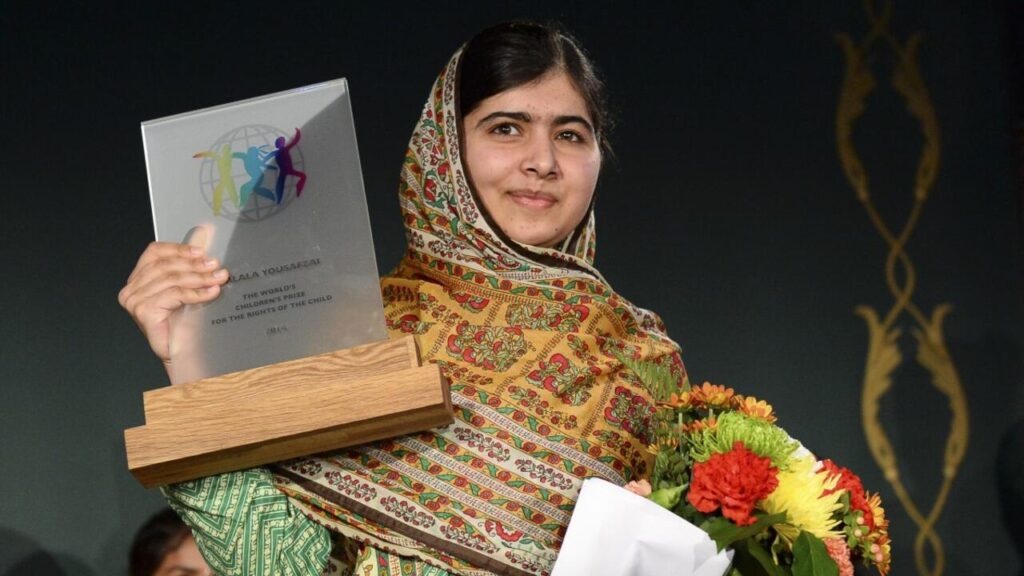
In 2014, at age 17, she was awarded the Nobel Peace Prize, becoming the youngest person ever to receive the prestigious award.
Malala Fund:
She co-founded the Malala Fund, an organization dedicated to empowering girls through education in developing countries.
Marriage:
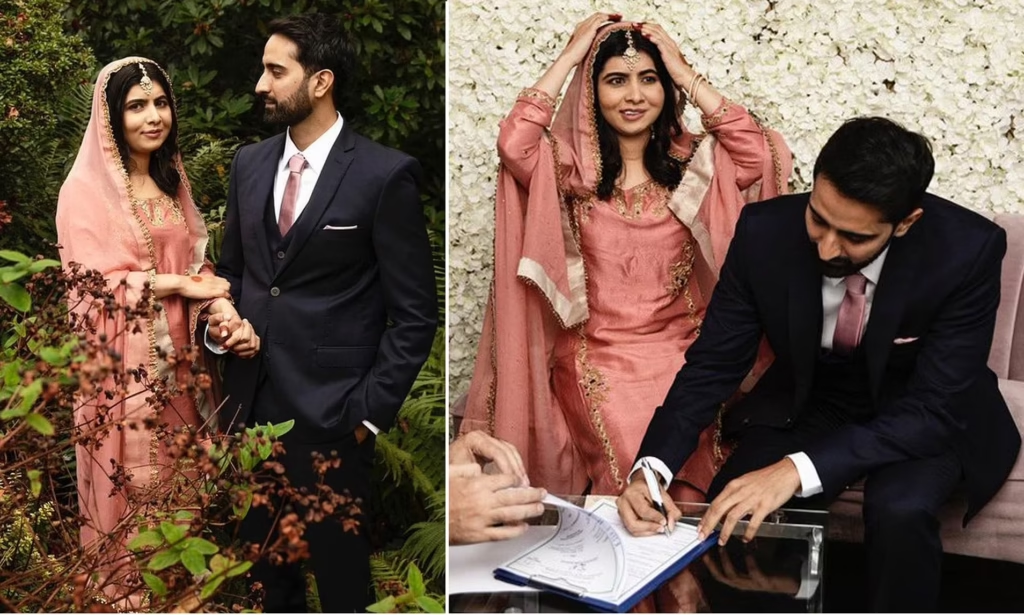
In 2021, she married Asser Malik in Birmingham, England.
Malala Yousafzai net-worth:

As the youngest Nobel Prize laureate and a tireless advocate for girls’ education, Malala has earned and donated millions to support her mission. Malala Yousafzai’s net worth is estimated to be between $2 million and $5 million, primarily from book sales, speaking engagements, and media partnerships
Siblings of Malala Yousafzai
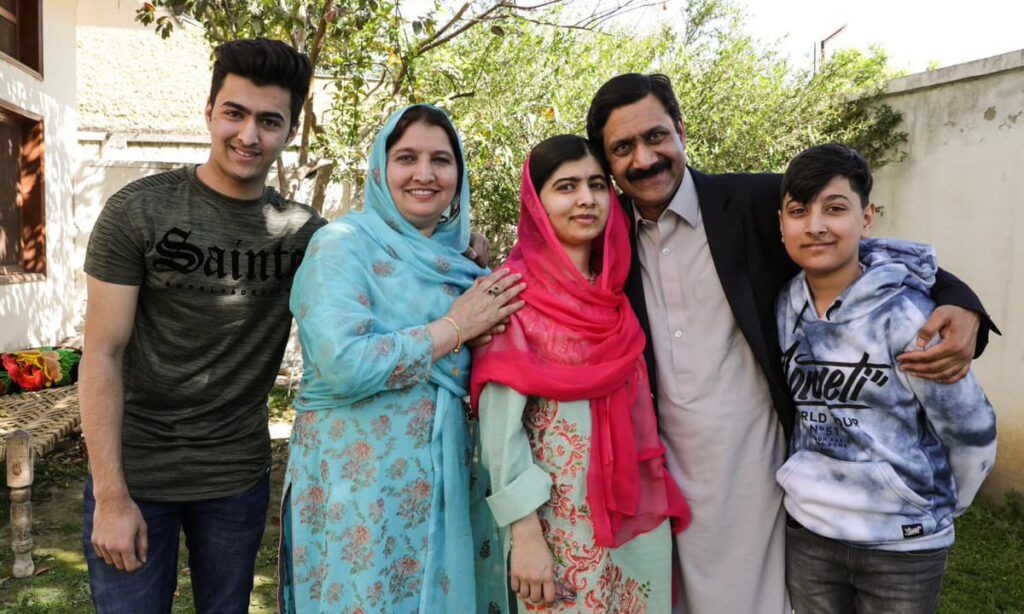
Khushal Yousafzai is Pakistani diplomat, Ziauddin Yousafzai`s son and Nobel Peace Prize Awardee, Malala Yousafzai`s, brother. He, at 14 years of age will be seen in the documentary, He Named Me Malala, directed by David Guggenheim, set to release in 2015
Born: January 1, 1970. Atal Yousafzai is Nobel peace prize awardee, Malala Yousafzai`s brother. At the age of 9 years, he is all set to appear in the documentary, He Named Me Malala, which is slated to release in 2015. Malala Yousafzai is a recipient of the Nobel Prize, having been awarded the Nobel Peace Prize in 2014 at the age of 17, making her the youngest laureate at that time. She was recognized for her advocacy for girls’ rights to education, which brought global attention to the prohibition of girls’ schooling in her native Pakistan by the Tehrik-e-Taliban Pakistan. Yousafzai shared the award with Kailash Satyarthi for their combined efforts in promoting children’s rights
Key facts about Malala Yousafzai’s Nobel Prize:
- Awarded for: Her work for girls’ education and children’s rights.
- Year: 2014.
- Age at award: 17 years old.
- Co-recipient: Kailash Satyarthi.
- Significance: She became the youngest Nobel laureate in history.
Background Story:
Born in Mingora, Pakistan, Yousafzai became an activist after the Taliban took control of her town in the Swat Valley and banned girls from attending school.
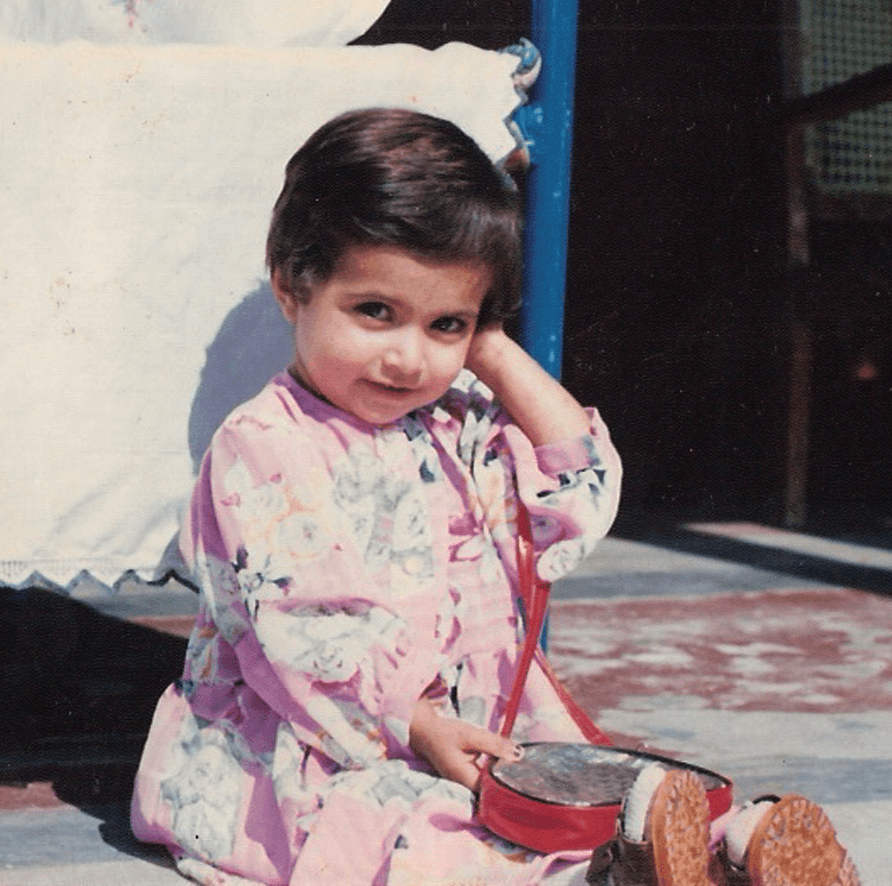
- She gained international recognition through an anonymous blog for BBC Urdu and her public speeches for girls’ education.
- After surviving an assassination attempt in 2012, her advocacy grew into a global movement, leading to the establishment of the Malala Fund to support education for girls worldwide.
Malala Yousafzai, 17, wins Nobel Peace Prize
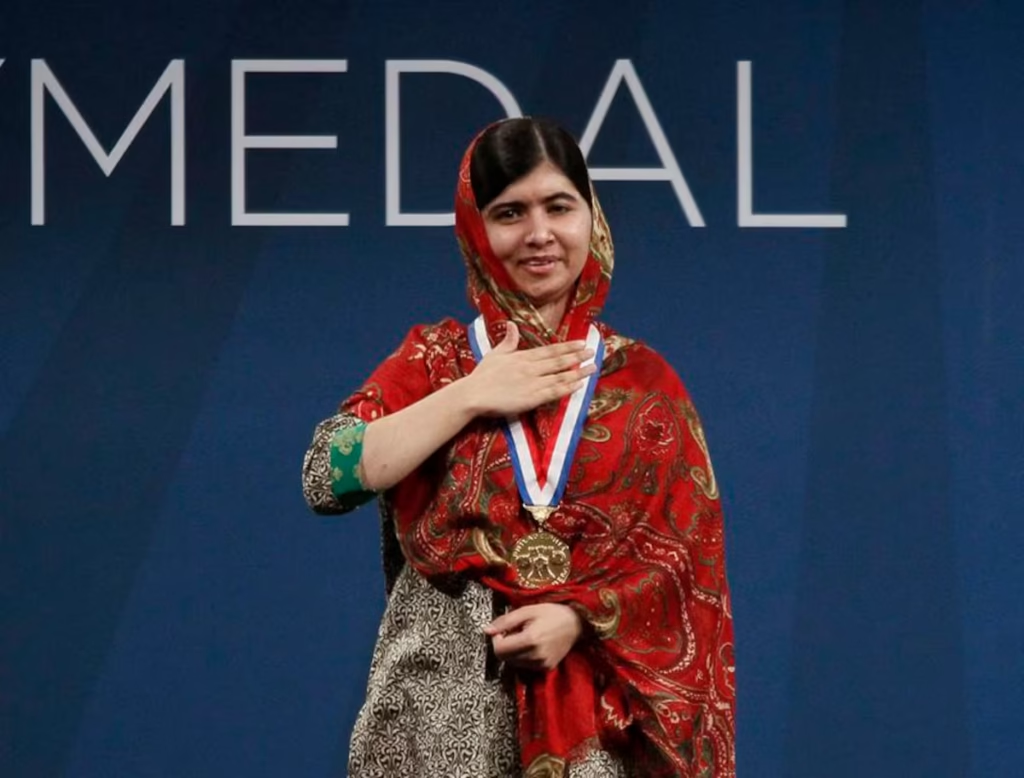
- On October 10, 2014, activist Malala Yousafzai, age 17, wins the Nobel Peace Prize. A fierce advocate for girls’ education, in her native Pakistan and around the world, she is the youngest-ever Nobel laureate.
- Malala Yousafzai was in chemistry class when she learned she had won the Nobel Peace Prize. After hearing the news, she recalled, “I went to my physics class. I said, I have to finish my school day, because when you get the Nobel Peace Prize for education, you have to finish your school day.”
Banned from school
Following the edict, the Pakistani Taliban destroyed several more local schools. On 24 January 2009, Yousafzai wrote: “Our annual exams are due after the vacations but this will only be possible if the Pakistani Taliban allow girls to go to school. We were told to prepare certain chapters for the exam but I do not feel like studying.”[47]
It seems that it is only when dozens of schools have been destroyed and hundreds others closed down that the army thinks about protecting them. Had they conducted their operations here properly, this situation would not have arisen.
In February 2009, girls’ schools were still closed. In solidarity, private schools for boys had decided not to open until 9 February, and notices appeared saying so.[47] On 7 February, Yousafzai and her brother returned to their hometown of Mingora, where the streets were deserted, and there was an “eerie silence”. She wrote in her blog: “We went to the supermarket to buy a gift for our mother but it was closed, whereas earlier it used to remain open till late. Many other shops were also closed.” Their home had been robbed and their television was stolen.[47]
After boys’ schools reopened, the Pakistani Taliban lifted restrictions on girls’ primary education, where there was coeducation. Girls-only schools were still closed. Yousafzai wrote that only 70 pupils attended out of the 700 who were enrolled.[47]
On 15 February, gunshots were heard in Mingora’s streets, but Yousafzai’s father reassured her, saying, “Don’t be scared—this is firing for peace.” Her father had read in the newspaper that the government and militants were going to sign a peace deal the next day. Later that night, when the Taliban announced the peace deal on their FM Radio studio, another round of stronger firing started outside.[47] Yousafzai spoke out against the Pakistani Taliban on the national current affairs show Capital Talk on 18 February.[48] Three days later, Tehreek-e-Nafaz-e-Shariat-e-
Mohammadi leader Maulana Fazlulla announced on his FM radio station that he was lifting the ban on women’s education, and girls would be allowed to attend school until exams were held on 17 March, but that they had to wear burqas.[47]
Girls’ schools reopen
On 25 February, Yousafzai wrote on her blog that she and her classmates “played a lot in class and enjoyed ourselves like we used to before.”[47] Attendance at Yousafzai’s class was up to 19 of 27 pupils by 1 March, but the Pakistani Taliban were still active in the area. Shelling continued, and relief goods meant for displaced people were looted.[47] Only two days later, Yousafzai wrote that there was a skirmish between the military and Taliban, and the sounds of mortar shells could be heard: “People are again scared that the peace may not last for long. Some people are saying that the peace agreement is not permanent, it is just a break in fighting.”[47]
On 9 March, Yousafzai wrote about a science paper that she performed well on, and added that the Taliban were no longer searching vehicles as they once did. Her blog ended on 12 March 2009.[49]
As a displaced person
After the BBC diary ended, Yousafzai and her father were approached by New York Times reporter Adam B. Ellick about filming a documentary.[43] In May, the Pakistani Army moved into the region to regain control during the Second Battle of Swat (also known as Operation Rah-e-Rast). Mingora was evacuated and Yousafzai’s family was displaced and separated. Her father went to Peshawar to protest and lobby for support, while she was sent into the countryside to live with relatives. “I’m really bored because
I have no books to read,” she is filmed saying in the documentary.[5]
That month, after criticising militants at a press conference,
Yousafzai’s father received a death threat over the radio by a Pakistani Taliban commander.[5] Yousafzai was deeply inspired in her activism by her father. That summer, for the first time, she committed to becoming a politician and not a doctor, as she had once aspired to be.[5]
I have a new dream … I must be a politician to save this country. There are so many crises in our country. I want to remove these crises.
— Malala Yousafzai, Class Dismissed (documentary)[5]
By early July, refugee camps were filled to capacity. The prime minister made a long-awaited announcement saying it was safe to return to the Swat Valley. The Pakistani military had pushed the Taliban out of the cities and into the countryside. Yousafzai’s family reunited, and on 24 July 2009 they headed home. They made one stop first—to meet with a group of other grassroots activists that had been invited to see United States President Barack Obama’s special representative to Afghanistan and Pakistan, Richard Holbrooke. Yousafzai pleaded with Holbrooke to intervene in the situation, saying, “Respected ambassador, if you can help us in our education, so please help us.” When her family finally returned home, they found it had not been damaged, and her school had sustained only light damage.[5]
Following the documentary, Yousafzai was interviewed on the national Pashto-language station AVT Khyber, the Urdulanguage Daily Aaj, and Canada’s Toronto Star.[43] She made a second appearance on Capital Talk on 19 August 2009.[50] Her BBC blogging identity was being revealed in articles by December 2009.[51][52] She also began appearing on television to publicly advocate for female education.[42] From 2009 to 2010 she was the chair of the District Child Assembly of the Khpal Kor Foundation.[53][54]
In 2011, Yousafzai trained with local girls’ empowerment organisation, Aware Girls, run by Gulalai Ismail, whose training included advice on women’s rights and empowerment to peacefully oppose radicalisation through education.[55]
In October 2011, Archbishop Desmond Tutu, a South African activist, nominated Yousafzai for the International Children’s Peace Prize of the Dutch international children’s advocacy
group, KidsRights Foundation. She was the first Pakistani girl to be nominated for the award. The announcement said, “Malala dared to stand up for herself and other girls and used national and international media to let the world know girls should also have the right to go to school.”[56] The award was won by Michaela Mycroft of South Africa.[57]
Yousafzai’s public profile rose even further when she was awarded
Pakistan’s first National Youth Peace Prize two months later in
December.[41][56] On 19 December 2011, Prime Minister Yousaf Raza Gillani awarded her the National Peace Award for Youth. At the ceremony, she stated she was not a member of any political party, but hoped to found a national party of her own to promote education.[58] The prime minister directed the authorities to set up an IT campus in the Swat Degree College for Women at Yousafzai’s request, and a secondary school was renamed in her honour.[59] By 2012, she was planning to organise the Malala Education Foundation, which would help poor girls go to school.[60] In 2012, she attended the International Marxist Tendency National Marxist Summer School.[61][62] In a television interview the same year, she named Barack Obama, Benazir Bhutto and Abdul Ghaffar Khan (Bacha Khan), a Pashtun leader known for his nonviolent Khudai Khidmatgar resistance movement against the British Raj, as inspirations for her activism.[9]
Medical treatment of Malala yousafzai:
After the shooting, Yousafzai was airlifted to a military hospital in Peshawar, where doctors were forced to operate after swelling developed in the left portion of her brain, which had been damaged by the bullet when it passed through her head.[67] After a five-hour operation, doctors successfully removed the bullet, which had lodged in her shoulder near her spinal cord. The day following the attack, doctors performed a decompressive craniectomy, in which part of her skull was removed to allow room for swelling.[68]
On 11 October 2012, a panel of Pakistani and British doctors decided to move Yousafzai to the Armed Forces Institute of Cardiology in Rawalpindi.[68] Mumtaz Khan, a doctor, said that she had a 70% chance of survival.[69] Interior Minister Rehman Malik said that Yousafzai would be moved to Germany, where she could receive the best medical treatment, as soon as she was stable enough to travel. A team of doctors would travel with her, and the government would bear the cost of her
treatment.[70][71] Doctors reduced Yousafzai’s sedation on 13 October, and she moved all four limbs.[72]
Offers to treat Yousafzai came from around the world.[73] On 15 October, Yousafzai travelled to the United Kingdom for further treatment, approved by both her doctors and family. Her plane landed in Birmingham, England, where she was treated at the Queen Elizabeth Hospital, one of the specialties of this hospital being the treatment of military personnel injured in conflict.[74] According to media reports at the time, the UK Government stated that “[t]he Pakistani government is paying all transport, migration, medical, accommodation and subsistence costs for Malala and her party.”[75]
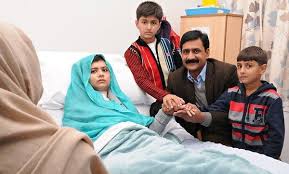
Yousafzai had come out of her coma by 17 October 2012, was responding well to treatment, and was said to have a good chance of fully recovering without any brain damage.[76] Later updates on 20 and 21 October stated that she was stable, but was still battling an infection.[77] By 8 November, she was photographed sitting up in bed.[78] On 11 November, Yousafzai underwent surgery for eight and a half hours, in order to repair her facial nerve.[64]
On 3 January 2013, Yousafzai was discharged from the hospital to continue her rehabilitation at her family’s temporary home in the West Midlands,[79][80] where she had weekly physiotherapy.[64] She underwent a five-hour-long operation on 2 February to reconstruct her skull and restore her hearing with a cochlear implant, after which she was reported to be in stable condition.[81][82] Yousafzai wrote in July 2014 that her facial nerve had recovered up to 96%.[64]
Current Residence
Since then: 🌍 I co-founded Malala Fund, now working in Afghanistan, Brazil, Ethiopia, Nigeria, Pakistan & Tanzania.
Malala Friends
During the event Malala spoke about her friends, saying: After I was shot the terrorists thought that I would not continue the struggle for education, but not only did I not stop my campaign but now Kainat and Shazia are with me and they are also supporting me. Currently, Malala’s family, living in
Birmingham, has grown since she married Asser Malik, a young Pakistani man whom she calls her partner, not just her spouse. He fully supports his wife’s advocacy work and operations of the Malala Fund.
Malala speaks (or understands) 4 different languages.
Malala grew up learning Pashto, her mother tongue, and also learned Urdu, which is the national language of Pakistan. From a young age she also started learning English, which came in handy when she moved to the U.K. in 2013..
Thank you for your sharing. I am worried that I lack creative ideas. It is your article that makes me full of hope. Thank you. But, I have a question, can you help me?
ask
Can you be more specific about the content of your article? After reading it, I still have some doubts. Hope you can help me.