INDIA SHOT DOWN PAKISTANI JETS
From May 7-10, India and Pakistan fought a near-war. This essay seeks to offer a first rough draft of history for that conflict, which does not have a settled name.1 Both combatant states have names for conflict: Operation Sindoor for India, and for Pakistan, Marka-e-Haq (“Battle for Justice”) and Operation Bunyanum Marsoos. Yet neither side grants the other side’s name much currency in their own conversations on the crisis.
Some commentators have offered more neutral labels, such as “the 87-Hour War” or “the 88–Hour War.”2 These are good candidate designations for the conflict, barring two problems: (1) the minor disagreement about how long the conflict lasted, and (2) the stricture in political science to withhold the “war” moniker to circumstances where more than one thousand combatants die from fighting. Thankfully, total casualties for both sides—while serious— appear to include less than 200 dead. To correct these deficiencies, I will refer to it as the Four-Day Conflict, since the description is both temporally and taxonomically correct.
On April 22, terrorists killed 26 tourists in Pahalgam, in the Indianadministered portion of the disputed territory of Jammu and Kashmir. The attack was especially provocative since it involved a clearly civilian target—a vast meadow that is a known tourist destination—and many eyewitness accounts report a communal nature to the killings, with Hindu males singled out for death.10
The Pahalgam attack occurred as the Narendra Modi government in India sought to restore normalcy to the union territory of Jammu and Kashmir, after major political changes New Delhi undertook to Kashmir’s political status in
August 2019. By killing tourists, the attack called into question the success of the Modi government’s Kashmir approach while simultaneously complicating efforts to encourage tighter integration between Kashmir and the rest of India.
Since Modi became prime minister in 2014, there had been two earlier attacks in Kashmir with significant casualties: one at Uri in 2016, which killed 19 soldiers, and another in Pulwama in 2019, which killed 40 Indian paramilitary troops. Both triggered an Indian military response. Most observers, myself included, expected an Indian military response after the Pahalgam massacre.11
As analyst and former U.S. official Joshua White has observed, given Pakistan’s long track record of supporting militant and terrorist groups, most outside governments were willing to accept India’s conclusion of Pakistani culpability, even though the released information tying Pakistan to the group responsible for the attack, the Resistance Front, was scarce.12 (The perpetrators of the attack remain at large.)
The REASONS BEHIND THIS
The India–Pakistan conflict in 2025 (specifically the May clashes that led to Operation Sindoor) is rooted in a complex mix of historical tensions, geopolitical triggers, and military escalations. Here’s a breakdown of the main reasons behind the conflict:
1. Cross-Border Terrorism and Insurgency in Kashmir
- As in past Indo-Pak tensions, Kashmir remained the core flashpoint.
- Indian officials accused Pakistan of supporting cross-border terrorism and arming insurgents in Jammu & Kashmir.
- A deadly terror attack on an Indian military convoy in April 2025 reportedly killed over
30 soldiers — seen by India as Pakistan-sponsored (though Pakistan denied involvement).
2. Airspace Violations and Surveillance
- Indian radar systems reportedly tracked Pakistani aircraft conducting reconnaissance missions near Indian military installations.
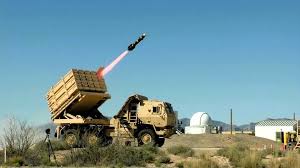
- India’s downing of a Pakistani surveillance aircraft (from 300 km away using the S-400 system) was seen as a response to these perceived airspace threats.
- Pakistan claimed it was routine surveillance in their own territory and accused India of overreacting militarily.
3. Operation Sindoor and Military Build-up
- India launched Operation Sindoor as a pre-emptive air-defense posture, citing credible threats of Pakistani aerial aggression.
- It involved extensive use of missile defense systems, radar, and air patrols.
- Pakistan responded with fighter jet mobilizations, leading to dogfights and air skirmishes over contested areas.
4. Geopolitical Shifts & International Pressure
- The global situation in 2025 is marked by strategic alignments:
o India has growing defense ties with the US, France, and Israel. o Pakistan maintains strong ties with China and some Gulf states.
- There were rumors that Chinese satellite data was being shared with Pakistan, adding to Indian concerns.
5. Domestic Political Factors
Both nations had elections approaching or major internal issues: o Indian leadership was accused by critics of taking a hard-line stance for political gain.
o Pakistan faced economic and internal political instability, possibly leading to external confrontation as a distraction.
6. Breakdown in Diplomatic Channels
- Peace talks stalled in early 2025 after months of silence.
Back-channel diplomacy failed, and both nations scaled up rhetoric and troop deployments
Pakistan’s Official Position
Pakistan’s Defence Minister, Khawaja Asif, categorically denied that any of its aircraft were hit or destroyed by Indian forces during the conflict. He described the Indian claims as “implausible” and “ill-timed,” and even challenged India to open both sides’ aircraft inventories for independent verification The Express TribuneThe Financial ExpressThe Times of India. He also asserted that Pakistan, not India, suffered fewer losses and maintained that
Who won?
On May 10, 2025, following four days of intense fighting, India and Pakistan accepted a ceasefire, putting an end to what had been the greatest military escalation between the two countries in decades. Initially broken within a matter of hours, the ensuing uneasy truce remains in effect at the time of writing
India’s View & Strategic Gains
- Strategic Objectives Met: India succeeded in its primary objective—to deliver a direct, precise military response against terrorist infrastructure inside Pakistan—signaling a new doctrine of treating state-supported terrorism as a military target StratNews GlobalMedium.
- Military Impact: India reportedly degraded Pakistan’s air capabilities, hitting airbases, radars, command centers, and neutralizing over 100 terrorists MediumWikipedia.
- Technological Edge: The operation showcased India’s modern air defense (e.g., S-400) and long-range strike capabilities, winning praise from analysts and reinforcing military confidence WikipediaThe Times of India.
- Expert Opinions: Analysts described Operation Sindoor as a calibrated use of force that largely achieved objectives and reshaped deterrence dynamics on the subcontinent WikipediaVivekananda International FoundationMedium.
Pakistan’s Perspective & Diplomatic Gains
- Narrative of Victory: Pakistan’s leadership declared a historic victory—Prime Minister Shehbaz Sharif even marked a “day of gratitude” to celebrate it Wikipedia.
- Domestic Rallying Point: The conflict stirred national unity and pride, with reports suggesting Pakistani military and political leadership emerged more consolidated and popular post-conflict Wikipedia.
- Symbolic Resistance: Analysts noted that Pakistan also disseminated narratives of successful defense, particularly around claims of Indian losses WikipediaThe Times of India.
International & Balanced Viewpoints
- Mixed Outcomes: The New York Times labeled the result “little more than a draw,” emphasizing neither side achieved a decisive breakthrough Wikipedia.
- Diplomatic Leverage: Financial Times highlighted that U.S. brokering of the ceasefire offered Pakistan a degree of diplomatic leverage, somewhat balancing perceptions of success Wikipedia+1.
- Narrative Importance: India’s Army Chief emphasized that modern conflict is as much about controlling the story as battlefield outcomes—“victory is in the mind” The Times of India.
In short, India appears to have secured a military and strategic edge, delivering its intended objectives with precision and restraint. Pakistan, meanwhile, achieved a domestic and diplomatic narrative counter, managing to portray itself as resilient and capable.
The four-day military conflict between India and Pakistan from May 7 to 10 broke norms in more than one way. Pakistan-sponsored terrorist attacks had in the past led to retaliations limited to Pakistan-administered Kashmir. In response to a terrorist attack on April 22 in India-administered Kashmir that India alleges was sponsored by Pakistan, the Indian Air Force conducted airstrikes not only in Pakistan-administered Kashmir but also in Pakistani Punjab. The latter area is the heartland of Pakistan’s army and the country’s economic, political, and strategic center of gravity.
Pakistan responded by shooting four jets of the Indian Air Force (a Rafale, a Mirage, a Mig-29, and a Sukhoi 30).[2] On the night of May 7, it launched drones strikes on Indian military bases in 15 locations in Indian Punjab, Jammu and Kashmir, Gujarat, and Rajasthan. Tensions further escalated on May 8, with India conducting drone strikes on Pakistan’s radar infrastructure, and Pakistan launching missiles and drones against 36 locations in India “from Leh to Sir Creek.”[3] The next two days followed the same pattern of escalation, with India striking air defense infrastructure at six sites in Pakistan and the latter responding by launching missile and drone attacks on 26 Indian
air bases. As the conflict went on, India targeted increasingly sensitive locations, including a surface-to-air missile site at Malir military base close to Karachi “and the Nur Khan air base in Rawalpindi, home to Pakistan’s Army General Headquarters and a short distance from the headquarters of
Pakistan’s nuclear command authority, the Strategic Plan Division.”[4]
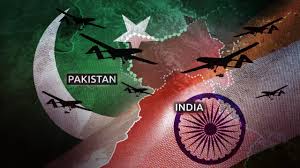
The conflict mobilized massively new types of equipment, without any use of foot soldiers or penetration of enemy territory. There was also no evidence of any manned aircraft crossing into the airspace of the other side.[5] It was primarily a war of missiles and drones, with the latter emerging as the weapon of choice. India relied on Israeli-made drones such as the IAI Searcher, Heron, Harpy, and Harop, which are capable of autonomous reconnaissance and precision strikes, as well as several indigenous ones such as the Nagastra-1 suicide drone, Rustom-2 medium-altitude long-endurance drone, and the Archer-NG armed tactical drone. India’s arsenal also includes 31 MQ3B Predator drones, which it acquired from the United States through a 2024 deal.[6] Pakistan’s arsenal includes the Chinese CH-4 drone, the Turkish Bayraghtar Akinci, and the indigenously developed Burraq and Shahpar drones. A lower level of military operations than fighter jets or missiles, drones are usually employed as a least escalatory step. Both India and Pakistan used them to probe each other’s defense systems.
Interestingly, India did not cross any of the red lines enumerated by Pakistan to justify a potential nuclear strike, and Islamabad did not send any open signal that it could use nuclear weapons.[7] Nonetheless, India did strike much deeper in Pakistani territory than anybody, including Pakistani leaders, had envisaged.
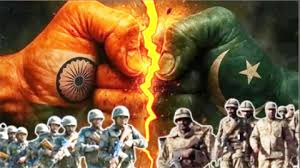

A War with No Clear Winner
The strategic outcome of the conflict appears to favor India. Although it experienced some losses in the early phase of the conflict, India subsequently neutralized Pakistan’s air-defense and radar systems and was able to strike deep into Pakistani territory. More importantly, India demonstrated that it would no longer be intimidated by nuclear threats, such as the deployment of a missile battery, as Pakistan has done in past crisis.
The political outcome, however, is debatable. Donald Trump’s de facto rehyphenation of the U.S.-India relationship to the U.S.-Pakistan relationship exasperated Indian decision-makers as much as his proposal to mediate between the two countries on the Kashmir issue. U.S. talking points also de facto acknowledged Pakistani equities in Jammu and Kashmir, which has potential consequences for relations with India even if both sides maintain a façade of entente. Trust between India and Pakistan may be the first victim.
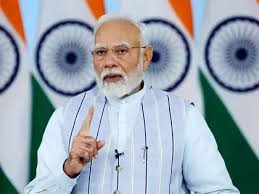
Following the end of hostilities, on May 12 Prime Minister Narendra Modi announced a new Indian military doctrine, signaling a more aggressive stance against cross-border terrorism and implicit nuclear threats.[8] According to the new doctrine, India will respond to terrorism on its own terms regarding both the choice of the means and the location of the strikes. It will also no longer be deterred by nuclear blackmail and will make no differentiation between the government sponsoring terrorism and the masterminds of terrorism. Modi further suggested that no discussion about trade or even water sharing would take place with Pakistan as long as terrorism continues, indicating that only terrorism and Pakistan-administered Kashmir would from now on be discussed with Islamabad. This leaves little room for negotiations, whether mediated by the United States or any other country.
The strategic and political significance of the conflict are more doubtful for
Pakistan. As discussed earlier, Pakistan was able to inflict some losses on India. Moreover, Trump’s proposal for mediation opens the prospect of renewed political and badly needed economic relations with the United States. But accepting the ceasefire as a U.S. initiative was no more than a facesaving move. This relative success has to be gauged against existing realities. Pakistan has often justified its policy vis-à-vis India by the argument that the Kashmir Valley is the origin of its major rivers that provide water for irrigation, drinking, and hydroelectric power. India’s decision to suspend the Indus Water Treaty, which will not stop the flow of the rivers but reduce it substantially enough to damage Pakistan’s agriculture during dry winters, is therefore a blow to the Pakistani economy. Furthermore, even as the conflict temporarily united the country behind the armed forces, a deeper economic crisis still looms at a time when Pakistan’s remaining friends are less willing to support its failing economy
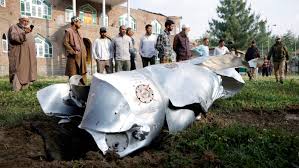
The Uncertain Policies of the Great Powers
The May 2025 conflict was also characterized by a lack of clarity in the positions and policies of the United States and China. U.S. policy, in particular, perplexed many observers. After Vice President J.D. Vance declared on May 9 that any Pakistan-India war was none of the United States’ business, President Trump proposed that the United States mediate between the two countries, thereby de facto re-hyphenating U.S.-India and U.S.Pakistan relations.[10]
The U.S. management of the crisis seemed to vacillate between two lines: a classical interventionist one led by Secretary of State Marco Rubio and a more isolationist one emanating from Trump and Vance. The two lines aligned around the ceasefire announcement, but the rationale of the proposals and the issue of re-hyphenation remain unclear. The move complicates U.S.
diplomacy. Entangling itself in the Kashmir issues would bring few benefits, if any, to Washington and makes little sense. India is increasingly averse to U.S. pressures, while the absence of U.S. leverage on Pakistan obliges Washington to rely mostly on incentives. This not only is at odds with the policies followed during the first Trump administration but also is unlikely to facilitate relations with New Delhi.
Several analysts have claimed that China may ultimately be the only real winner of the conflict. Chinese weapon systems were tested for the first time in combat, and the performance of the J-10 fighter aircraft has been greeted by some analysts as a boost for the country’s defense industry.[11] India’s use of air defenses and launch of cruise and ballistic missiles were of particular interest for Beijing. But more sober analyses show mixed results. Chinese air defenses, including YL-8E counter-stealth radars and medium- and longrange surface-to-air missile systems (HQ-16FE and HQ-9BE), failed to intercept many of India’s missile strikes, while Chinese air-to-surface missiles also failed to reach their targets.
Beijing does not want a weak Pakistan and, following the conflict, has consequently reaffirmed its friendship with Islamabad during the visit of Pakistan’s foreign minister. The Chinese foreign minister remained cautious, though, even as he reiterated his country’s support.[12] Beijing does not appear to trust the Pakistani military or want to let Islamabad dictate the terms of China’s own relationship with India. Beijing’s attitude is consistent with the evolution of the bilateral relationship. Pakistan remains a risky venture for a very risk-averse China. Yet Beijing is in the middle of the road, having invested substantially in Pakistan without obtaining the guarantees it has been constantly seeking regarding political stability and security. Moreover, China’s priorities for cooperation seem less and less connected with Pakistan’s concerns and more focused on access to the Indian Ocean.[13] Thus, Chinese support for Pakistan is likely to continue but will remain very calibrated. INDIA CLAIMS
- Response to Terrorism:
India views its military actions, including missile strikes and drone attacks, as a direct response to a terrorist attack on Indian tourists in the Pahalgam region and other attacks on its soil, which are attributed to groups supported by Pakistan.
- Targeting Terrorist Infrastructure:
India’s Defence Minister reiterated that Indian forces struck “only those who harmed our innocents,” implying that the strikes were precise and aimed at terrorist infrastructure rather than civilians or military installations.
- Deterrence:
The strikes, sometimes termed “Operation Sindoor” in reference to the attack on nonMuslims, are seen as a necessary measure to deter Pakistan from supporting terrorist groups and to prevent future attacks.
- Self-Defense:
India frames its actions as a defense of its sovereignty and the safety of its citizens against external aggression. Pakistan’s Counterclaim:
- Civilian Casualties:
Pakistan claims that Indian strikes killed civilians, including children, and hit residential areas and mosques, contradicting India’s claim of targeting only terrorist infrastructure.
- No Support for Terrorists:
Pakistan denies supporting terrorist groups responsible for attacks in India and claims to offer only moral and diplomatic support for the Kashmiri people.
- Victim Status:
Pakistan positions itself as the victim, accusing India of aggression and escalating tensions through its military actions.
🇮🇳 India’s Claims about the 2025 Conflict (Operation Sindoor)
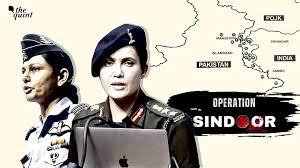
During and after the May 2025 clashes with Pakistan, the Indian government and military made a series of strong claims regarding their success in the operation, particularly in terms of military precision, deterrence, and defense.
Key Indian Claims
- Air Dominance Achieved
- India shot down 5 Pakistani fighter jets and 1 large surveillance aircraft during the conflict.
- The S-400 air defense system was used to shoot down the surveillance aircraft from 300 km away, which India claims is the longest surface-to-air kill ever recorded.
- Operation Sindoor Was a Strategic Success
- The Indian Air Force says the operation was carefully planned and executed, targeting terror camps, logistics hubs, and key Pakistani airbases.
- Over 100 militants were reportedly neutralized in precision airstrikes across the Line of Control (LoC).
- No Indian Aircraft Lost
- India claims no Indian fighter jets were lost in aerial combat or to Pakistani air defenses—unlike the 2019 Balakot incident where an Indian MiG-21 was downed.
- This is presented as proof of superior planning, technology, and preparedness.
- Surgical Precision, Not Escalation
- Indian officials emphasized that this was a limited military response, not a declaration of war.
- PM Modi and IAF Chief both said that civilian targets were avoided, focusing strictly on militant infrastructure and military assets.
- Diplomatic Victory
- India claims that international powers, including the U.S., France, and Japan, acknowledged India’s right to self-defense and praised the measured nature of the operation.
- India asserts that it gained support in global forums, such as the UNSC emergency meeting, where Pakistani attempts to censure India failed.
- Public and Strategic Messaging
- Indian Army Chief said the operation also achieved “narrative dominance”, framing India as a technologically advanced and responsible power. PM Modi said:
“Operation Sindoor showed the world the new face of India: decisive, restrained, and effective.”
Narrative Positioning
India’s military and political leadership used the operation to:
- Demonstrate new rules of engagement (willingness to hit back hard, but without fullscale war).
- Reinforce its deterrence posture against cross-border terrorism.
- Boost domestic morale and showcase the modernization of the armed forces.
🇮🇳 India’s Official Claims About Shooting Down Pakistani Jets (May 2025 – Operation Sindoor)
During Operation Sindoor in May 2025, the Indian Air Force (IAF) made detailed and specific claims regarding the shooting down of Pakistani military aircraft.
Here’s a breakdown of what India officially claims:
Aircraft Shot Down by India
Aircraft Type Number Details
Downed in aerial engagements or by ground-based air defense
| Pakistani Fighter Jets | 5 | systems |
| Pakistani Surveillance Aircraft | 1 | Shot down from ~300 km by India’s S-400 missile system |
| Total Confirmed by IAF | 6 | Confirmed publicly by the Indian Air Force Chief in August 2025 |
How the Jets Were Shot Down
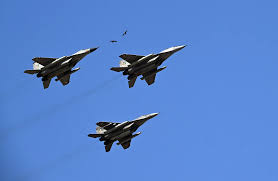
- Air Combat Engagements
- IAF Su-30MKIs and Rafales were deployed during intercept missions along the western front.
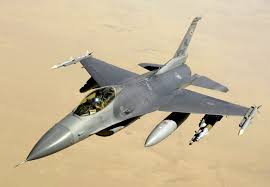
- Indian fighter pilots engaged Pakistani F-16s and JF-17s over/near the LoC and Rajasthan sectors.
- Several kills were achieved through air-to-air missiles, including Meteor and Astra.
- S-400 Triumph Air Defense System
- India used the Russian-made S-400 system to take down a Pakistani AEW&C aircraft (Airborne Early Warning & Control) operating deep within Pakistani airspace (approx. 300 km range).
- This was hailed as the longest recorded surface-to-air kill in history.
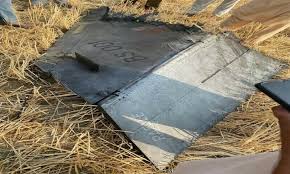
Significance of the Claims
- Largest single-day aerial victory by India since the 1971 war. Showcased India’s advanced integrated air defense network.
- Marked a shift in India’s strategic posture—asserting it can and will respond beyond the LoC with precision.
India’s Position on Losses
- India denies any aircraft losses during the operation.
- No IAF pilots were captured or killed, according to official reports.
- India claims this contrasts sharply with past conflicts, where aircraft losses were more evenly matched.
Statements by Indian Officials
- IAF Chief (Aug 2025):
“The air defense systems performed as planned. Six Pakistani aircraft were downed, including a high-value surveillance platform.”
- PM Narendra Modi:
“India has demonstrated its resolve and technological edge. We did not escalate. We responded.”
🇮🇳 India vs 🇵🇰 Pakistan: Air Force Strength (2025)
Category India (IAF) Pakistan (PAF)
Total Combat
~680+ ~360–400
Aircraft
| Category | India (IAF) Pakistan (PAF) | |
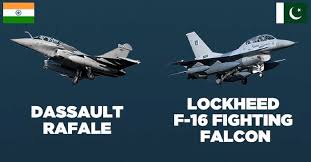
| 4th/4.5 Gen Fighters | Rafale (36), Su-30MKI (~270), Mirage 2000 JF-17 Block III, F-16C/D, Mirage III/V | |
| (~50), Tejas | ||
| 5th Gen Fighters | None (AMCA under development) | None |
| Mainstay Aircraft | Su-30MKI, Rafale | JF-17 Thunder, F-16C |
| AWACS / AEW&C | Netra AEW&C, IL-76 Phalcon | ZDK-03 Karakoram Eagle, Saab 2000 Erieye |
| Tanker Fleet | IL-78 Mid-Air Refueling (6+) | IL-78 (few) |
| Drone/UCAV Programs | Archer-NG, Israeli Heron, US Predator drones (imported) | Wing Loong II (Chinese), Bayraktar TB2 (rumored) |
| Air Defense Systems | S-400, Akash, Barak 8, Israeli SPYDER | LY-80 (Chinese HQ-16), FM-90 |
Notable Fighter Jets: Technical Comparison
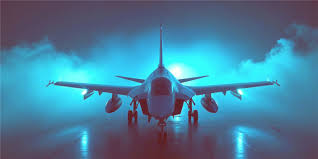
Range
| Aircraft Used By Generation | Role (km) | Notable Strength | |
| Su-30MKI 🇮🇳 India | 4++ Gen | Air superiority, strike ~3,000 | Heavy payload, long range, twinseat |
| Rafale 🇮🇳 India | 4.5 Gen | Multirole fighter ~3,700 | Meteor missiles, ECM, stealth features |
| Tejas 🇮🇳 India Mk1A | 4 Gen | Lightweight ~1,700 multirole | Indigenous, modern avionics |
| JF-17 Block 🇵🇰 3 Pakistan | 4+ Gen | Multirole fighter ~2,000 | AESA radar, Chinese missiles, low cost |
| 🇵🇰 F-16C/D Pakistan | 4 Gen | Multirole air ~4,200 superiority | Combat proven, precision strike capability |
Combat Edge: Analysis
| Aspect Edge | Reason |
| Technology/Avionics 🇮🇳 India | Rafale + Israeli/Western systems superior to Chinese equivalents |
| Missile Arsenal 🇮🇳 India | Meteor, Astra Mk2, BrahMos-A vs. Chinese PL-15, SD-10 |
| Air Defense 🇮🇳 India | S-400 outclasses Pakistan’s Chinese LY-80 systems |
| Training/Experience 🇮🇳 India | More extensive combat exercises, global joint drills |
Agility & Numbers 🇵🇰 Pakistan JF-17s are cheaper, more numerous per dollar, easier to operate
| Historical Context | |
| Conflict | Air Combat Outcome |
| 1965 War | Roughly balanced, Pakistan had early air superiority |
| 1971 War | India dominated air and ground |
| 1999 Kargil War | Limited air combat; India used Mirage 2000 successfully |
| 2019 Balakot Clash | 1 IAF MiG-21 shot down, 1 PAF F-16 possibly lost (disputed) |
2025 (Operation Sindoor) India claims 6 Pakistani aircraft downed; Pakistan denies losses
Military & Defense Updates
- India confirms shoot-downs: On August 9, 2025, Indian Air Chief Marshal A.P. Singh stated that during Operation Sindoor (May 7–10), India shot down six Pakistani military aircraft—comprising five fighter jets and one large surveillance plane. Most of these were downed using the S-400 surface-to-air missile system, with the surveillance aircraft taken down at a range of ~300 km—potentially the longest surface-to-air kill recorded.Reuters
- Pakistan rejects the claims: In response, Pakistan’s Defence Minister Khwaja Asif dismissed the Indian assertions as “implausible, ill-timed and politically motivated,” accusing the IAF chief of using the incident for domestic political gains, despite India presenting imagery and video evidence.The Times of India
Escalating Rhetoric
- Nuclear threats and economic targeting: Pakistan Army Chief General Asim Munir, speaking in the United States, made alarming statements, suggesting that if Pakistan were to fall, it would “take half the world down with it,” and specifically naming Reliance’s Jamnagar refinery as a potential economic target. These comments have raised serious concerns regarding nuclear saber-rattling.The Times of India
- Water warfare rhetoric: Adding to the escalatory tone, PPP Chair Bilawal Bhutto Zardari hinted at a conflict over water resources—suggesting Pakistan could reclaim six rivers from India
https://t.me/s/Official_1xbet1/1815
Как скачать авиатор 1win и начать играть или делать ставки на спорт прямо сейчас! Получите доступ к онлайн казино с бонусами за депозит до 150%, шанс выиграть крупные суммы в слотах и лайв-ставках с высокими коэффициентами, а также использовать промокод для дополнительных фриспинов и кэшбэка до 10%. Быстрый вывод средств, круглосуточная поддержка и личный кабинет делают игры максимально выгодными и удобными.