
Great Leaders of History Who Changed the World
1.Abraham Lincoln (1809-1865)
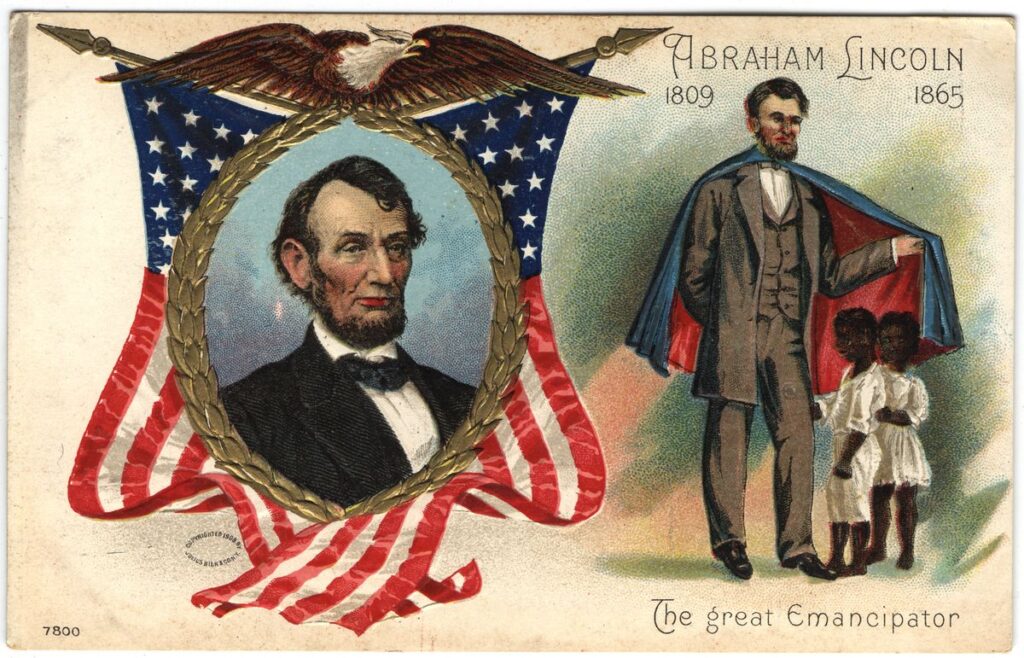
Abraham Lincoln (February 12, 1809 – April 15, 1865) was the 16th U.S. president who led the country through the American Civil War and abolished slavery. Born in a Kentucky log cabin, he overcame early hardships and a limited formal education to become a lawyer and eventually president, preserving the nation and establishing a legacy of freedom.
Early Life and Education
- Birth and Family:Born in a log cabin near Hodgenville, Kentucky, on February 12, 1809. His family later moved to Indiana.
- Loss and Stepmother:His mother died when he was young, but his stepmother encouraged his passion for learning.
- Self-Education:Despite limited formal schooling, Lincoln was a voracious reader and a self-taught individual who later became a lawyer.
Presidency and Leadership
- 16th U.S. President:Lincoln served as the 16th President of the United States from 1861 to 1865.
- American Civil War:He guided the United States through the tumultuous period of the Civil War.
- Emancipation:He is credited with bringing about the emancipation of enslaved people in the United States.
Legacy
- Preserving the Union:His leadership is credited with preserving the United States during its greatest internal conflict.
- Abolishing Slavery:Lincoln played a crucial role in ending slavery through the Emancipation Proclamation and the passage of the 13th Amendment, though the Civil War was already raging at that time.
- Died in Office:Abraham Lincoln died on April 15, 1865, in Washington, D.C., shortly after the end of the Civil War.
2.Queen Elizabeth II (1926-2022)
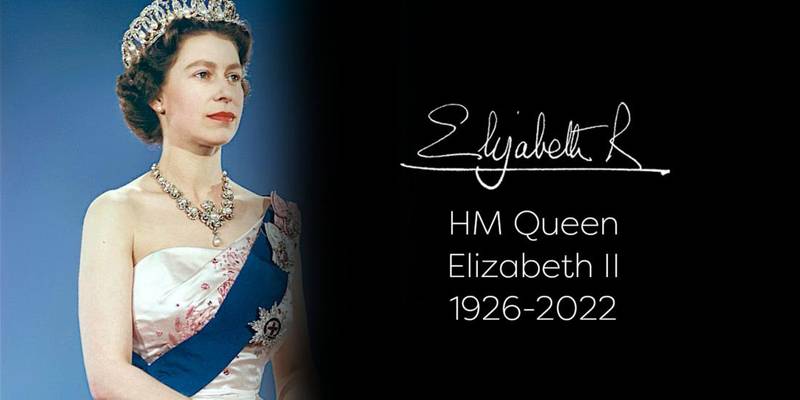
Queen Elizabeth II (April 21, 1926–September 8, 2022) was the longest-reigning monarch in British history, serving as Queen of the United Kingdom and other Commonwealth realms for over 70 years. Her reign lasted from February 6, 1952, until her death in 2022.
- Birth and family Elizabeth Alexandra Mary was born in London to Prince Albert (later King George VI) and Elizabeth Bowes-Lyon on April 21, 1926.
- Heir presumptive She became heir presumptive at age 10 after her uncle, King Edward VIII, abdicated, making her father the new king.
- World War II service During the war, she joined the Auxiliary Territorial Service and trained as a driver and mechanic, becoming the first female royal to be a full-time, active member of the armed forces.
- Marriage In 1947, she married Prince Philip, Duke of Edinburgh, and together they had four children: Charles, Anne, Andrew, and Edward.
- Accession to the throne On February 6, 1952, at age 25, she became Queen upon the death of her father while she was in Kenya on a royal tour. Her coronation took place on June 2, 1953, and was the first to be televised, a historical event watched by an estimated 277 million people worldwide.
Reign and accomplishments
- Head of the Commonwealth As Head of the Commonwealth and Head of State for many of its member nations, she frequently toured the globe, acting as a diplomat and hostess and welcoming more than 110 presidents and prime ministers on state visits to the UK.
- Devotion to service Her reign was defined by a strong sense of duty and a commitment to public and voluntary service, serving as a patron or president for over 500 charities and public service organizations.
- Political neutrality and guidance She maintained a politically neutral position while still meeting regularly with her prime ministers throughout her reign, from Winston Churchill to Liz Truss.
Death
- Final months In the final months of her life, she experienced mobility issues and undertook only light duties, meeting with Liz Truss at Balmoral in September 2022 to oversee the transition of the premiership.
- Passing Queen Elizabeth II died on September 8, 2022, at Balmoral Castle, Scotland, at the age of 96. Her eldest son, Charles, immediately ascended to the throne as King Charles III.
3.Alexander the Great (356 BCE-323 BCE)
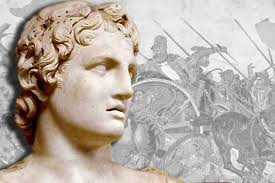
Alexander III of Macedon (July 20/21, 356 BCE–June 10/11, 323 BCE), commonly known as Alexander the Great, was a king of Macedon who created one of the largest empires in the ancient world. He is widely regarded as one of history’s most successful military commanders and is famous for spreading Greek (Hellenistic) culture across his vast territories.
- Birth and family Alexander was born in Pella, the capital of Macedonia, to King Philip II and Queen Olympias.
- Aristotle’s tutelage From age 13 to 16, Alexander was tutored by the Greek philosopher Aristotle, who sparked his lifelong interest in philosophy, medicine, and scientific investigation.
- Accession to the throne After his father was assassinated in 336 BCE, the 20-year-old Alexander became king of Macedon and quickly eliminated his rivals to secure his rule.
- Early military experience Even before becoming king, Alexander showed military prowess. At 18, he commanded the left wing of the Macedonian army in the Battle of Chaeronea (338 BCE), helping his father defeat the allied Greek states.
Conquests and reign
- Campaign against Persia Taking up his father’s plan to invade the Persian Empire, Alexander led a large army across the Hellespont in 334 BCE, beginning a 10-year campaign of conquest.
- He defeated the Persian forces in a series of decisive battles, including the Battle of Issus (333 BCE) and the Battle of Gaugamela (331 BCE), eventually overthrowing King Darius III and conquering the entire empire.
- Conquest of Egypt and city founding In 332 BCE, Alexander conquered Egypt without resistance and was welcomed as a liberator. He founded the city of Alexandria, which would become a vital center for trade, culture, and science.
- Invasion of India Driven by his ambition to reach the “ends of the world,” Alexander invaded India in 326 BCE and won a difficult victory against King Porus at the Battle of the Hydaspes.
- Turnaround and journey home Despite his desire to continue eastward, his war-weary troops mutinied at the Hyphasis (Beas) River, forcing him to turn back. He led his army on a grueling march back to Persia.
- Final plans By 323 BCE, Alexander was in Babylon, the planned capital of his empire, where he began preparing for a new military and commercial expedition into Arabia.
Death and legacy
- Death in Babylon Alexander died suddenly in Babylon in June 323 BCE, just shy of his 33rd birthday. The exact cause of his death remains a mystery, with theories ranging from poisoning to natural causes like malaria or typhoid fever.
- Hellenistic Age Alexander’s death marked the beginning of the Hellenistic period. His conquests led to widespread cultural diffusion, blending Greek and Eastern traditions and spreading Greek language, philosophy, and art as far east as the Indian subcontinent.
- Empire’s fragmentation Because Alexander had not named a clear successor, his vast empire was torn apart by civil wars among his generals, known as the Diadochi, who eventually carved it up into separate kingdoms.
- Historical and legendary figure Alexander’s military genius and legendary exploits have made him a heroic figure throughout history. His tactics are still studied in military academies, and his story inspired countless later leaders and is still discussed today.
4. Mother Teresa (1910-1997)
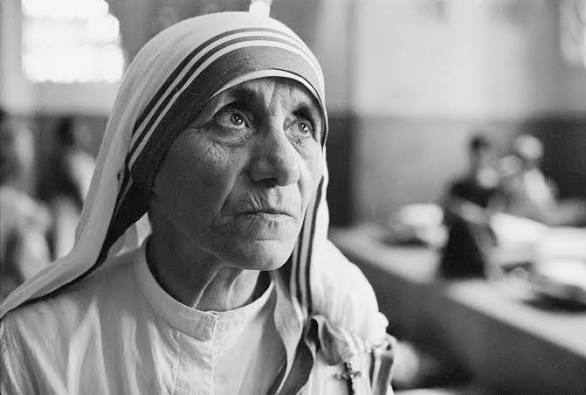
Mother Teresa (August 26, 1910–September 5, 1997), born Anjezë Gonxhe Bojaxhiu, was an Albanian-born Roman Catholic nun who devoted her life to serving the poor and destitute in Calcutta, India. She founded the Missionaries of Charity in 1950 and became a global symbol of selfless charity, winning the Nobel Peace Prize in 1979.
- Birth and family Born to an ethnic Albanian family in Skopje (now the capital of North Macedonia), she felt a call to religious life from a young age.
- Joins the Sisters of Loreto At age 18, she joined the Sisters of Loreto in Ireland and was soon sent to India to teach at a school in Calcutta (now Kolkata).
- “Call within a call” In 1946, while on a train journey, she experienced what she described as a “call within a call” to leave the convent and dedicate herself to serving the “poorest of the poor” in the slums.
Ministry and the Missionaries of Charity
- Homes for the dying and needy The Missionaries of Charity opened several crucial centers in Calcutta:
- Nirmal Hriday (Home for the Pure Heart): A hospice for the terminally ill, offering dignity in their final days.
- Shishu Bhavan: A home for abandoned and orphaned children.
- Shanti Nagar (Town of Peace): A colony established to care for and rehabilitate people suffering from leprosy.
Recognition and controversies
- Awards and honors For her humanitarian work, Mother Teresa received numerous honors, most notably the Nobel Peace Prize in 1979, which she requested be used to aid the poor in India.
- Criticisms Mother Teresa and her order also faced criticism on several fronts:
- Quality of care: Some critics claimed that the medical care in her facilities was inadequate and that there was a refusal to use pain-relieving medication, though supporters of her mission disputed these claims.
Death and canonization
- Death After years of declining health and heart problems, Mother Teresa died on September 5, 1997, at the Missionaries of Charity headquarters in Calcutta. She received a state funeral from the Indian government and was mourned internationally.
- Sainthood The process for her canonization was expedited by Pope John Paul II. After two miracles were attributed to her intercession, she was officially declared a saint by Pope Francis on September 4, 2016.
5.Nelson Mandela (1918-2013)
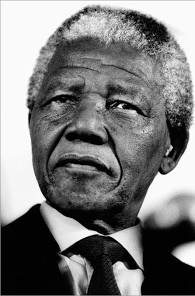
Nelson Rolihlahla Mandela (July 18, 1918–December 5, 2013) was a South African anti-apartheid revolutionary, politician, and philanthropist who became the country’s first Black president from 1994 to 1999. He was an international symbol of freedom and equality, recognized for leading the fight to end apartheid and guiding South Africa through a peaceful transition to a multiracial democracy
Born into the Thembu royal family, Mandela studied law and, with Oliver Tambo, opened the first Black-owned law firm in the country. He joined the African National Congress (ANC) in 1944 and co-founded its Youth League to fight against apartheid and white supremacy. After the Sharpeville massacre in 1960 and the suppression of peaceful protests, Mandela shifted to advocating armed resistance. In 1961, he helped form Umkhonto we Sizwe (“Spear of the Nation”), the militant wing of the ANC.
Imprisonment and release
In 1962, Mandela was arrested and later sentenced to life imprisonment during the Rivonia Trial in 1964. He spent 27 years in prison, mostly on Robben Island, facing harsh conditions. Despite imprisonment, he remained a leader, resisting the regime and advocating for better conditions. A global campaign for his release, combined with international pressure and domestic unrest, led to his unconditional release in 1990 by President F. W. de Klerk.
Presidency and legacy
After the dismantling of apartheid, Mandela led the ANC to victory in the first multiracial election and became president in 1994. His government focused on racial reconciliation, establishing the Truth and Reconciliation Commission and enacting a new constitution. After one term, he retired in 1999 to focus on philanthropy and global advocacy through the Nelson Mandela Foundation. Nelson Mandela passed away on December 5, 2013, at age 95, remembered as the “Father of the Nation” and a global figure for democracy and social justice.
Pingback: The History of Salivary in America - Fact Hub
Pingback: US Presidents & the Darkest Moments in American History - Fact Hub
I don’t think the title of your article matches the content lol. Just kidding, mainly because I had some doubts after reading the article.
ASK!
Pingback: 10 Rare Facts about World Presidents - Fact Hub
Can you be more specific about the content of your article? After reading it, I still have some doubts. Hope you can help me.