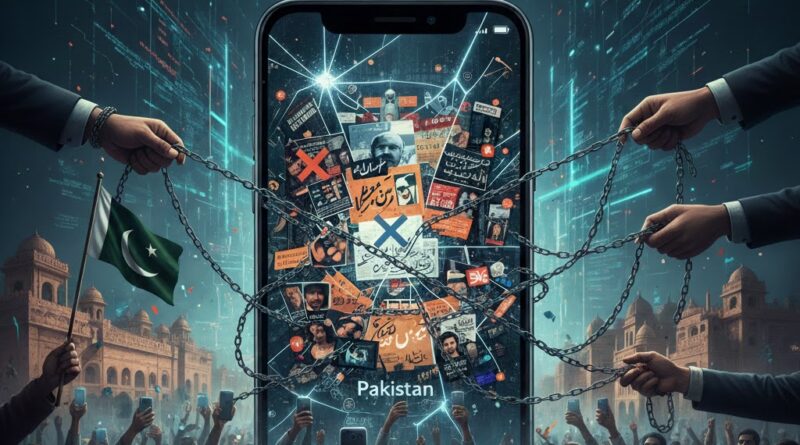
Fake news & Social media regulation in Pakistan
Pakistan’s digital landscape has exploded in recent years, with over 100 million social media users as of 2025, but this growth has amplified challenges like misinformation, hate speech, and cyberbullying.
Fake news—often defined as deliberately false information spread to deceive—has fueled political unrest, communal violence, and public panic, particularly around elections, military matters, and blasphemy allegations.
The government views social media as a national security threat, while critics argue regulation efforts mask censorship.
The current date, December 8, 2025, marks nearly a year since major legislative changes, with ongoing enforcement sparking debates on free speech versus public safety.
What is the Fake News Problem in Pakistan?
The reason of it:
Sharing unverified information
Political propaganda
Edited videos and fake images
Social media influencers spreading false claims for views
Misleading YouTube channels
Government Regulations on Social Media in Pakistan
PECA 2016 (Prevention of Electronic Crimes Act)
Online harassment
Fake accounts
Defamation
Spreading false information
Anti-state content
Social Media Rules (2021 & 2024 Updates)
Removal of illegal content within 48 hours
Mandatory local representative in Pakistan
Data sharing upon legal request
Restrictions on content involving hate speech, extremism, anti-state propaganda, or attacks on institutions.
Concerns & Criticism
National security
Stopping fake news
Preventing religious hatred
Protecting state institutions
Controlling online misinformation
Fear of limiting freedom of speech
Risk of labeling political criticism as “fake news”
Excessive control over social media companies
Lack of independent oversight
Broader Implications and Global Context
PECA 2025 mirrors global trends—e.g., EU’s Digital Services Act fines for misinformation—but stands out for its speed and breadth, potentially shrinking US tech market access in South Asia while boosting state-aligned apps.
In Pakistan, it coincides with AI misuse (deepfakes in 70% of surveyed cases, per SpeechFuture 2025) and low media literacy (Reuters Institute: Many can’t spot fakes).
This steps include calls for digital literacy campaigns, but enforcement risks a “digital prison,” as one analyst put it.
PTI vows Supreme Court challenges, while activists push for amendments emphasizing transparency over punishment.
Government Rationale and Enforcement
The Shehbaz Sharif government justifies the laws as essential for curbing “information disorder,” citing incidents like 2024 election misinformation that allegedly incited riots.
Interior Minister Mohsin Naqvi has led the charge, declaring on December 4, 2025, that “90% of social media content is fake” and announcing a “massive crackdown” via NCCIA and the Information Ministry.
He emphasized: “Freedom of expression is fine, but propaganda and misinformation will no longer go unchecked,” targeting “those sitting abroad” (a nod to exiled PTI figures).
Main information
July 2025 YouTube Bans
An Islamabad court ordered blocking 27 channels (e.g., those of journalists Matiullah Jan, Asad Toor, and PTI’s official channel) for “fake news against state institutions.” The NCCIA cited PECA violations, alleging content caused “panic and unrest.”
Ongoing Arrests
Over 50 social media users arrested in 2025 under PECA for anti-army posts, including PTI supporters sharing “fabricated” claims about military unrest. Quetta authorities warned in March 2025 against sharing “anti-state propaganda” on platforms like WhatsApp, with FIA helplines for reporting.
Platform Compliance
TikTok and X (formerly Twitter) faced temporary slowdowns or blocks in 2025 for non-removal of content; Wikipedia was briefly banned in 2023 over “blasphemous material” but lifted on PM orders.
What’s Next for Pakistan?
A new Digital Media Act
More coordination with global platforms
AI-based fact-checking systems
Penalties for spreading false information
Technology to detect deepfakes
Whoa! This blog looks exactly like my old one! It’s on a totally different topic but it has pretty much the same page layout and design. Superb choice of colors!