
Deadly 2025 Flood in Punjab & KP ,Pakistan
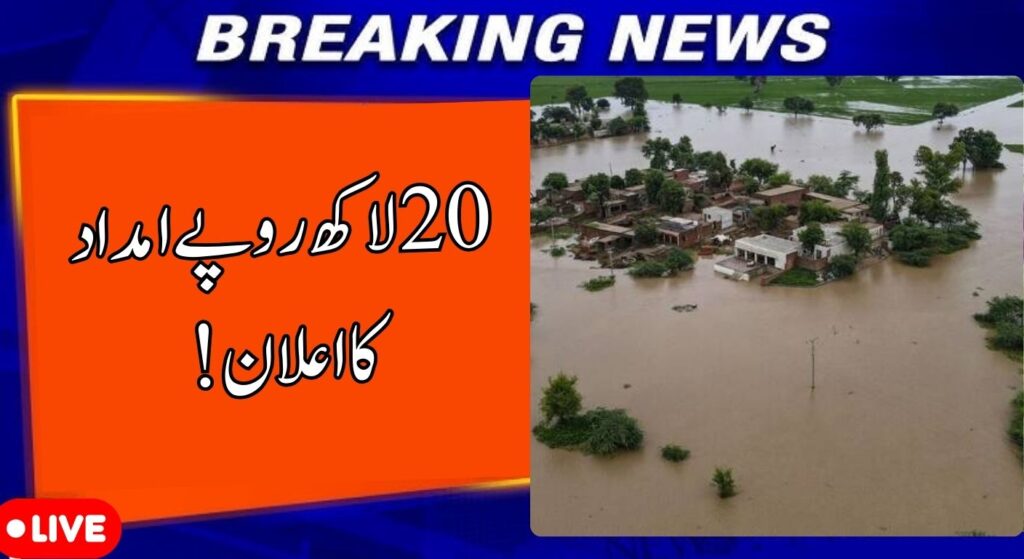
The 2025 Pakistan floods, driven by intense monsoon rains, glacial melt, and alleged cross-border water releases from India, devastated Punjab and Khyber Pakhtunkhwa (KP), among other regions
Khyber Pakhtunkhwa (KP)
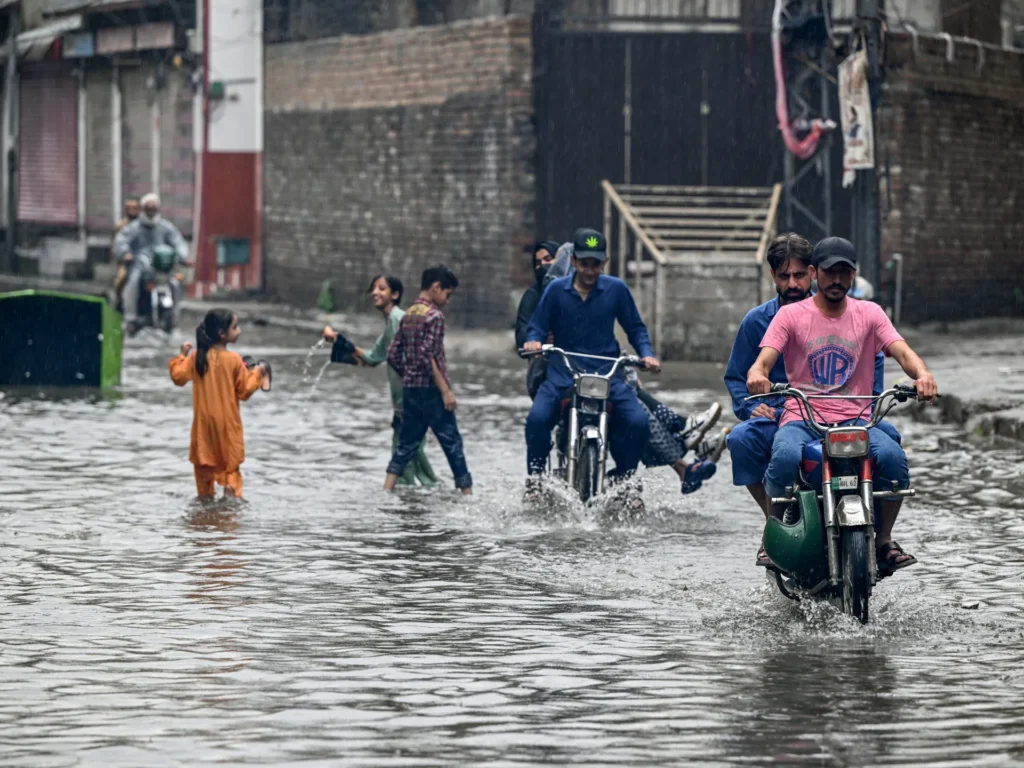
- Death Toll and Injuries: Over 400 deaths were reported, with Buner district alone recording 228–274 fatalities. At least 182–965 people were injured across the province.
- Worst-Hit Areas: Buner, Swat, Bajaur, Shangla, Mansehra, and Battagram were severely affected, with entire villages swept away by flash floods and landslides. Buner reported 209–274 missing persons.
- Infrastructure Damage: Over 941–1,676 homes and 600 schools were damaged or destroyed. Roads, bridges, and the Karakoram Highway were severed, isolating communities.
- Health Crisis: 3,037 communicable disease cases, including 221,000+ malaria, diarrhoea, and eye infections, and 398 dengue cases were reported.
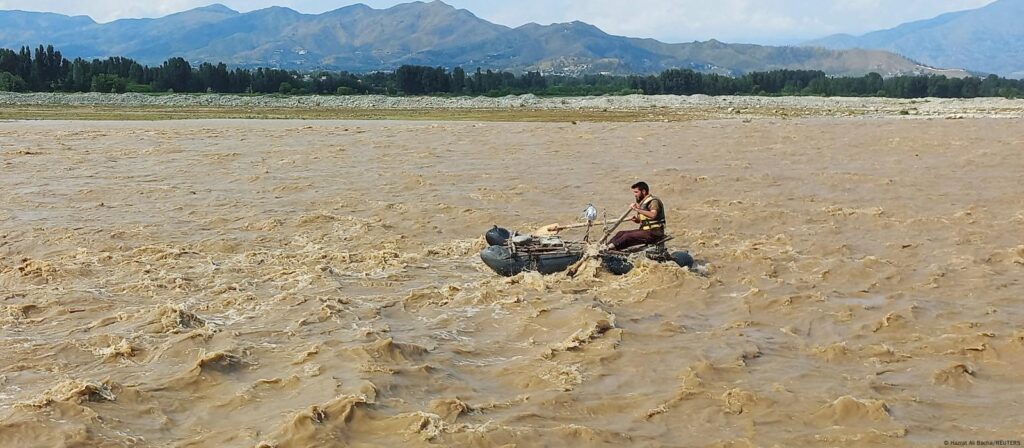
- Specific Incidents:
- Flash floods from June 27–28 and August 14–16, triggered by intense rainfall and Swat River overflow, killed 344 people, including 328 in KP.
- A rescue helicopter (Mil Mi-17) crashed in Bajaur on August 15, killing five crew members, prompting a day of mourning.
- In Swat, a school principal saved 900 students, but 18 members of an extended family and a tourist group perished.
- Response: Rescue 1122, military, and drones conducted operations, rescuing dozens. Four Swat officials were suspended for response lapses. A ban on riverbed mining and a crackdown on illegal hotels along the Swat River were enforced. Compensation of Rs 1.5 million was announced for victims’ families.
Death Toll and Injuries: Over 400 deaths were reported, with Buner district alone recording 228–274 fatalities. At least 182–965 people were injured across the province.
Worst-Hit Areas: Buner, Swat, Bajaur, Shangla, Mansehra, and Battagram were severely affected, with entire villages swept away by flash floods and landslides. Buner reported 209–274 missing persons.
Infrastructure Damage: Over 941–1,676 homes and 600 schools were damaged or destroyed. Roads, bridges, and the Karakoram Highway were severed, isolating communities.
Health Crisis: 3,037 communicable disease cases, including 221,000+ malaria, diarrhoea, and eye infections, and 398 dengue cases were reported.
Specific Incidents:
Flash floods from June 27–28 and August 14–16, triggered by intense rainfall and Swat River overflow, killed 344 people, including 328 in KP.
A rescue helicopter (Mil Mi-17) crashed in Bajaur on August 15, killing five crew members, prompting a day of mourning.
In Swat, a school principal saved 900 students, but 18 members of an extended family and a tourist group perished.
Response: Rescue 1122, military, and drones conducted operations, rescuing dozens. Four Swat officials were suspended for response lapses. A ban on riverbed mining and a crackdown on illegal hotels along the Swat River were enforced. Compensation of Rs 1.5 million was announced for victims’ families.
Punjab Flood
- Death Toll and Injuries: At least 164 deaths (63 men, 31 women, 70 children) and significant injuries were reported.
- Affected Areas: Over 1,400 villages were submerged, with Kasur, Bahawalnagar, Sialkot, and Lahore heavily impacted. The Sutlej, Ravi, and Chenab rivers reached “exceptionally high” levels, exacerbated by India’s release of water from Thein and Madhopur dams.
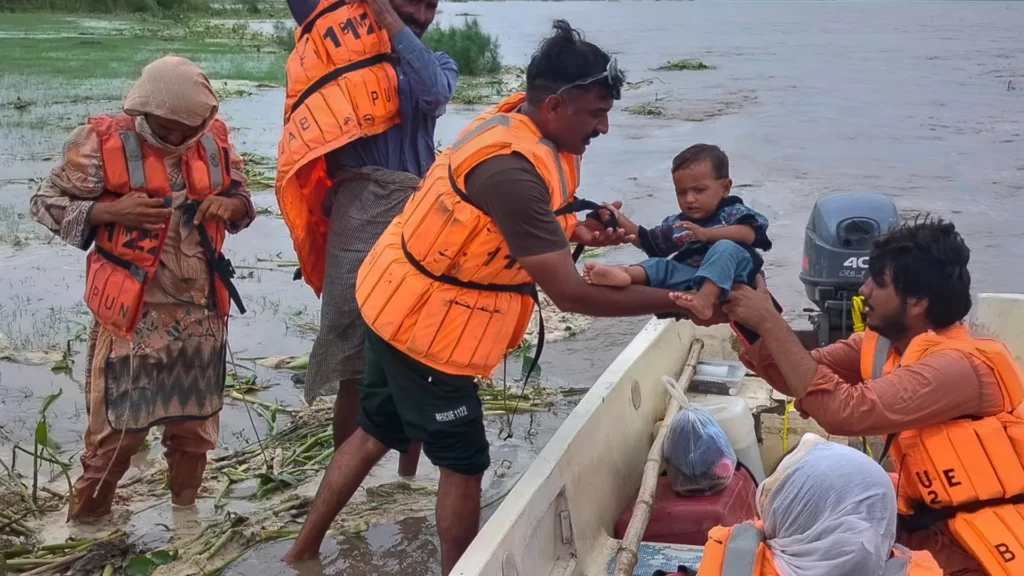
- Displacement and Evacuations: Over 1.5 million people were affected, with 210,000–250,000 displaced. Evacuations included 14,000 from Kasur, 89,000 from Bahawalnagar, and 20,000 from Lahore. 511 relief camps, 354 medical camps, and 333 veterinary camps were set up.
- Infrastructure and Economic Damage: 719–1,676 homes and historic sites like the Guru Nanak shrine were damaged. Crops and 516,000 livestock were lost, threatening food security in Pakistan’s breadbasket. Economic losses may reach $50 billion, surpassing the 2022 floods’ $30 billion toll.
- Health Issues: Fungal infections, diarrhoea, gastric pain, and malaria surged due to contaminated water.
- Response: The Pakistan Army and civil administration rescued 760,000 people, including in Faisalabad’s Ravi Pattan. Punjab CM Maryam Nawaz ordered relief funds, dewatering pumps, and drone footage monitoring. Sialkot schools closed from September 1–5 for safety.
Contributing Factors
- Climate Change: Intensified monsoon rains (15% stronger) and glacial melting from 13,032 glaciers, particularly in KP and Gilgit-Baltistan, triggered flash floods and glacial lake outbursts (GLOFs). A 7-km-long lake in Gilgit-Baltistan’s Ghizer district posed further risks.
- Human Factors: Illegal construction near riverbeds, deforestation, and poor urban planning exacerbated vulnerabilities. In Punjab, India’s dam releases were blamed, though India cited normal practices.
- Systemic Issues: Lack of early warnings, clogged drainage systems (e.g., Karachi’s nullahs), and institutional gaps hindered preparedness. Posts on X criticized elite corruption and limited climate resilience funding.
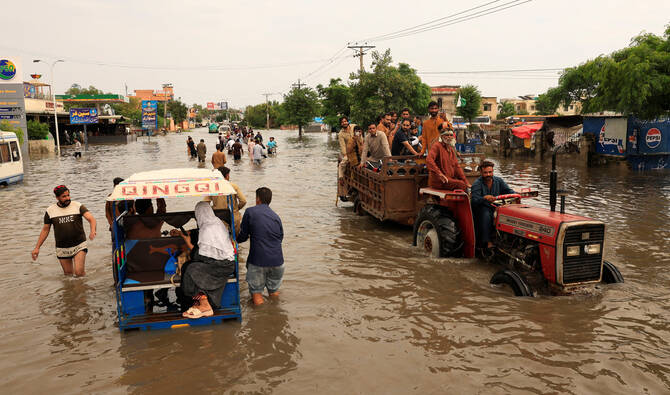
Broader Impact and Response
- Nationwide Toll: Over 800 deaths (including 200 children), 993–4,200 injuries, and 7,225 homes damaged across Pakistan since June 26.
- Economic Strain: Crop losses, infrastructure damage, and disrupted trade worsened Pakistan’s economic crisis, with inflation and a volatile rupee adding pressure.
- Relief Efforts: NDMA mobilized 2,000+ personnel, distributing food, WASH kits, and shelter. Alkhidmat and Action For Humanity provided food parcels, mosquito nets (3,607 in KP), and medical aid. International aid was sought.
- Warnings: The Pakistan Meteorological Department forecasted heavy rains into September, raising fears of further flooding.
Sentiment on X
Sentiment on X
Posts on X highlighted public frustration over inadequate warnings, governance failures, and the role of climate change. Some users called the floods Pakistan’s worst ever, noting full dams like Tarbela and Mangla increased risks.
Pakistan’s vulnerability to climate-driven disasters, compounded by systemic issues, made the 2025 floods catastrophic. Urgent investments in resilient infrastructure and reforestation are critical to mitigate future risks.
Pakistan govt response on Punjab Flood
The Pakistan government’s response to the devastating 2025 floods in Punjab and Khyber Pakhtunkhwa (KP) involved a multi-faceted approach, though it faced criticism for lapses in preparedness and coordination. Below is a detailed summary of the actions taken by federal and provincial authorities, based on available information:
Federal Government Response
- National Disaster Management Authority (NDMA):
- Alerts and Evacuations: Issued advance alerts for Punjab, warning of surging rivers like the Sutlej, Ravi, and Chenab due to heavy rains and India’s dam releases. Over 24,000 people were evacuated from floodplains, with 14,000 moved from Kasur and 89,000 from Bahawalnagar.
- Rescue Operations: Mobilized over 2,000 personnel for rescue and relief, using boats and helicopters. Over 760,000 people were rescued nationwide, with 25,000 saved in KP alone.
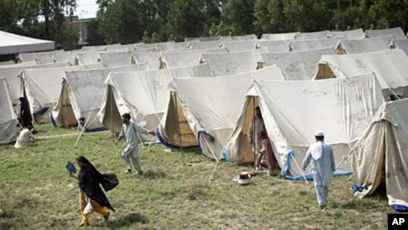
- Relief Distribution: Set up 511 relief camps, 354 medical camps, and 333 veterinary camps in Punjab, providing food, clean water, and medical aid. Distributed WASH kits and mosquito nets (3,607 in KP).
- Monitoring and Warnings: NDMA’s National Emergencies Operation Centre issued alerts for KP, Punjab, and Balochistan, warning of landslides and urban flooding risks in cities like Karachi and Hyderabad.
- International Aid: Sought global assistance to address the crisis’s scale, though only 20% of pledged aid from the 2022 floods ($3.4 billion of $10.9 billion) was delivered, highlighting funding challenges.
- Criticism: NDMA Chairman Lt. Gen. Inam Haider Malik acknowledged climate-driven weather shifts but faced backlash for inadequate early warning systems, particularly in Buner, where residents reported no mosque loudspeaker alerts.
- Military Involvement:
- The Pakistan Army and Navy conducted joint rescue operations with civil administration, notably in Faisalabad’s Ravi Pattan, relocating women, children, and 516,000 livestock to safety.
- Aerial monitoring and supply drops were deployed in remote areas of KP and Balochistan, despite challenges from damaged infrastructure and ongoing rains.
- A tragic Mil Mi-17 helicopter crash in Bajaur, KP, on August 15 killed five crew members delivering relief goods, prompting a day of mourning.
- Prime Minister’s Oversight: PM Shehbaz Sharif directed NDMA to oversee rescue operations and urged the public to follow safety measures and avoid unnecessary travel in flood-hit areas.
Khyber Pakhtunkhwa (KP) Provincial Response
- Emergency Measures:
- Declared a day of mourning after the helicopter crash and disaster zones in areas like Buner, Swat, and Shangla.
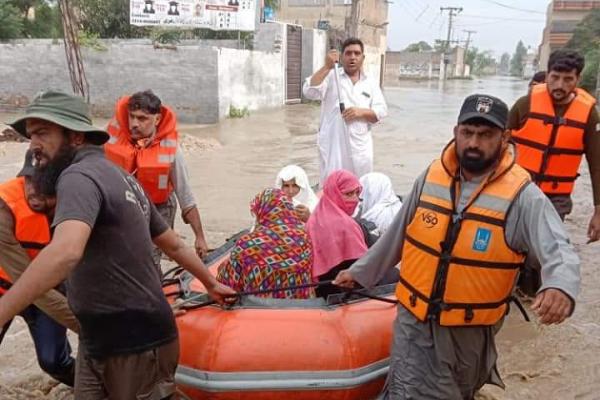
- Rescue 1122, supported by drones and boats, conducted extensive operations in Swat, Malakand, and Shangla, rescuing dozens and searching for missing persons.
- Imposed a ban on riverbed mining and cracked down on illegal hotels and resorts along the Swat River to prevent future risks.
- Compensation: Announced Rs 1.5 million for each victim’s family, though delivery details remain unclear.
- Administrative Actions: Suspended four senior Swat officials (Deputy Commissioner, Rescue 1122 head, Tehsil Municipal Officer, and Assistant Commissioner) for response lapses, with Chief Secretary Shahab Ali Shah admitting a “45-minute window” failure turned a small mistake into a major tragedy.
- Criticism: Punjab Information Minister Azma Bukhari and Federal Minister Attaullah Tarar criticized KP’s governance, particularly for transporting recovered bodies in garbage dumpers, deemed “deeply disrespectful.” Calls were made for KP CM Ali Amin Gandapur’s resignation.
Punjab Provincial Response
- Leadership and Coordination:
- Punjab CM Maryam Nawaz convened deputy commissioners at the Provincial Disaster Management Authority (PDMA) head office in Lahore, ordering relief funds, dewatering pumps, cattle feed, and drone footage monitoring of flood-prone rivers (Chenab, Ravi, Sutlej).
- Declared disaster zones in eastern Punjab after lethal cloudbursts, with Sialkot schools closed from September 1–5 for safety.
- Evacuations and Relief:
- Evacuated over 200,000 people, including 35,000 voluntarily, from flood-prone areas like Kasur and Bahawalnagar. Set up extensive relief infrastructure, though uptake was low due to livestock concerns.
- Local fishermen and volunteers rescued over 50 people in rising waters, complementing army efforts.
- Health and Infrastructure: Addressed rising cases of fungal infections, diarrhoea, and malaria through 354 medical camps. PDMA reported 1,400 villages submerged and 719–1,676 homes damaged.
- Loss of Personnel: Pattoki Assistant Commissioner Furqan Ahmed died of a heart attack while visiting flood-affected areas in Kasur, mourned by PDMA DG Irfan Ali Kathia.
- External Factors: Punjab Irrigation Minister Kazim Raza Pirzada noted heavier rainfall due to climate change and criticized India’s dam releases, which exacerbated flooding.
Broader Context and Challenges

- Systemic Issues: The government faced criticism for inadequate early warning systems, deforestation, and illegal constructions near riverbeds, which amplified flood impacts. Posts on X highlighted institutional indifference and elite corruption as aggravating factors.
- Climate Vulnerability: Pakistan’s low contribution to global emissions (<1%) contrasted with its high climate risk, with experts urging investments in resilient infrastructure, drainage systems, and reforestation.
- Economic Strain: With potential losses of $50 billion, the government’s limited climate resilience funding, high defense spending, and unfulfilled 2022 flood aid pledges strained recovery efforts.
- Public Sentiment: X posts expressed frustration over governance failures, with calls for better preparedness and accountability.