
A Historic Turning Point : The landmark Peace Deal Between Azerbaijan and Armenia
Main Terms of the Agreement
1. Mutual Recognition & Non‑Aggression
Both Armenia and Azerbaijan formally recognize each other’s Soviet-era borders, pledging no future territorial claims.
They commit to refraining from using force, threatening force, or interfering in each other’s internal affairs.
Both have agreed to establish diplomatic relations, contingent on the exchange of ratification instruments, and to engage in border delimitation and demarcation negotiations.
Transit Corridor (TRIPP / Zangezur Corridor
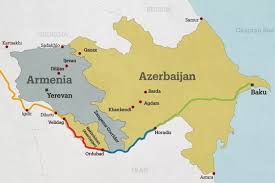
- A 43 km transit corridor through southern Armenia—linking mainland Azerbaijan to its Nakhchivan exclave—is a central component.
- The corridor, dubbed the Trump Route for International Peace and Prosperity (TRIPP) or Zangezur Corridor, will stay under Armenian sovereignty and jurisdiction, but the U.S. secures exclusive development rights for 99 years.
- Infrastructure plans include rail, road, oil and gas pipelines, fiber-optic cables, and possibly electricity lines. The projected impact includes unlocking up to $45 billion in economic opportunities. 3. Shift in Mediation & Diplomatic Framework
- Both countries agreed to propose the dissolution of the OSCE Minsk Group, previously the main international mediating body.
The United States is poised to take a more central role, including a potential U.S. military peacekeeping presence in the region
Strategic and Political Implications
U.S. Influence vs. Regional Power Dynamics
- The corridor deal broadly reduces Russian and Iranian regional influence by enabling alternative trade and energy routes that bypass them. It also enhances U.S. strategic presence in the South Caucasus.
Iran especially has voiced opposition, citing security concerns and stating it may attempt to block the corridor near its border..
Domestic Political Hurdles in Armenia
A key outstanding demand from Azerbaijan is that Armenia amend its constitution, removing references to territorial claims—especially regarding Nagorno-Karabakh. This would require a national referendum, realistically not feasible before mid to late 2026. Additional unresolved issues include border delimitation, legal lawsuits pending in international courts, and EU monitoring mechanisms along the border
A key outstanding demand from Azerbaijan is that Armenia amend its constitution, removing references to territorial claims—especially regarding Nagorno-Karabakh. This would require a national referendum, realistically not feasible before mid to late 2026. Additional unresolved issues include border delimitation, legal lawsuits pending in international courts, and EU monitoring mechanisms along the border
• While global players such as the EU and UN welcomed the agreement as a positive step toward normalization, voices from the Armenian diaspora and human rights groups expressed concern that the deal fails to address justice for displaced populations or war crimes accountability
Indepth details
The TRIPP / Zangezur Corridor — Infrastructure & Geopolitics
- Definition and Scope
The centerpiece of the deal is the establishment of a transit corridor—termed the Trump Route for International Peace and Prosperity (TRIPP), also known as the Zangezur corridor—that links mainland Azerbaijan with its Nakhchivan exclave via roughly 32 km of Armenian territory. Armenia retains sovereignty, but the U.S. is granted exclusive development rights for 99 years, operating under Armenian law and subleasing to a consortium that will construct rail lines, oil/gas pipelines, fiber-optic networks, roads, and potentially electrical infrastructure.
Strategic Vision
The corridor is designed to amplify regional connectivity, streamline trade between Turkey, Azerbaijan, Central Asia, and Europe, and support energy exports—while bypassing traditional Russian and Iranian routes. Analysts perceive this as a signal of deepening Western—or specifically U.S.—influence in the South Caucasus.
Regional and Global Reactions
- Iran’s Rebuke
Iran openly opposed the corridor. Its Supreme Leader’s adviser warned: it won’t become “a gateway for Trump’s mercenaries” and threatened to block it “with or without Russia.” Tehran sees it as an intrusion into its security buffer.
Russia’s Cautious Stance
Russia offered guarded support for peace, but cautioned against external interference, viewing the corridor and U.S. role as a potential destabilizer. Turkey’s Support
Turkey warmly welcomed the deal, seeing it as a historic step towards regional trade and stability
Political and Domestic Hurdles
- Constitutional Amendments in Armenia
Azerbaijan demanded Armenia amend its constitution to remove references to territorial claims over Nagorno-Karabakh. Armenia has not yet enacted this change, and it would likely require a referendum—an increasingly contentious and politically risky process, especially ahead of Armenia’s 2026 elections. - Border Demarcation and Village Transfers
Progress since 2024 includes transferring four Armenian villages back to Azerbaijan—seen as a precondition to the peace agreement. Joint boundary markers have been installed, and Armenian and Azerbaijani border guards replaced formerly Russian-monitored boundaries.
Lawsuits and Monitoring
As part of a “phase one” compromise, both sides agreed to drop international lawsuits against each other and remove EU monitoring missions along the border. These moves sparked backlash within Armenia, with critics calling them premature and risky
Geostrategic Realignment & U.S. Diplomacy
- Sidestepping the Minsk Group
Both Armenia and Azerbaijan indicated they would formally dissolve the OSCE Minsk Group, which had mediated peace efforts since the 1990s but became largely ineffective. This shift marks a pivotal change in the mediation landscaT - Trump’s Diplomatic Play
The deal illustrates the Trump administration’s push to present itself as a global peacemaker. Some supporters even nominated Trump for the Nobel Peace Prize in recognition of his role. - Impact on Russian Influence
The accord is viewed as a direct challenge to Russia’s traditional dominance in the region—shifting strategic alignment toward Washington
TRUMPH ROLE IN PEACE DEAL
1. Lead Mediator and Architect
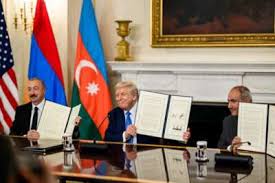
- Trump positioned himself as the primary negotiator of the agreement, hosting months of behind-the-scenes talks between Armenian and Azerbaijani officials at Mar-a-Lago, and later at the Trump International Hotel in Washington.
- He personally drafted language for several provisions—most notably the corridor clause—and pushed both sides toward compromise with direct phone calls and public statements.
- Trump’s team framed it as a legacy-defining moment, likening it to the Abraham Accords in the Middle East.
Trump in his statement: “This deal is not just peace—it’s prosperity. It will unite East and West, and bring business to places once ruled by war.”
2. TRIPP Corridor Naming & Framing
- The 43 km transit route between mainland Azerbaijan and Nakhchivan via southern Armenia was officially named the Trump Route for International Peace and Prosperity (TRIPP).
- Trump reportedly insisted on branding the corridor under his name as a symbol of peace through commerce, drawing parallels to historic trade routes like the Silk Road.
The TRIPP will be constructed under a U.S.-led consortium, and the U.S. was granted exclusive development rights for 99 years, a model some critics compare to 19th-century concessionary zones.
3. Strategic Vision and Goals
- Trump framed the deal as a way to:
- Reassert U.S. global leadership.
- Counterbalance Russia and Iran’s influence in the Caucasus.
- Promote energy independence and connectivity between Europe and Central Asia, bypassing adversarial powers.
- It was also a campaign message: portraying Trump as the only U.S. leader capable of delivering “real deals” and “real peace.”
4. Diplomatic Outcomes and Fallout
- Trump persuaded both Armenia and Azerbaijan to sideline the OSCE Minsk Group (co-chaired by the U.S., Russia, and France) and bring negotiations under exclusive U.S. oversight.
- He offered economic aid packages tied to U.S. investment in corridor infrastructure and peacekeeping assistance.
- His involvement triggered backlash:
- Iran denounced the TRIPP as a “neo-colonial project.”
- Russia expressed concern over U.S. military presence and long-term control in the region.
- Some Armenians saw the U.S. deal as overly favorable to Azerbaijan and eroding national sovereignty.
5. Nobel Prize Nomination After the agreement was signed, multiple U.S. lawmakers and international figures nominated Trump for the 2026 Nobel Peace Prize, citing his role in ending one of Eurasia’s most protracted conflicts
Trump’s Portrayal in U.S. Coverage
Politico
Described the August 8, 2025 agreement as a landmark peace accord, casting Trump as a global peacemaker. Highlighted his role in securing U.S. rights to the strategic Zangezur Corridor (TRIPP) and his push to dissolve the OSCE Minsk Group. Media noted that Armenian and Azerbaijani leaders both publicly endorsed nominating him for the Nobel Peace Prize. The deal was framed as a strategic win and a bold shift for U.S. diplomacy.
Time
Focused on the deal’s wider significance, underlining the U.S.-controlled transit route through southern Armenia—the TRIPP Corridor—as a geopolitical setback for Russia and Iran. Presented Trump’s role as part of a broader narrative of renewed U.S. diplomatic influence.
Financial Times
Portrayed the deal as a transformative moment in the South Caucasus, noting Armenia’s move toward Western alignment and the sidelining of Russian influence. Called the corridor deal a strategic coup for Washington and emphasized the symbolic and real concessions that raise Armenia’s connectivity.
IndiaTimes
Reported that the TRIPP corridor could reshape regional dynamics, boosting trade and infrastructure while reinforcing Washington’s strategy to extend its influence into the South Caucasus. Mentioned Nobel Peace Prize nominations and flagged the uncertain implementation ahead of Armenian elections.
NewsDash (AP, Reuters, etc.)
- Washington Post highlighted that the signing at the White House was a rebuke to Russia—moving the mediation spotlight from Moscow to Washington. The report emphasized the U.S. defense role in peacekeeping and Russian criticism that the deal represented a “great victory” for Trump and a strategic defeat for Russia.
- Associated Press (via ABC News) showcased mixed reactions—Armenians and Azerbaijanis responded with both cautious hope and skepticism. Concerns included unresolved issues over Nagorno-Karabakh and whether the agreement was substantive or more symbolic.
Dawn( Pakistan)
· Prime Minister Shehbaz Sharif received a phone call from President Ilham Aliyev, who thanked Pakistan for its longstanding support on the Karabakh issue.
· Shehbaz Sharif lauded both Aliyev’s leadership and Trump’s role in facilitating the peace deal
· Both leaders highlighted the deal’s potential to enhance connectivity between Pakistan and Central Asia, and planned further diplomatic engagements including a possible visit by President Aliyev to Pakistan and meetings at the upcoming SCO summit.
Fact-Check & Perspective Pieces
- Outlets like Axios and The Daily Beast have flagged Trump’s broader claim that he ended “six wars,” including the Armenia–Azerbaijan deal, as questionable and contested, casting doubt on the lasting impact of these interventions.
BRIEF Armenia history facts : Geographical review
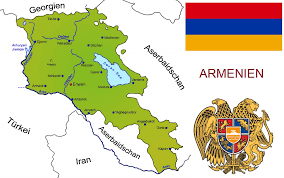
Armenia is a mountainous, landlocked country in the South Caucasus region, characterized by its rugged Armenian Highlands terrain. About 90% of the country lies above 1,000 meters (3,281 feet). It is bordered by Georgia to the north, Azerbaijan to the east and south , and Turkey to the west.
Key Geographical Features:
- High Altitude:
Armenia is dominated by mountains, with the highest peak being Mount Aragats at 4,090 meters (13,419 feet).
- Landlocked:
Armenia is a landlocked nation, situated between the Black and Caspian Seas.
- Volcanic Activity:
Volcanic activity has shaped the landscape, with numerous extinct volcanoes and fertile volcanic soils.
- Climate:
The climate is highland continental, with hot, dry summers and cold, snowy winters.
- Rivers and Valleys:
The country is drained by the Aras River and its tributaries, with valleys like those of the Debet and Akstafa Rivers forming important travel routes
HOSTORY OF Armenia
Armenia has a rich and ancient history, marked by periods of independence, empire rule, and cultural flourishing. It was the first nation to adopt Christianity as its state religion in 301 AD. Key historical periods include the Kingdom of Urartu, the Kingdom of Armenia under Tigranes the Great, and the Bagratid Kingdom of Armenia. Armenia also experienced periods of rule by the Byzantine, Persian, Mongol, and Turkish empires.
Here’s a more detailed look:
- Ancient History:
The Armenian Highlands have been inhabited for millennia. The Kingdom of Urartu was established in the 9th century BC, and later the Satrapy of Armenia emerged.
- Christianity:
Armenia adopted Christianity as its state religion in 301 AD, making it the first nation to do so. The Armenian Apostolic Church, the world’s oldest national church, is still recognized as the country’s primary religious establishment.
- Empire Influence:
Throughout its history, Armenia has been influenced by various empires, including the Roman, Byzantine, Persian, Mongol, and Turkish empires.
- Periods of Independence:
Armenia also experienced periods of independence, notably during the reign of Tigranes the Great and later with the restoration of the Bagratid Kingdom.
25,996,094
1,148
·
0
- Modern Era:
After being part of the Soviet Union, Armenia gained independence in 1991.
- Other Notable Facts:
Armenia is one of the world’s oldest continuously populated cities, with Yerevan being a prominent example. The country is also known for its strong chess tradition and has produced many grandmasters.
More Details
1. Ancient Armenia (c. 1500 BCE – 1st century CE)
Urartu (c. 860–590 BCE)
- The Kingdom of Urartu (also called the Kingdom of Van) is the earliest identifiable state in Armenian history.
- Located around Lake Van (modern-day eastern Turkey), it laid the cultural and linguistic foundations for later Armenian identity.
Orontid Dynasty (c. 6th–2nd century BCE)
- After Urartu fell to the Medes and Scythians, Armenia became part of the Achaemenid Persian Empire.
- The Orontid dynasty ruled under Persian suzerainty, blending Persian and native elements.
Artaxiad Dynasty & Tigranes the Great (1st century BCE)
- Under Tigranes II (the Great) (r. 95–55 BCE), Armenia became a powerful regional empire stretching from the Caspian to the Mediterranean.
- Eventually defeated by Rome, Armenia became a buffer zone between Roman and Parthian (later Sassanid Persian) empires.
2. Christian Armenia (301 CE – 7th century)
Adoption of Christianity (301 CE)
- Armenia became the first nation to adopt Christianity as a state religion, under King Tiridates III and the influence of Saint Gregory the Illuminator.
- The Armenian Apostolic Church was established—distinct from both Eastern Orthodoxy and Roman Catholicism.
Armenian Alphabet (405 CE)
- Mesrop Mashtots created the Armenian alphabet, solidifying national identity and enabling translation of the Bible.
3. Medieval Armenia (7th–15th centuries)
Arab & Byzantine Periods (7th–11th centuries)
- Armenia was conquered by Arab Caliphates but retained some autonomy. Armenian nobility often allied with Byzantines to resist Muslim rule.
- The Bagratid Kingdom of Armenia (885–1045) marked a cultural renaissance centered in Ani, the “City of 1,001 Churches.”
Seljuk Invasions and Cilician Armenia (11th–14th centuries)
- After the Seljuk Turks overran Greater Armenia, Armenian nobles established the Armenian Kingdom of Cilicia (1198–1375) near the Mediterranean.
- This kingdom had strong ties to Crusader states and European powers.
4. Early Modern Period (15th–19th centuries)
Ottoman & Persian Rule
- Armenia was partitioned between the Ottoman Empire (west) and the Persian Empire (east) from the 16th century onward.
- Armenians under both empires faced varying degrees of autonomy, taxation, forced conversions, and periodic violence.
Russian Expansion
- In the 19th century, Eastern Armenia was annexed by the Russian Empire after wars with Persia (Treaty of Turkmenchay, 1828).
- Western Armenia remained under Ottoman control, where Armenians were viewed with suspicion.
5. Armenian Genocide (1915–1917)
- During World War I, the Ottoman government systematically exterminated 1.5 million Armenians, in what is widely recognized as the Armenian Genocide.
- Victims were deported, massacred, or starved; survivors fled across the world, forming a vast diaspora.
6. Soviet Armenia (1920–1991)
- After a brief First Republic of Armenia (1918–1920), Armenia was Sovietized and became the Armenian SSR, part of the USSR.
- Under Soviet rule, Armenia underwent industrialization, urbanization, and cultural suppression, but also saw significant development.
- Nagorno-Karabakh, a majority-Armenian region, was placed within the Azerbaijan SSR—planting the seeds for future conflict.
7. Modern Republic of Armenia (1991–present)
Independence & War
- Armenia declared independence from the USSR in 1991.
- Fought the First Nagorno-Karabakh War (1988–1994) with Azerbaijan, resulting in Armenian control of the region and surrounding territories.
Post-Soviet Transition
- Faced economic hardship, energy crises, and political instability through the 1990s and early 2000s.
- Joined international bodies (e.g., UN, CSTO, EEU) and built ties with Russia, Iran, and Europe.
2020 & 2023 Conflicts
- In 2020, Azerbaijan launched a large-scale offensive, regaining most of Nagorno-Karabakh in a 44-day war.
- By 2023, Azerbaijan reclaimed full control of Karabakh, and over 100,000 ethnic Armenians fled to Armenia—effectively ending Armenian presence there.
2025 Peace Deal
- Brokered by the U.S., the TRIPP corridor agreement opened a transit route across Armenia to Nakhchivan.
- Azerbaijan dropped war crime claims; Armenia agreed to border demarcation and constitutional
AZERBAIJAN HISTORY
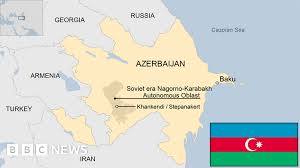
Azerbaijan’s geography is diverse, encompassing mountainous regions, flatlands, and coastal areas. It sits at the crossroads of Eastern Europe and Western Asia, bordering the Caspian Sea, Russia, Georgia, Armenia, and Iran. The country is characterized by the Caucasus Mountains, the Kura and Aras rivers, and the Caspian Sea coastline.
Key Geographical Features:
- Caucasus Mountains:
The northern and western parts of Azerbaijan are dominated by the Caucasus Mountains, including the Greater and Lesser Caucasus ranges.
- Caspian Sea:
The eastern border of Azerbaijan is formed by the Caspian Sea, the world’s largest inland body of water.
- Climate:
Azerbaijan experiences a variety of climates due to its diverse topography, including humid subtropical, temperate, and semi-desert climates.
Additional Notes:
- Azerbaijan’s location at the intersection of Europe and Asia contributes to its rich cultural heritage and diverse landscape.
- The country is known for its abundant natural resources, particularly oil and natural gas.
- .
1. Ancient & Early History (Before 7th Century CE)
Caucasian Albania (c. 4th century BCE – 8th century CE)
- The region now called Azerbaijan was once home to Caucasian Albania, an ancient kingdom unrelated to modern Albania.
- It was located primarily in what is now northern Azerbaijan and southern Dagestan.
- The people practiced paganism, then Zoroastrianism, and later adopted Christianity (c. 4th century CE).
Persian and Roman Influence
- The territory came under the control of Achaemenid, Parthian, and Sassanid Persian empires.
- The area experienced constant power struggles between Rome/Byzantium and Persia.
2. Islamic and Medieval Period (7th–15th Centuries)
Arab Conquest & Islamization (7th century)
- Arabs conquered the region in the mid-7th century, bringing Islam, which gradually replaced Christianity and Zoroastrianism.
- Islam became a central part of Azerbaijani identity, especially under the Abbasid Caliphate.
Local Dynasties
- Post-caliphate, various local and Turkic dynasties ruled the area:
- Shirvanshahs (9th–16th centuries) in the north
- Sajids, Sallarids, and Shaddadids in other regions
Seljuk and Mongol Invasions
- The Seljuk Turks took over in the 11th century, introducing Turkic language and culture—a major turning point for Azerbaijan’s ethnic and linguistic identity.
- In the 13th century, the Mongols under Hulagu Khan invaded; later, the area was part of Tamerlane’s empire.
3. Safavid and Qajar Period (16th–19th Centuries)
Safavid Dynasty (1501–1736)
- Founded by Shah Ismail I, a native of modern-day Azerbaijan and founder of Twelver Shi’a Islam in Iran.
- Safavid Iran ruled Azerbaijan and spread Shi’a Islam, which remains the dominant sect today.
Ottoman-Safavid Conflicts
- Azerbaijan was a battleground between Ottoman and Persian empires.
- The population and economy suffered during repeated invasions and wars.
Qajar Dynasty & Russian Wars (18th–19th centuries)
- In the late 18th century, the Qajars (another Persian dynasty) controlled Azerbaijan.
- A series of Russo-Persian wars (1804–1813, 1826–1828) ended with Northern Azerbaijan being annexed by Russia (Treaty of Gulistan and Treaty of Turkmenchay), while Southern Azerbaijan remained part of Iran (and still is today).
4. Russian Empire and Oil Boom (19th–early 20th centuries)
Baku Oil Boom
- By the late 19th century, Baku became one of the world’s leading oil-producing cities.
- Multinational companies (including the Nobel Brothers and Rothschilds) invested heavily.
- A cosmopolitan, often politically radical, working class developed—Lenin even spent time in Baku.
National Awakening
- Azerbaijani national identity began to form in opposition to Russian control, fueled by increased literacy, print culture, and Pan-Turkism.
5. Independence & Soviet Rule (1918–1991)
Democratic Republic of Azerbaijan (1918–1920)
- Declared independence on May 28, 1918—the first secular democratic Muslim-majority country in the world.
- Granted women the right to vote before many Western countries.
- Fell to the Red Army in 1920, becoming part of the Soviet Union.
Soviet Era (1920–1991)
- Azerbaijan became the Azerbaijan SSR, part of the USSR.
- Rapid industrialization, urbanization, and education spread—especially around Baku and the Caspian oil fields.
- Nagorno-Karabakh, a majority-Armenian region, was placed inside Soviet Azerbaijan in 1923—this sowed seeds of future conflict.
- Repression occurred under Stalin, but also scientific and cultural development.
6. Independence and Conflict (1991–Present)
Post-Soviet Independence (1991)
- Azerbaijan declared independence in August 1991 as the Soviet Union collapsed.
- The country joined the United Nations, Organization of Turkic States, OPEC+, and other regional groups.
Nagorno-Karabakh Conflicts
- First War (1988–1994): Armenia seized Nagorno-Karabakh and surrounding Azerbaijani districts. Over 700,000 Azerbaijanis became refugees.
- Second War (2020): Azerbaijan launched a major offensive, reclaiming much of the lost territory.
- 2023 Recapture: Azerbaijan regained full control over Nagorno-Karabakh in a swift military operation, ending decades of Armenian administration.
2025 Peace Deal
- Brokered by the U.S., the TRIPP corridor agreement opened a transit route across Armenia to Nakhchivan.
- Azerbaijan dropped war crime claims; Armenia agreed to border demarcation and constitutional changes.
7. Modern Azerbaijan
Politics
- Ruled by the Aliyev family since 1993:
- Heydar Aliyev (1993–2003)
- Ilham Aliyev (2003–present)
- The country is an authoritarian republic, with limited press freedom and tight political control.
Economy
- Rich in oil and gas—especially via the BTC pipeline (Baku–Tbilisi–Ceyhan).
- Key supplier to Europe; partner of the EU, Turkey, and China in energy and trade.
Foreign Relations
- Close ties with Turkey (brotherly nation), Israel (security cooperation), Russia (strategic coordination), and China (Belt and Road).
- More recently, growing cooperation with the U.S. and EU
local responses of both countries
Azerbaijan: Cautious Optimism and Strategic Hope
- Public sentiment in Baku leans hopeful. Many residents see the deal, particularly with U.S. backing, as a reliable guarantor of stability.
“We have been waiting for a long time for this agreement… Russia couldn’t do it, but the United States succeeded.”
- Opposition leaders applauded the deal for reducing Russian influence and deepening ties with the U.S.:
- Ali Karimli noted it “brought Azerbaijan and Armenia significantly closer to peace,” dealing another blow to Moscow’s clout.
- Arif Hajili echoed that the most positive outcome was Russia’s absence from the process, while warning of lingering dependencies that Russia may exploit.
- Expert voices in Baku also offered measured perspectives:
- Ilgar Mammadov, an opposition figure, cautioned that while Armenia renounced territorial claims, the agreement oversimplifies justice and might come with runway risks.
- Analyst Elkhan Shahinoglu took a more pragmatic stance—observing that Azerbaijan secured several demands such as the corridor, abolition of the Minsk Group, and legal mutual ceasefire, though noting reciprocal concessions were necessary.
Armenia: Skepticism, Hope, and Uncertainty
- Yerevan residents expressed mixed emotions, with many seeking clarity and fearing one-sided concessions:
- “I feel uncertain because much still needs clarification… more details are needed.”
- “If pipelines and rail connect through Armenia, it could be economically beneficial,” said one optimistic voice.
- Others warned, “That declaration is unlikely to bring real peace… the concessions are entirely one‑sided.”
- Political and civic criticism runs deep:
- Artak Beglaryan, a former Artsakh official, labeled the deal unrealistic, warning that dropping lawsuits without safeguards could backfire.
- Reddit users voiced frustration over plans to retract legal claims and remove observers, describing it as dangerously naive:
- Artak Beglaryan, a former Artsakh official, labeled the deal unrealistic, warning that dropping lawsuits without safeguards could backfire.
“This government is suicidally stupid… It’s like they’ve never studied a single event in our history.”
- Ongoing protests reflect deep unease with territorial concessions:
- In May 2024, around 500 protesters marched on Yerevan against giving up four border villages—calling for a referendum per the constitution.
- These demonstrations, linked to the “Tavush for the Homeland” movement, reflected fears of eroded sovereignty.
in the context of ongoing conflicts, local communities in both countries often express a strong desire for peace and actively engage in peacebuilding efforts. This can include initiatives like community-based conflict resolution, supporting local leaders in peace processes, and implementing early warning systems.
Regional Powers & Neighbors Response
Turkey:
Welcomed the deal enthusiastically, emphasizing its potential to boost regional connectivity. Turkish Foreign Minister Hakan Fidan described the corridor (TRIPP) as an opportunity to “link Europe with the depths of Asia via Turkey.” President Erdoğan also offered Ankara’s backing for enduring peace in the CIRAN
IRAN
While characterizing the accord as a positive step toward peace, Iran expressed serious concerns about foreign involvement near its borders. Tehran indicated it might block the corridor, citing regional security challenges
Russia
Adopted a cautious but generally supportive tone, calling the agreement a “positive development” that might stabilize the South Caucasus. Still, Moscow voiced unease about being excluded from a region it historically dominated
European Union
The EU and its leadership heralded the peace deal as a meaningful step toward normalization. High Representative Josep Borrell and other EU officials underscored the accord’s alignment with mutual recognition and border inviolability standards.
United Nations
UN Secretary-General António Guterres commended Armenia and Azerbaijan for advancing peace negotiations and urged sustained momentum toward regional stability.
Georgia
Prime Minister Irakli Kobakhidze viewed the agreement as “the beginning of a new era of stability and economic development” in the region.
Analysis and Commentary
Analysts caution that while the deal is symbolically important, its success hinges on continued domestic reforms and on-the-ground implementation. Especially key are constitutional amendments in Armenia and operational details for the TRIPP corridor. Without these, experts warn, the agreement could remain more declarative than transformative.
Pakistan’s Official Reaction
Prime Minister Shehbaz Sharif’s Statement
- On August 9, 2025, Prime Minister Muhammad Shehbaz Sharif extended warm congratulations to Azerbaijan and called the agreement a “landmark development”, praising it as the dawn of a new era of peace, stability, and cooperation in the South Caucasus.
- He commended Azerbaijan’s leadership for showing “wisdom, foresight, and sagacity in charting a course for a peaceful future.”
- He reaffirmed that Pakistan has always stood with the “brotherly nation” of Azerbaijan and expressed appreciation for the U.S. facilitation role under President Donald Trump, noting the agreement’s potential to unlock new trade, connectivity, and regional integration opportunities.
- He also held hope that this spirit of dialogue might serve as an inspirational model for resolving other prolonged conflicts globally.
Foreign Office Spokesperson’s Remarks
- In a parallel statement, the Foreign Office echoed the Prime Minister’s sentiments, affirming that the peace agreement reflects the wisdom and sagacity of Azerbaijan’s leadership.
- The spokesperson also acknowledged President Trump’s role in fostering conflict resolution and expressed Pakistan’s hope that the agreement would usher in a new era of enduring peace and prosperity—not only for Armenia and Azerbaijan but for the entire region
Government-to-Government Communications
Personal Congratulations to President Aliyev
- On August 10, Prime Minister Shehbaz Sharif personally congratulated President Ilham Aliyev, lauding his “visionary leadership” for resolving the decades-long conflict and emphasizing that Pakistan stands firmly with Azerbaijan.
- He also reiterated appreciation for Trump’s mediation and highlighted how the peace move opens potential for increased connectivity between Pakistan and Central Asia. The two leaders reaffirmed their mutual goodwill and anticipated continued cooperation, with prospects for further engagement at upcoming international summits (e.g., SCO).
Strategic and Diplomatic Context
- Pakistan’s response aligns with its longstanding policy of unwavering support for Azerbaijan’s territorial integrity and kinship with its leadership—especially on the issue of Nagorno-Karabakh.
Although Pakistan does not recognize Armenia as a sovereign state, this independent and distinct stance has not diminished its support for peace efforts in the region, particularly when those efforts buttress Azerbaijan’s position