AI Tools and Artifical Intelligence Trends 2026
Artificial Intelligence is entering a new era in 2026, transforming from a supportive technology into a powerful driving force across industries.
AI tools are no longer limited to automation and basic data analysis; they now possess the ability to reason, adapt, and make decisions with minimal human involvement.
From autonomous AI agents and multimodal systems to intelligent healthcare solutions and smart workplaces, artificial intelligence is reshaping how businesses operate and how people interact with technology.
As innovation accelerates, 2026 marks a critical turning point where AI becomes more human-centered, regulated, and deeply integrated into everyday life.
AI tools and trends in 2026 emphasize agentic systems, multimodal integration, and industry-specific applications that automate complex tasks and enhance efficiency.
These developments build on advancements like scalable AI models and physical AI deployments.

Agentic AI and Multi-Agent Systems
Agentic AI evolves from reactive chatbots to proactive systems that independently manage multi-step processes, such as supply chain optimization or fraud detection.
Businesses integrate these agents into core workflows, with protocols like Agent2Agent enabling cross-platform collaboration.
Deloitte predicts widespread enterprise scaling by 2026, boosting productivity in finance and logistics.
Smaller, Efficient Models and Edge AI
In 2026, the AI landscape has reached a structural inflection point where intelligence is shifting from centralized cloud servers to the “edge”—local devices like smartphones, medical monitors, and industrial sensors.
This shift is powered by the rise of Small Language Models (SLMs) and specialized hardware that allow complex tasks to be performed locally, securely, and instantly.
Multimodal and Physical AI
Multimodal AI processes text, images, video, and audio simultaneously for applications like real-time traffic management or voice assistants.
Physical AI embeds intelligence into robots and environments, targeting manufacturing and healthcare with safety-focused features.
Surveys show 44% of leaders expect extensive adoption within two years.
In 2026, the convergence of Multimodal AI and Physical AI has transformed artificial intelligence from a passive digital tool into an active participant in the physical world.
This shift is defined by models that can not only “think” in text and images but can also “see,” “hear,” and “act” with real-world precision.
AI in Scientific Discovery and Specialized Applications
In 2026, AI has evolved from a research assistant into an autonomous co-scientist, significantly compressing the timelines of discovery in life sciences, chemistry, and physics.
This era, often called “Agentic Science,” is defined by systems that can independently formulate hypotheses, design experiments, and analyze results.
AI will actively participate in research, generating hypotheses and controlling experiments.

Governance, Security, and Sovereignty
In 2026, the global AI landscape is defined by the shift from high-level theoretical frameworks to aggressive enforcement, the rise of Sovereign AI as a matter of national security, and the emergence of agentic AI as a primary threat vector in cybersecurity.
Pakistan’s National AI Policy 2025 addresses AI governance, security, and sovereignty through a structured framework that balances innovation with ethical safeguards.
Globally, AI governance emphasizes risk management, data privacy, and international standards, while Pakistan aligns its approach with these via dedicated oversight bodies.
Pakistan prioritizes national AI infrastructure, including Centers of Excellence in major cities and a National AI Fund allocating 30% of R&D resources for local innovation.
International partnerships focus on interoperability without compromising data sovereignty, fostering homegrown tech and training 1 million professionals by 2030.
This reduces reliance on foreign AI while enabling global compliance.
US government Policy
The US government’s AI policy in 2026 centers on federal preemption to streamline regulation, prioritizing national security, innovation, and global dominance under President Trump’s administration.
This contrasts with Pakistan’s more consultative, inclusive approach by establishing unified national standards over fragmented state laws.
Key focuses include minimizing regulatory burdens while addressing risks like security threats and child safety.
Policies stress domestic AI leadership via infrastructure investments, research funding, and talent attraction, as outlined in America’s AI Action Plan.
International coordination with allies harmonizes standards without ceding control, while sectoral strategies leverage existing agencies like FTC and DoD for targeted oversight.
This approach protects copyrights, prevents censorship, and accelerates government AI adoption.
Infrastructure and Sustainability Challenges
In 2026, the explosive growth of AI has pushed digital infrastructure to a breaking point, shifting the focus from model performance to the “brutal economics” of power and physical resources.
The “Thirsty” Nature of AI
Global data center water consumption is expected to reach 1,200 billion liters annually by 2030, nearly doubling current levels.
Over 160 new AI data centers have been built in water-scarce regions of the US in the last three years, leading to direct competition with agricultural and municipal needs.
A single 100MW hyperscale facility can consume 2.5 billion liters of water per year, enough to sustain 80,000 people.
Top AI Tools and Platforms in 2026
Artificial Intelligence in 2026 is defined by smarter reasoning, autonomous decision-making, and seamless integration across platforms.
Modern AI tools are no longer limited to simple automation; they now function as intelligent agents capable of understanding context, managing workflows, and collaborating with humans in real time.
From advanced large language models and enterprise AI agents to specialized voice, research, and video platforms, the AI ecosystem is rapidly expanding.
This new generation of AI tools is transforming productivity, creativity, and business operations, making 2026 a landmark year for intelligent technology adoption.
General-Purpose LLMs
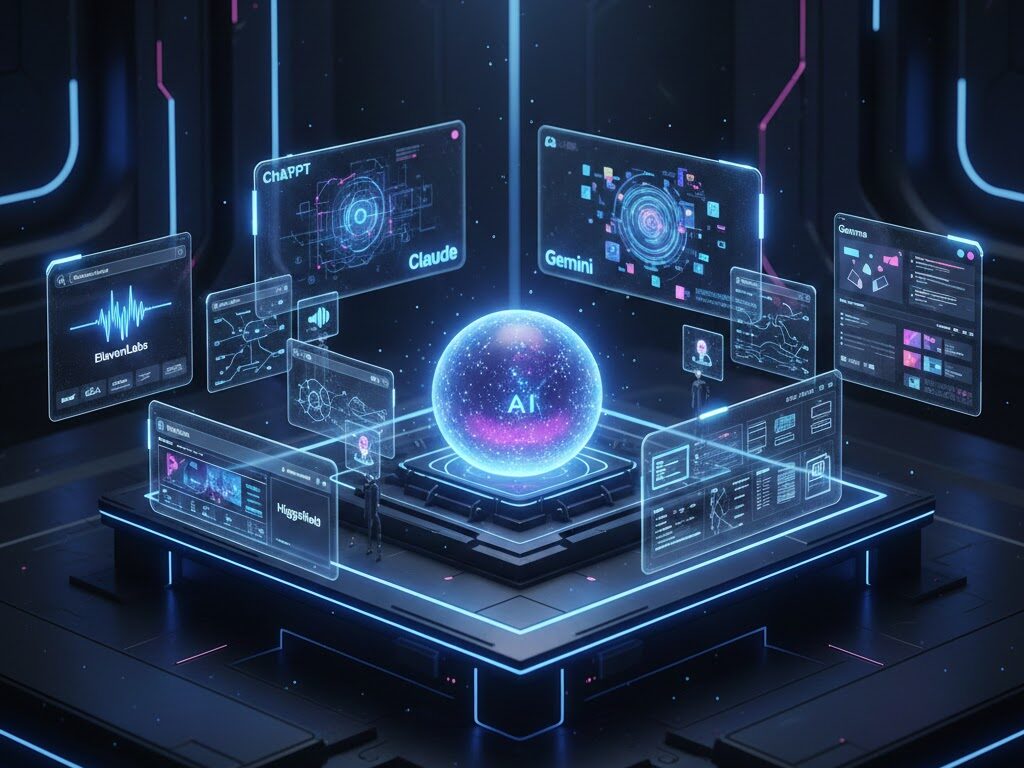
ChatGPT (advanced reasoning, voice), Claude (writing/coding), Gemini (multimodal generation).
Agentic/Workflow Tools
Microsoft Copilot, n8n, Writer for enterprise agents.
Specialized
ElevenLabs (voice cloning), Perplexity (research/search), Higgsfield (video).
Productivity
Gamma/Tome (presentations), NotebookLM (document-grounded research).
How TO Earn Online with AI
In today’s digital world, Artificial Intelligence (AI) is no longer limited to big companies or tech experts. Anyone can now earn money online using AI tools.
From content writing and video creation to freelancing, affiliate marketing, and automation, AI has opened up new and smart income opportunities.
In this blog, you will learn step by step how to use AI to generate online income, even with limited skills, time, or investment.
1. Freelance Services Enhanced by AI
Offer faster, higher-volume services using AI to handle repetitive tasks. Platforms like Upwork, Fiverr, and Freelancer see high demand for AI-assisted gigs.
Content Writing & Copywriting
Use tools like ChatGPT or Claude to draft articles, social posts, or ads. Edit for quality and sell on freelance sites. Potential: $500–$5,000/month.
Graphic Design & AI Art
Generate images with Midjourney or DALL-E, refine, and offer custom designs.
2. Create and Sell AI-Generated Content
Produce blogs, YouTube videos, or social media content with AI assistance.
Write blog posts or scripts with AI, monetize via ads, affiliates, or sponsorships.
AI video tools like InVideo for faceless YouTube channels (e.g., tutorials, reviews).
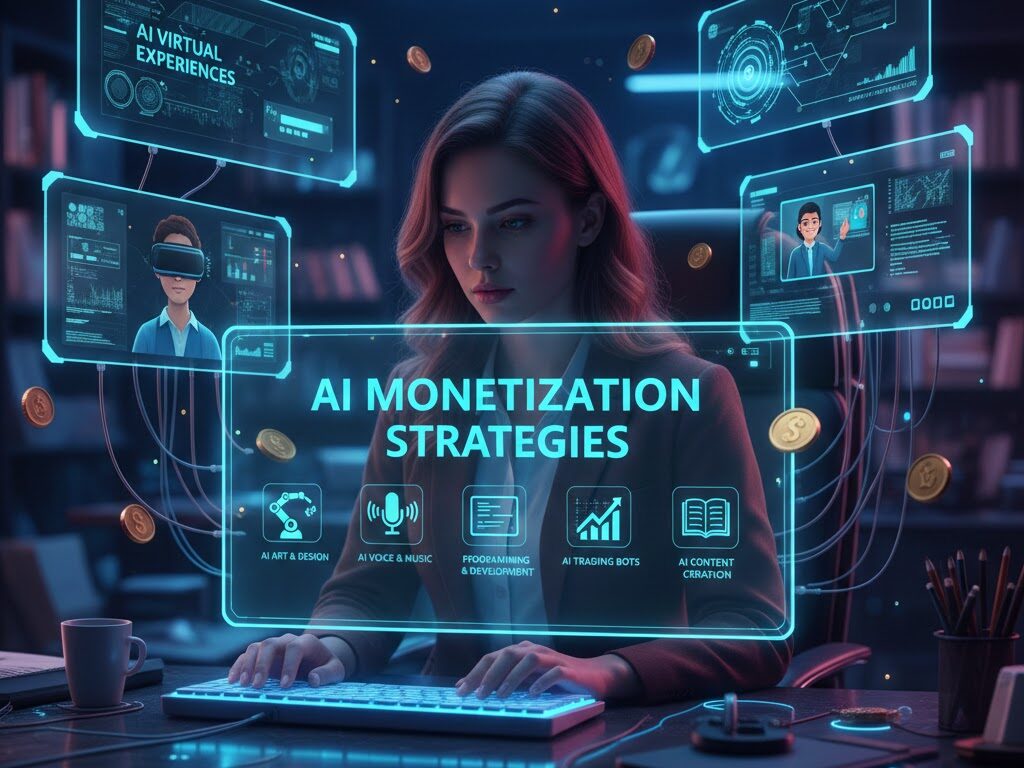
3. Sell AI-Created Digital Products (Passive Income)
Create once, sell repeatedly on Etsy, Gumroad, or your site.
AI-generated art, printables, planners, e-books, or Notion templates.
Print-on-Demand (POD): Design t-shirts/mugs with AI and sell via Printful or Teespring—no inventory needed.
Online courses
Use AI to outline/teach AI skills on Udemy or Teachable.
4. AI Consulting or Automation Services
Help businesses integrate AI.
Advise on tools, build custom chatbots, or automate workflows.
Tips for Success in 2026
Start small: Pick one method matching your skills.
Key tools: ChatGPT/Gemini (text), Midjourney/DALL-E (images), Canva/Adobe Firefly (design).
Market yourself: Build a portfolio, use LinkedIn/X, or create content showing your process.
Ethics & Quality: Always disclose AI use if required; human editing ensures standout results.
Scale for passive income: Automate sales funnels and focus on evergreen products.