10 Reasons of Youth Unemployment in Developing Countries

Unemployed youth with degree
Youth unemployment in Pakistan is rising fast. This in-depth article explains 10 major reasons for youth unemployment in Pakistan, its emotional impact, and practical solutions for a better future.
Introduction: A Generation Waiting for a Chance
Every morning, millions of young people wake up with hope in their hearts and uncertainty in their minds. They prepare their CVs, scroll through job portals, ask friends for references, and walk into offices with nervous smiles. Many return home with empty hands and heavy hearts.
Youth unemployment is not just an economic issue—it is an emotional wound. It creates frustration, self-doubt, and silent anger. A young person without work feels invisible, as if their dreams are placed on pause. Families worry. Society loses energy. The nation loses potential.
Pakistan is a young country. More than 60% of the population is under the age of 30. This should be a golden advantage. Instead, it has become a worrying challenge. When youth do not find jobs, their talent slowly turns into tiredness, and their hope becomes fragile.
This article explains 10 major reasons for youth unemployment in Pakistan, using simple words, real-life understanding, and practical insight. The goal is not just to point out problems, but to awaken discussion, care, and action.
1.Weak Education System and Skill Mismatch
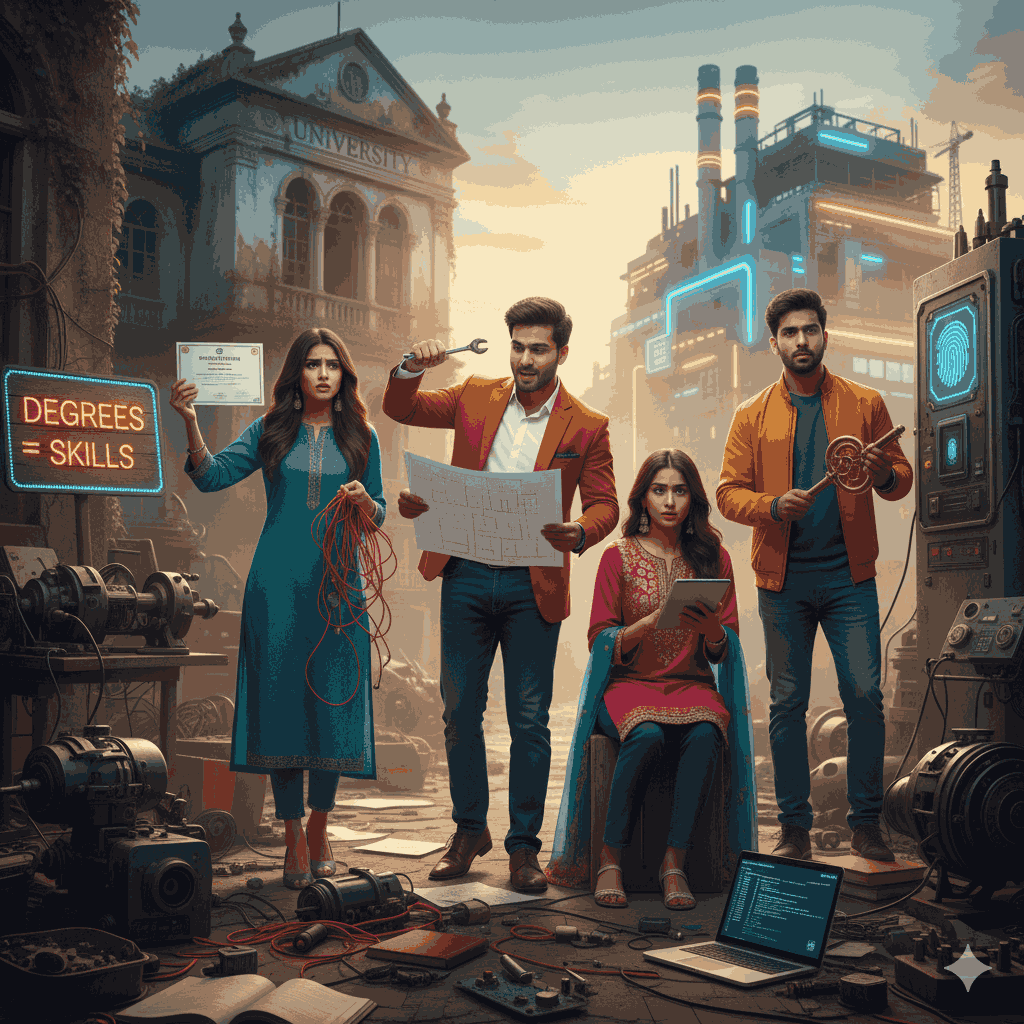
Degree without skills
One of the biggest reasons for youth unemployment in Pakistan is the gap between education and real-world skills. Many students spend years in schools and colleges, but when they enter the job market, employers say: “You are educated, but not skilled.”
Why This Happens
- Outdated curriculum
- Too much theory, less practical learning
- Lack of career guidance
- Little focus on problem-solving, communication, and digital skills
Students memorize books, pass exams, and receive degrees. But workplaces demand:
- Tech skills
- Critical thinking
- Teamwork
- Creativity
- Practical experience
This mismatch creates disappointment. Young people feel cheated. Employers feel helpless. The result is a silent disconnect between classrooms and offices.
Emotional moment
Many graduates feel a sharp sting of rejection. They start to doubt their worth. This emotional fog can lead to hopelessness, and in some cases, depression. Education should empower, but when it fails to prepare, it becomes a broken promise.
2.Limited Job Opportunities in the Formal Sector
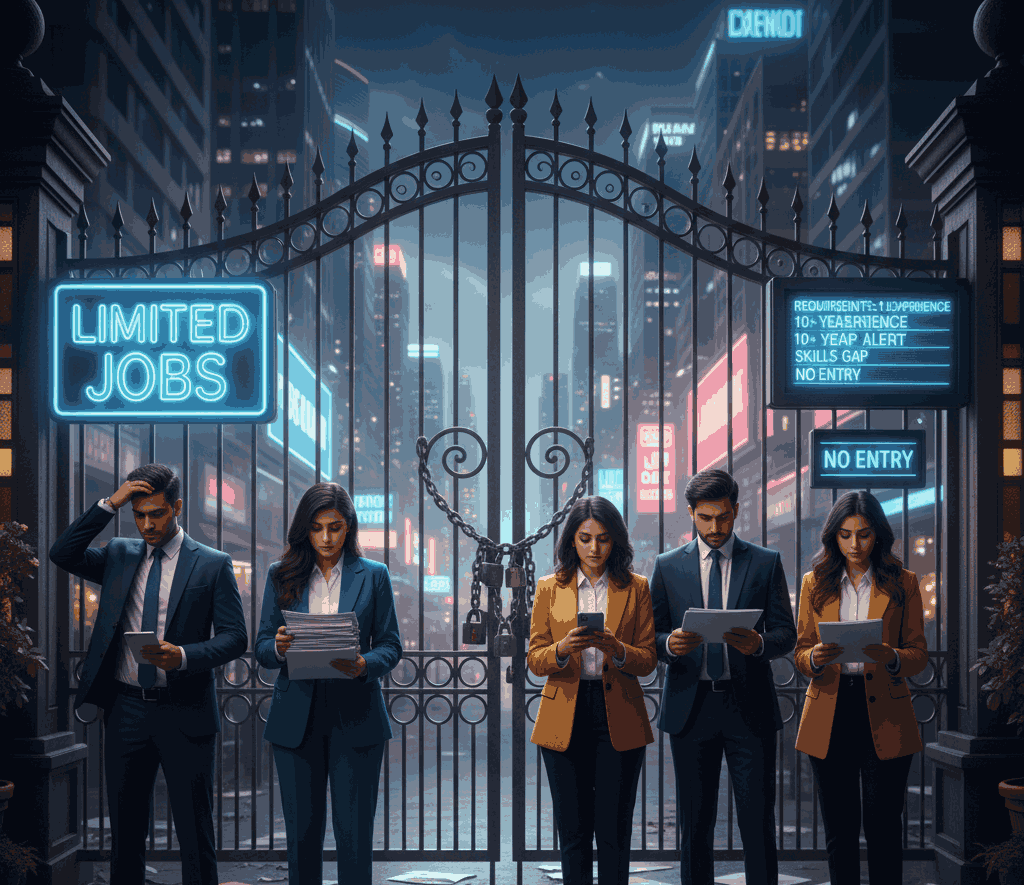
Limited jobs for freshers
Pakistan’s formal job sector is small compared to its growing population. Every year, millions of young people enter the job market, but the number of new jobs created is far less.
Key Problems
- Slow industrial growth
- Few large companies expanding
- Limited new businesses
- Lack of foreign investment
When opportunities are scarce, competition becomes fierce. Hundreds apply for one vacancy. Even talented candidates remain unemployed simply because there are not enough seats at the table.
Positive Side
This pressure is slowly pushing some youth toward:
- Freelancing
- Online work
- Startups
The digital economy is opening small windows of hope. But these options are still not accessible to everyone.
3.Rapid Population Growth
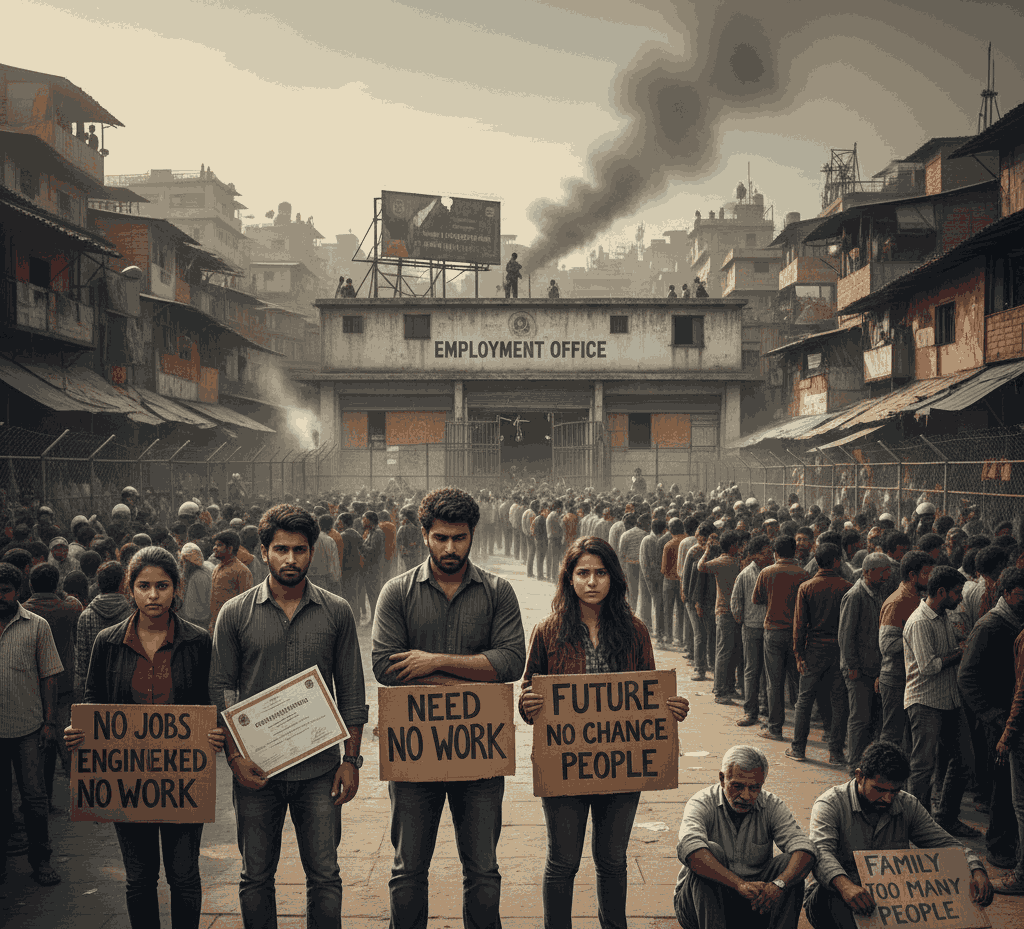
No experience ,No job opportuinity
Pakistan’s population is increasing quickly, and so is the number of young job seekers. The economy struggles to keep pace with this growth.
The Reality
- More youth entering the job market each year
- Limited expansion in industries
- Overcrowded cities with fewer jobs
This creates a “crowd effect,” where too many people chase too few opportunities. Even skilled individuals can be left behind.
Emotional Tone
There is a quiet panic in many households. Parents worry about their children’s future. Youth feel trapped in a long waiting line. The future seems blurry, like a road covered in fog. You can learn more by clicking the link given below:
https://www.wider.unu.edu/publication/youth-unemployment-and-illusion-progress
4.Economic Instability and Slow Growth

Instable economy
Economic instability in Pakistan plays a major role in youth unemployment. When the economy is weak, businesses do not expand, and new hiring slows down.
Economic Challenges
- Inflation
- High cost of living
- Currency devaluation
- Energy shortages
- Policy uncertainty
Companies focus on survival rather than growth. Hiring freezes become common. Internships turn unpaid. Permanent jobs turn into short-term contracts.
Positive Possibility
Economic reforms, digital businesses, and small enterprises can slowly rebuild confidence. Stability creates jobs. Uncertainty destroys them.
5.Lack of Career Guidance and Counseling
Many young people in Pakistan choose fields of study without proper guidance. They follow trends, family pressure, or social status, not market demand.
Common Patterns
- Too many students in limited fields
- Ignoring vocational and technical careers
- Little awareness of future job trends
This leads to overcrowded professions and underfilled technical roles. For example, many graduates seek office jobs, while skilled technicians are in short supply.
Emotional Conflict
Young people feel lost. They realize too late that their chosen path does not match market needs. This creates regret and self-blame.
6.Nepotism and Lack of Merit-Based Hiring

Freshers get opportunities through nepotism
One painful reason for youth unemployment in Pakistan is favoritism. Many young people believe that jobs go to those with connections, not qualifications.
The Perception
- “You need sifarish to get a job.”
- Merit feels overshadowed by networks.
This belief, whether fully true or not, damages trust in institutions. When youth feel the system is unfair, motivation weakens.
Emotional Consequences
This creates bitterness. Talented youth feel invisible. They start to believe effort is useless. This emotional erosion can be more harmful than unemployment itself.
7.Gender Barriers and Social Restrictions

Gender barriers and restrictions
Young women in Pakistan face extra challenges in finding jobs. Cultural norms, safety concerns, and family restrictions limit their opportunities.
Barriers
- Limited mobility
- Workplace safety concerns
- Social pressure to stay at home
- Fewer female-friendly workplaces
This reduces the workforce potential of the country. Half of the population remains underutilized.
Positive Change
More women are entering:
- Remote work
- Online businesses
- Education and healthcare fields
This slow shift brings hope. When women work, families grow stronger, and society becomes more balanced.
8.Poor Quality of Internships and Entry-Level Jobs
Many internships in Pakistan are unpaid or poorly structured. Young people work long hours without learning much or earning enough.
Problems
- Exploitation in the name of experience
- No clear career path
- Temporary contracts without growth
This discourages youth. They feel used rather than trained.
Hopeful Angle
Some companies are now offering:
- Paid internships
- Skill-based training
- Mentorship programs
These small changes can rebuild trust between employers and youth.
9.Lack of Entrepreneurship Support
Lack of skills and entrepreneurship support
Many young people want to start their own businesses, but they face barriers such as:
- Lack of funding
- Complex registration processes
- Fear of failure
- Limited mentorship
The entrepreneurial spirit exists, but the ecosystem is weak. Without support, ideas remain dreams.
Positive Spark
Startup incubators, online platforms, and youth-led ventures are slowly growing. With the right support, youth entrepreneurship can become a strong solution to unemployment in Pakistan.
10.Mental Pressure, Fear, and Loss of Confidence
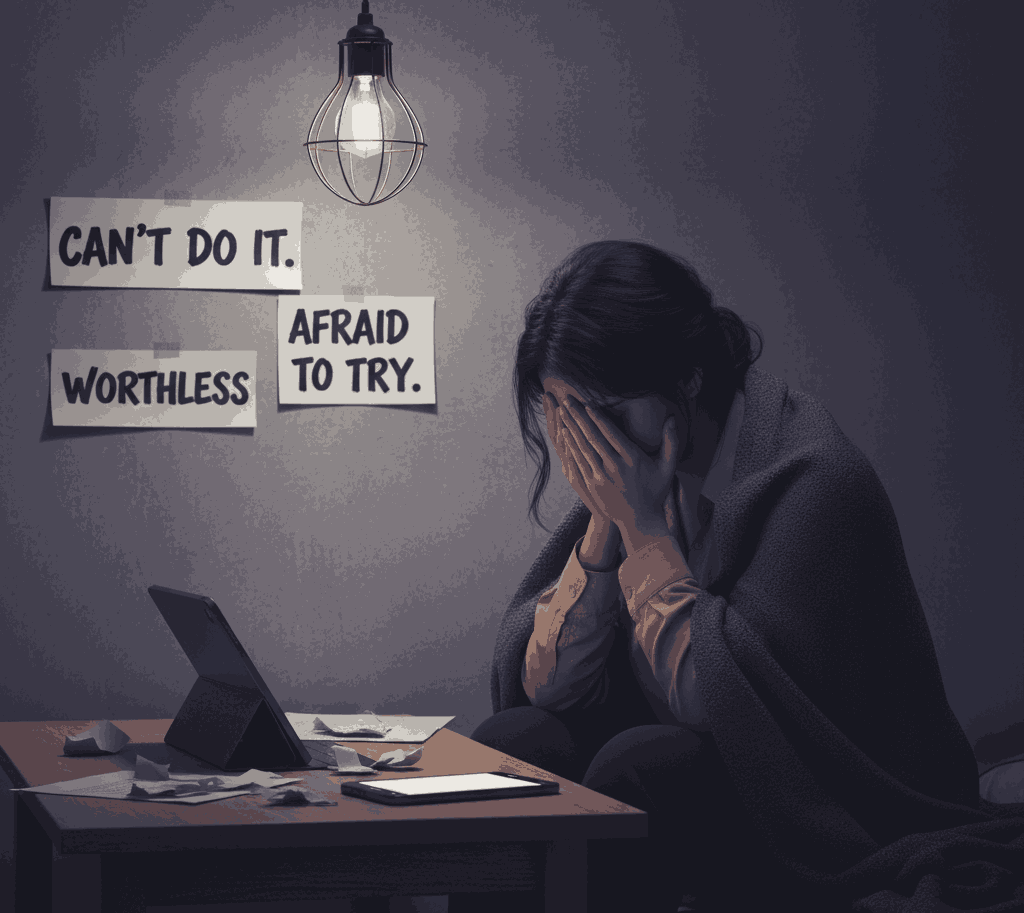
Feeling worthless
Youth unemployment is not only about jobs—it is also about mental health. Rejection after rejection can damage confidence.
Hidden Struggles
- Anxiety
- Low self-esteem
- Social comparison
- Fear of being judged
When confidence breaks, youth stop applying, stop learning, and stop believing in themselves.
Healing Through Hope
Support systems, mentorship, and community programs can rebuild emotional strength. A hopeful mind searches for paths. A broken mind sees only walls.
Conclusion: Turning a Crisis into a Chance
Youth unemployment is a serious crisis, but it is not a destiny. The problems are deep, but so is the potential. Youth are energetic, creative, and resilient. They do not lack talent they lack opportunities, guidance, and a fair system.
To move forward, youth needs:
- Education reform
- Skill-based training
- Economic stability
- Merit-based hiring
- Support for startups
- Mental health awareness
Every unemployed young person is not a burden—they are a seed of possibility waiting for the right soil. When society invests in its youth, it invests in its own future.
The pain of unemployment is real. The hope of change is also real. The choice lies in action. https://facthubblog.com/giorgia-meloni-in-oman-a-diplomatic-visit-with-big-implications/