10 Mind -Blowing facts about AI Nobody told you
Here are these:
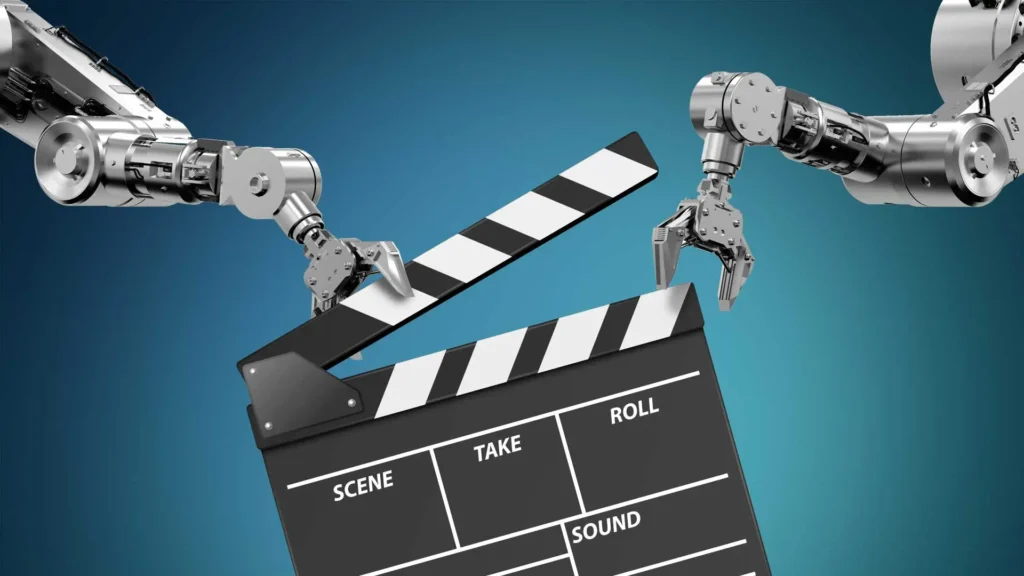
1. AI Can Now Create Entire Movies
AI tools can generate full scripts, voices, animations, and scenes—without a film crew.
The first feature-length film made entirely by artificial intelligence is a romantic drama titled Love You.
2. IN 2026 90% online content will be AI generated
Experts predict most text, images, and videos online will be created by AI, not humans
The prediction that 90% of online content will be AI-generated by 2026 is driven by the rapid advancement and widespread use of generative AI tools for creating text, images, and other media for efficiency and scale.
This trend is fueled by businesses and individuals using AI to produce content for marketing, communication, and other tasks more quickly than human creators alone can manage.
3. AI Can Predict Your Emotions
This models can analyze your face, voice tone, and typing patterns to detect your mood with shocking accuracy.
AI predicts emotions by analyzing various data streams like facial expressions, voice tone, and physiological signals using machine learning models trained on large datasets.
These models detect patterns in non-verbal cues to infer emotional states, such as a higher pitch indicating excitement or specific facial micro-expressions showing sadness.
How it work:
Data Collection:
The AI collects data from various sources, such as cameras for facial analysis, microphones for voice, and sensors for physiological data.
Pattern Recognition:
Machine learning algorithms process this data to find patterns that correspond to different emotions.
For example, the system is trained to recognize that a certain combination of facial muscle movements, voice pitch, and body language correlates with “anger” or “joy”.
Emotion Interpretation:
Once a pattern is detected, the AI interprets the emotion based on its training.
Response Generation:
Based on the interpreted emotion, the AI can generate a suitable response, such as modifying its tone of voice or providing a specific type of content.
4. AI Learns Faster Than Humans
Some AI systems learn in minutes what takes humans months—especially in medical imaging and language tasks.
5. AI Can Create Realistic Fake Voices
AI creates realistic fake voices through deep learning techniques like Neural Speech Synthesis, which analyzes vast amounts of human speech to learn patterns, intonation, and rhythm.
This allows it to generate new speech from text (text-to-speech), often with the ability to customize the emotion, pitch, and style of the voice.
High-end systems can even clone a specific person’s voice from a sample, a process known as voice cloning.
Voice Cloning:
Some advanced systems can create a synthetic voice that mimics a specific person.
This requires a smaller audio sample of the target voice to train the model to replicate its unique characteristics, such as its tone and articulation.
6. AI Writes Its Own Code
Modern AI can generate, debug, and optimize complex software code—sometimes better than human developers.
AI is increasingly able to write its own code, primarily through machine learning models trained on vast datasets of existing code, though current systems are better at writing code snippets than complex programs.
Some AIs can also “reprogram” themselves by modifying internal values to optimize performance, like Google’s AlphaEvolve, which improved Gemini’s training time by 1% by optimizing a specific code kernel.
More advanced systems are also capable of completing more complex coding tasks, including debugging and documentation, and some are even being used to help build and maintain other AI systems.
How AI writes code
Machine Learning:
AI Models are trained on enormous amounts of code to learn programming patterns and languages, enabling them to generate new code based on instructions or context.
Code Snippet Generation:
AI can efficiently generate small pieces of code for specific tasks, like creating APIs or interfaces between different software components.
Self-Optimization:
Some AIs can analyze their own performance and adjust internal parameters, such as the weights in a neural network, to improve efficiency without altering the fundamental code.
Workflow Automation:
More advanced AI agents can handle entire coding workflows, from writing and testing code to generating documentation and performing refactoring.
7. AI Can Read Medical Scans Better Than Doctors
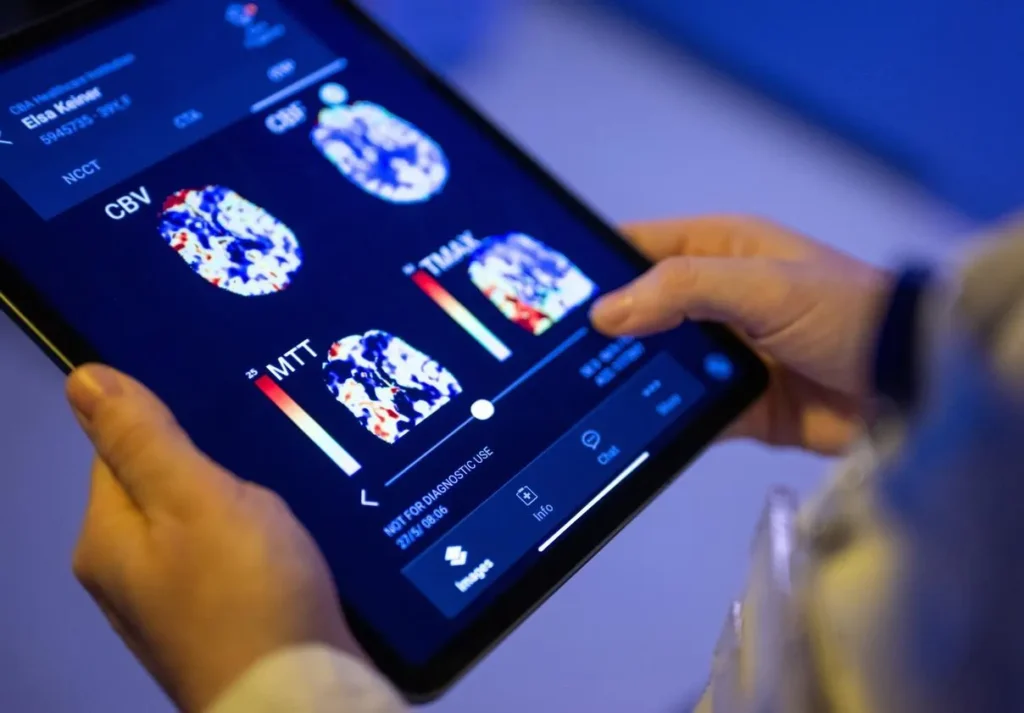
In tests, AI detects diseases like cancer earlier and with higher accuracy than many medical professionals.
AI can analyze medical scans with greater accuracy and speed than doctors by using machine learning to detect subtle patterns in vast datasets, identify anomalies that a human eye might miss, and provide a consistent, unbiased second opinion.
This systems are trained on millions of scans, allowing them to become proficient at spotting conditions and can highlight urgent cases, potentially leading to earlier diagnosis and treatment.
It’s crucial to understand that this is currently a tool that assists, rather than replaces, the physician’s expertise.
8. AI Never Sleeps
AI works 24/7 with zero breaks, handling millions of tasks nonstop.
9. AI Understands More Than 200 Languages
Advanced models translate and respond in almost every spoken language on Earth.
10. AI Can Recreate Missing Memories
AI-powered tools can reconstruct blurred or old images into hyper-realistic visuals—almost like reviving memories.